
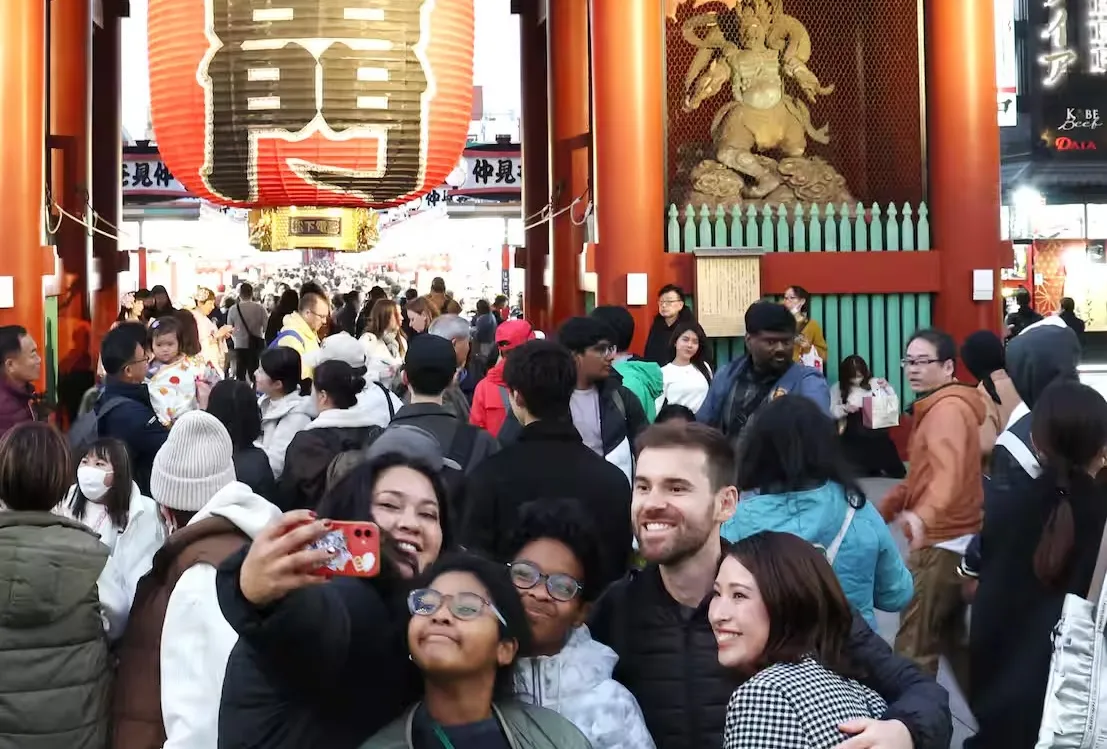
The Japanese government has approved a “Tourism Nation Promotion Basic Plan” covering fiscal years 2026 through 2030. The plan retains its predecessor’s targets of 60 million inbound visitors and ¥15 trillion (around $93.8 billion) in tourist spending by 2030, but it places greater emphasis on tackling overtourism.
Tourism in Japan has been on a strong upward trajectory. In 2017, inbound visitors surpassed 40 million for the first time. Their spending hit a record of roughly ¥9.5 trillion ($59.4 billion), cementing tourism’s status as a key growth industry.
However, this success has come with a cost. Overcrowding and poor behavior observed among some visitors at popular destinations have become increasingly difficult to ignore.
The Need for Sustainability
Developing the tourism industry is vital to Japan’s economy, but not at the expense of the people who actually live there. Overtourism doesn’t just burden residents — it also diminishes the experience that visitors come for in the first place. Sustainable growth requires finding the right balance, and the government has signaled that the next five years will be critical for achieving this.
Under the new plan, the number of regions actively addressing overtourism should double from 47 to 100 by 2030. Local residents and communities will be at the center of these efforts.
On the ground, this means initiatives like building parking facilities near attractions to reduce vehicle congestion and introducing reservation and crowd-management systems at high-demand sites. To curb problems like trespassing and littering, authorities will step up enforcement and tailor public awareness campaigns to the specific challenges each region faces.
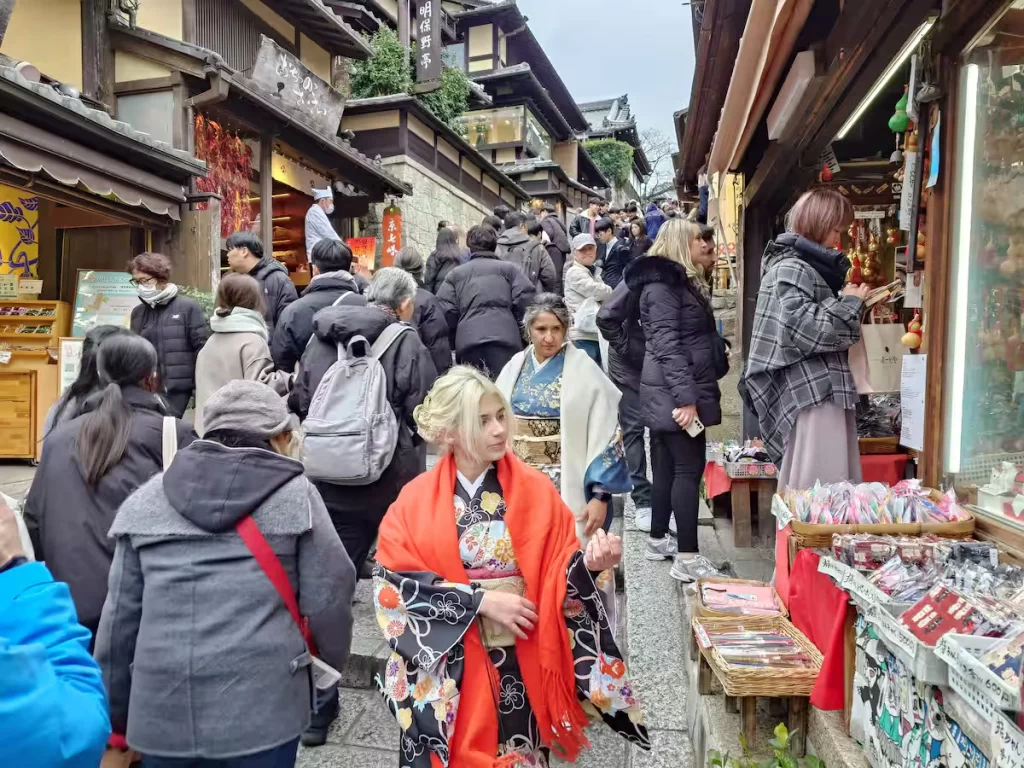 Crowds of tourists fill Sannenzaka near Kiyomizu Temple in Kyoto, January 27. (©Sankei by Satonobu Oyanagi)
Focus on Repeat Visitors
Of the 60 million visitor target, the plan aims for 40 million to be repeat visitors. This focus makes sense for several reasons. Currently, 67% of inbound tourists are concentrated in Japan’s three major metropolitan areas, but repeat visitors tend to show greater interest in exploring regional destinations.
They also arrive with a better understanding of local culture and customs, making them less likely to contribute to the kinds of problems overtourism causes. Promoting Japan’s regional attractions more effectively will be key to drawing this audience.
The road ahead remains uncertain. China’s travel restrictions and tensions surrounding Iran could weigh on tourism numbers in the near term.
However, periods like this are precisely when foundational work matters most. Building a broad base of fans across diverse countries and regions, and giving them reasons to keep coming back, is what will carry Japan’s tourism strategy forward over the long run.

RELATED:
(Read the editorial in Japanese.)
Author: Editorial Board, The Sankei Shimbun
Continue Reading
AloJapan.com