
Breadcrumb Trail Links
Food & DrinksTravelTravel GuideTravel International
A culinary tour of the country’s street markets and kitchens reveals what Canadians might be missing
Published Apr 08, 2026 • 6 minute read
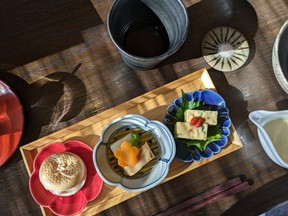 From knife-making to matcha preparation, Japan treats food as an art form. Canadians tend to treat it simply as fuel. Photo by Leigh Taveroff /PostmediaArticle content
Reviews and recommendations are unbiased and products are independently selected. Postmedia may earn an affiliate commission from purchases made through links on this page.
I thought I understood what “food culture” meant before travelling to Japan. As a proud West Coast Canadian, I’ve always taken pride in our Pacific Northwest cuisine — fresh seafood, locally sourced and often foraged ingredients, Indigenous and Asian influences. It’s been hard for me to define what Canadian cuisine is (poutine?) but I’ve settled on multiculturalism or borrowing flavours from everywhere. A single street in Toronto or Vancouver often offers sushi, shawarma and butter chicken.
Advertisement 2
This advertisement has not loaded yet, but your article continues below.
Article content
But travelling with Oku Japan on the Culinary Heritage: Winter Warmth tour showed me something different: a food culture not built on variety, but on depth. Not on abundance, but on intention. And it made me reflect on how we eat back home — what we value, what we overlook and what we might want to carry forward from a culture that gets eating just right.
Article content
Article content
Seasonal inspiration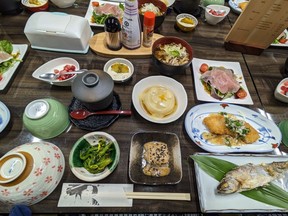 Every dish has meaning and is meticulously presented. Photo by Leigh Taveroff /Postmedia
The tour began in Tokyo, but it was in Kanazawa — wandering through the Ōmichō Ichiba market — that I first felt this difference. In Canada, winter for me and many others often means survival mode: root vegetables, slow cookers and whatever happens to be on sale at the grocery store that day. In Japan, winter is a season with its own cuisine, its own rituals and traditions and you could feel it everywhere.
At the market, every stall catered to the season: fresh seafood pulled from the cold surrounding water, pickles and pickled vegetables in every shade, mixed with delicious flavours like yuzu and ginger and vegetables chosen for how they nourish the body in the colder months just as much as for flavour.
Advertisement 3
This advertisement has not loaded yet, but your article continues below.
Article content
Later that day, in a traditional wooden Japanese home, we cooked the ingredients we’d purchased at the market with a local culinary expert, learning how winter dishes are meant to warm you from the inside out — physically and spiritually.
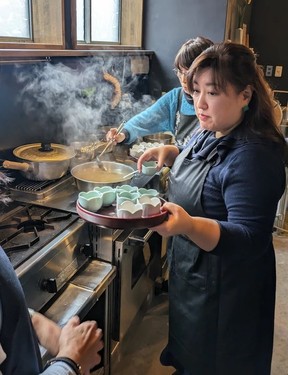 Learning to cook traditional dishes celebrating the new year in Kanazawa. Photo by Leigh Taveroff /Postmedia
There is a deep connection with annual community events in Japanese culture, so our group learned to cook traditional dishes celebrating the new year (our trip took place in early January). Each dish holds meaning and symbolism such as stir-fried namasu: sweet and sour vegetables like taro and lotus root symbolizing family stability, ozoni: a mochi-based soup meaning to bring good fortune and kinton: sweet potato mash with candied beans meant to represent wealth and financial freedom.
Canada has seasonal eating, but not with this level of deep respect for tradition and community. We don’t gather together to pound mochi or celebrate the first fresh sake of the year, but I wish we did.
It was in this kitchen that I began to understand the attention to detail in every Japanese dish, with presentation almost as important as flavour. This meticulousness became obvious beyond the kitchen too, and seemed rooted in the Japanese way of thinking. Every person I met seemed to be what I would consider an expert at their craft, but in Japan, after 13 years of studying the art of soba noodles, for example, they’re only considered an apprentice. This level of mastery was found in every dish we ate along our journey.
Advertisement 4
This advertisement has not loaded yet, but your article continues below.
Article content
Fermentation as a way of life
The following day, in Takayama’s morning market, we learned how families preserve vegetables for the winter, a way to sustain life over the colder months. In Canada, fermentation has become trendy — kombucha workshops, sourdough starters, the occasional jar of homemade pickles or pickled onions. But in Japan, it’s woven into everyday life. It’s not something you do because it’s cool, it’s something that has been passed down by previous generations.
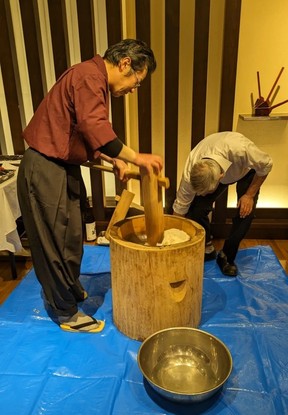 Mochitsuki, pounding rice into mochi with a wooden mallet in Kiso-Fukushima. Photo by Leigh Taveroff /Postmedia
Our local guide spoke about fermentation the way Canadians talk about hockey — with passion, pride and a sense of identity. Fermentation in Japan isn’t just a hobby but a winter survival strategy that has become a cultural cornerstone.
The art of slowing down
One of the most memorable evenings we had was in Kiso-Fukushima, where we took part in mochitsuki, pounding rice into mochi with a wooden mallet. Our group giggled away as we tried to match the rhythm of the experts. Spoiler alert: it’s much harder than it looks. Later that night, we indulged in hotpot and a beautifully presented multi-course meal at our ryokan (a traditional Japanese inn) under a kotatsu — a heated table that kept us warm while light snow fell outside.
Advertisement 5
This advertisement has not loaded yet, but your article continues below.
Article content
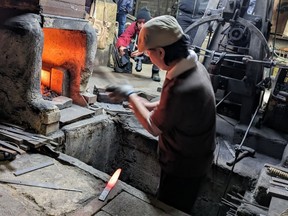 Watching a local master blacksmith forge a kitchen knife in Sakai City. Photo by Leigh Taveroff /Postmedia
It struck me how much Japanese food culture encourages slowness and truly savouring every dish, which are often only one or two bites. Not just slow eating, but slow everything — making, moving and appreciating. Even the tools reflect this way of life: in Sakai City, we watched a local master blacksmith forge a kitchen knife with a level of focus that I haven’t seen before. In Canada, we value efficiency — meal prep, 20-minute dinners, online grocery ordering and pickup. In Japan, the process is part of the fun.
Street food with soul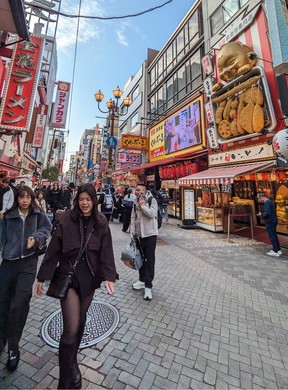 Dotonburi, a long strip famous for its array of street eats in Osaka. Photo by LEIGH TAVEROFF /POSTMEDIA
After leaving the small northern mountain villages, Osaka felt like a whole new world. As we wandered Doguyasuji Shopping Street, depachika food halls (essentially gourmet underground food mazes) and Dotonburi, a long strip famous for its array of street eats, I realized the vendors weren’t selling “fast food” — but everyday food. Takoyaki (minced octopus balls), okonomiyaki (savoury pancakes made with egg and cabbage), skewers, sweets — all made with care, all rooted in regional identity.
Advertisement 6
This advertisement has not loaded yet, but your article continues below.
Article content
In Canada, street food can be delicious, but it’s not rooted in the foundation of who we are. It doesn’t tell our story, whereas in Osaka, it absolutely does.
Markets that feel more like a museum
Kyoto’s Nishiki Market was the perfect finale to an incredible (and filling) eight days with Oku Japan. Walking through its narrow lanes, I felt like I was moving through a living archive of Japanese culinary history: tofu in many forms, pickled vegetables I’d never heard of before, sweets shaped like teeny-tiny works of art.
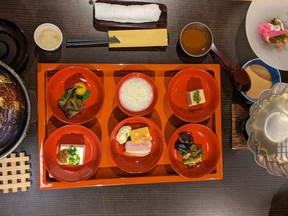 Not every meal needs to be fast. Each ingredient should be savoured. Photo by Leigh Taveroff /POSTMEDIA
Our tofu lunch that day was proof that a single ingredient, treated with respect, can become an entire cuisine. In Canada, tofu is often an afterthought, a protein substitute. In Kyoto, it’s a craft, much like wagyu beef or sushi.
Culinary traditions worth embracing
If I had to pick five culinary take-aways from the tour that I wish Canadians could adopt more fruitfully, they would be:
Seasonal celebration: Not just eating seasonally, but celebrating the seasons — marking our calendars with flavours, rituals and shared meals.
Advertisement 7
This advertisement has not loaded yet, but your article continues below.
Article content
Ingredient respect: The idea that a carrot isn’t just a carrot; it’s a product of land, weather and a whole lot of care. Canadians could benefit from this deeper connection to where our food comes from.
Culinary craftsmanship: From knife-making to matcha preparation, Japan treats food as an art form. Canadians tend to treat it simply as fuel.
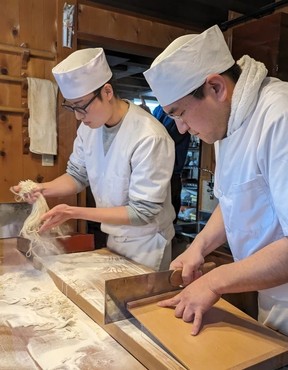 Masters of the soba noodles — refining their craft for 11 years. Photo by Leigh Taveroff /Postmedia
Communal cooking traditions: Mochitsuki, nabe hotpots, shared markets — these experiences create community. In Canada, we gather around food, but we don’t often make it together.
Slowness: Not every meal needs to be fast. Not every recipe needs to be efficient. There’s value in lingering, savouring and enjoying.
Final thoughts
Travelling through Japan made me realize that Canada’s strength — our diversity — can also be our weakness. Because we draw from so many cultures, we sometimes forget to cultivate our own food identity (no, poutine can’t be our entire identity). We eat well, but not always with intention. We cook, but not always with tradition. We enjoy food, but we don’t always honour it.
Advertisement 8
This advertisement has not loaded yet, but your article continues below.
Article content
Oku Japan’s Culinary Heritage: Winter Warmth tour showed me what it looks like when a country’s cuisine is deeply tied to its seasons, its history and its sense of self. And while Canada may never have a single culinary identity, we can still learn from Japan’s devotion to craft, seasonality and ritual.
I returned home with a suitcase full of matcha, sake, a new Japanese knife and a whole lot of inspiration. I also brought back a new way of thinking about food — one that I hope will shape the way I cook, eat and gather.
Read More
I wanted to see Japan without the crowds and found an island rich in history and hot springs
More Canadians are visiting Japan as country boasts record year for tourism
Shopping Essentials, a category written by research-obsessed shopping fanatics, is now on Canoe. Explore in-depth product reviews, expert recommendations and exciting collaborations — plus get behind-the-scenes info on your favourite brands and trending products — learn more here or sign up for our newsletter.
ltaveroff@postmedia.com
instagram.com/leightav
Article content
Share this article in your social network
AloJapan.com