

Japan has a very unique history and culture when it comes to self-care, soaps, and cleaning products. This goes back to traditional bathing practices designed to support circulation and address winter dryness. With that background, how would you describe the unique approach Japanese companies take when making body wash and body care products? And how does this relate to the longstanding attention to detail in the Japanese consumer market, which has historically been one of the largest in the world?
The Japanese approach is shaped by centuries of viewing bathing as a form of wellness rather than simply hygiene. Consumers expect exceptional quality, safety, and attention to detail. Japanese companies respond with refined craftsmanship, careful selection of ingredients, and meticulous product development. This long-standing cultural appreciation for purity and comfort has sustained our large domestic market and shaped the philosophy of brands like ours.
There is now widespread international discussion about Japan’s demographic challenges: an aging population and a shrinking domestic market. For your company, how are you responding to these conditions, and how important is internationalization as a strategic response?
Demographic decline is a reality, but for us, international expansion is both a strategic necessity and a natural evolution of our mission. We anticipated these trends and established a dedicated overseas division early on. Interestingly, despite Japan’s shrinking population, our sales continue to grow because global awareness of natural, additive-free soap is increasing. Our educational campaigns, which help consumers understand the benefits of natural soap versus synthetic detergents, are also contributing to this momentum.
I saw that on your website, you provide a detailed comparison of synthetic soaps and natural soaps, including historical explanations. How is your campaign helping the public understand the difference? Do you feel that consumers now recognize the distinction?
Even after 51 years of producing additive-free soap, we still find that many consumers remain uncertain about the difference. We address this through multiple channels. Our factory tours receive about 16,000 visitors each year, allowing people to witness the soap-making process firsthand. This closes the information gap dramatically.
We also actively use social media, publish educational videos and images, and conduct seminars nationwide. By teaching the principles of saponification and the craft behind natural soapmaking, we see real results: awareness spreads, word of mouth grows, and ultimately customers make informed choices.
Regarding craftsmanship, one of the most fascinating aspects of your production is the traditional kettle boiling method known as kamidaki shokunin. Could you explain what this method involves and how it shapes the quality of your soap?
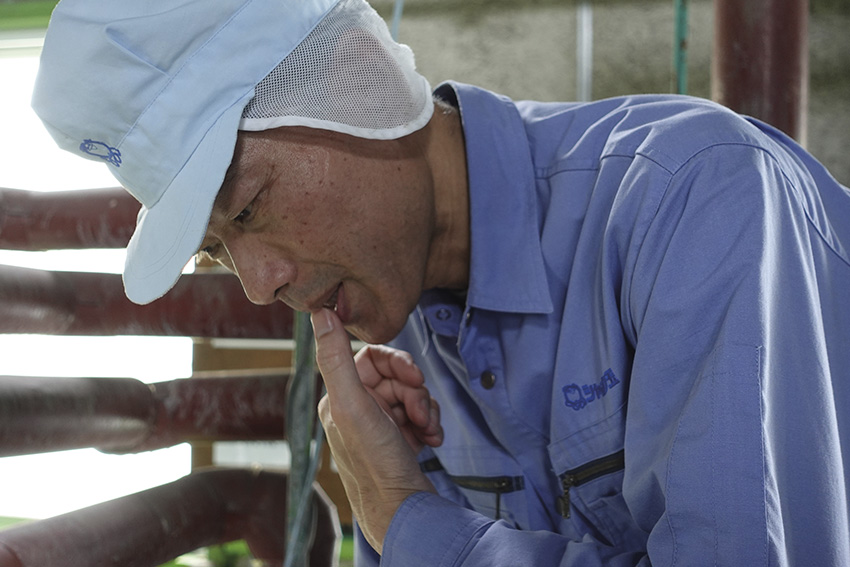
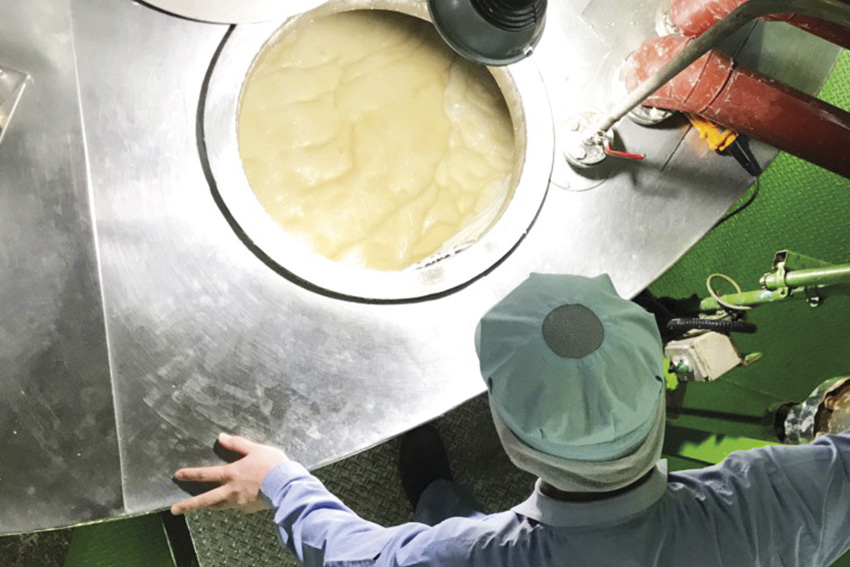
The kamidaki method requires deep expertise and nearly a full week of hands-on attention. Natural oils and lye are heated in large open kettles to initiate saponification. We then conduct salt separation, purification, and a full week of aging and resting. The final evaluation is done by craftsmen, who even taste the soap with the tip of their tongue to detect impurities. Although certain steps are automated, the final judgment is always human. This method produces exceptionally pure, gentle soap. We also apply the same philosophy to industrial products, making this a unique and consistent manufacturing approach within Japan.
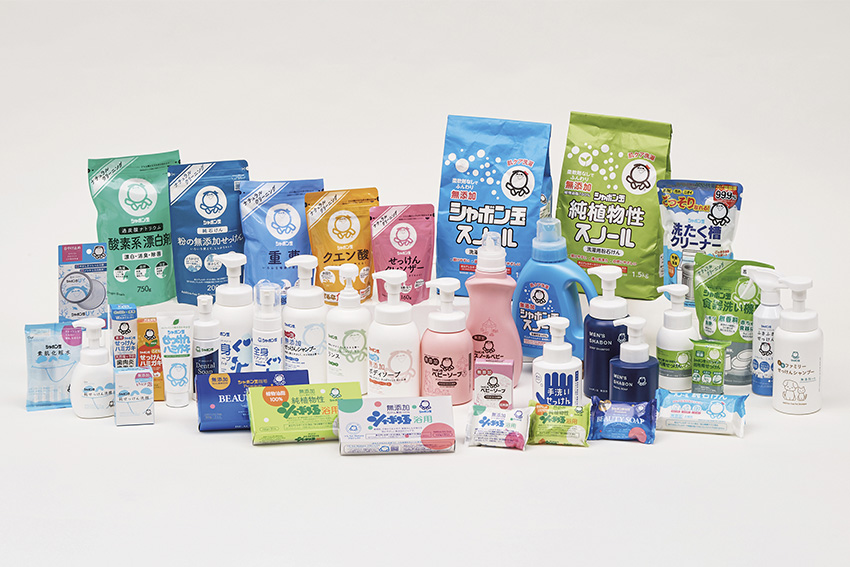
It is also interesting how you use natural ingredients such as salt in toothpaste or avocado in other products. Many international visitors come to Japan and love buying uniquely Japanese items. Do you see the possibility of incorporating ingredients such as yuzu into future products to appeal to this inbound market?
There is certainly a strong inbound market, but we do not create products specifically for tourists. Our priority is maintaining price stability in the Asian regions where we operate. If inbound visitors were to buy products in bulk and resell them abroad, it would disrupt local pricing. Therefore, although tourists do purchase our products, we do not design offerings specifically for them at this time.
Do you see a possibility down the line of incorporating such uniquely Japanese ingredients such as yuzu into products that could appeal to the inbound market?
From a conceptual standpoint, yes, there is always a possibility. However, strategically, we remain focused on serving regional markets through established distribution channels rather than designing tourist-oriented products. Stability and fairness in overseas pricing take priority.
Do you see a possibility of incorporating uniquely Japanese ingredients such as yuzu into products that could appeal to the inbound market?
The same applies: conceptually it is possible, but strategically we must prioritize market consistency and avoid price distortions in our overseas networks. For that reason, we have not pursued inbound-specific product development.
More broadly, you have recently begun targeting younger consumers. You established ZLab to understand their values and behaviors, and you launched new products online. What was the concept behind this initiative, and do you see younger consumers becoming a major target segment?
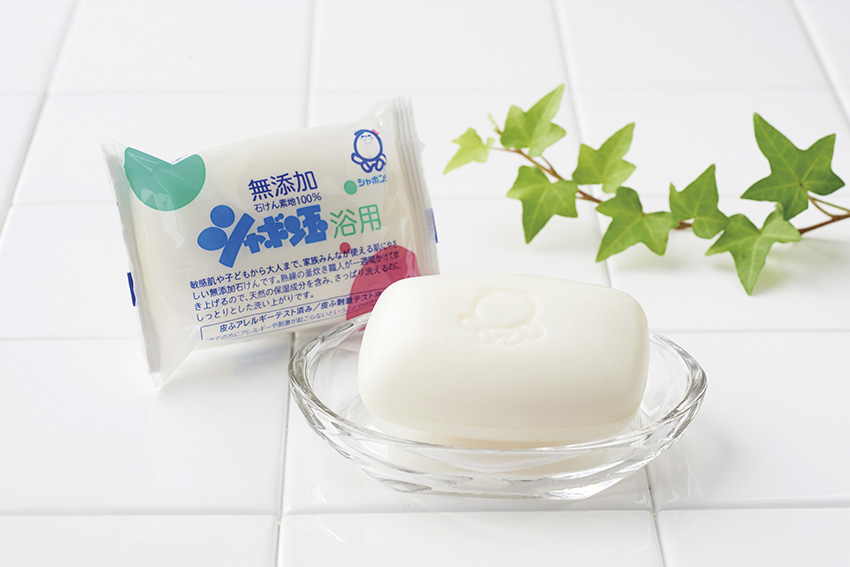
Our core users are in their 40s and 50s, but we wanted younger generations to learn about Shabondama. ZLab focuses on short-form video content and building natural contact points through social media. We also launched the Shabond brand with redesigned packaging and lower pricing. Traditional kamidaki soaps retail around 1,200 yen, which can deter younger shoppers. By reducing the price to around 600 yen and adopting contemporary, minimalist packaging, we made the products more accessible. Sales and social media engagement have increased significantly.
Returning to overseas expansion, could you update us on your international strategy? Which countries and products currently show the strongest demand?
Our first international market was Korea in 2002, driven by Korean consumers who had used our products in Japan and wanted to bring them home. Despite our initial warning that sales might be difficult, the market grew steadily. Since then, we have expanded to Taiwan, China, Malaysia, Singapore, Thailand, Vietnam, the Philippines, Mongolia, the USA, and Russia. We continue to look for strong local partners, especially in Southeast Asia, and we are exploring potential entry into the Middle East.
Do you have a target ratio in mind for domestic versus overseas sales, for example by 2030?
Our aim is for overseas sales to reach about 5 percent of total revenue by 2030, and possibly 10 percent within five years if growth progresses optimistically.
When skincare companies expand internationally, they often must change formulations to suit different skin types or practices. Because your philosophy emphasizes minimal additives, do you find that your products can succeed globally without reformulation?
Yes. Natural soap is gentle yet effective and environmentally friendly, so the formulation itself seldom needs modification. What may require adjustment is packaging. Many of our products show illustrations of babies, which can mislead consumers into thinking they are only for infants. We will update packaging to appeal to broader audiences. In markets such as India, we must modify certain raw materials due to religious restrictions on cow-derived fats. And in Muslim-majority markets, halal certification is essential. These are manageable adjustments that allow us to maintain our core philosophy.
As you expand in ASEAN, is there a particular country where forming a strong partnership is especially important for accelerating growth?
This year we entered Mongolia and Vietnam. Vietnam, in particular, holds strong potential because Japanese products are highly valued there. Malaysia is another important market once halal certification is fully in place. These three markets may become our strongest growth engines.
|
|
Previous Next
Japan has many recognizable IP characters, and partnerships with these IPs have helped other companies grow abroad. Do you see IP collaboration as a future opportunity?
To clarify, Vietnam was actually added last year, in 2024. As for IPs, we have collaborated domestically with Sanrio’s Hello Kitty and Kikirara, with Peanuts’ Snoopy, and with Disney’s Winnie the Pooh. These partnerships performed well in Japan. We have not yet explored IP collaborations for overseas markets, but this is certainly an option for future development pending discussions with IP holders.
I also wanted to ask about the soap-based fire extinguisher you developed. You partnered with JICA in Indonesia’s peatlands and other fire-prone areas. It biodegrades much faster than traditional extinguishers. How were you able to achieve that level of biodegradation while ensuring firefighting effectiveness? And what applications do you foresee in the future?
The fire extinguishing agent originated in 2001 as part of a project to create the world’s first environmentally friendly extinguisher. We collaborated with academic institutions and government agencies for seven years and conducted roughly 600 trials before finalizing the formula in 2007. It is a soap-based, salt-based agent with strong biodegradability. We initially aimed for the U.S. market, but U.S. certification requires pH-neutral agents, and ours is mildly alkaline. Through JICA’s support, we focused instead on Indonesia’s peat and forest fires, which release enormous amounts of CO₂. Our agent helps suppress these fires while minimizing long-term environmental impact. The technology is still undergoing testing and evaluation, and we hope eventually to deploy it more widely.
Is this envisioned as a B2B product for governments and institutions, or do you imagine households using it one day?
At present, it is not intended for household use. It is best suited for large-scale environmental and community fire prevention, so our focus is on institutional and governmental applications.
Thank you for answering all our questions. As a final question for our readers, what would you personally like to accomplish during your presidency before you retire or pass leadership to the next generation? Do you have a goal or dream you can share?
Our corporate philosophy is to protect healthy bodies and clean water. One dream of mine is for people everywhere to clearly understand the difference between natural soap and synthetic detergents. Many consumers still mistake one for the other, just as people may confuse butter and margarine when they appear similar on store shelves. This misunderstanding can lead parents to choose products that irritate their child’s skin, believing they are harmless. I want to eliminate these mismatches and help people choose products that are genuinely good for their health and the environment. And internally, I want every employee of Shabondama Soap to retire with a smile. That is one of my greatest goals.
They certainly look very happy. And I have to say, the butter example is excellent. We are from Ireland, so we know what real butter is unlike margarine in the U.S.
Thank you very much.
Thank you so much for the interview. We truly appreciate it.
Thank you. Thank you very much.
For more information, please visit their website at: https://global.shabon.com/
AloJapan.com