
Where It All Begins
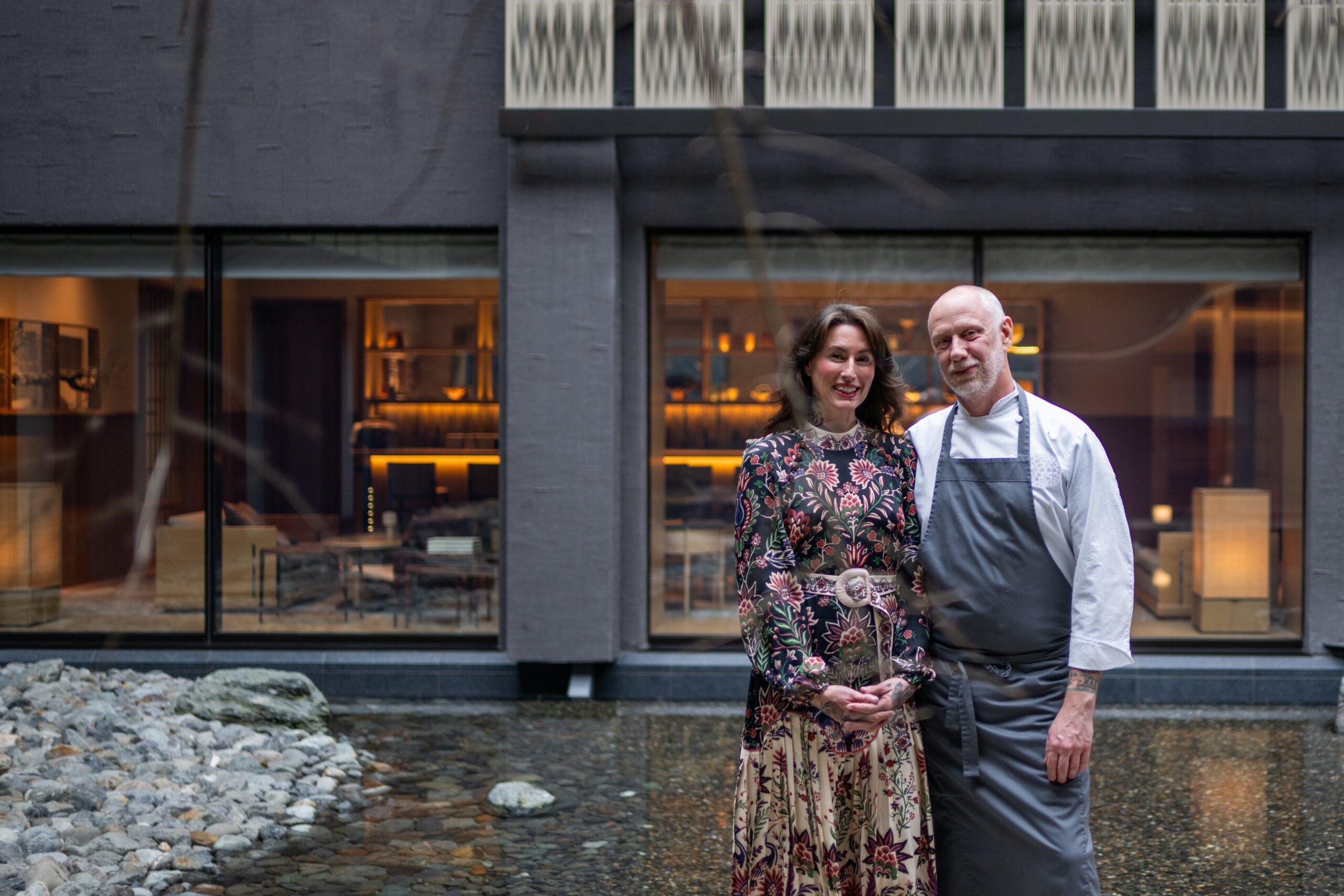
To understand how SoNoMa operates, it helps to look back to Healdsburg, where the Connaughtons built SingleThread around a fundamentally different rhythm. There, the restaurant is anchored by its farm, where produce is grown specifically for the kitchen. Each day begins with requests from the chefs, followed by harvest, delivery, and service, creating a system in which the menu responds directly to what is available.
“We have ways to say hello and goodbye to things,” Connaughton says, describing how ingredients move through their lifecycle, from first emergence to peak abundance to disappearance. Roughly 70 percent of the restaurant’s produce comes from the farm, a figure the Connaughtons have deliberately maintained, not as a marker of self-sufficiency, but as a commitment to the broader agricultural community. The remaining ingredients come from nearby growers, reinforcing a system built on interdependence rather than isolation.
More importantly, the relationship between farm and kitchen is not symbolic. It is structural. “The menu is essentially a one-for-one result of what is actually happening agriculturally,” Connaughton says. That reality introduces constraints that, in turn, drive creativity. A crop grown to yield squash blossoms must also account for the squash itself, and dishes are designed not around a single perfect moment, but around the full arc of an ingredient. For Katina, who leads the farm, the work is less about adhering to labels than responding to the land itself. “We let the land dictate its needs to us,” she says, emphasizing a philosophy grounded in observation rather than prescription.
That same logic carries through to SoNoMa, but in a more concentrated form. Where SingleThread operates with a large team and a carefully orchestrated agricultural timeline, Kyoto introduces a different kind of seasonality that is faster, more volatile, and often less predictable. Ingredients arrive and disappear within days, and micro-seasons compress the window for decision-making, requiring a level of immediacy that even the farm in Healdsburg does not demand.
In response, the Connaughtons have distilled their approach. The restaurant is smaller, the menu tighter, and the dishes are developed entirely in Kyoto, using local ingredients and relationships rather than being transported from California. Techniques and ideas remain consistent, but their expression is recalibrated to place, bringing their philosophy into sharper focus. “It’s about taking what we do and looking at it through the lens of Kyoto,” Connaughton says.
The result is a cuisine that feels both familiar and newly precise, more intricate in execution, yet more restrained in form. Beyond the plate, SoNoMa reflects a deeper alignment with Japanese notions of time and experience. Connaughton often references ichigo ichie, the idea that each encounter is unique and unrepeatable, and mono no aware, an awareness of impermanence, concepts that shape how guests move through the meal.
The pacing of the experience creates space to notice the texture of a ceramic bowl, the arrangement of seasonal flowers, and the subtle shifts in flavor from one course to the next. Like the tea ceremony, which Connaughton cites as inspiration, the focus is not on a single element, but on the accumulation of small, deliberate details. “It’s not just about what’s on the plate,” he says. “It’s about how people feel in that moment.”
That philosophy extends beyond the restaurant itself. At both SoNoMa and SingleThread, hospitality is conceived as something larger than the dining room, an effort to connect guests more deeply to the place they are in, whether that means guiding them through Kyoto’s quieter neighborhoods or introducing them to the growers and producers in Sonoma.
AloJapan.com