
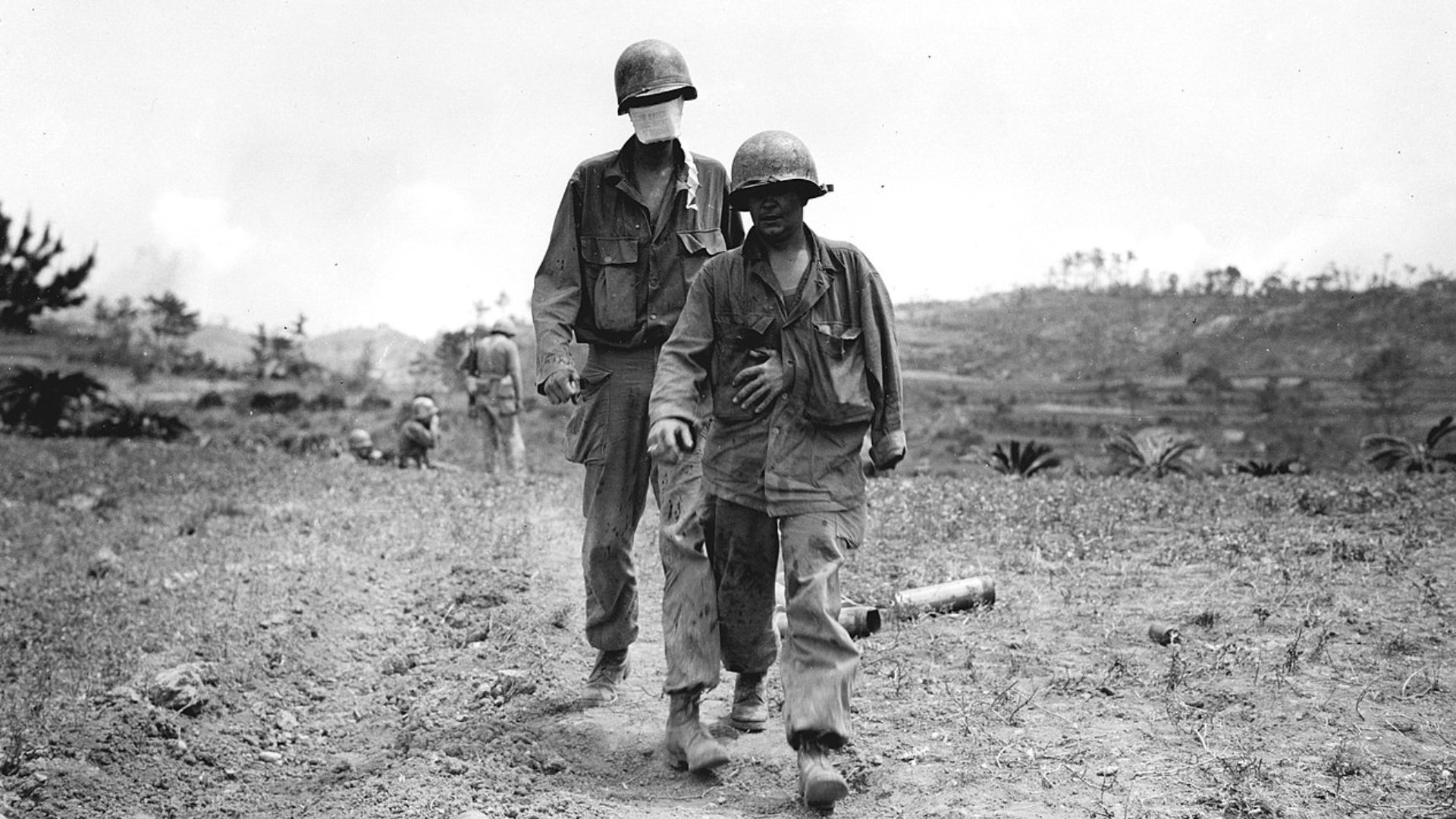
April 5, 1945. Rain lashed the Maeda Escarpment. Forty-foot waterfalls carved into jagged limestone cliffs.
The 77th Infantry Division of the US Army clung to ropes and ladders, trying to survive Japanese machine-gun fire, mortar shells, and grenades. They were National Guard soldiers from New York and Connecticut, civilians turned warriors. Factory hands, clerks, and farmers now faced one of the Pacific War’s bloodiest tests.
The ridge would come to be called Hacksaw Ridge, and it would demand everything from those who climbed it.
Okinawa: The Stepping-Stone to Japan
Okinawa lies 350 miles from Japan. The island’s capture was crucial for an invasion of the home islands.
The battle began on April 1, 1945. 1.3 million Allied troops faced 100,000 Japanese defenders under the command of Lieutenant General Mitsuru Ushijima. The enemy dug into caves, ridges, and reverse slopes along the island’s southern spine.
By April 5, Marines had cleared northern heights, but the Shuri Line blocked further advance.
The 96th Infantry Division pressed the left flank. The 77th, fresh from Leyte, targeted Hacksaw Ridge, a sheer 400-foot cliff protecting the Shuri Line.
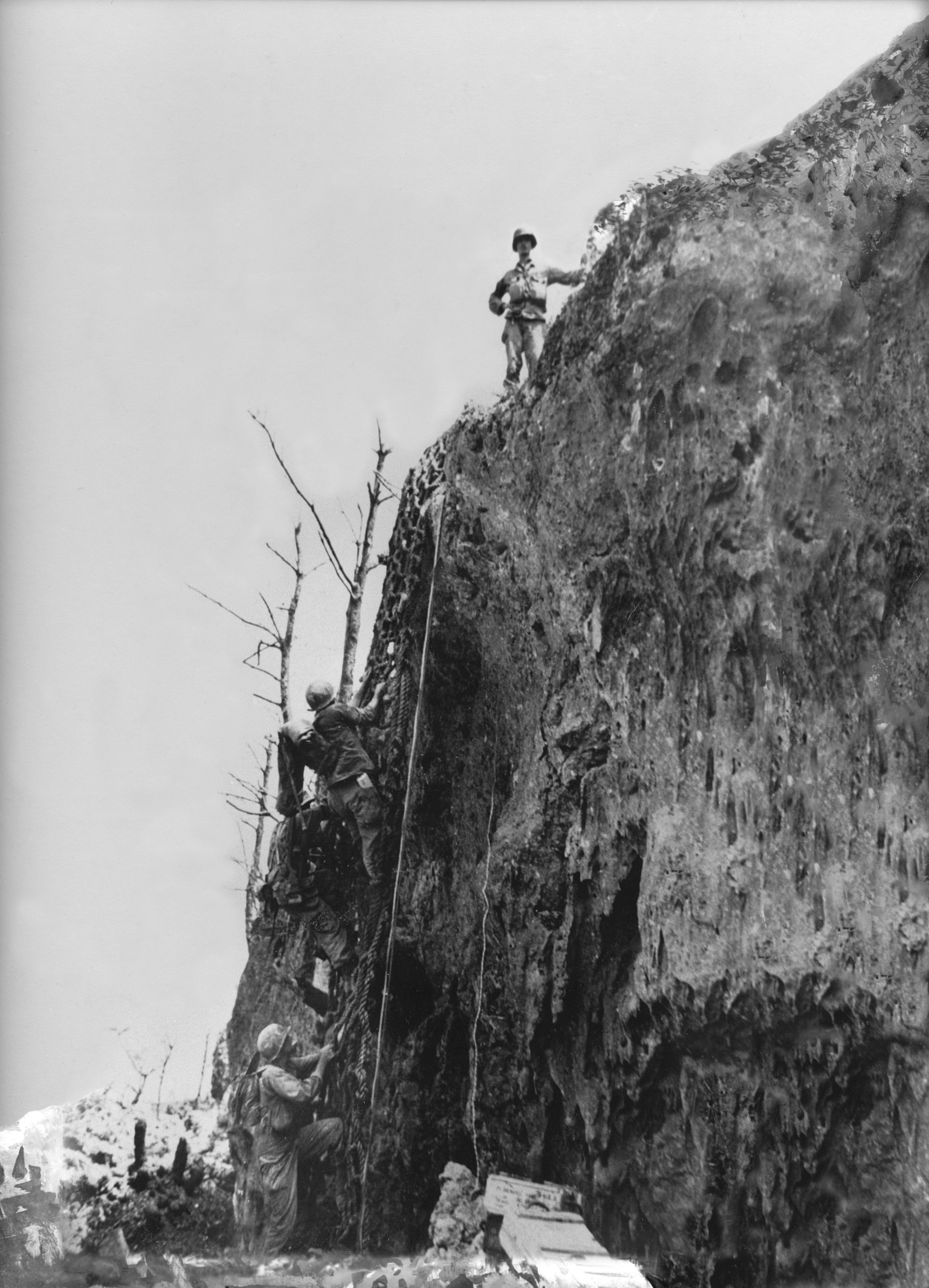 The Maeda Escarpment (Hacksaw Ridge) is a 400-foot sheer vertical cliff on Okinawa, Japan. The soldier on top is the real Pvt. Desmond Doss. (Image Credit: Reddit)
The ridge jutted like a knife through the southern terrain. Rain turned the cliff faces into slick walls of death. Mud clung to boots. Engineers fired ropes and ladders into the sky. Every step upward was a fight against gravity, water, and bullets.
Assault Under Fire
Zero hour. Companies of the 306th Infantry moved first. Mortars pounded cave mouths. Japanese gunners raked the slopes with Nambu machine guns. Knee mortars arced deadly rounds into clusters of men. Soldiers dangled from ropes, bullets cutting close. Some fell 100 feet onto jagged coral below.
Private Desmond Doss, a medic and Seventh-day Adventist, moved unarmed. His battalion pinned the enemy with fire while he dragged the wounded to cliff edges. He lowered 75 men one by one through the hail of bullets.
“Lord, help me get one more,” he prayed.
Already have an account? Sign In
Two ways to continue to read this article.
Free Limited Trial
Sign up to continue reading
By signing up, you agree to our Privacy Policy
Subscribe
$1.99
every 4 weeks
Unlimited access to all articles
Support independent journalism
Ad-free reading experience
Subscribe Now
Recurring Monthly. Cancel Anytime.
April 5, 1945. Rain lashed the Maeda Escarpment. Forty-foot waterfalls carved into jagged limestone cliffs.
The 77th Infantry Division of the US Army clung to ropes and ladders, trying to survive Japanese machine-gun fire, mortar shells, and grenades. They were National Guard soldiers from New York and Connecticut, civilians turned warriors. Factory hands, clerks, and farmers now faced one of the Pacific War’s bloodiest tests.
The ridge would come to be called Hacksaw Ridge, and it would demand everything from those who climbed it.
Okinawa: The Stepping-Stone to Japan
Okinawa lies 350 miles from Japan. The island’s capture was crucial for an invasion of the home islands.
The battle began on April 1, 1945. 1.3 million Allied troops faced 100,000 Japanese defenders under the command of Lieutenant General Mitsuru Ushijima. The enemy dug into caves, ridges, and reverse slopes along the island’s southern spine.
By April 5, Marines had cleared northern heights, but the Shuri Line blocked further advance.
The 96th Infantry Division pressed the left flank. The 77th, fresh from Leyte, targeted Hacksaw Ridge, a sheer 400-foot cliff protecting the Shuri Line.
The Maeda Escarpment (Hacksaw Ridge) is a 400-foot sheer vertical cliff on Okinawa, Japan. The soldier on top is the real Pvt. Desmond Doss. (Image Credit: Reddit)
The ridge jutted like a knife through the southern terrain. Rain turned the cliff faces into slick walls of death. Mud clung to boots. Engineers fired ropes and ladders into the sky. Every step upward was a fight against gravity, water, and bullets.
Assault Under Fire
Zero hour. Companies of the 306th Infantry moved first. Mortars pounded cave mouths. Japanese gunners raked the slopes with Nambu machine guns. Knee mortars arced deadly rounds into clusters of men. Soldiers dangled from ropes, bullets cutting close. Some fell 100 feet onto jagged coral below.
Private Desmond Doss, a medic and Seventh-day Adventist, moved unarmed. His battalion pinned the enemy with fire while he dragged the wounded to cliff edges. He lowered 75 men one by one through the hail of bullets.
“Lord, help me get one more,” he prayed.
Each trip was a battle against wind, rain, and the fear of death.
Guard noncommissioned officers led with grit. Sergeant Michael McCaffree’s squad from New York pinned enemy caves with BAR fire. Connecticut Corporal Thomas Reed hauled ammunition up the cliffs while shrapnel cut past him. By nightfall, the ridge crest remained contested.
Two hundred Americans were dead. Six hundred wounded.
The Japanese lost 500.
Typhoon rains flooded foxholes.
Soldiers huddled in shell craters, sharing rations and clinging to life amid the stench of death.
Days of Relentless Combat
Fighting dragged on through April 7 to 9. The 96th Division attacked adjacent ridges. Naval gunfire and airstrikes pounded the Japanese positions. USS Tennessee’s 14-inch shells shattered caves. Night brought banzai charges, bayonets flashing in the rain.
Doss stayed exposed for three days, treating casualties under flare light. He became a one-man evacuation chain.
Engineers used dynamite to clear caves.
Flamethrowers forced out holdouts.
On April 10, the 77th finally crested Hacksaw Ridge, only to face counterattacks that shredded their lines.
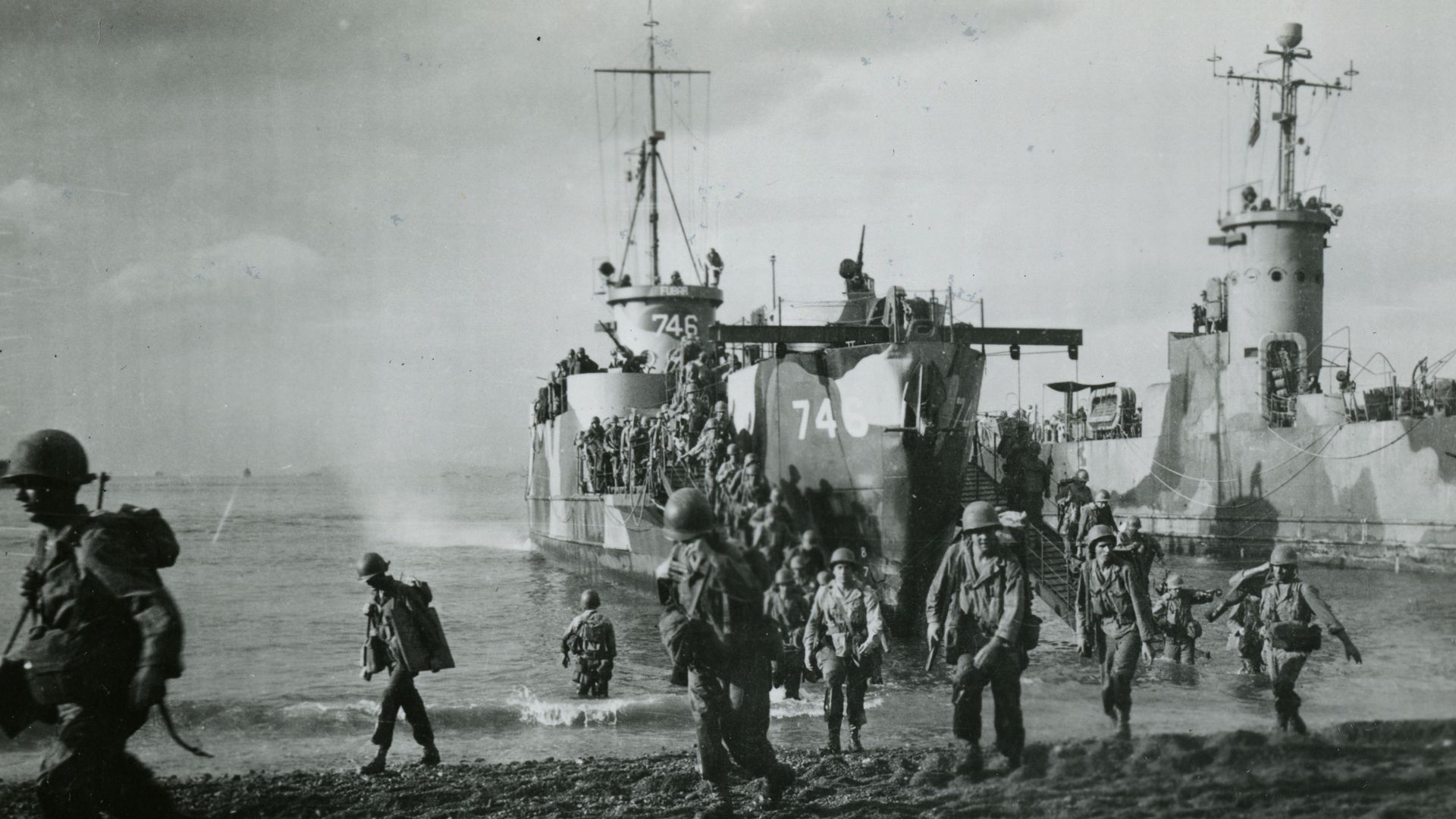 77th Infantry Division soldiers land from USS LCI(L)-746 during the Leyte invasion, Philippines, 1944. (Image Credit: US Army/WW2)
The Guardsmen held firm. Company K, 307th Infantry, New York, defended the ridge’s edge. Connecticut medics evacuated hundreds of wounded.
The fighting foreshadowed Okinawa’s brutal toll.
Twelve thousand five hundred Americans died. Forty-nine thousand were wounded.
Japanese losses exceeded 110,000, many taking their own lives rather than surrendering.
The capture of Hacksaw Ridge cracked the Shuri Line and opened the way for the Allies to secure Okinawa by June 22.
Faith Amid Fire
Doss’s courage became legendary. He saved 75 men under fire among 400 casualties.
Then-US President Harry S. Truman awarded him the Medal of Honor, making him the only conscientious objector so honored in World War II.
His story inspired Mel Gibson’s 2016 film Hacksaw Ridge, a cinematic tribute to faith, courage, and moral conviction amid the horrors of war.
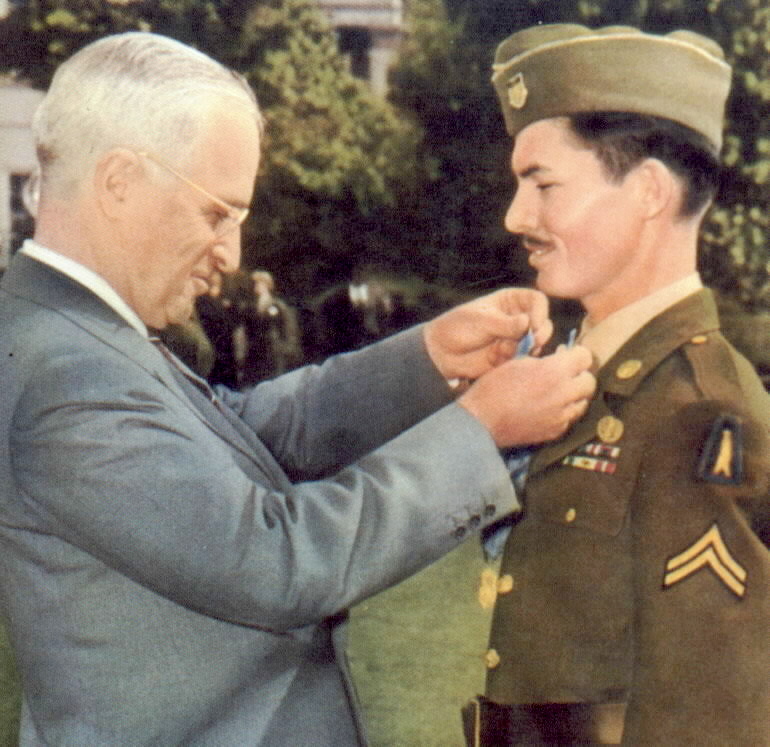 Corporal Desmond Doss receives the Medal of Honor from President Truman, October 12, 1945. (Image Credit: Wikimedia Commons)
The 77th pressed forward after the ridge fell. Shuri and its defensive network fell in weeks. Airbases constructed on Okinawa accelerated the bombing campaigns that would end the war.
The Legacy of Hacksaw Ridge
Hacksaw Ridge stands as a monument to grit and determination. Citizen-soldiers, molded by National Guard service, turned impossible odds into victory.
The 77th Infantry Division earned two Presidential Unit Citations. Annual memorials at Mabuni Hill honor those who fell. The Peace Memorial Museum preserves Doss’s ropes and dog tags as a reminder of individual bravery.
For modern historians and soldiers, April 5 marks the day ordinary men became legends. They scaled cliffs that should have been impossible. They faced bullets, bombs, and typhoon rains. They survived through training, courage, and sheer willpower.
Hacksaw Ridge is not just a battlefield. It is a lesson in faith, resolve, and the enduring spirit of citizen-soldiers.
AloJapan.com