
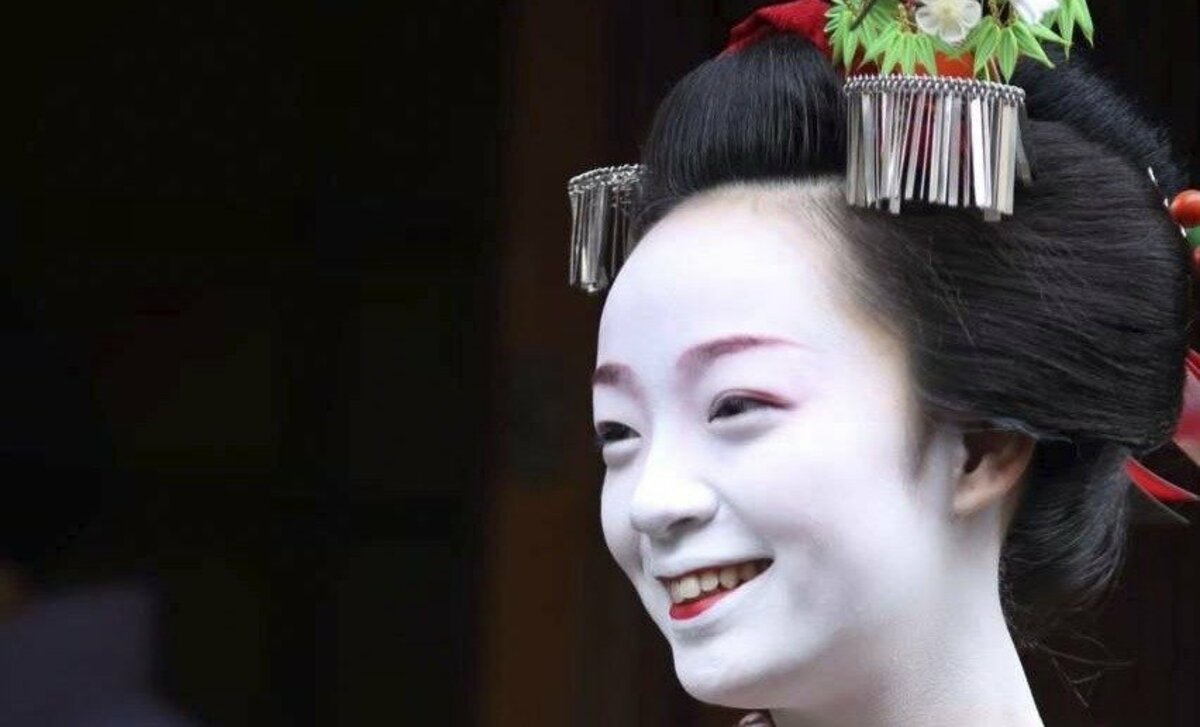
TOKYO – When Kiyoha Kiritaka left Kyoto’s geisha district in 2016, she says she was escaping what she now calls “a system of slavery,” exposing a darker reality behind one of Japan’s most celebrated traditions.
Kiritaka entered the world of geisha as a teenager, drawn by a love of traditional arts. She practiced Japanese dance, the shamisen and tea ceremony, hoping one day to become a fully fledged geisha.
But after just over a year as a maiko, or apprentice geisha, she says she found herself trapped in what she describes as an “extremely abnormal world.”
Her path began in junior high school. Aspiring to become a fashion model, she joined a talent agency and performed in underground idol groups and local shows.
Her interests shifted after she encountered Japanese dance. Watching a master perform at a studio, she recalled being mesmerized by the fluidity of the movements.
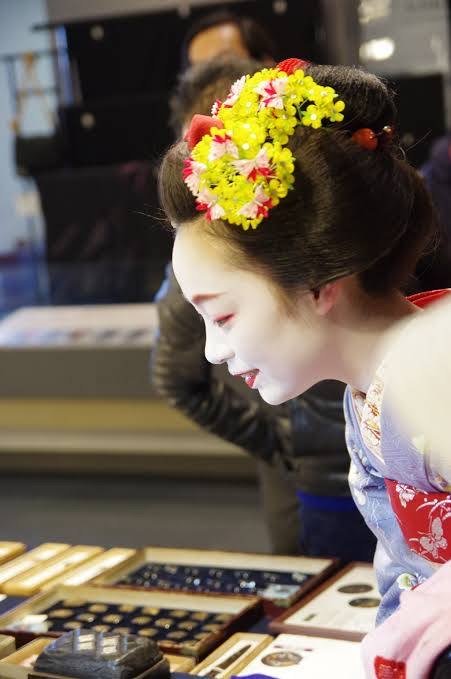
Kiyoha Kiritaka participates in an event showcasing geisha culture at Miyako Messe convention center in Kyoto, March 2016. (Photo not for sale)(For editorial use only)(Photo courtesy of Kiyoha Kiritaka)(Kyodo)
“An almost unbelievable smoothness, like something a real person wouldn’t do,” she said.
In the spring of her final year of junior high school, a man approached her after a recital.
“How about becoming a maiko?” asked the man, a regular customer of the geisha district.
Initially hesitant, Kiritaka said financial difficulties at home made continuing her education uncertain. She decided to pursue the opportunity.
Just before graduating, she joined an “okiya,” an agency that introduces geisha and maiko to clients, and began her training in February 2015. By November, she debuted as a maiko in Kyoto’s Pontocho district.
Geisha districts are known for their historic streets and refined entertainment, where geisha and maiko perform at banquets.
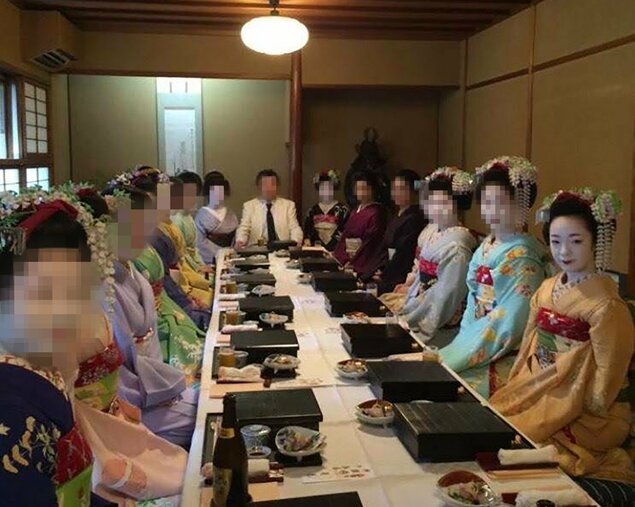
Photo shows Kiyoha Kiritaka (front, R) with customers at a Kyoto restaurant celebrating the debut of fellow geisha apprentices in May 2016. (Photo not for sale)(For editorial use only)(Photo courtesy of Kiyoha Kiritaka)(Portions of this image have been obscured to protect privacy)(Kyodo)
But Kiritaka says the reality she experienced was far removed from that image.
As customers drank, she said, their behavior often escalated into sexualized contact. Touching through openings in kimono was treated as part of the atmosphere, and games at banquets frequently involved suggestive or physical interactions.
She said there was an unspoken expectation that “girls who couldn’t do it would have to quit.”
Kiritaka said she was subjected to repeated harassment, including having her kimono lifted and being touched on her lower body. She also described being forcibly kissed by customers in taxis while traveling between venues.
Despite this, she endured, telling herself that once she had become a maiko there was “no going back.”
A turning point came during a trip to a hot spring with customers, accompanied by other geiko and maiko and a teahouse proprietress.
Kiritaka said she had heard of a custom in which maiko and geiko bathe with customers. In the hotel room, she said, events unfolded in line with those fears.
“There’s no way I can do this,” she recalled thinking. A senior geiko sensed her discomfort and injured herself by banging her head against a wall, bringing the situation to an end.
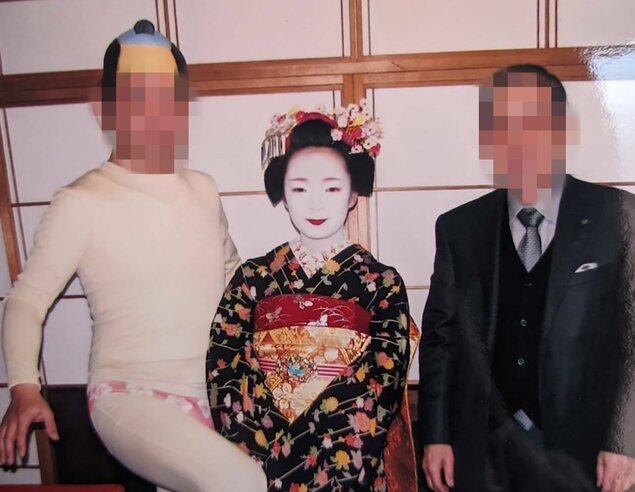
Kiyoha Kiritaka poses for a photo with customers at a teahouse in Kyoto, February 2016. (Photo not for sale)(For editorial use only)(Photo courtesy of Kiyoha Kiritaka)(Portions of this image have been obscured to protect privacy)(Kyodo)
“I thought that if something like this happened again, I wouldn’t be able to escape,” she said, deciding to quit.
By then, more than a year had passed since she entered the okiya. She described a life of near-daily banquets, late nights and only two days off per month.
Restrictions on leaving the house and the demanding schedule left little time to reflect, she said.
Hierarchy within the okiya was strict. Mistakes could result in slaps or objects being thrown, she said, leaving her with bruises. Verbal abuse was frequent.
She also described being confined to a room for nearly eight hours without food, water or access to a toilet.
“I was constantly restrained, my will wasn’t respected, and I had no right to speak,” she said. “I lost track of who I was.”
She left in July 2016.
After quitting, she received a resident tax bill, despite having no recollection of earning a formal salary. During her time at the okiya, she said she received about 50,000 yen a month in what was described as pocket money.
For tax purposes, however, it appeared she had been recorded as receiving wages. She paid the bill without challenging it.
Kiritaka said there had been no employment contract. Instead, the relationship was formalized through a traditional ritual, and she was instructed not to defy her superiors.
When she sought to leave, she said, she was asked to repay 30 million yen, a sum she does not recall borrowing. When she refused, she said the proprietress introduced the possibility of a patron who would pay the amount in exchange for a personal relationship.
She resisted and was eventually allowed to leave without being shown a breakdown of the alleged debt.
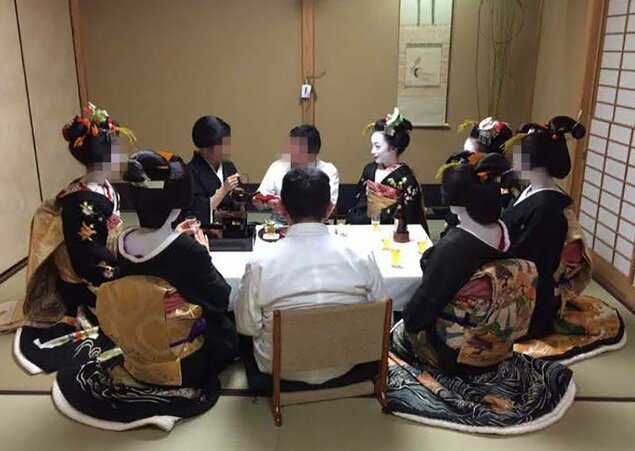
Photo shows Kiyoha Kiritaka at a Kyoto teahouse with customers and the “okiya” proprietress in January 2016. (Photo not for sale)(For editorial use only)(Photo courtesy of Kiyoha Kiritaka)(Portions of this image have been obscured to protect privacy)(Kyodo)
Similar complaints have surfaced in the past.
In 1994, several maiko ran away from their okiya, citing long working hours and corporal punishment. They alleged being slapped, having personal correspondence opened and belongings discarded, and being unable to keep tips earned from customers.
At a press conference, they said they feared for their lives if they remained.
In June 2025, lawyers and academics established a network to examine issues surrounding maiko and geisha district culture, raising awareness of cases like Kiritaka’s and calling for reform.
The Kyoto Traditional Art Foundation, which oversees the city’s geisha districts, said in a written response that there are no formal contracts but that customs are explained in advance, with consent obtained from both the individual and their parents.
It said mixed bathing with customers does not occur and that underage drinking is prohibited, adding that efforts are made to protect maiko from sexual harassment.
Kiritaka and others dispute that account.
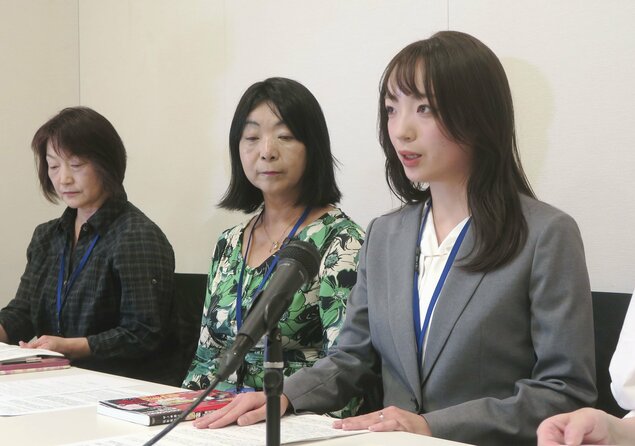
Kiyoha Kiritaka (R) holds a press conference in Tokyo on June 5, 2025. (Kyodo)
She said she continues to receive consultations from current maiko reporting inappropriate touching by customers, including allegations of assault, pregnancy and abortion.
Lawyers involved say elements of forced labor and human trafficking may apply, citing the level of control and lack of freedom described.
Kiritaka spoke at a press conference announcing the network’s launch.
“There are still many people suffering (from sexual abuse),” she said. “The wounds inflicted as a child never heal, no matter how many years pass.”
AloJapan.com