
On a recent trip to Kyoto, Japan, I experienced something rare in American cities: a world shaped by thoughtful design. It made me realize something simple but radical—the people building our world should think like artists.
Kyoto’s environment felt like it had been designed for the human nervous system, especially people with ADHD and anxiety. There was legroom in small spaces. The color palette was calm instead of chaotic. The airport layout flowed naturally instead of feeling overwhelming, and the walkways were wider. Water stations were everywhere, so I did not worry about dehydration, overpriced water, or the impact of single-use plastic on the planet. Public seats were often clean and reclining, with phone and cup holders and a variety of charging cords.
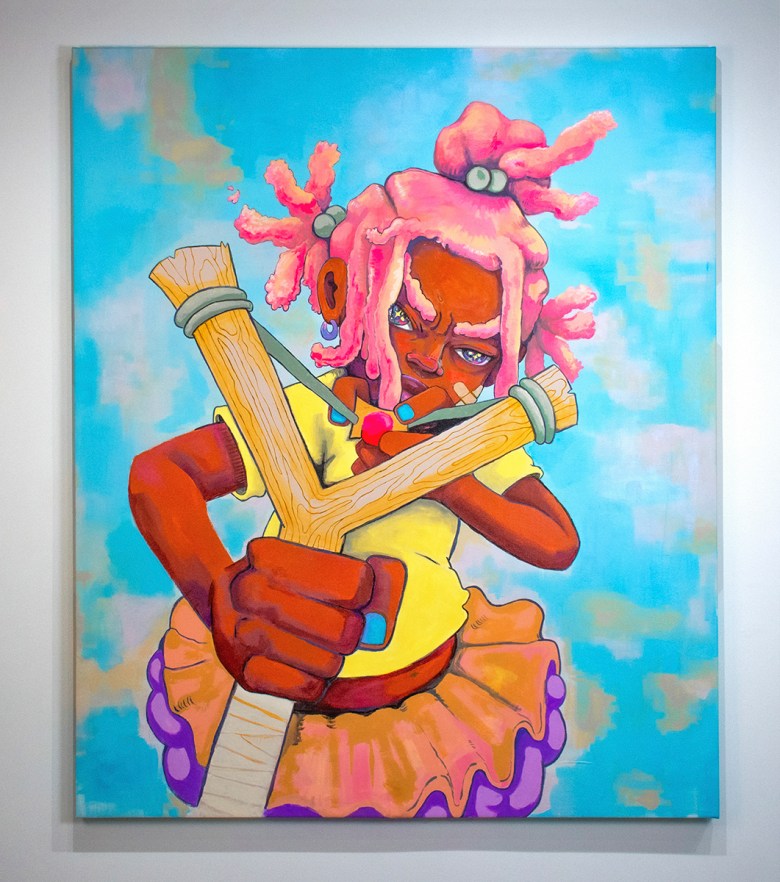 Outta Options Credit: Bianca Pastel
These details may sound small, but together they created something powerful: a sense that the designers of public space cared about the people moving through it. Even without speaking the language, I could navigate easily. Cozy illustrations showed which train to take. The designs were playful, even silly. That sense of whimsy reminded me of nostalgic childhood shows like Blue’s Clues and Dora the Explorer, where it felt safe to explore and discover the world around me. The experience calmed my nervous system.
Returning to Chicago was a shock.
Everything felt hostile to the senses: noisy trains, cramped platforms, dirty stations, confusing public transit layouts. The design didn’t make me feel happy or inspired. Quite the opposite. Being in those spaces is distressing, and it feels like a mission to get out as fast as possible. Moving through the city felt less like living and more like surviving.
Until I went to Japan, I accepted many things about Chicago. I told myself, “Well, I guess I’ll just suffer whenever I go outside.” But going to Kyoto and seeing simple solutions to small problems at home made me realize that good design can solve many social issues.
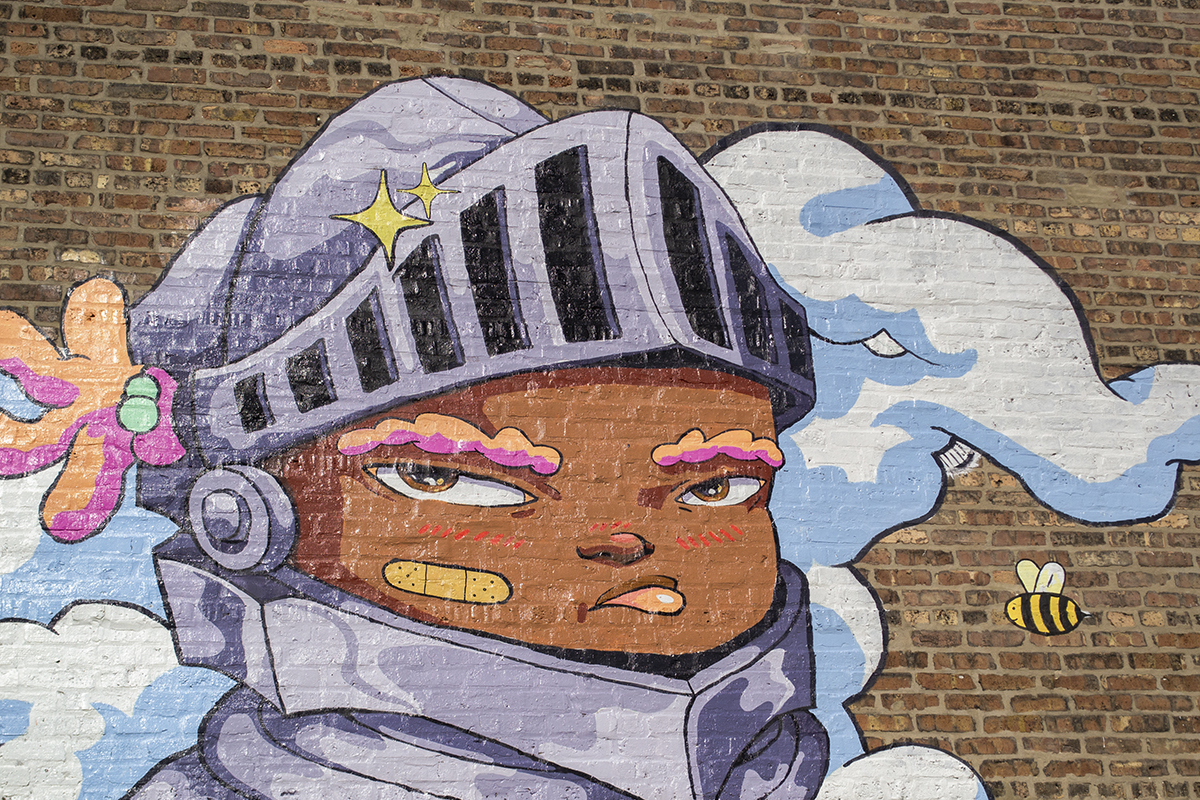
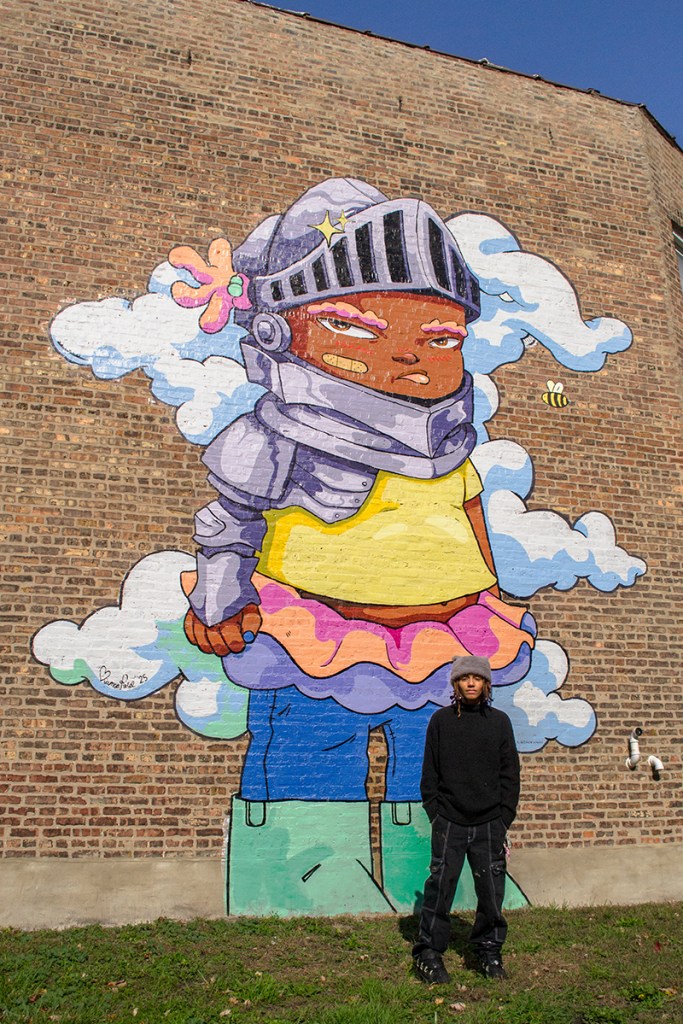 Bianca Pastel’s mural at 63rd and Aberdeen in Englewood features Binky, a central character in her work. Credit: Nicole Misfitx
In many Black neighborhoods, neglect isn’t accidental. The environment feels engineered to exhaust you—liquor stores next to churches next to funeral homes next to broken infrastructure in a chaotic loop. When you grow up surrounded by that design language, you start to believe that disorder is normal. You do not know anything else is possible.
I’m on a quest to change that. If cities shape our imagination, murals can interrupt the story.
In April 2025, I was approached to paint an 18-by-26-foot mural on 63rd and Aberdeenin Englewood. Over the next four months, I sat in community meetings with the residents of the block, walked the neighborhood, attended their block party, and got to know the people who live there.
As I painted in the August heat, neighbors brought me home-cooked meals, watched over me at night, and shared their stories of resilience. I felt the weight of what this space has carried and the resilience of the people who live there. Through conversations with longtime residents and stories shared by photographer, social justice artist, and lifelong Englewood resident Tonika Johnson, who commissioned me to paint the mural, I learned about the deep roots of systemic racism in this neighborhood—how families were scammed out of homeownership in the 60s, and how even today, our people are still fighting for safety, land, and agency.
My contribution, anchored in both history and imagination, is Binky, a character I dreamed up, dressed in full knight’s armor—a protective, magical figure standing strong on this historic block. Englewood reflects the full arc of American urban policy—racial containment, white flight, divestment, and resistance. It is historic because of what was taken and what has been rebuilt anyway.
I believe Black neighborhoods deserve fantasy and a sense of the surreal—not just struggle. We deserve beauty and magic, too. I dream of color, whimsy, and delight flooding our streets, inspiring children and adults alike to dream. Great, creative design has an economic impact and is worth investing in. Just ask Roki Sasaki, who signed with the Dodgers and cited their high-end toilets as a reason why.
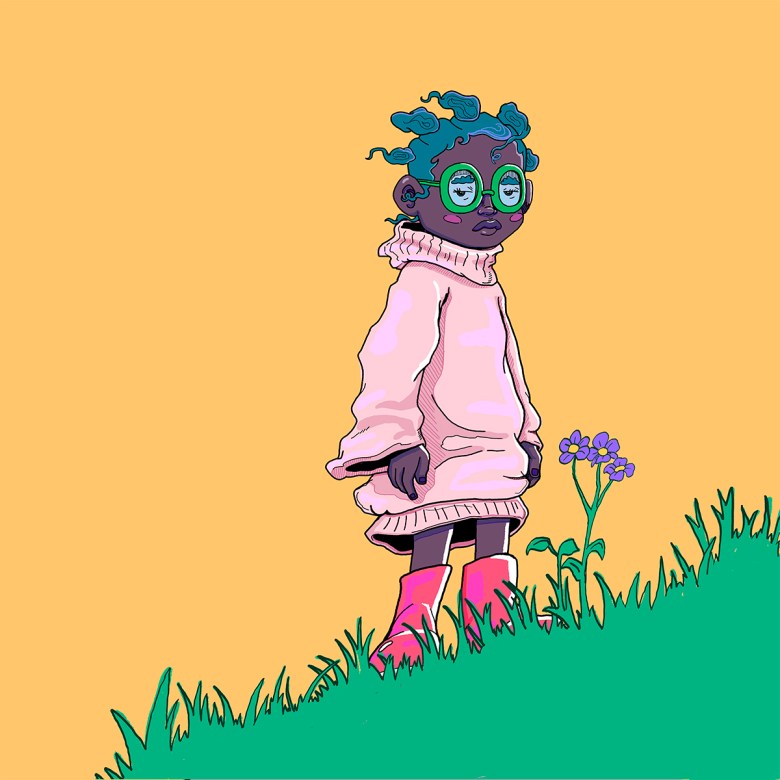 Binky Credit: Bianca Pastel
It would be a mistake to dismiss the design of a toilet as an indicator of the quality of life. Toilet bidets with good lighting and privacy features are included in public transit in Japan. They are clean and well-maintained, with a thoughtful design that suits every body type. In many parts of Chicago, especially when using public transportation, clean restrooms that meet your needs are hard to find. When a city neglects your most basic bodily needs, that communicates exclusion. Clean, well-designed places provide dignity. Neglected design spaces breed shame. Bathrooms are not just infrastructure; they are a psychological reset point.
I’m not romanticizing my time in Japan; I’m using it as proof of what could be when we’re encouraged to explore the world. Across American cities, the visual language of our environments is incredibly strict—boxy buildings, flat shapes, muted colors, repetitive forms. Design has become standardized and unimaginative. In some neighborhoods, it appears as neglect; in others, as sterile uniformity. But in both cases, what’s missing is imagination—play with shape, color, and form that makes a place feel alive.
As a visual artist, I notice how little creativity is applied to these environments. Where is the whimsy, the softness, the play?
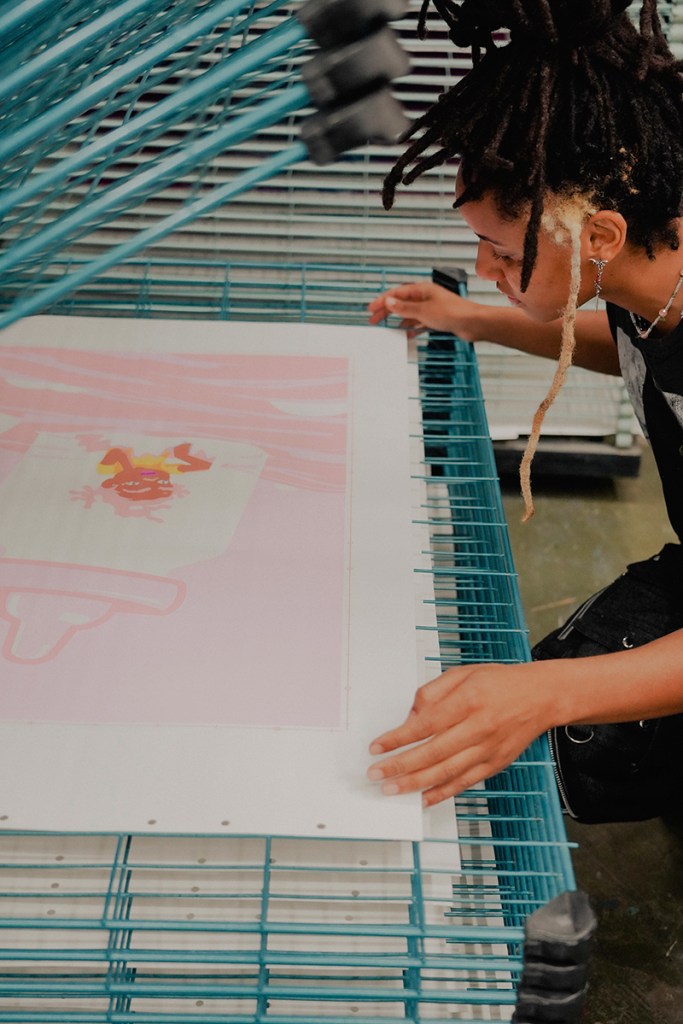 Bianca Pastel Credit: Nicole Misfitx
When I dressed Binky in armor, it was a symbol of protection and of honoring the ongoing battles our communities face. Binky becomes a guardian of this space—a reminder to the children, elders, and everyone passing by that we are worthy of being protected, believed in, and imagined into powerful new futures. This mural isn’t just decoration. It’s a prayer, a shield, and a portal.
If our cities were built with artists’ imaginations, our streets wouldn’t just move people, they would nurture them. And children growing up in places like Englewood wouldn’t just learn how to survive their neighborhoods, they would learn how to dream inside them. That’s the power of art—it can change the world.
Bianca Pastel is a Chicago-based artist whose influences include 90s movies/cartoons, art deco, photography, and music. She has a background in art and design from Columbia College, and her experience spans album cover creation, children’s book illustration, animation, and graphic design.
More in COLUMNS & OPINION
Thoughtful takes from the readers and the writers.
Editor’s note: From defiant kitchens to living archives, this month’s stories trace the cultures of care, resistance, and creativity that surface as the city comes back to life.
April 1, 2026April 1, 2026
The claimed detention story and ensuing media storm show why journalists must slow down—even when the stakes feel urgent.
March 17, 2026March 17, 2026
Growing up in Little Village, Jorge Valdivia’s mother reclaimed her voice through art. Today, he reflects on immigration, gender, and grief against the backdrop of renewed federal immigration enforcement in Chicago, where art is not a luxury but a lifeline.
March 5, 2026March 5, 2026
Eileen O’Neill Burke promised to protect pretrial justice. One year in, her policies suggest a return to the politics of punishment.
March 4, 2026March 4, 2026
Editor’s note: March 2026 Best of Chicago issue
March 4, 2026March 6, 2026

March 2026 reader letter
March 4, 2026
AloJapan.com