
Day 1
Okinawa has a cuisine all its own, and there’s no better place to try it than at Makishi Public Market off of Kokusai Dori, Naha’s main artery. Browse regional specialties—including goya (bitter melon), shikuwasa (a citrus fruit), and purple sweet potatoes—and for breakfast, choose some seafood and have it cooked on the market’s second floor for around $5. If caffeine instead of tempura is more your morning speed, my Naha go-to is The Coffee Stand, which is housed in an old shipping container nearby and serves some of the island’s best espresso and pour-overs.
Next up is Shuri Castle, which was the former palace of the Ryukyu Kingdom during the 14th century and almost completely destroyed during the 1945 Battle of Okinawa. It’s since been reconstructed based on photographs and historical records, and reflects the island’s varied influences: the castle was built using Ryukyuan limestone, and has red lacquer and architectural elements reminiscent of China’s Forbidden City. Once done wandering the grounds, do as we did and head 10 minutes north up winding hills for lunch at Shimujo, which serves steaming bowls of Okinawan soba with slow-cooked pork in an old home designated National Tangible Cultural Property by the government. (Get there by 11:30 a.m., lest they sell out, which has been my experience far too many times.)
Okinawa is known for its unglazed Tsuboya pottery, made using soil in a wood-fired kiln. One of my favorite places to see it being made is Yachimun no Sato, or Yomitan Pottery Village, home to more than 40 artisans. There’s an expansive parking lot at the beginning of the complex, and shops and studios are connected by a path best explored on foot. Potters display their wares on tables in front of their homes, but anyone can wander back to their studios and see them in action. Items, including bowls and curly-maned shisa, which resemble a cross between a dog and a lion and are seen virtually everywhere on Okinawa, start at $5 and run into the hundreds.
For dinner, it’s worth forgoing 58 and heading east for taco rice, a popular Okinawan dish that is pretty much what it sounds like: taco meat, cheese, lettuce, and tomatoes over a bed of rice. My pick for dinner is King Tacos in Kin, which claims to have invented the dish. (Even Anthony Bourdain, who featured the island on Parts Unknown in 2015, was a fan, characterizing it as an “unholy, greasy, starchy, probably really unhealthy delight, a booze-mop-turned-classic.”)
The only real option after a plate of taco rice is to collapse into bed. Stay on the west side at Guesthouse Tama, which is conveniently located next to Nagahama Seika, a factory that makes traditional chinsuko (Okinawan salt cookies).
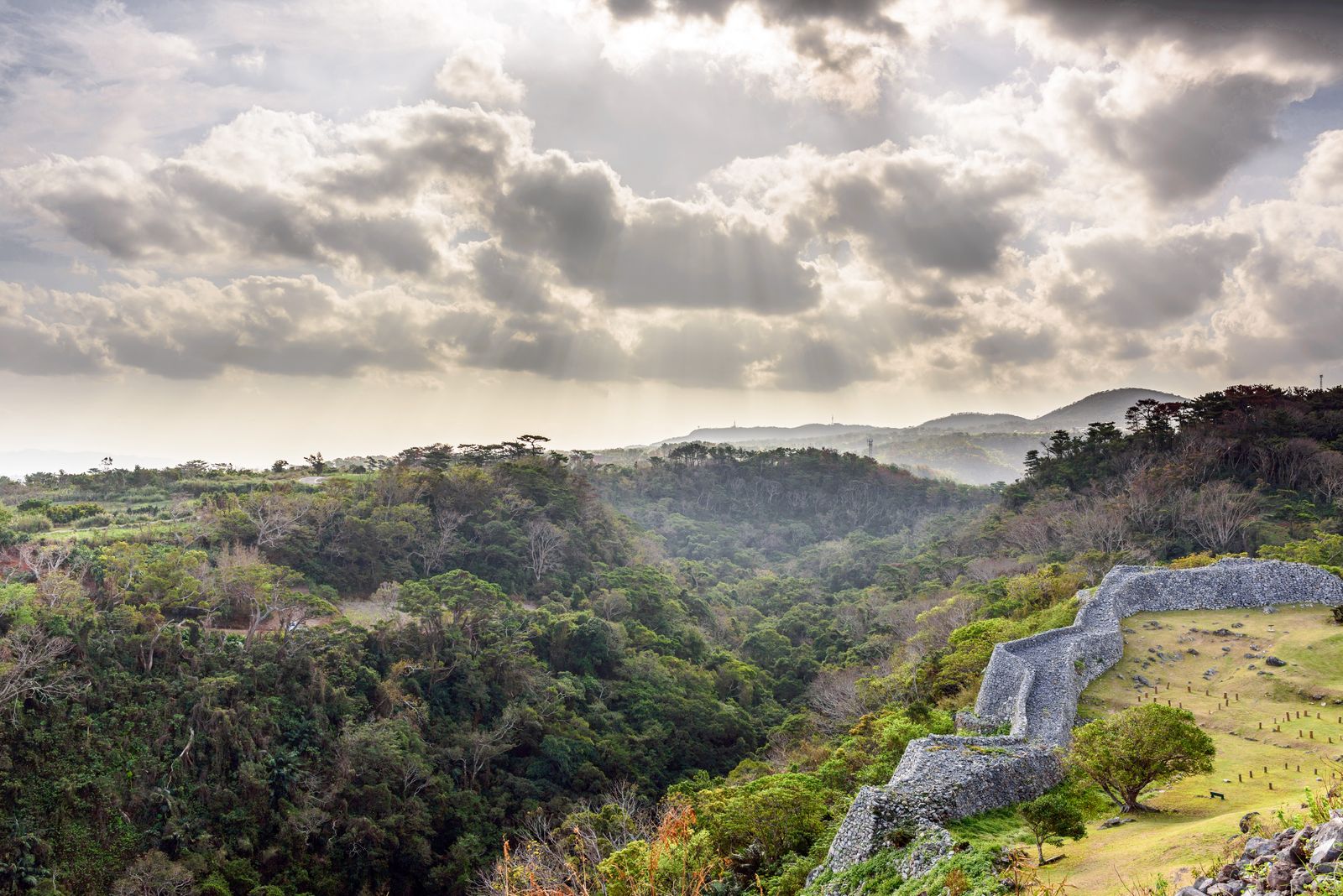
Among other things, Nakijin Castle has spectacular views over the East China Sea.
Getty
AloJapan.com