
Image Credit: Shutterstock.
You’ll be shocked to learn that the United States is home to some of the most acclaimed Japanese gardens in the world outside of Japan.
If you have been waiting for a reason to finally visit one of the United States’ extraordinary Japanese gardens, this spring, with cherry blossoms opening and strolling paths at their most spectacular, is your window.
Across the country, more than 200 public Japanese gardens offer something increasingly rare: genuine stillness. And a remarkable number of them have been recognized by the same experts who study gardens in Japan as being among the finest in the world.
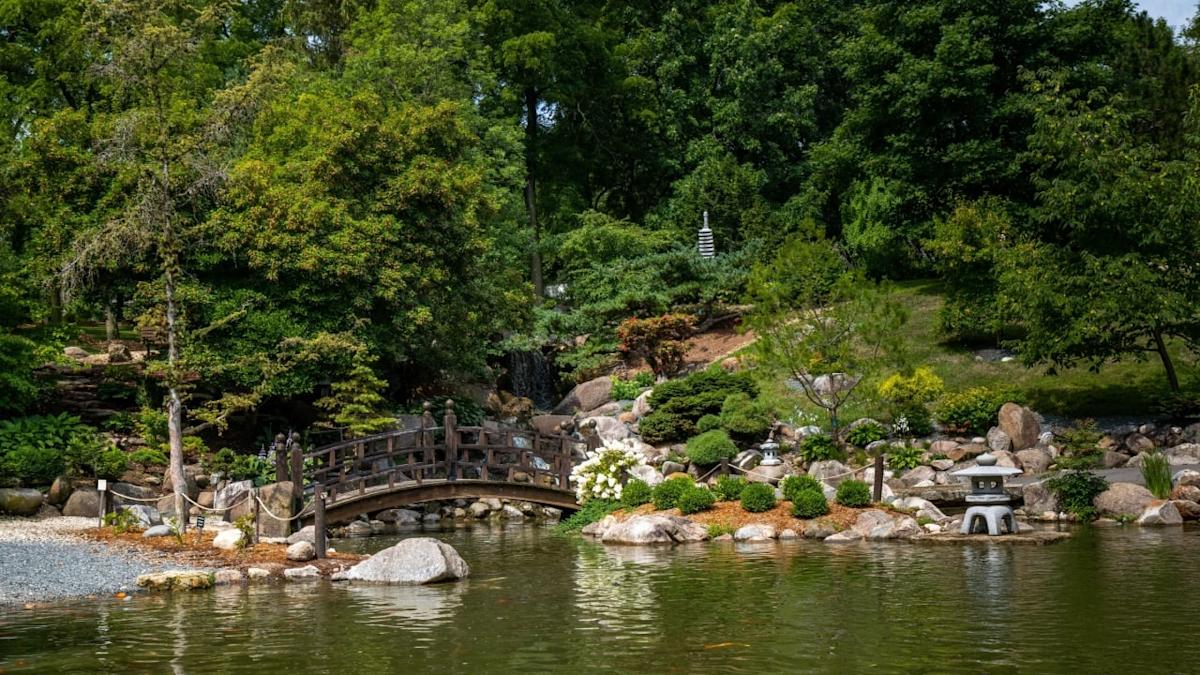
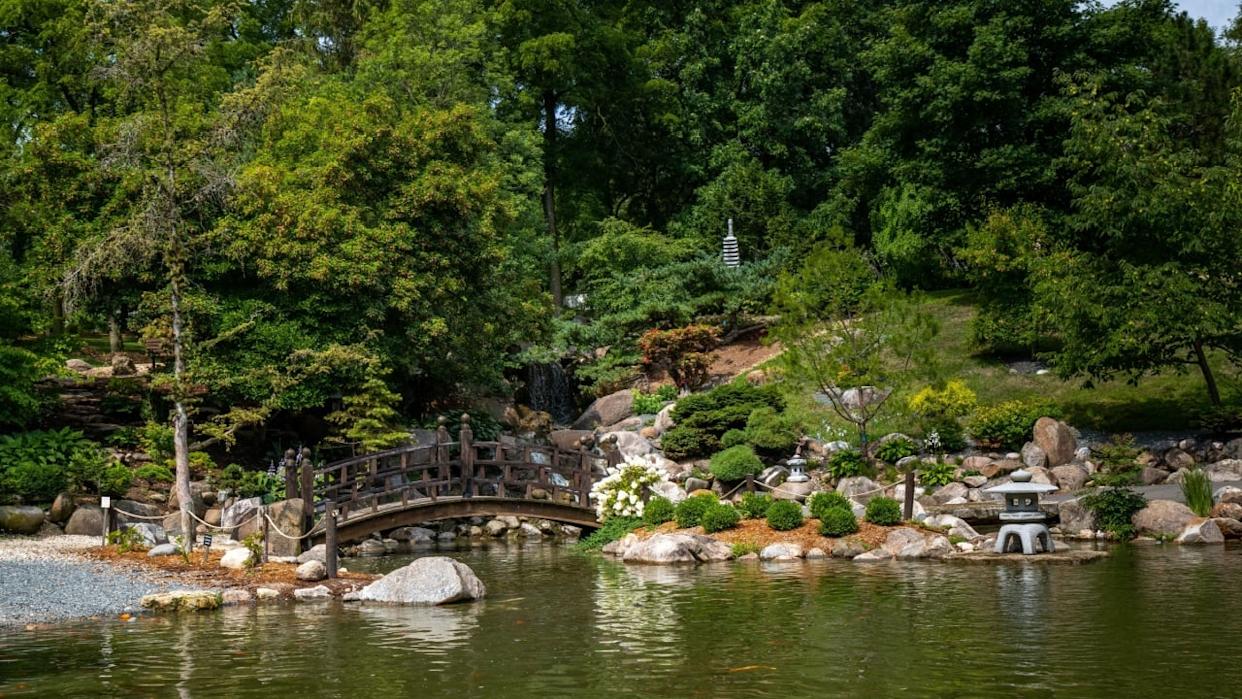
In a 2004 survey of 41 Japanese garden specialists conducted by Sukiya Living Magazine (the Journal of Japanese Gardening), experts were asked to name the highest-quality public Japanese garden in North America. The top spot went to Anderson Japanese Gardens in Rockford, Illinois, a city most travelers have never considered as a garden destination.
You don’t need a passport to find the experience you are looking for. You just need to know where to go.
What Makes an American Japanese Garden Worth Traveling For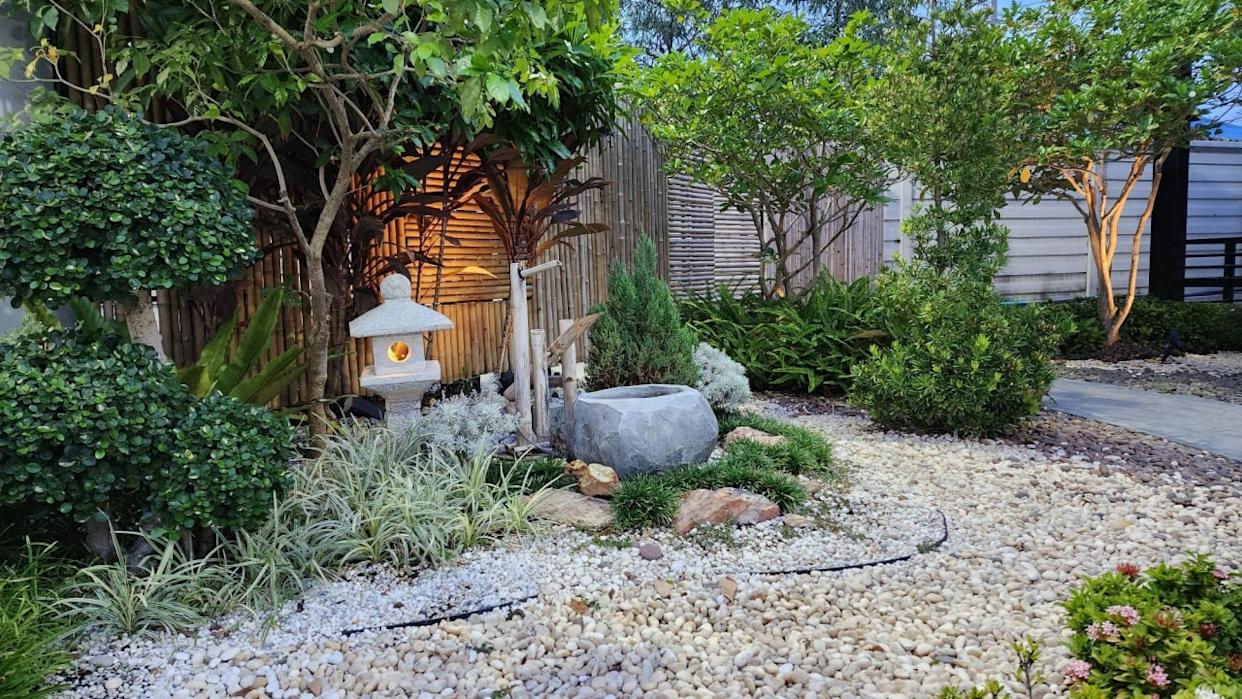
Image Credit: Shutterstock.
Before you visit, a little context makes everything richer.
Authentic Japanese gardens are built around three essential natural elements: water, rocks or gravel, and plants, particularly moss. According to AAA Travel, the guiding principles of a Japanese garden are asymmetry, enclosure, harmony, symbolism, and shakkei – the borrowed scenery technique in which the landscape beyond the garden’s borders becomes part of the composition itself.
Quality, the survey found, had nothing to do with size or fame. Here are 10 incredible Japanese gardens in the United States that are worth visiting this spring.
1. Portland Japanese Garden, Portland, Oregon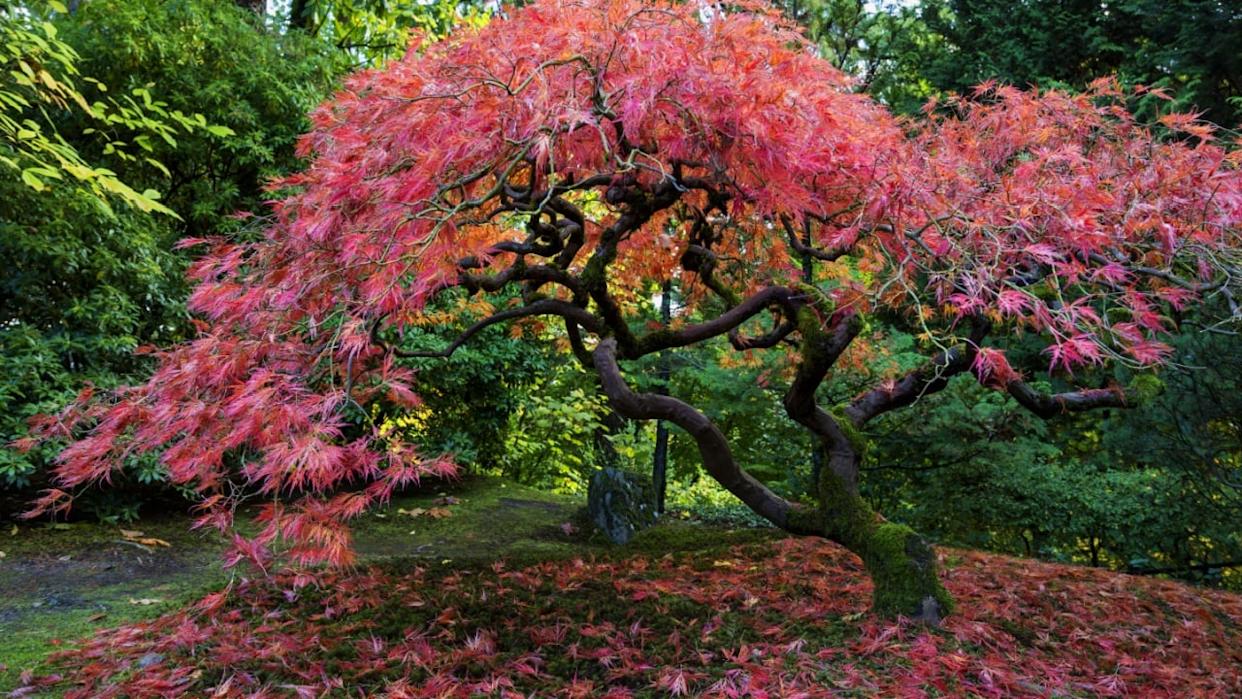
Image Credit: Sveta Imnadze at Shutterstock.
There is a reason Portland’s garden is the first name on every list. Its accolades are not marketing; they are a result of the endorsement of the Japanese ambassador to the United States, who called it “the most beautiful and authentic Japanese garden in the world outside Japan,” according to VisitTheUSA.
Tucked inside Washington Park, the garden spans 5.5 acres and presents five distinct historical garden styles: flat garden, strolling pond garden, tea garden, natural garden, and sand and stone garden. The Cultural Village, designed by celebrated Japanese architect Kengo Kuma, also known for his work on the 2020 Tokyo Olympic stadium, adds a layer of contemporary artistry that makes Portland’s garden feel alive and evolving rather than preserved under glass, per Architectural Digest.
2. Anderson Japanese Gardens, Rockford, Illinois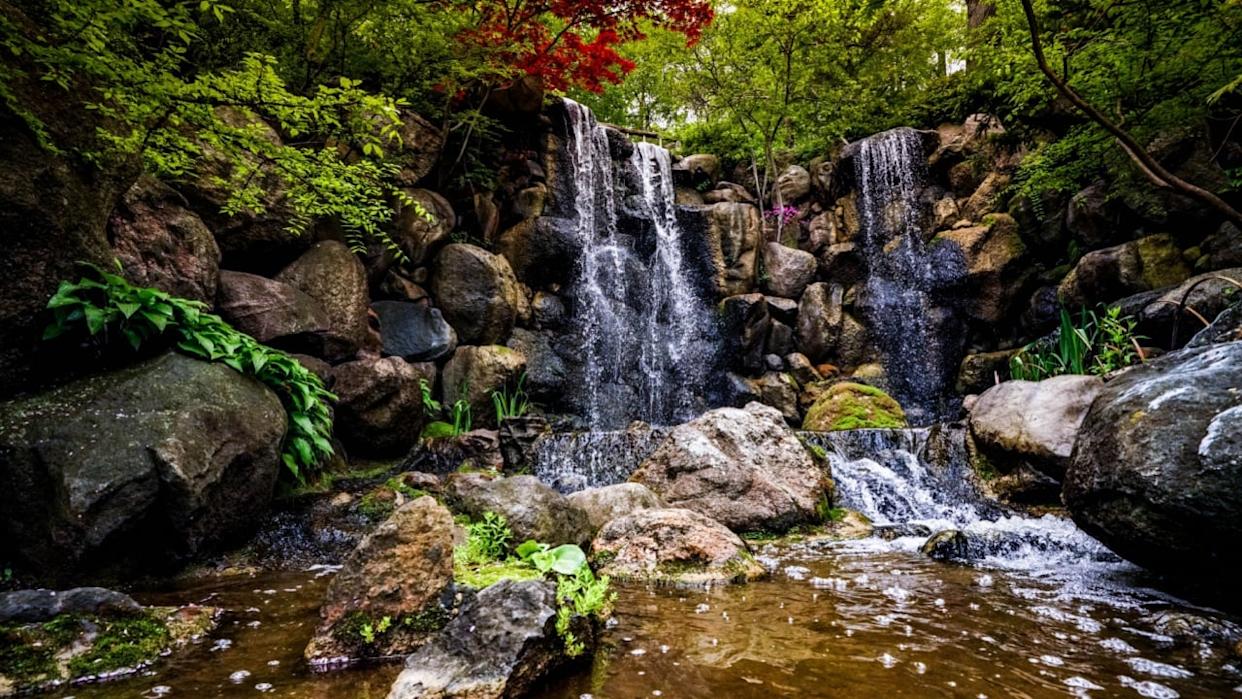
Image Credit: Shutterstock.
Most visitors to Illinois never make it to Rockford, and that is their loss. Anderson Japanese Gardens was ranked the number one Japanese garden in North America by a panel of 41 specialists surveyed by Sukiya Living Magazine, edging out Portland for the top position.
According to Sugimoto USA, the garden’s founder, John Anderson, was himself inspired by a visit to the Portland Japanese Garden; what he built in Rockford is now considered its equal or better by the experts who judge such things. Anderson is open seasonally, May through October, so spring and early summer visits catch the garden at its most luminous.
3. Japanese Tea Garden, San Francisco, California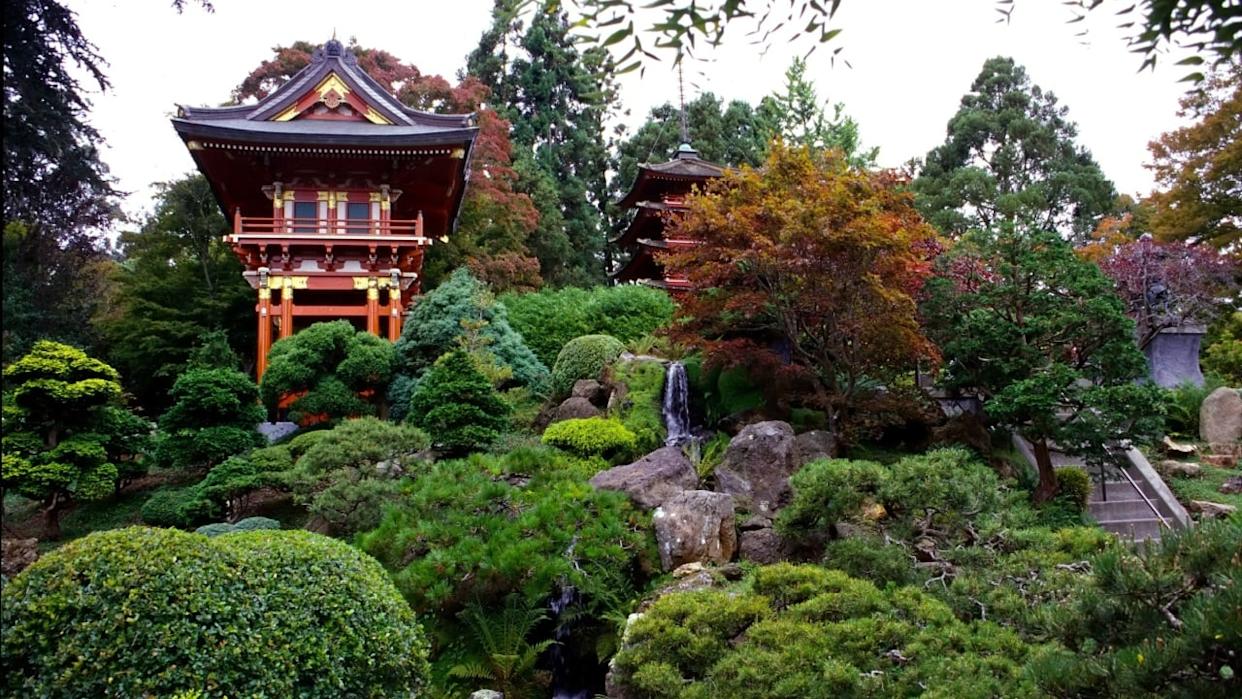
Image Credit: Shutterstock.
The Japanese Tea Garden in Golden Gate Park holds a distinction no other American garden can claim: it is the oldest public Japanese garden in the United States, dating to 1894, according to Sugimoto USA.
Originally designed as a “Japanese Village” exhibit, it was transformed into a true garden by Makoto Hagiwara, who also introduced fortune cookies to the United States, a legacy still honored at the garden’s Tea House today. Classic architectural elements, including pagodas, stone lanterns, and a steeply arched drum bridge, give it a visual density that rewards slow wandering. In March and April, cherry blossom trees scatter pink petals across the paths in a display that draws visitors from across the Bay Area and beyond.
4. Shofuso Japanese Cultural Center, Philadelphia, Pennsylvania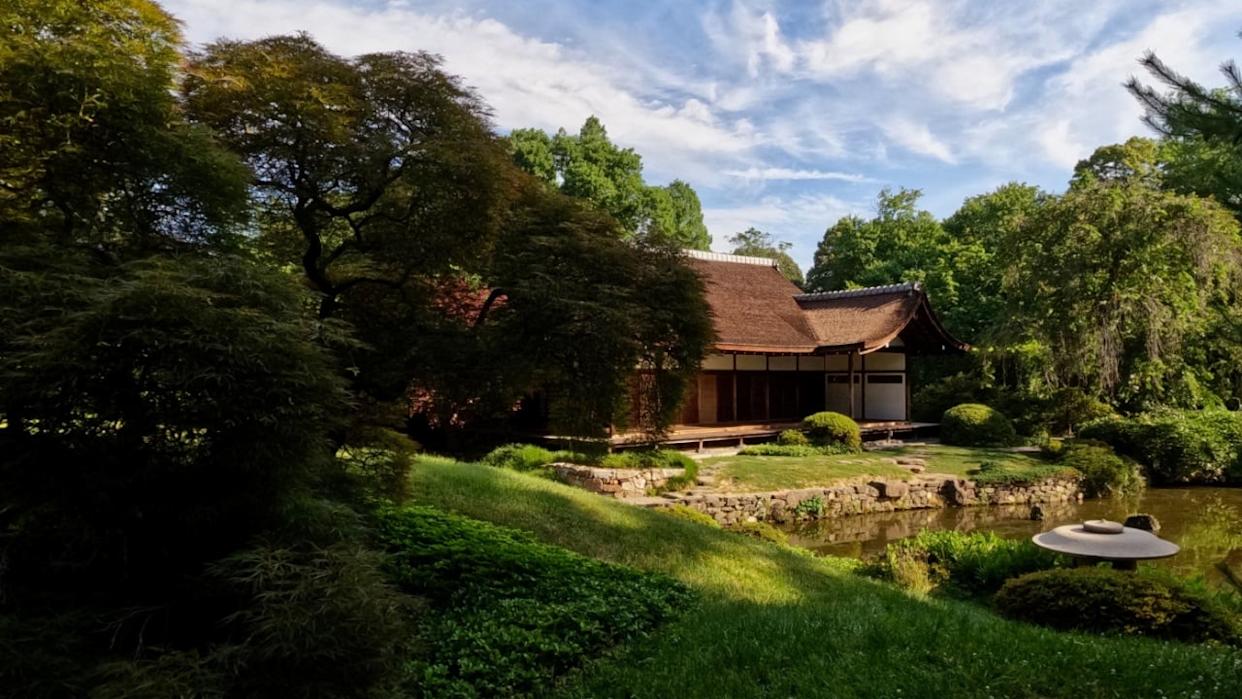
Image Credit: Bryan Littel at Shutterstock.
Shofuso is one of the most under-visited world-class gardens in America, and the gap between its quality and its crowd size is one of the great gifts of the US garden circuit.
According to Fodor’s Travel, the 17th-century-style Japanese house at its center, whose name means “Pine Breeze Villa,” was originally exhibited at New York’s Museum of Modern Art in 1953, then relocated to Philadelphia’s West Fairmount Park. It was built in Nagoya using traditional Japanese materials and techniques, per Sugimoto USA. Artist Hiroshi Senju later installed twenty waterfall murals on mulberry paper inside the house, creating a permanent exhibition that moves with the light.
5. Morikami Museum and Japanese Gardens, Delray Beach, Florida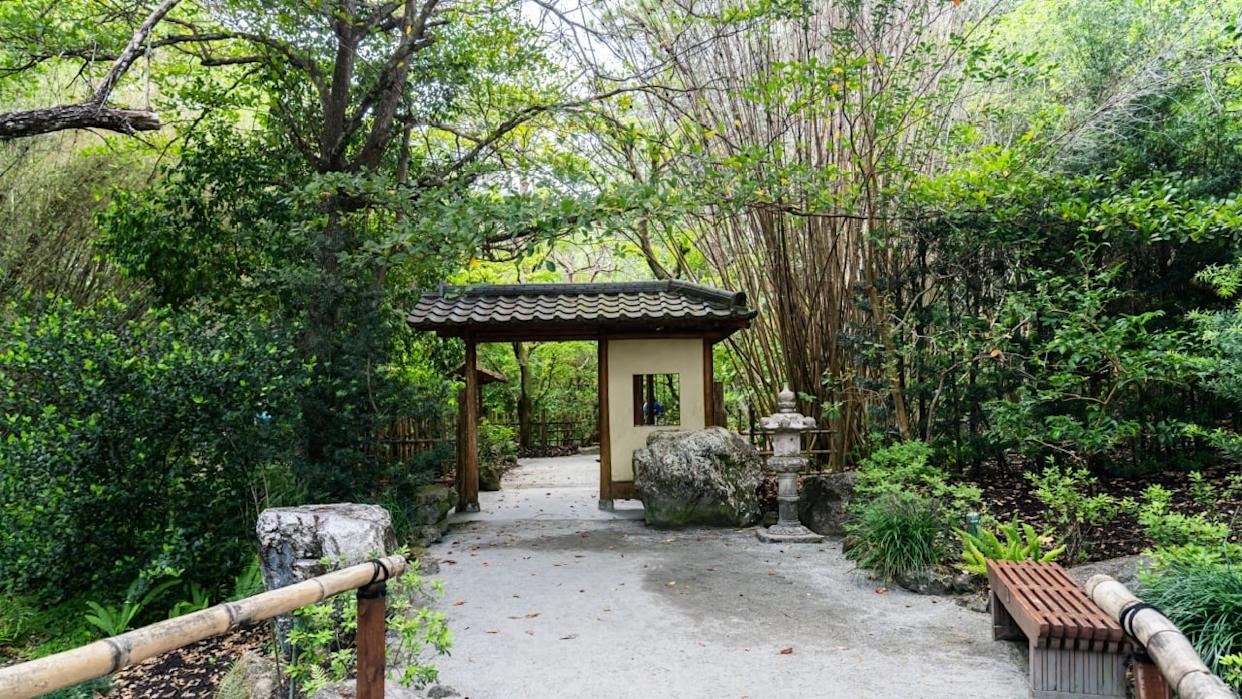
Image Credit: Shutterstock.
South Florida is not the first place most people think of when imagining a Japanese garden, and that surprise is part of Morikami’s appeal. The garden’s backstory is genuinely moving: in the early 1900s, a group of Japanese farmers established an agricultural colony called Yamato in what is now Boca Raton, according to Budget Travel. The colony failed, but its legacy endures in 16 beautifully maintained acres, divided into six distinct gardens, each inspired by a counterpart in Japan, writes Sugimoto USA. You can move from one complete garden world to another in a single afternoon, watching turtles and alligators share the central lake with elegant stone lanterns. The Cornell Café’s bento lunch on the open-air terrace turns a garden visit into a full afternoon of cultural immersion.
6. Missouri Botanical Garden (Seiwa-en), St. Louis, Missouri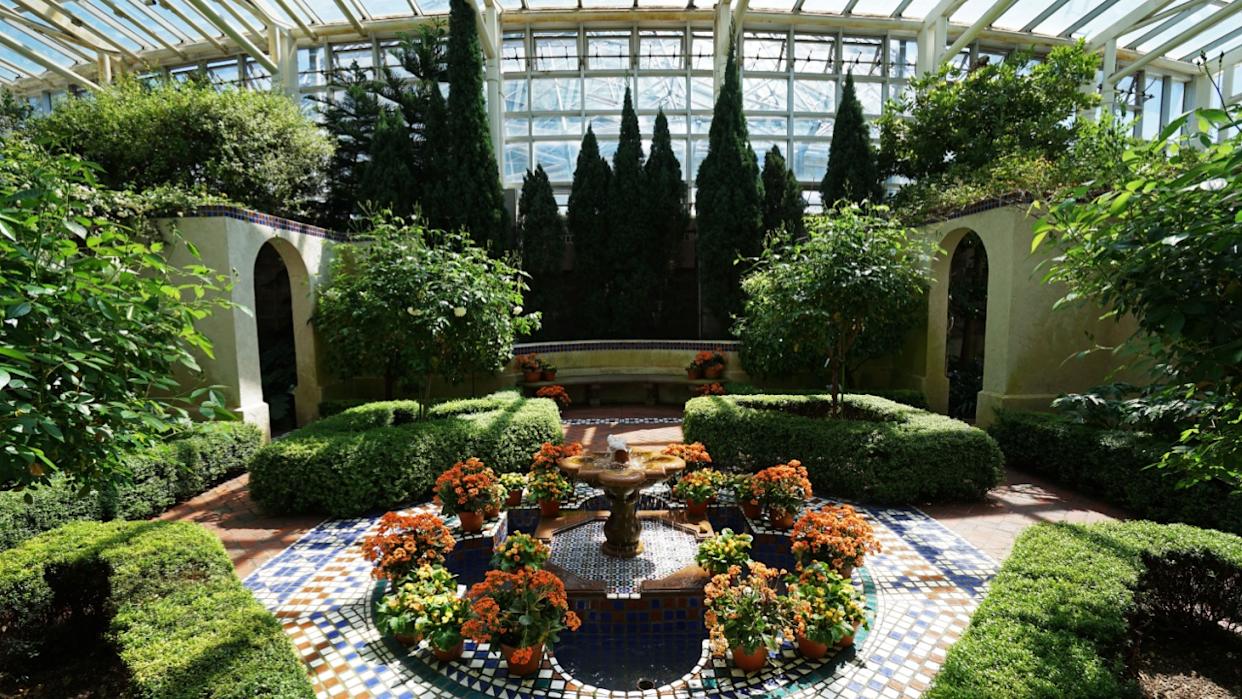
Image Credit: chettarin at Shutterstock.
The Seiwa-en, which translates to “garden of pure, clear harmony and peace,” covers 14 acres within St. Louis’s Missouri Botanical Garden, making it one of the largest Japanese gardens in the United States. According to Fodor’s, its centerpiece is a large lake with four islands, one featuring an authentic teahouse constructed in Missouri’s Japanese sister state of Nagano Prefecture, then reassembled in St. Louis and dedicated in a Shinto ceremony. Fodor’s also notes something wonderful about this garden’s relationship with the seasons: snow is considered a flower in Japanese garden philosophy, and winter visitors here experience a quieter, arguably more meditative version of the space than any spring crowd ever will.
7. Japanese Hill-and-Pond Garden, Brooklyn Botanic Garden, New York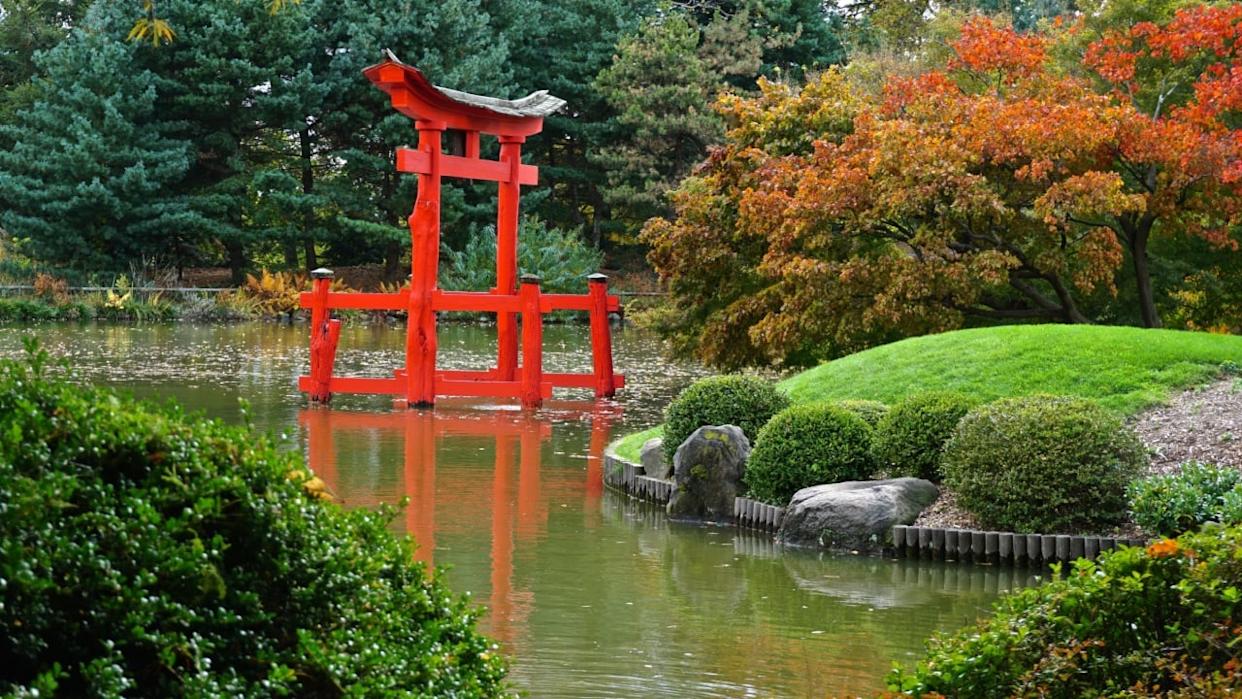
Image Credit: Shutterstock.
Opened in 1915, the Japanese Hill-and-Pond Garden at Brooklyn Botanic Garden is one of the oldest Japanese gardens in the country, according to Sugimoto USA. Designed by Takeo Shiota, it features a dramatic red Shinto torii gate perched over a 1.5-acre pond, modeled after Japan’s famous Miyajima Gate, per Budget Travel. A winding path reveals a five-tiered waterfall along the way.
Every spring, the garden hosts the Sakura Matsuri festival, a two-day celebration of Japanese culture that includes tea ceremony demonstrations, Taiko drumming, and the Cherry Esplanade at full bloom, where 27 species of cherry trees cover the walk in petals ranging from white to deep pink.
8. Bloedel Reserve, Bainbridge Island, Washington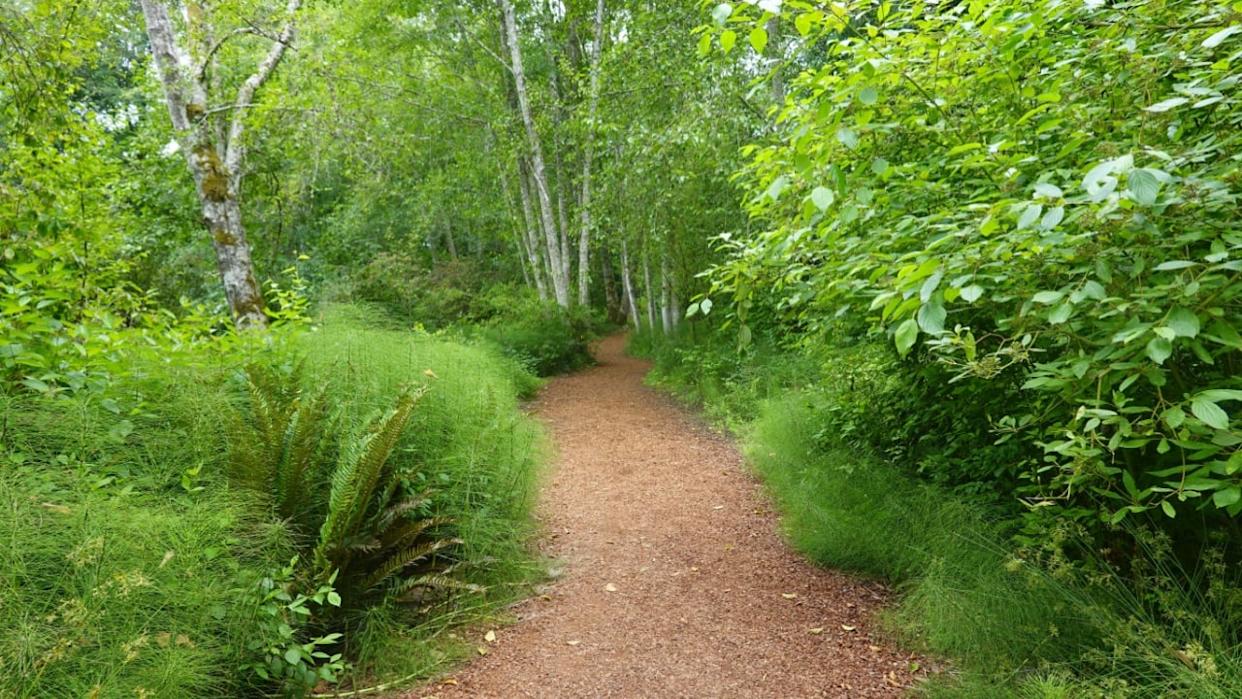
Image Credit: Shutterstock.
Getting to Bloedel Reserve requires a ferry ride from Seattle to Bainbridge Island, and that short crossing across Puget Sound is the first act of the experience. The garden itself, according to Fodor’s, was planned without drawings by Seattle nurseryman Fujitaro Kubota for the Bloedel family, a detail that says everything about its deeply intuitive, unhurried character.
Its most remarkable living specimen is an approximately 170-year-old Laceleaf Japanese Maple, imported directly from Japan by Kubota. Standing beside a plant that has been growing since before the Civil War, in a garden that was shaped by feel rather than blueprint, has a way of resetting your sense of time entirely.
9. Japanese Friendship Garden (Ro Ho En), Phoenix, Arizona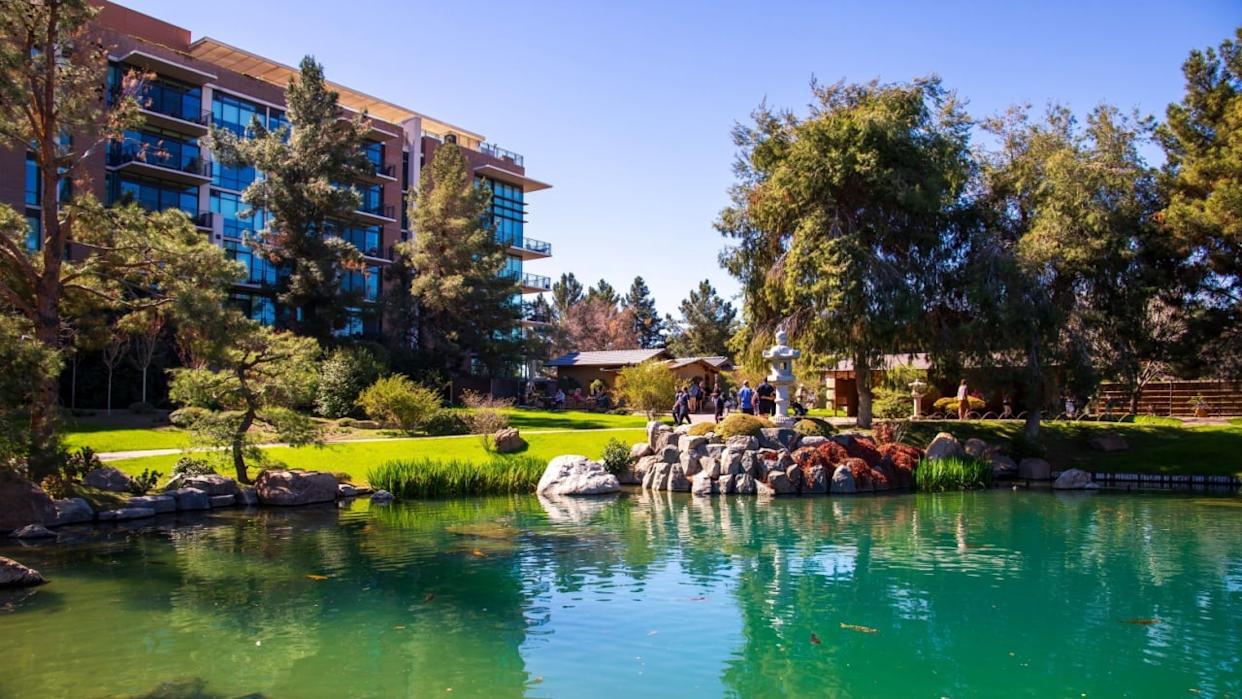
Image Credit: Marcus E Jones at Shutterstock.
Arizona may seem like an unlikely home for a Japanese stroll garden, but Ro Ho En, the Japanese Friendship Garden of Phoenix, is a genuine standout. According to Fodor’s, the garden began as a cooperative project between Phoenix and its Japanese sister city, Himeji, which donated all of the decorative elements. The name itself is a poem: Ro means heron, Ho refers to the mythical phoenix, and En means garden.
The garden’s strolling path uses the miegakure (hide-and-reveal) principle, offering a new vista at every turn. Aikido sessions and moonlight meditation are scheduled multiple times a year, making Ro Ho En one of the most programmatically rich gardens on this list.
10. Valley of the Temples, Kaneohe, Oahu, Hawaii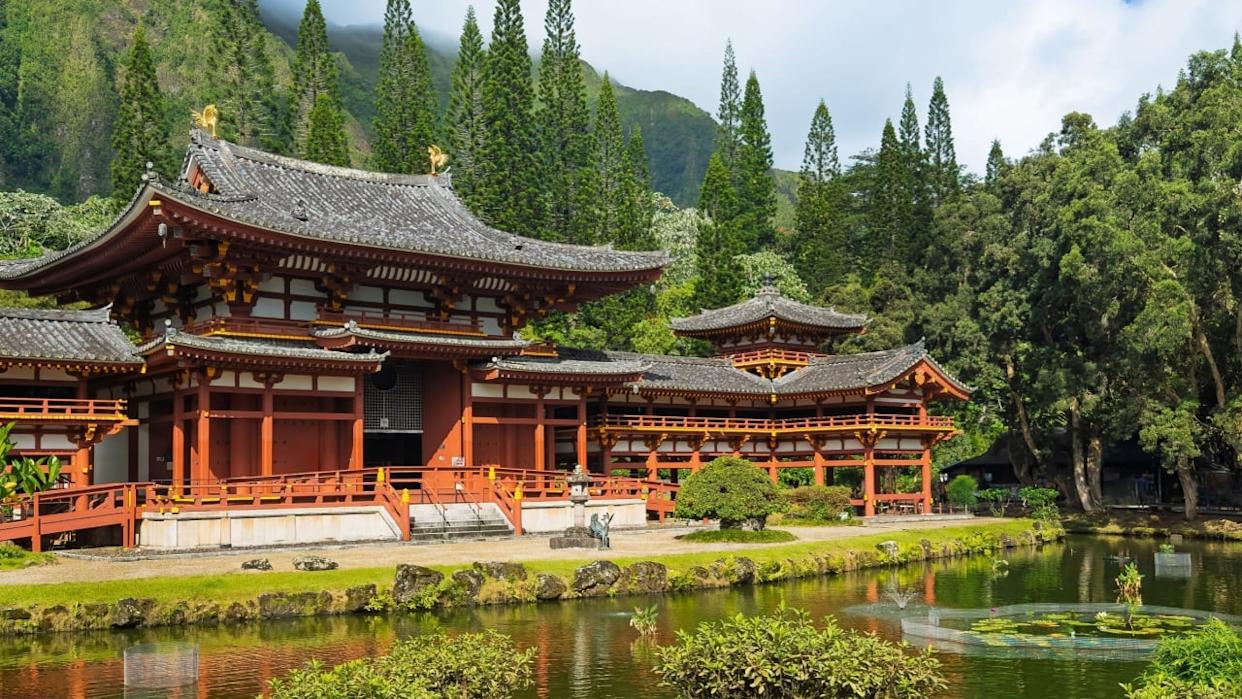
Image Credit: Claudine Van Massenhove at Shutterstock.
Valley of the Temples Memorial Park in Kaneohe sits at the base of the Koʻolau Mountains and contains the Byodo-In Temple, a smaller replica of its 900-year-old Japanese namesake, constructed in 1968 to commemorate 100 years of Japanese immigration to Hawaii, according to Fodor’s. The reflection pond is full of Japanese koi, peacocks roam the grounds, and the entire setting, backed by dramatic volcanic cliffs, creates a backdrop that stops visitors mid-step. It is open to all faiths, and the grounds are free to enter, making it the most accessible Japanese garden experience in the Hawaiian Islands.
The Gardens Are Already Waiting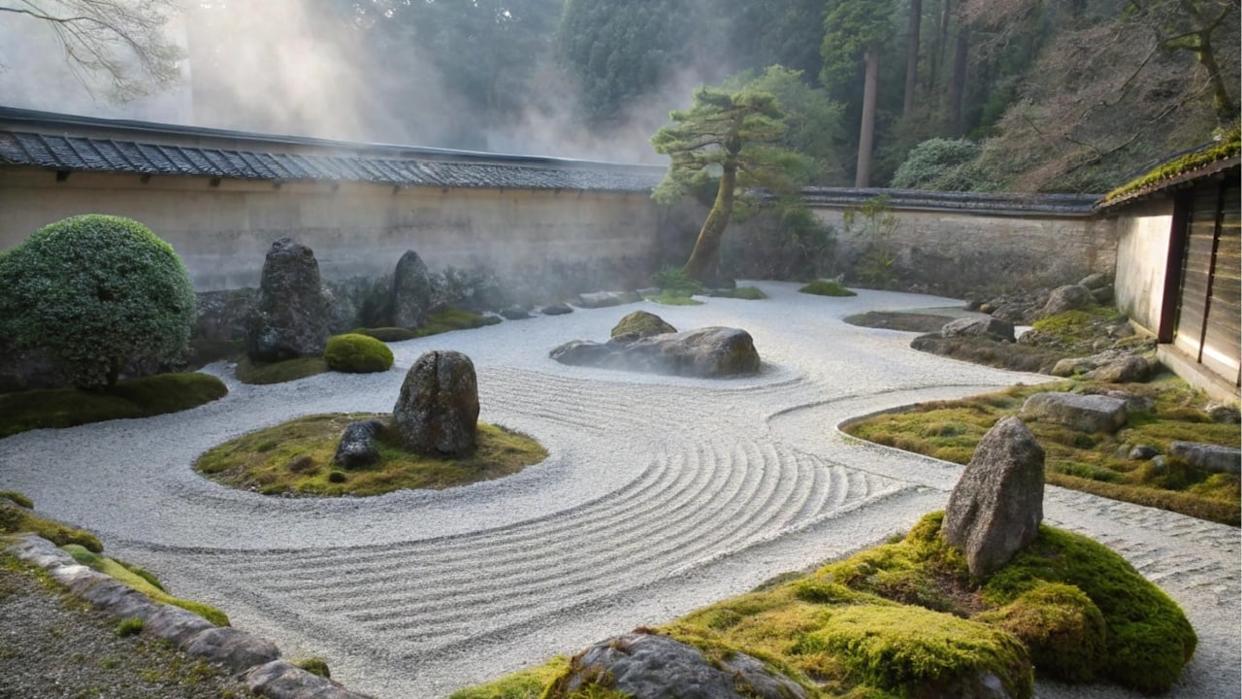
Image Credit: Shutterstock.
From the oldest garden in San Francisco to an expert-ranked masterpiece in the middle of Illinois, America’s Japanese gardens represent one of the most underappreciated collections of living art in the world. Spring is generous but brief; the cherry blossoms don’t hold, and the strolling paths fill up quickly once word gets out. Pick one garden from this list, clear a weekend in March or April, and let it surprise you.
Read More
Do these 12 raised garden bed tasks before March ends, or lose your head start
12 vegetables to direct sow in the garden right now in March
AloJapan.com