
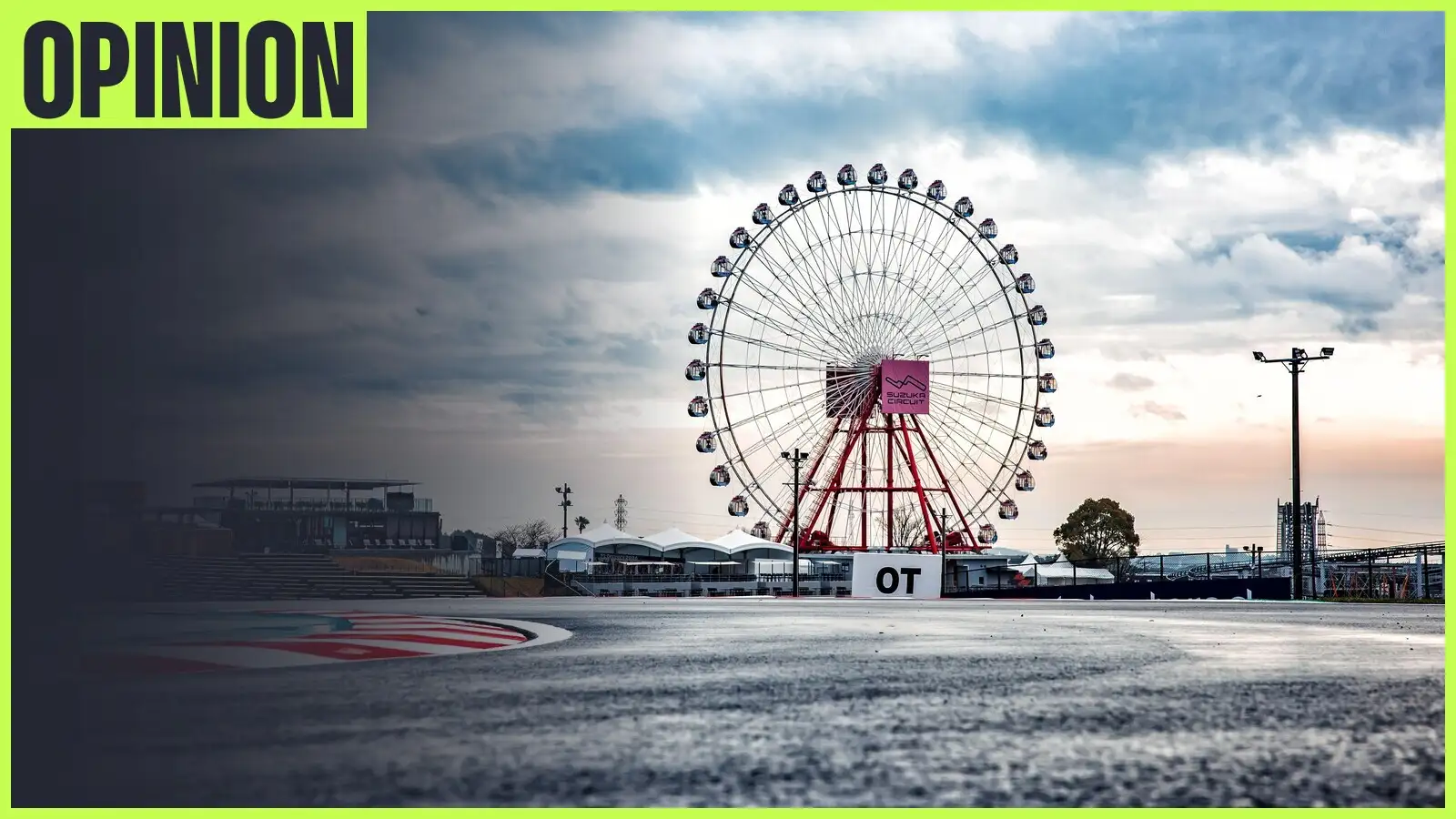
A change to the energy management regulations for qualifying at the Japanese Grand Prix is subtle, but significant.
During Saturday’s all-important session, drivers will have a maximum of 8 MJ of energy they can recover as the sport moves to reduce the need for energy management on a qualifying lap.
A small Japanese GP qualifying tweak signals something bigger for F1 2026
Want more PlanetF1.com coverage? Add us as a preferred source on Google for news you can trust.
Two races into the all-new F1 2026 regulations and a change has been made.
Comments from drivers and feedback from fans have been almost deafening in their united disdain at the new style of racing, at least as far as the single-lap spectacle goes.
One of the key elements of qualifying has always been that it’s a single lap against the clock, an all-out attack with no compromise or concession.
Until this year, when energy management requirements make it more efficient to lift and coast, or roll through a corner that could easily be taken at top speed.
Qualifying has become a resource management exercise in a way it has never been before.
For many, that hasn’t sat well, and they’ve made their opinions clear.
And to its credit, Formula 1 as a collective has listened. Ahead of the Japanese Grand Prix, the FIA announced that energy that can be harvested over a single lap will be reduced from 9 MJ to 8 MJ.
That reduction will mean less lift and coast, less time off the throttle, less superclipping. Put another way, more raw aggression and outright attack.
The flipside is it also likely means slower overall laptimes, a point Oliver Bearman pointed out when he spoke with the media on Thursday.
“It’s just making us even slower,” declared Haas driver Bearman.
“On one hand, we don’t have to do any lift-and-coast anymore, which is probably a bit better for us, but we still have to recharge the energy.
“And we spend a lot of time just with no energy, because we’re losing one megajoule compared to what we had on the sim.
“I think there’s better ways of achieving the same thing. If we could harvest at negative 350 kilowatts while on full throttle, I think it would make everyone’s lives a bit easier, but this is also a solution, I guess.”
Even still, it must be considered a win for the fans because, although laptimes will likely suffer, the spectacle to the naked eye (as opposed to the stop watch) should be positive.
But there’s a far bigger win to acknowledge.
Throughout the opening weeks of these new regulations, we have been repeatedly told to remain patient and give things time to settle down.
We were told that, should changes be needed they would be made, but let’s first understand the product we have before making a rash move.
The cynics may have dismissed it as rhetoric, a way of kicking the problem down the road until everyone gives up and the problem goes away by default.
Instead, the sport has come together in a comparatively rare moment of unity as the F1 Commission voted through the change for this weekend.
The F1 Commission is a key decision-making body when it comes to the sport’s regulations, with its governance laid out as part of the Concorde Agreement.
There are different voting structures in place depending on what it is that is placed before the Commission, but in this instance, because the change related to the current season, it required unanimous approval.
It’s an important distinction, as this is not the FIA introducing a Technical Directive, which is effectively a reinterpretation of a regulation, but not a change to the rules themselves.
This time, the 11 teams, the FIA, and Formula One Management all voted in favour of a 1 MJ reduction in electrical recovery over a lap in qualifying.
While it may not sound like much, it demonstrates the appetite from within the paddock to tinker with the regulations to get them into the best possible shape.
Technically, it is a comparatively subtle change, but it is not the change itself that matters; it’s the message.
Now, when the sport speaks about reviewing and changing where necessary, it does so from a place of authority, not hypotheticals.
Key changes ahead of F1 2026 Japanese GP
FIA makes late rule change over energy fears at Japanese Grand Prix
FIA makes surprise decision for Japanese Grand Prix as key change emerges
Even the change that has been introduced is reasonable and measured.
The reduction in available energy in qualifying will do little to shape the race, but will offer some insight into what things might look like with that limit reduced more broadly.
Perhaps 8 MJ per lap recovery hits that sweet spot between strong electrical power and a more traditional style of racing.
It’s a small, subtle, and measured move that reinforces the sport’s stated position on these regulations throughout: give them time, be patient, we can tweak as needed – provided that unity holds.
F1 was aggressive with its 2026 regulations, arguably too aggressive.
Already, teams are learning how to better manage the tools at their disposal, but to have flexibility within the rules that might produce a more palatable product in the short term as that development takes place is no bad thing.
Want to be the first to know exclusive information from the F1 paddock? Join our broadcast channel on WhatsApp to get the scoop on the latest developments from our team of accredited journalists.
You can also subscribe to the PlanetF1 YouTube channel for exclusive features, hear from our paddock journalists with stories from the heart of Formula 1 and much more!
Read Next: Drivers warn FIA Suzuka qualifying tweak could make F1 slower
AloJapan.com