
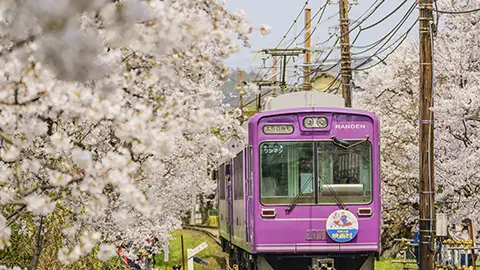
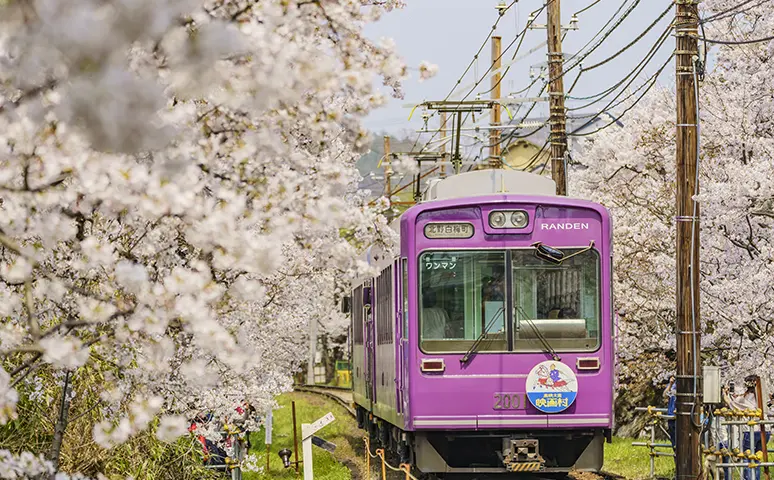
Cherry blossom tunnel along the Kitano Line of the Keifuku Electric Railroad in Kyoto.
Japan offers travel experiences that showcase the beauty of each season, in particular spring scenery never fails to lift the spirits. We spoke with MIYAMURA Kazuo, professor emeritus at Tokyo University of Science and an expert on rail travel in Japan, about journeys along local train lines where travelers can fully savor the feeling of spring.
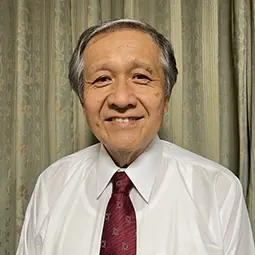
MIYAMURA Kazuo
Professor emeritus at Tokyo University of Science. Holding a Doctor of Engineering degree from the University of Tokyo, he has appeared on NHK’s Radio Midnight News with Tecchan-sensei no tabi no susume (“Dr. Tecchan’s Travel Recommendations”) and is known as a train enthusiast. His major publications include ‘Noritetsu’ kyoju no tokoton tetsudo tabi (“Professor Noritetsu’s Complete Railway Journey”) (Ushio Publishing Co., Ltd., 2021) and Zero kara manabu genso no sekai (“Learning the World of the Elements from Scratch”) (Zero kara manabu series, Kodansha Scientific Books, 2006).
Japan can be explored extensively by rail. From your experience with zensen kanjo—traveling every single line in the country—what would you say are the defining characteristics of Japanese railways?
My fascination with rail travel began with the “Good Journey Challenge 20,000 Km,” a campaign run by Japanese National Railways1 (the predecessor of today’s JR Group) in 1980 that ran for about 10 years. The initiative encouraged participants to ride a total of 20,000 kilometers by train, mastering timetables to complete zensen kanjo. Its unique appeal sparked my passion for railways when I was a university student.
As the campaign suggested, in 1980 Japan’s railway network already stretched over 27,000 kilometers, and today it is said to exceed 30,000 kilometers. Japan’s long north-to-south archipelago, comprising the four main islands of Hokkaido, Honshu, Shikoku, and Kyushu, is connected by rail lines via bridges and undersea tunnels, allowing travelers to journey across the islands entirely by train without switching to other modes of transportation.
The core of this extensive railway network is the high-speed trunk lines known as the Shinkansen (“bullet trains”), which connect Japan’s major cities. From Tokyo Station, the starting point of the East Japan network, four Shinkansen lines depart: the Tohoku–Hokkaido Shinkansen heading north, the Joetsu Shinkansen and Hokuriku Shinkansen toward the Sea of Japan side, and the Tokaido Shinkansen heading west toward Kyoto and Osaka. From Shin-Osaka Station, the western terminal station of the Tokaido Shinkansen, two more lines extend further west: the Sanyo Shinkansen and the Kyushu Shinkansen.
By skillfully connecting these trunk lines, travelers can journey from the northernmost city of Hokuto, a city just north of Hakodate in Hokkaido, to the southern city of Kagoshima in Kyushu, a distance of roughly 2,300 kilometers, in as little as 12 hours. This level of convenience for the movement of people and goods is one of the proud hallmarks of Japan’s railway system. Looking ahead, the opening of Linear Chuo Shinkansen, which will reduce travel time between Tokyo and Osaka, two of the country’s busiest hubs, from about two and a half hours to roughly one hour, is expected to further enhance Japan’s high-speed railway network.
Another notable feature of Japanese railways is their punctuality. While on-time operation is taken for granted by Japanese passengers, it often surprises visitors from abroad. Indeed, travelers greatly appreciate trains that arrive and depart on time, but this punctuality can sometimes create challenges. For example, in my own experience, taking extra time to photograph a train can leave me boarding just moments before departure. Even in such cases, Japanese trains do not wait—they close their doors promptly and depart on schedule, so travelers should take be mindful of the time.
While Japan’s main lines continue to expand and improve, many local lines—branch lines off the main network—face the threat of closure. Yet some lines have found ways to reinvent themselves by emphasizing their unique appeal. Could you tell us about the attractions of traveling on local lines that can only be experienced firsthand?
Japan has a large community of railway enthusiasts, and there are various ways to enjoy the experience. Some, known as nori-tetsu, take pleasure simply in riding trains. The term nori-tetsu comes from the words nori (“to ride”), and tetsu, which is short for tetsudo (“railway”). Others, called tori-tetsu (tori means “to take a photo”), capture trains and the surrounding scenery in photographs (See “Railway Photographer NAKAI Seiya on the Attraction of Railway Photography,” in HIGHLIGHTING Japan May 2026 issue). There are also collectors, or shushu-tetsu (shushu means “to collect”), who enjoy gathering tickets, boxed meals, and other railway merchandise and memorabilia. In short, the ways to enjoy railways are as varied as the enthusiasts themselves.
For me, the true joy of rail travel lies in simply being on the train. Given the same fare, I prefer to spend more time riding a local line, enjoying the changing scenery along the way, rather than focusing solely on reaching the destination efficiently. On routes through the mountains, travelers can view the outline of mountains and valleys, while coastal lines offer a different character depending on whether they run along the Pacific or the Sea of Japan.
Some travelers enjoy combining rail travel with drinking alcohol, a pastime known as nomi-tetsu (nomi means “to drink”), but for me, one of the pleasures of riding trains is enjoying ekiben (from eki, meaning “station,” and ben, from bento, meaning “boxed lunch”), boxed meals purchased at station shops or on board the train, and carefully collecting their wrapping. Many ekiben feature creative presentations, and the ingredients often reflect local specialties. Recommended examples include the herring (nishin) migaki bento at Hakodate Station in Hokkaido, the surf clam rice (hokki-meshi) at Tomakomai Station, also in Hokkaido, and the cod rice (tara-meshi) at Naoetsu Station in Niigata Prefecture, all highlighting the distinctive seafood of their regions.

Herring (nishin) migaki bento (left) at Hakodate Station and surf clam rice (hokki-meshi, right) at Tomakomai Station. Regional ekiben are also one of the pleasures of train travel.
One local line with a distinctive appeal is the JR-West Sakai Line (See “Recommended Trips by Rail in Japan,” in HIGHLIGHTING Japan April 2025 issue), which runs from Yonago Station to Sakaiminato Station in Tottori Prefecture. The line has attracted wide attention for its “Kitaro Train,” featuring characters from GeGeGe no Kitaro, the famous work of Tottori-born manga artist MIZUKI Shigeru. Themed displays of the characters are also placed at stations along the route. A popular ekiben inspired by the series, the GeGeGe no Kitaro Don, is sold at Tottori Station on the JR West San-in Main Line.
Local lines offer various ways to enjoy rail travel, but some of them are facing closure. One such example is the JR Hokkaido Rumoi Main Line, which opened in 1910 and will be discontinued on March 31, 2026. Compared with when I became a railway enthusiast, nearly half of Japan’s local lines have disappeared.
As a rail travel enthusiast, I have reflected on the role of local lines and sometimes feel they do not always complement the convenience of the main network. Because local lines are primarily used by residents for commuting to work or school, train schedules tend to be concentrated at certain times of day. As a result, the number of trains connecting with the main lines is limited, and their overall contribution to the convenience of the country’s railway network is not always sufficient.
To prevent further closures of local lines, attracting more domestic and international tourists is important.In addition, I believe there may be opportunities to strengthen freight transport, as is done on some railways abroad. At the same time, unique local initiatives, such as the Cat Stationmaster on the Wakayama Electric Railway Kishigawa Line in Wakayama Prefecture, showcase the appeal of local lines and help sustain their operations.
Are there any routes you particularly recommend for a spring journey? And are there any tips you keep in mind to make the trip more enjoyable?
When it comes to spring rail travel, few sights are as delightful as cherry blossoms. As Japan’s national flower, cherry trees offer beautiful scenery along nearly every route in the country during their blooming season.
Particularly well known are the cherry blossom tunnel between Narutaki and Utano stations on the Kitano Line, which branches from the Arashiyama Main Line of the Keifuku Electric Railroad in Kyoto; the Natsui Senbon-Zakura (“1,000 Cherry Trees of Natsui”), where thousands of cherry trees line both banks of the river along the Ban’etsu East Line, operated by JR East, from Koriyama Station to Iwaki Station in Fukushima Prefecture; and the cherry blossom scenery around Shin-Fujiwara Station on the Aizu Kinugawa Line of the Yagan Railway, which runs from Shin-Fujiwara Station in Tochigi Prefecture to Aizu-Kogen-Ozeguchi Station in Fukushima Prefecture.
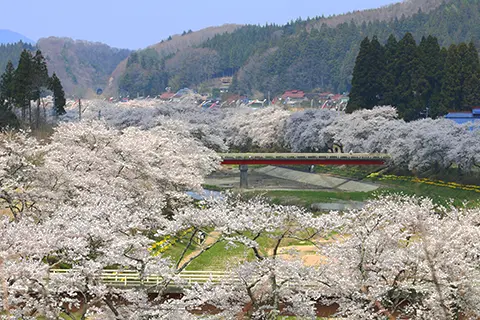
Natsui Senbon-Zakura along the Ban’etsu East Line in Fukushima Prefecture.
While Japan’s cherry blossoms are a must-see, I personally also recommend the peach blossoms. They bloom earlier than cherry trees, so timing is important, but when the trees in the peach orchards flower, the landscape is dyed a soft pink and looks stunning. Along the tracks, fields and embankments are dotted with dandelions and horsetail shoots, offering glimpses of spring’s delicate arrival. Experiencing these scenes through a train window is a pleasure unique to traveling on local lines.
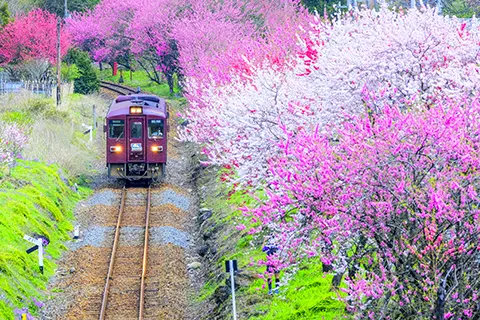
The beautiful flowering peach trees along the line of the Watarase Keikoku Railway in Gunma Prefecture.
Rail travel in spring is also a pleasure when it follows rivers, waterfalls, and scenic valleys swollen with seasonal runoff. The JR Central Minobu Line, which runs between Fuji Station in Shizuoka Prefecture and Kofu Station in Yamanashi Prefecture, parallels the Fuji River for much of its route, allowing travelers to enjoy the river’s gentle flow for about an hour. Along this line, there are also excellent viewpoints for taking in views of Mount Fuji.
On the Watarase Keikoku Line, which runs from Kiryu Station in Gunma Prefecture to Mato Station in Tochigi Prefecture, travelers can enjoy views of the Watarase River valley from the train window. Similarly, the JR Central and JR West Takayama Main Line, connecting Gifu Station in Gifu Prefecture to Hida-Furukawa Station, runs along the Arata, Kiso, and Hida rivers, offering spectacular views of the Hida River Gorge, known as Hisui-kyo.
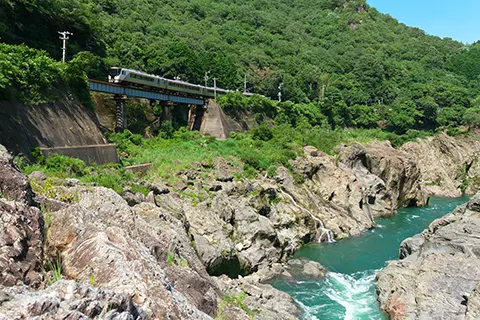
The Takayama Main Line running through Hisui-kyo in Gifu Prefecture.
The true charm of rail travel lies in enjoying the changing scenery outside the window, occasionally savoring a local ekiben, and simply taking in the passage of time. Equally enjoyable is the time spent planning the journey, researching routes, considering options, and thinking through the itinerary.
I always keep my bag packed so I can set out on a trip within five minutes whenever I decide to travel. Traveling light with just a single backpack is my style. A backpack worn on both shoulders makes it easier to navigate stations with many steps and to get on and off trains efficiently. I also recommend bringing rain gear, as spring in Japan tends to be rainy. Because the Japanese archipelago stretches from north to south, spring arrives first in the south and gradually moves north. I encourage travelers to enjoy this seasonal progression by following it along local lines.
1. In 1987, the company was privatized and split into six regional passenger railway companies and one freight railway company, among others.
By TAKADERA Kuriko
Photo: PIXTA
Wakayama Electric Railway’s Kishigawa Line: Continuing the Challenge with the Stationmaster Cat
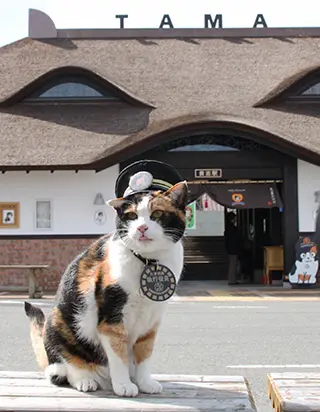
The first stationmaster cat, the late Tama (served 2007–2015).
Photo: Courtesy of Wakayama Electric Railway Co., Ltd.
In 2022, Japan’s railways marked their 150th anniversary. Amid the COVID19 pandemic, as travel was severely limited, the rail industry suffered a major blow. Coupled with long-standing challenges such as depopulation and changing lifestyles, the Japanese government in July 2022 issued a recommendation that the future of certain local lines should be carefully reviewed.
Amid increasingly challenging conditions, some local lines have continued efforts to survive by highlighting their unique appeal. One such example is Wakayama Electric Railway’s Kishigawa Line in Wakayama Prefecture (See “The Station with a Cat as Its Stationmaster: Wakayama Electric Railway’s Kishi Station,” in HIGHLIGHTING Japan February 2022 issue).
The Kishigawa Line connects Wakayama Station in Wakayama City with Kishi Station in Kinokawa City, Wakayama Prefecture. In 2004, the line, then operated by Nankai Electric Railway Co., Ltd., was in danger of closure. Responding to residents’ calls to keep it running, the local government opened public tender for operators nationwide. Among those who stepped forward was Okayama Electric Tramway Co., Ltd., based in Okayama Prefecture. KOJIMA Mitsunobu, then its president, was passionate about maintaining public transportation. To revitalize the Kishigawa Line, he established Wakayama Electric Railway Co., Ltd. in 2005, and the company took over operations in April 2006.
The company quickly began collaborating with local communities on a variety of initiatives to attract passengers. Recognized as a model for local railways’ revitalization efforts, the Kishigawa Line drew widespread interest—and then sparked an even more remarkable movement: the birth of the “stationmaster cat” in 2007.
When publicly owned land around Kishi Station was reorganized, the resident cat “Tama”, left homeless, was welcomed as the stationmaster—this story caught the public’s attention. Domestic and foreign tourists flocked to see the diligent cat at work. The first stationmaster cat, Tama, steadily “rose through the ranks,” and her successor, Nitama, took over the role. Their contributions would go on to play a major part in the survival and revitalization of the line.
Then, in 2025, as the line marked the 20th anniversary of its revitalization, Wakayama Electric Railway began moving toward public-private operation under a fully separated infrastructure-and-service model.1 As of 2026, with stationmaster duties carried on by Yontama, Gotama, and Rokutama, attention is once again focused on the Kishigawa Line’s bold challenge as a local railway.
1. A railway management system in which the local government owns and maintains infrastructure such as tracks and stations, while a private railway operator handles train operations and commercial services.
NEXT
A Spring Journey through Hokkaido on the South Hokkaido Railway
Feedback and Comments

Thank you for your feedback
Your valuable feedback and commnents will be referenced for our future operations.
Close
AloJapan.com