

Thank you for taking the time to speak with us today. I would like to begin by discussing Japan’s demographic challenges. This issue has persisted for the past fifty to sixty years, and projections show that Japan’s population is expected to fall below 100 million by the 2050s. The fertility rate has dropped to 1.15%, and naturally, this will affect the number of families and marriages. In 2020, there were over 500,000 weddings nationwide, but by 2025 the number had decreased to fewer than 240,000. Could you describe the current state of Japan’s wedding industry for our readers, and share what key trends you are observing in your sector?
It is true that the number of weddings nationwide has been steadily declining. However, our parent company, Plan・do・See, continues to maintain a very strong brand presence in the market. Even though the number of ceremonies has fallen overall, our venues remain the top-rated in each region, which means that we are not as severely affected as many other bridal or dress companies.
So there has been a slight decline, hasn’t there?
Yes, Plan・do・See has seen a small decrease, but when we look at the total numbers across our group, we actually see a marginal increase. So while some companies are unfortunately closing, Plan・do・See has managed to remain strong and resilient.
At Treat, we have also expanded beyond wedding dresses to include guest attire and jewelry. This has increased our average sales per customer, and as a result, the company continues to grow. So even though the number of weddings has decreased, we do not see this trend in an entirely negative light. There are still many couples who wish to celebrate properly, and as long as we continue to offer a strong, beautiful worldview through our brand, customers will continue to come to us.
The industry as a whole is becoming polarized — between those who can adapt and those who cannot. We are always thinking about how to remain on the winning side of that divide.
We also run a wholesale business, supplying dresses to bridal salons and dress shops throughout Japan. Unfortunately, about a quarter of those businesses have closed, and their purchasing volumes have declined as well. So from a B2B perspective, we can see that the gap between successful and struggling companies in this industry is widening significantly.
If you visit our office, you will understand that Plan・do・See is deeply committed to creating truly unique, one-of-a-kind spaces. Each wedding venue or hotel is built with a sense of individuality and a clear concept, never something generic. Because our dress shops are closely tied to those venues, we maintain a stable flow of customers, which allows us to operate with confidence and continue developing new, profitable ventures.
Of course, to maintain profitability, expansion into new regions is essential. Okinawa, for example, has become a major destination for tourism and weddings. With an ambitious target of 10 million annual visitors and ¥15 trillion in tourism spending, the region is now in its second phase of development. Despite travel restrictions during the pandemic, Okinawa still recorded 124,000 wedding guests in 2021 and generated sales of ¥22.3 billion. In this context, why do you think international couples choose Japan — rather than destinations like Paris, the U.S., or Australia — for their weddings?
Honestly, that’s something I myself would like to know! But from what I can see, Japan has become a major trend among young people worldwide. My own daughters live abroad — in places like Australia, the U.S., and Switzerland — and all of their friends say they want to visit Japan. Everyone talks about going to Kyoto or Hakone.
Japan and Korea, and Asia in general, have become cultural trends among younger generations. Influences like anime, our rich natural environment, and exceptional food culture have all contributed to this. Japan offers experiences that are deeply authentic — and a wedding, after all, is a form of experience.
Perhaps that’s part of it: Japan provides a beautiful setting where couples can create meaningful memories. There’s also the spiritual aspect — Japan has a unique cultural connection to nature and to the divine. Just as people go to Bali for meditation or spiritual retreats, Japan offers a sacred, pure atmosphere. Our “Yaoyorozu no Kami” belief, in which gods reside in all things, from nature to everyday life, gives weddings here a spiritual depth.
And of course, visually, Japan is stunning. The scenery photographs beautifully, and that beauty spreads quickly through social media. I think that’s one of the main reasons many couples are drawn here.
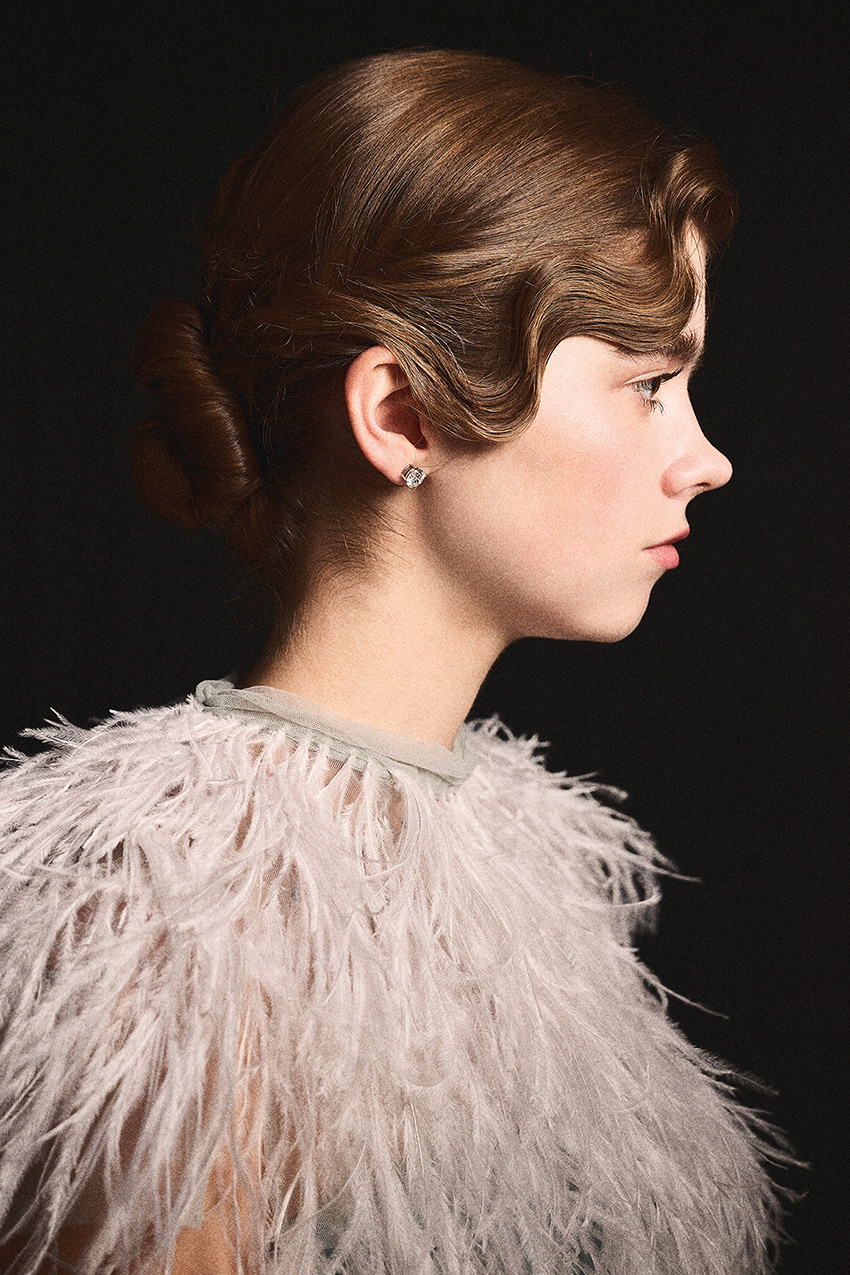
Treat Co., Ltd. was founded in 2005 in KOBE, with a philosophy centered on making Japanese bridal fashion more elegant and refined. You have spoken about creating an aesthetic that is neither overly modern nor too classic — something timeless. Could you elaborate on the philosophy that has guided you since the company’s founding?
When we started, the quality of Japanese wedding dresses was quite poor. I was originally a wedding planner in Tokyo, and I often questioned Japan’s traditional rental system, which was very different from what I had seen in the U.S. or Europe.
For example, if a customer rented a dress for ¥100,000, about 55% of that went back to the hotel as a kickback, leaving only 45% for the dress shop. Out of that, they had to cover purchasing, labor, and rent — which meant the only way to profit was to cut costs on the product itself. As a result, dresses were often made from polyester and reused repeatedly.
In contrast, in America, bridal shops sell dresses outright, with no commissions to venues. When I thought about what I would want if I were a bride, I realized I wouldn’t want a synthetic dress that everyone else had worn before, or one that didn’t fit me properly. At the time, I admired Vera Wang and dreamed of wearing silk, couture-quality gowns. But those kinds of imported dresses were almost impossible to find in Japan. That realization inspired me to create a new kind of bridal shop — one that offered real, authentic quality.
We also focus strongly on people. We recruit exceptional talent — our company consistently ranks among the most desired employers in our field. We train our stylists carefully so they can contribute directly to sales and customer satisfaction.
That human quality, combined with strong maintenance systems and authentic materials like silk, allows us to sustain a high-end business model even within Japan’s rental framework. Without skilled staff, expensive dresses would never sell. But with the right training and dedication, we can maintain both quality and profitability.
Your stores are supported by ateliers capable of producing haute couture gowns. That must require significant technical skill and staffing.
Yes, our atelier team is highly skilled — they can craft custom-made couture gowns to an extremely high standard. This is one of our greatest strengths. And because we recruit excellent people, many young professionals choose to work with us, which keeps our creative energy strong and our standards high.
Let me share a personal example. I am getting married next year. For men, the process of choosing the engagement ring can be quite stressful — studies show that around 28% of men argue with their partners about selecting the right ring. Similarly, many brides struggle to choose their wedding dress. Cultural and family expectations can add pressure, and statistics show that women in Japan try on between four and seven dresses before deciding. How does Treat help make this experience more enjoyable and less stressful for brides?
To us, that process is not a problem — it’s a joy. Choosing a wedding dress is part of a deeply emotional journey, and it should be fun. It’s a once-in-a-lifetime experience, often involving the most expensive garment a woman will ever wear. Our goal is to make that process as precious and enjoyable as possible.
We don’t try to shorten it or reduce the number of fittings. Instead, we focus on making every moment meaningful — on providing true omotenashi, or heartfelt hospitality. That’s something we emphasize in our training. I often tell our staff: “Treat each bride as if she were your own sister.”
I’d like to ask about Lab-Grown Diamonds. You’ve launched this brand to promote sustainable, ethically produced jewelry. Could you explain your motivation and vision behind this initiative?
Yes, I started Lab-Grown because I wanted to do something meaningful for the planet. After years in the bridal industry, I realized I wasn’t contributing to environmental sustainability in any way, and I didn’t feel comfortable telling my children that.
At that time, lab-grown diamonds were rapidly gaining recognition in the U.S. and Europe. I wanted to build a brand that reflected sustainability and modern values, so I founded Lab-Grown. For now, it operates mainly as a fashion jewelry line rather than bridal, because starting directly in the bridal segment would narrow the market too quickly.
Once the brand grows and becomes well-established as a fashion label, I would like to expand into bridal jewelry as well. For now, separating the two allows us to build the business strategically and authentically.
You mentioned earlier that you are expanding into new segments. Do you envision entering the hospitality space — for instance, boutique hotels — similar to how Plan・do・See has evolved?
Yes, that’s a natural direction. With the rapid increase in inbound tourism, many companies, including Plan・do・See, are now focusing on hotel and resort development. They’re investing heavily in places like Okinawa, Ishigaki, Karuizawa, and Hakuba. The aim is to create luxury resorts that appeal to both domestic and international guests.
Speaking of resorts, could you share your goals for the Okinawa wedding business in particular?
Our goal is to achieve 400 weddings annually, both domestic and international combined — roughly one per day. We want to continue expanding our reach to inbound customers as well as local Okinawan couples.
Are you also considering further overseas expansion?
Yes. Plan・do・See is already developing hotels in Indonesia, Kuala Lumpur, Vietnam, and Morocco. The Kuala Lumpur project has already started offering weddings. However, there are challenges — local water quality affects dress cleaning, which makes maintenance difficult. Pricing and intellectual property issues also complicate introducing luxury brands abroad. If we only use our own original Treat designs, expansion is easier, but luxury brand licensing adds complexity. Still, I would like to expand overseas when the time is right.
Which countries do you see as offering the greatest opportunities for your company?
Singapore, Bangkok, and Indonesia. These regions have large populations and growing interest in luxury bridal fashion, so I believe they offer strong potential.
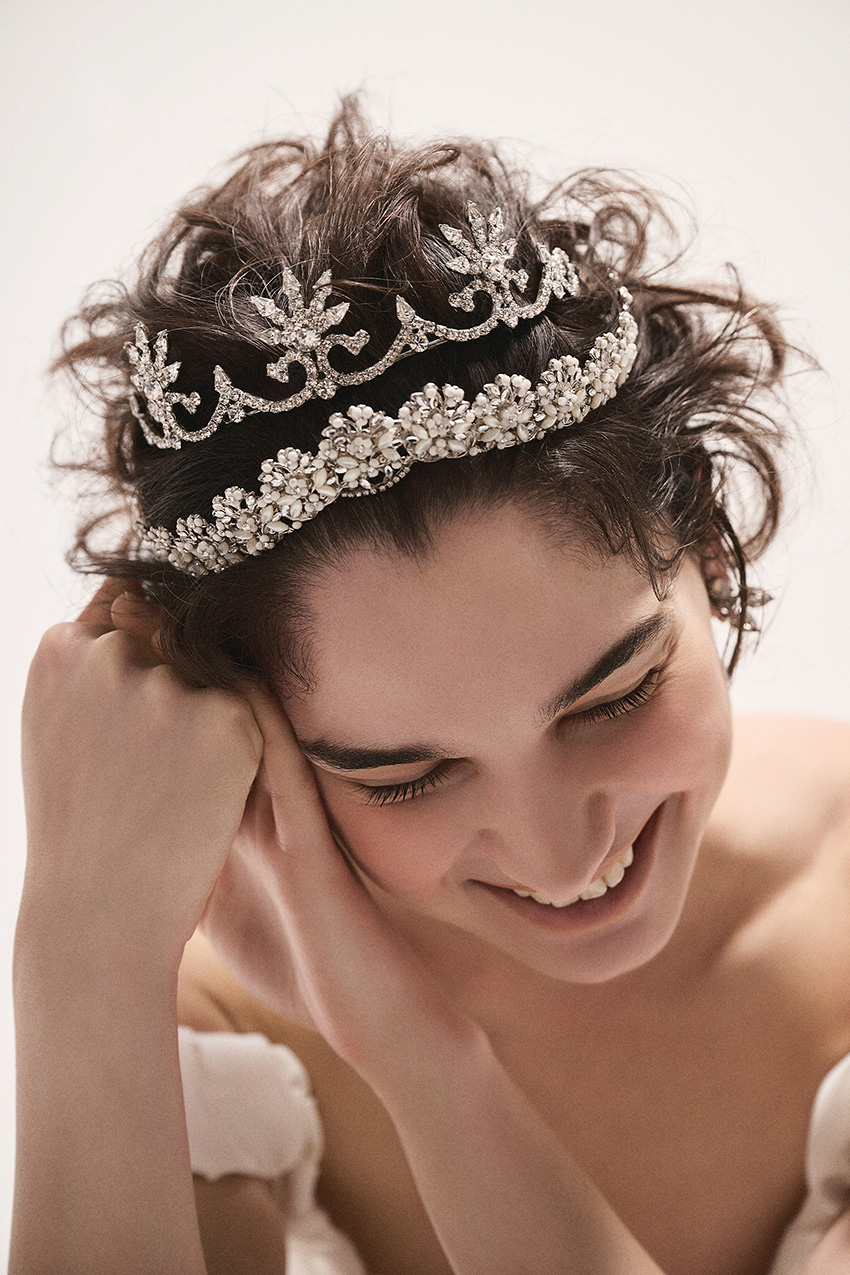
Regarding partnerships and collaborations — for example, some couture designers work closely with luxury hotels such as The Palace Hotel Tokyo or Four Seasons — are you seeking similar international partnerships?
We’re always open to collaborations. I’m not actively searching for partners right now, but if the right opportunity arises, I would absolutely welcome it.
When you say “partnership,” do you mean a brand collaboration or a financial alliance?
It could mean either. Financial support would certainly make it easier to expand internationally with confidence, but in terms of brand partnerships, we already engage in many. As we celebrate our 20th anniversary this October, we’re collaborating with designers such as Acra to mark the milestone. We regularly launch collaborations like these and share them with our Japanese customers.
That’s wonderful. Thank you very much. Finally, if we were to return in five years for another interview, what goals would you hope to have achieved by then?
That’s a wonderful question. Five years from now, I hope we will have expanded further into areas beyond dresses — into bridal photography, hair and makeup, and beauty.
I see significant potential in the photo business, especially for inbound clients. Even though many companies already operate in that space, I believe there’s still room for us to enter with our own worldview and level of quality.
Ultimately, I want Treat to offer a full spectrum of luxury bridal experiences — not just dresses, but every aspect that completes the wedding journey.
For more information, visit their website at: https://treat.jp/
To read more about Treat, check out this article about them.
AloJapan.com