
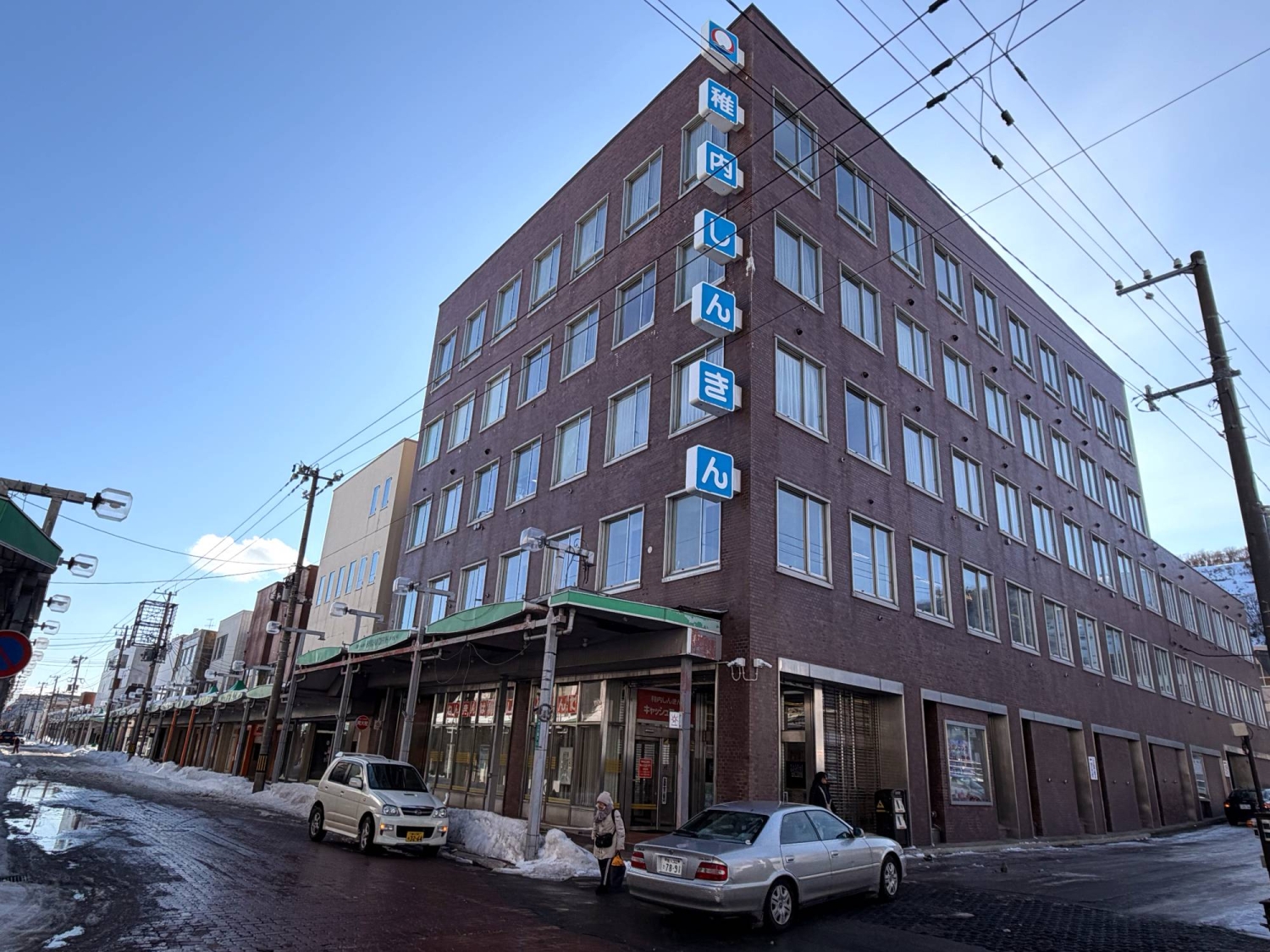
Many Japanese banks in the countryside are struggling due to a shrinking population, but at a tiny credit union in the northernmost tip of the country, the situation is extreme.
Wakkanai Shinkin Bank serves customers in the city of the same name in northern Hokkaido. Once a bustling fishing hub, it has seen the number of residents roughly halve from its peak in 1964. Loan demand has plummeted, and the bank has turned to investing in Japanese government bonds (JGBs) to eke out a profit, a strategy that is now coming into question.
Led by its long-standing President Masatoshi Masuda, 72, who grew up in the area, the lender has been engaging with local businesses and community to nurture startups and turn around troubled ones. But the hard truth is there just aren’t enough borrowers.
“No business can survive without people,” Masuda said in an interview. “If you ask about the future of Wakkanai Shinkin, it’s tied to the fall in the population and the number of businesses.”
It’s a challenge shared by many other rural lenders in Japan. Years of rock-bottom borrowing costs failed to lift local economies out of their deepening funk. Now, even with the Bank of Japan raising interest rates, credit demand is too weak to prop up profits.
Wakkanai Shinkin is a stark example. While the lender provides nearly half of the loans in its region, the amount makes up just 16% of deposits — far below the national average of 50% for Japan’s around 250 credit unions, known as shinkin. It funnels most of the rest into JGBs, which are now losing their value as interest rates climb.
Masuda, who has worked at the bank for almost 50 years and served as president for the past 20, sees the nation’s debt as a relatively safe proposition.
“We are taking so much credit risk in lending,” he said. “So, we don’t want to take any more credit risk in our securities portfolio.”
Sitting next to Soya Bay, Wakkanai is far enough north that you can see Russia’s Sakhalin island on a clear day. The city of 30,000 people is blanketed in snow during the winter, when average daytime temperatures are below freezing. Masuda spoke from the bank’s headquarters, located in a roofed shopping street where all but a few stores have shut for good.
The Financial Services Agency has been stepping up its scrutiny of the long-term viability of credit unions and cooperatives, including how they manage bond paper losses and whether they have enough capital to cover them.
The nation’s debt securities remain under pressure as investors expect the central bank to raise interest rates further and concerns persist that the government will increase fiscal spending to support the economy.
Wakkanai Shinkin held ¥290 billion ($1.8 billion) in JGBs as of March last year, according to its latest annual report. Its unrealized losses on the securities stood at about ¥47 billion, excluding those categorized as holding to maturity.
Masuda said the paper losses are manageable because JGBs are perceived as having no default risks and the bank plans to hold them to maturity, even those that are categorized as available for sale and therefore marked to market.
“The questions we get are framed as, ‘Aren’t you taking too much interest-rate risk?’ or ‘Aren’t you overly concentrated in government bonds?’” he said. “It’s like arguing about Cleopatra’s nose — focusing on a single feature while ignoring the whole.”
Still, unrealized losses on bonds would become a problem if holders are forced to dump them before redemption to fund deposit withdrawals and other cash needs, like Silicon Valley Bank and others did in the United States in 2023.
Masuda said his bank’s situation is different. Unlike the failed U.S. lender, it has ample liquidity in the form of cash and reserves at other financial institutions, and its deposits are made up of small savings by community residents, with whom the credit union has cultivated personal ties for decades. He said these deposits are “sticky” because they have stayed even though they pay lower rates than those of rivals.
Underscoring the depth of those relationships, Masuda said he used to take turns to get his hair cut at all six barbers in his area, and buy suits and electric appliances from all the stores with which his bank has had dealings.
“Some people make a short-sighted argument that Silicon Valley Bank-like thing might happen because paper losses grow,” he said. “Have a good look at our balance sheet and come talk to our depositors.”
AloJapan.com