
March 23, 2026
TOKYO – More than 70% of local governments have not conducted surveys to check for cavities below roads under their management since fiscal 2013, according to research conducted by The Yomiuri Shimbun.
Cost burdens are a major factor behind this situation, the Yomiuri found. Its investigation highlighted the reality that there has not been sufficient progress on measures to prevent road collapses, about 10,000 of which occur nationwide each year.
Subsurface cavity surveys involve driving a vehicle equipped with radar to detect cavities beneath the road surface. Such vehicles can detect cavities down to a depth of about 2 meters.
National highways managed by the central government span around 24,000 kilometers. The Land, Infrastructure, Transport and Tourism Ministry surveys these roads at a pace that inspects the total distance over five years.
However, for roads managed by prefectures and municipalities, the decision whether to conduct surveys of this kind is left up to local governments. Roads managed by prefectures cover a total length of about 162,000 kilometers and those managed by municipalities have a total length of about 1.04 million kilometers.
The Yomiuri Shimbun examined subsurface cavity surveys from December 2025 to February, targeting all prefectures, cities, towns and villages as well as Tokyo’s 23 wards, for a total of 1,788 local governments. Responses were received from 1,593 local governments, or 89%.
The investigation revealed the implementation of subsurface cavity surveys since fiscal 2013, when the central government strengthened its management of infrastructure in response to the ceiling panel collapse in Sasago Tunnel on the Chuo Expressway in Yamanashi Prefecture in 2012.
According to the Yomiuri’s findings, only 395 local governments, or 25%, said they had conducted cavity surveys at least once since fiscal 2013. Meanwhile, 1,184, or 74%, responded that they had never done such a survey.
The most common reason for not conducting the cavity survey, with multiple answers allowed, was “inability to secure funding” at 50%, followed by “no need for a survey” at 25% — citing that visual inspections were sufficient. “No contractors available to conduct the survey” was chosen by 17%.
Only 227 local governments said they had plans to carry out a cavity survey in the future, while the majority responded “undecided” or “no plans.”
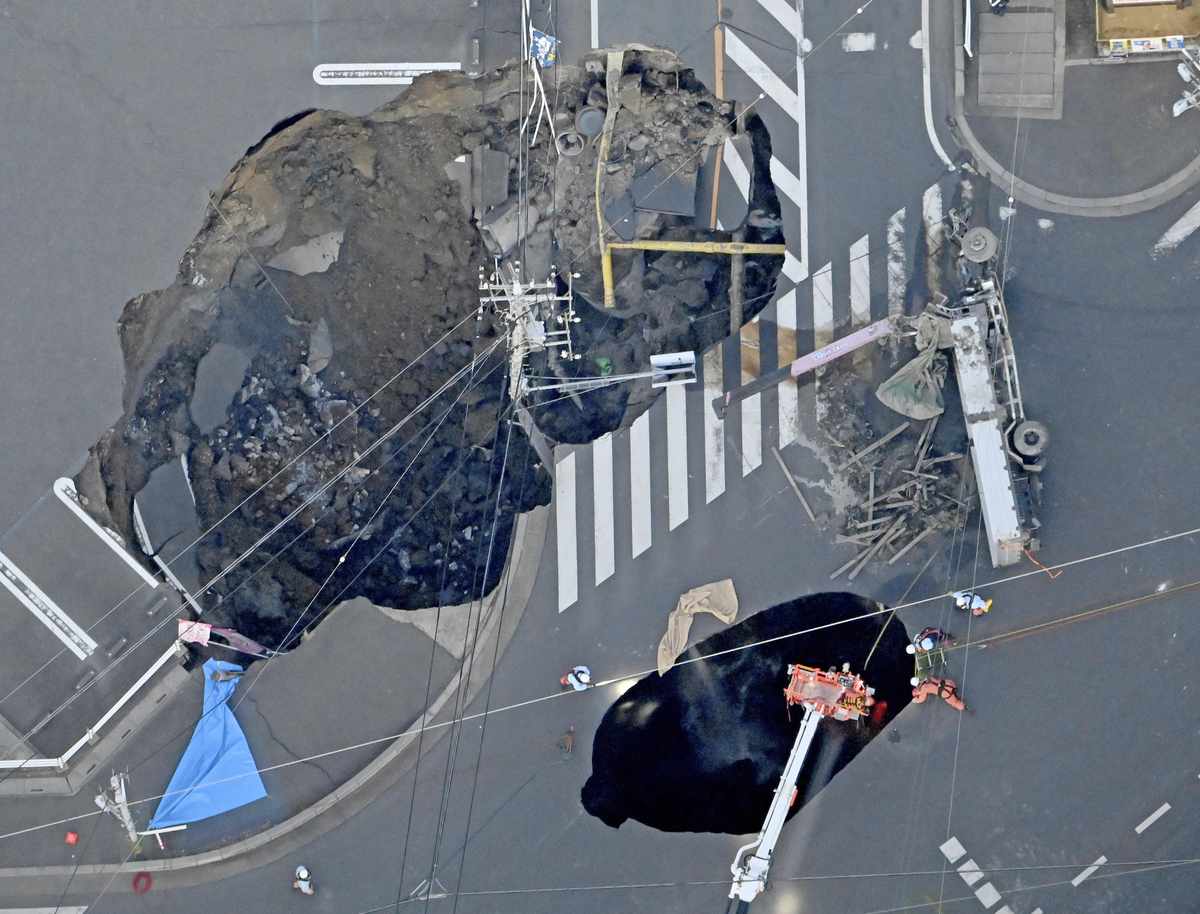
Between fiscal 2020 and 2024, there was a total of 6,088 cave-in accidents on roads managed by prefectural governments and 45,096 on roads managed by municipalities, amounting to about 10,000 incidents annually. Amid the increasing deterioration of underground infrastructure, a large-scale cave-in occurred on a prefectural road in Yashio, Saitama Prefecture, in January last year, highlighting the growing need for cavity surveys.
“The central government should provide local governments with criteria for which roads need to be surveyed so that local governments can conduct surveys effectively even under tight fiscal situations,” said University of Tokyo Prof. Reiko Kuwano, an expert in geotechnical engineering.
AloJapan.com