
Turning on its lights for the first time on Nov. 1, Fukuoka City’s “Christmas Market in Hikari no Machi” was one of the earliest to open in the country. Other major cities in Japan weren’t too far behind with several in Tokyo and others in Kobe, Yokohama and Osaka well underway by the end of the month.
With Wham’s timeless hit, “Last Christmas,” setting the mood and festive decor as far as the eye can see, Christmas in Japan seems similar to what I’m used to back home. But, it’s the little details, like yaki mochi (cooked rice cakes) alongside hot minestrone soup and as many date-night sightings as family outings that feel more Japan than abroad.
Reminiscent of their German origins, but with a few touches that make them uniquely Japanese, Christmas markets in Japan provide useful lenses for exploring cross-cultural fusions during holiday season.
A history of Christmas in Japan
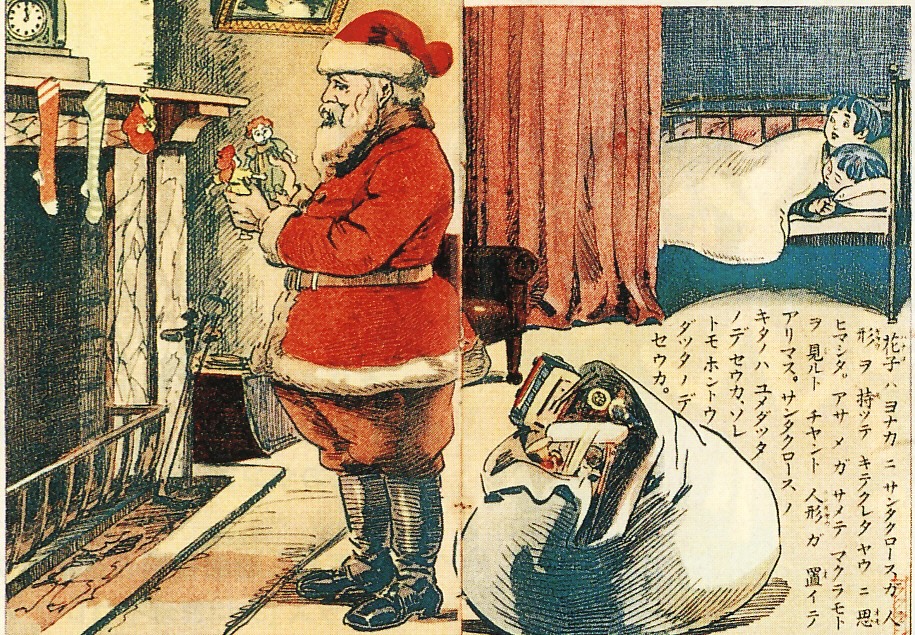
Santa Claus was featured in a 1914 children’s magazine, “Kodomo no Tomo” (Child’s Friend”), as the holiday was gaining popularity in Japan. Image: Public Domain
Christmas is not a native holiday in Japan. As requested by the Jesuit priest Francis Xavier in 1552, present-day Yamaguchi City became the first place where the holiday was celebrated in the country. Although there were other Christmas events held in the centuries since, they were unique and not repeated. Christmas in Japan only began to gain popularity in the modern era with the development of mass consumer culture. At the turn of the 20th century, several well-known Tokyo retailers, such as Meiji-ya and Maruzen, sold Christmas goods and decorated their stores with trees and ornaments.
On the eve of World War II, Christmas had slowly spread from the capital’s luxurious shops to regional centers and rural locales. The holiday also started to appear in some handbooks for teachers as a festive event alongside traditional Japanese ones, such as tanabata (star festival).
During the high growth and economic bubble periods (1960s-80s), magazines and newspapers marketed Christmas as a time for families to spend time together. With an increase in disposable income, people spent more money on Christmas cakes, decor and presents. Yet, it would take several more decades for Christmas markets to become mainstream.
The origins of Christmas markets
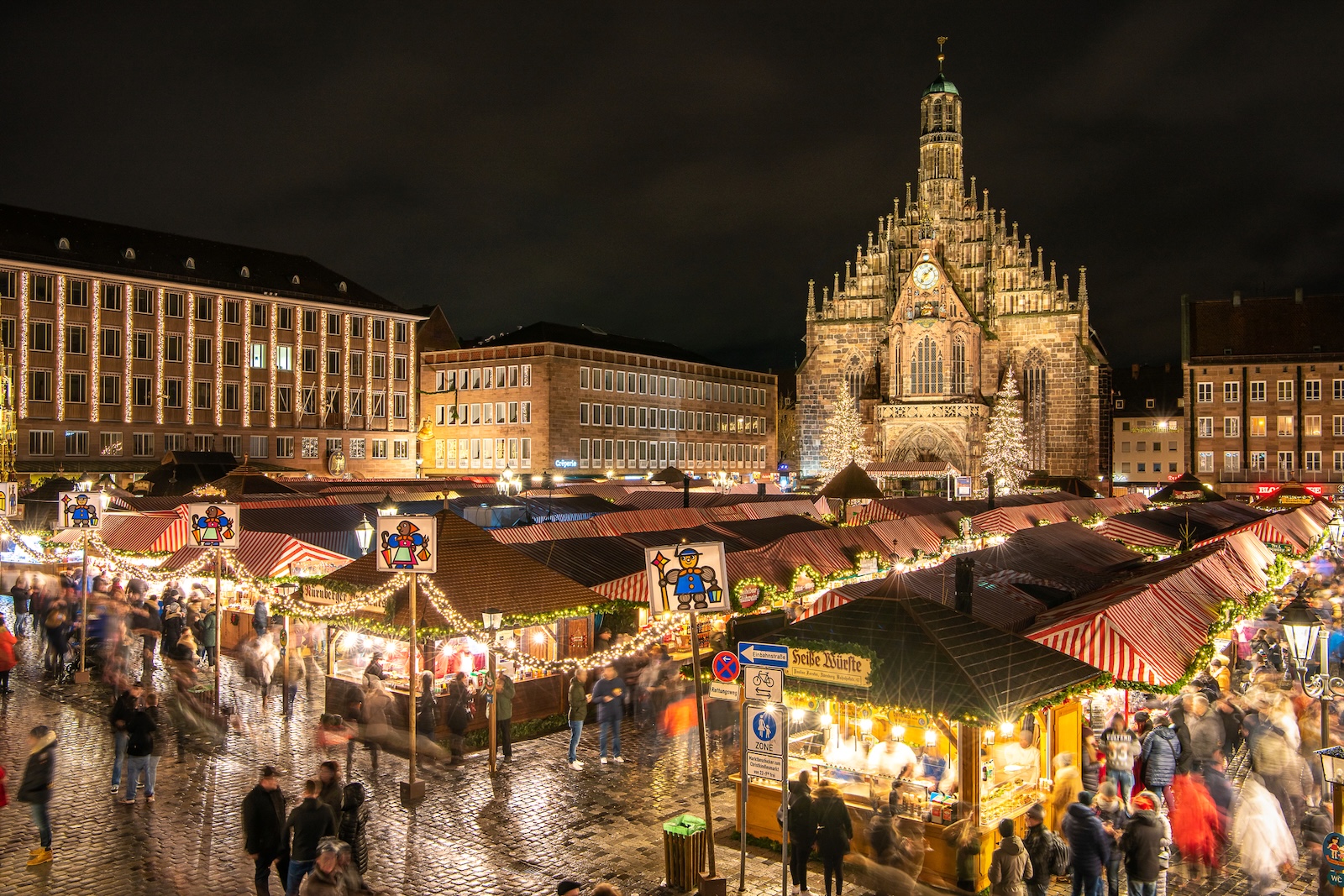
More than 2 million people visit the Nuremberg Christmas Market in Germany, one of the largest in the world. Image: genki/Pixta
Christmas markets first appeared in Germany in the 14th century and were gradually held in most towns and cities in the lead-up to Christmas. Until the 19th century, they tended to be social melting pots. Wealthier classes could purchase handcrafted goods from artisans, while less affluent groups were able to find expensive food, clothes and trade tools at lower prices.
The Industrial Revolution had a lasting impact on Christmas markets. With increasing urbanization and greater wealth divides between the rich and poor, Christmas markets came to be seen as lowbrow and undesirable by more affluent Germans. With a revival in the 1930s, Christmas markets took on the look and feel that still remain today: Christmas trees, ornaments, toys and crafts, food such as confectionery and sausages, and the temporary wooden stalls that dot the event landscape.
How German markets spread worldwide
Although Italian, Swiss and French border areas had long organized German-style Christmas markets of their own, it took a long time for other countries around the world to embrace the joy of the Christmas market. In the late 20th century, many English-speaking nations inaugurated their first big Christmas markets, like the U.K. (1982), Canada (1985) and the U.S. (1995). In 2002, Japan too would open its first annual Christmas market.
How Christmas markets arrived in Japan
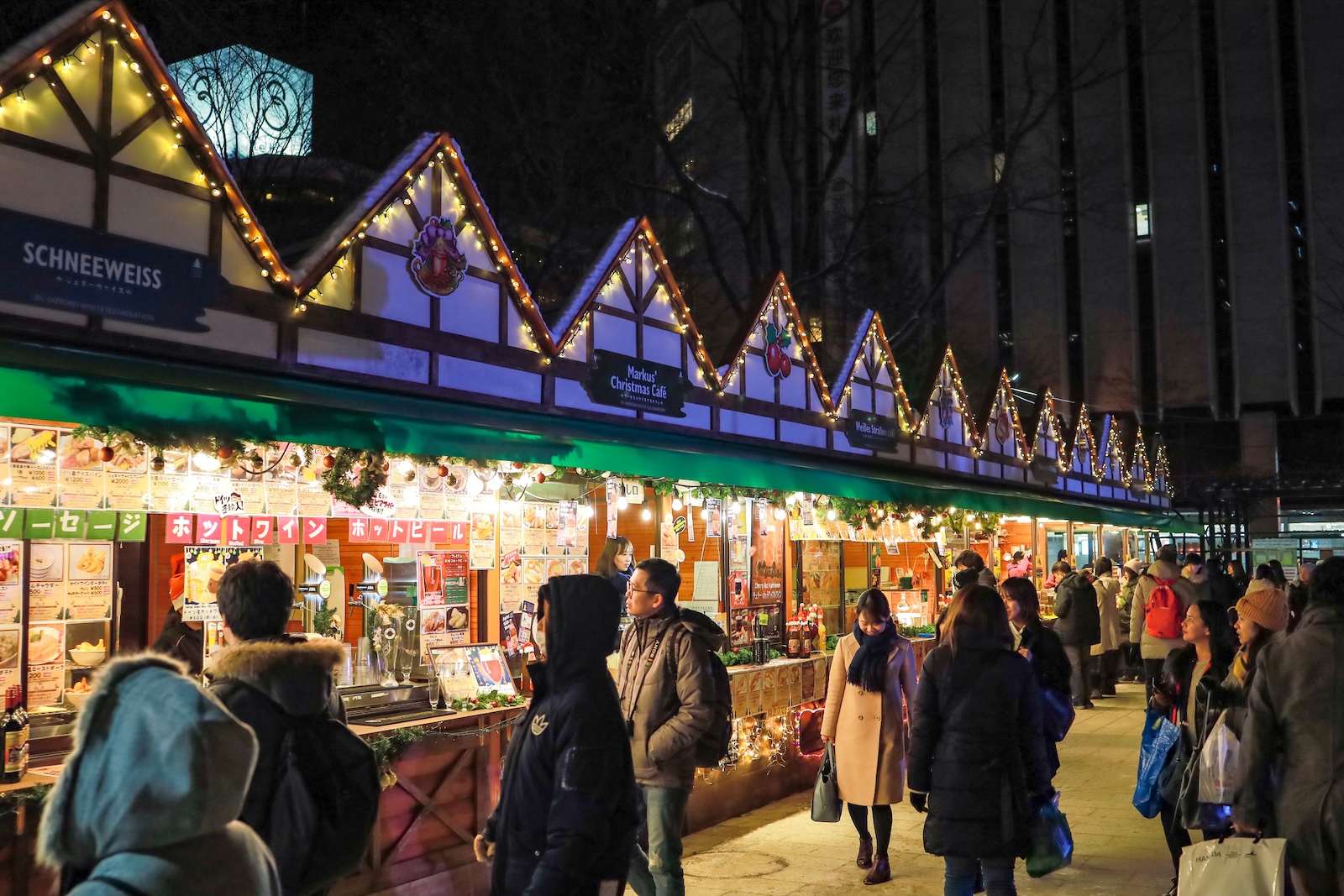
Sapporo’s Odori Park has been hosting one of the oldest continuous Christmas markets in Japan since 2002. Image: chayakorn lotongkum/iStock
The first German-style Christmas market took place in 1873 in the small mining town of Kosaka in Akita Prefecture. A German engineer named Kurt Netto was stationed in the area as part of the nationwide Meiji Industrial Revolution. He introduced the concept of the Christmas market to locals and helped to organize a festive market there. The tradition did not continue and Japan would not have its own annual market until the 21st century.
To celebrate the 30-year sister-city bond with Munich, Germany, Sapporo opened the Sapporo Munich Christmas Market in 2002. Officials from Munich proposed the idea of holding a market and several delegates attended the event. A variety of German products were sold, including nutcrackers, Christmas ornaments, mulled wine and sausages.
Following Sapporo, several other Japanese cities created their own Christmas markets. Launched in 2007 and the oldest in Tokyo, the Roppongi Hills Christmas Market is modeled off of the world’s largest in Stuttgart. Inspired by the one in Nuremberg, the Yokohama Red Brick Warehouse Christmas Market has been operating since 2010. Unfortunately, there are no official statistics on the number of Christmas markets held each year. However, according to a popular outlet that publishes event information, there are around 100 Christmas markets listed nationwide as of publication and the number continues to increase.
What makes Japan’s Christmas markets unique
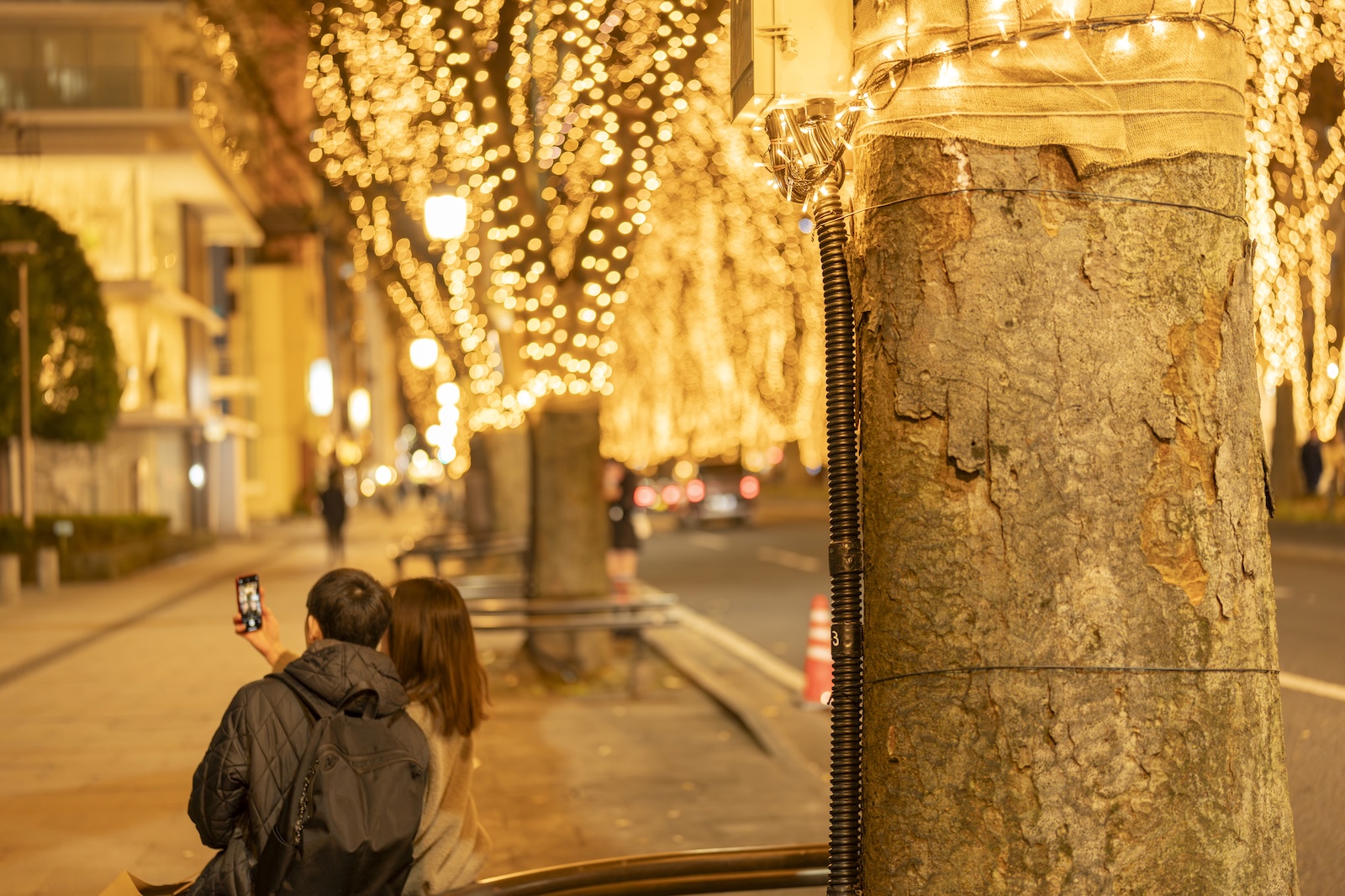
The sight of couples taking selfies is a common sight at Japanese Christmas markets. Image: YAEZAKURA/Pixta
From the makeshift wooden stalls and Christmas decor to the copious amounts of spiced wine, German beers and sausages, there are plenty of familiar sights and flavors reminiscent of German Christmas markets. Yet, in other ways, Japanese Christmas markets offer unique charms that are different from their European counterparts.
Romance at Japan’s Christmas markets
For many couples, Christmas markets in Japan are viewed as a prime date spot. While many people spend time with family and friends during Christmas in Japan, it is also an occasion for romance.
In the lead-up to Christmas this year, the convenience store chain, Family Mart, surveyed over 1,100 men and women about their holiday plans. When asked about who they plan to eat Christmas cake with, 61% responded “partners” compared to 54% with “children and grandparents” and 18% with “parents.”
Indeed, since the 1980s, Japanese popular culture has also been establishing a strong association between Christmas and romance. Trendy TV dramas, such as “Kurisumasu Ibu” (1990) and “29 Sai no Kurisumasu” (1994), integrated storylines that showcase Christmas as a time for lovers. On the pop charts, Tatsuro Yamashita’s romantic song, “Kurisumasu Ibu,” skyrocketed in popularity after being featured in Japan Railway holiday advertisements running from 1989 to 1992. The song is now a Japanese Christmas classic, playing in Christmas markets nationwide.
So, after being marketed first as a family event, in Japan during the bubble era and after, Christmas also came to be seen as intrinsically romantic.
For Christmas market dates, enchanting lighting sets the scene and love songs provide the romantic soundtrack. Many markets in Japan have goods and experiences that add a romantic flair to the outing, including heart-shaped churros at Tokyo Christmas Advent in Ueno Park and the giant heart illumination at Fukuoka’s Tenjin Christmas Market.
Winter illuminations in Japan
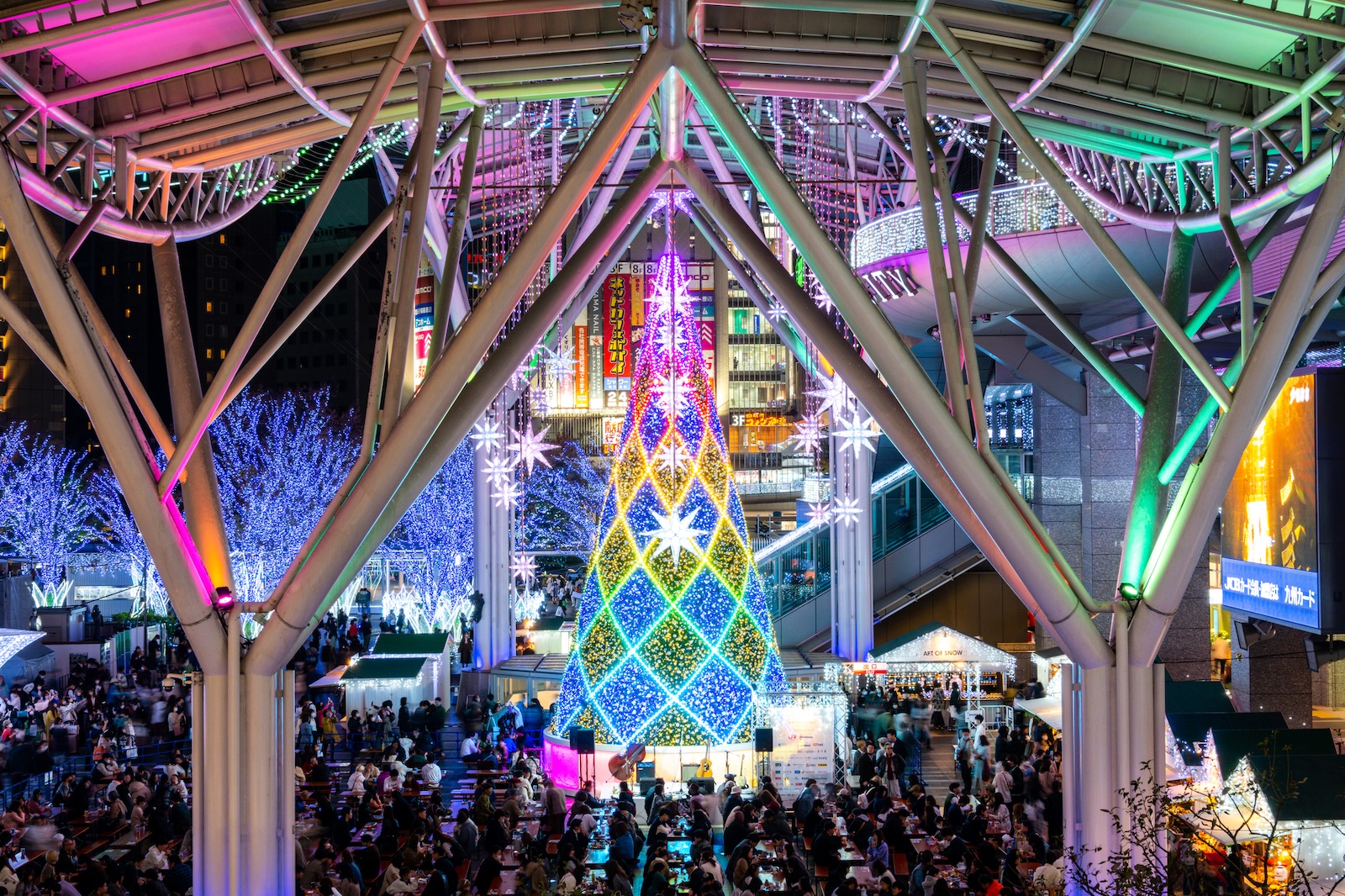
The Christmas market in Hikari no Machi Hakata transforms Kyushu’s busiest travel hub into a romantic illuminated landscape. Image: genki/Pixta
At Christmas markets in Japan, you can expect a sea of multi-colored lights covering the area.
Winter illuminations were popularized around the same time as Christmas’s romantic associations. Following the 1995 Great Hanshin Earthquake, Kobe held Luminaire, a large-scale lighting display, to bring hope to the disaster-stricken region. The positive reception was overwhelming and Luminaire became an annual event that coincided with the Christmas season, with an interruption only during the COVID-19 pandemic. For 2025/2026, organizers have moved it to January to coincide with the anniversary of the earthquake. From Luminaire, the allure of public light-ups spread across the country. By the time Christmas markets sprung up in the 2000s, illuminations were becoming a holiday staple.
At Christmas markets, like Hikari no Machi in Hakata and in Roppongi Hills in Tokyo, illuminations after sunset bring in more customers later in the day and set a festive mood.
Food at Japan’s Christmas markets
In Japanese Christmas markets, there are stalls that sell Japanese food and Japanese variations on classic German cuisine. The varied menus reflect a desire to offer familiar Japanese dishes alongside European ones and efforts to put a Japanese twist on foreign dishes.
At Nagasaki’s Stadium City Christmas Market, for example, several stalls offer oden (Japanese stew) and gyudon (rice bowl tapped with beef) to go with shiratama zenzai (sweet red bean soup with rice flour dumplings) or Japanese fruit sandwiches for dessert. As for culinary fusions, matcha can be found flavoring churros in Hakata and baked into Christmas tree-shaped mont blanc in Yokohama.
Christmas markets in Japan to visit in 2025
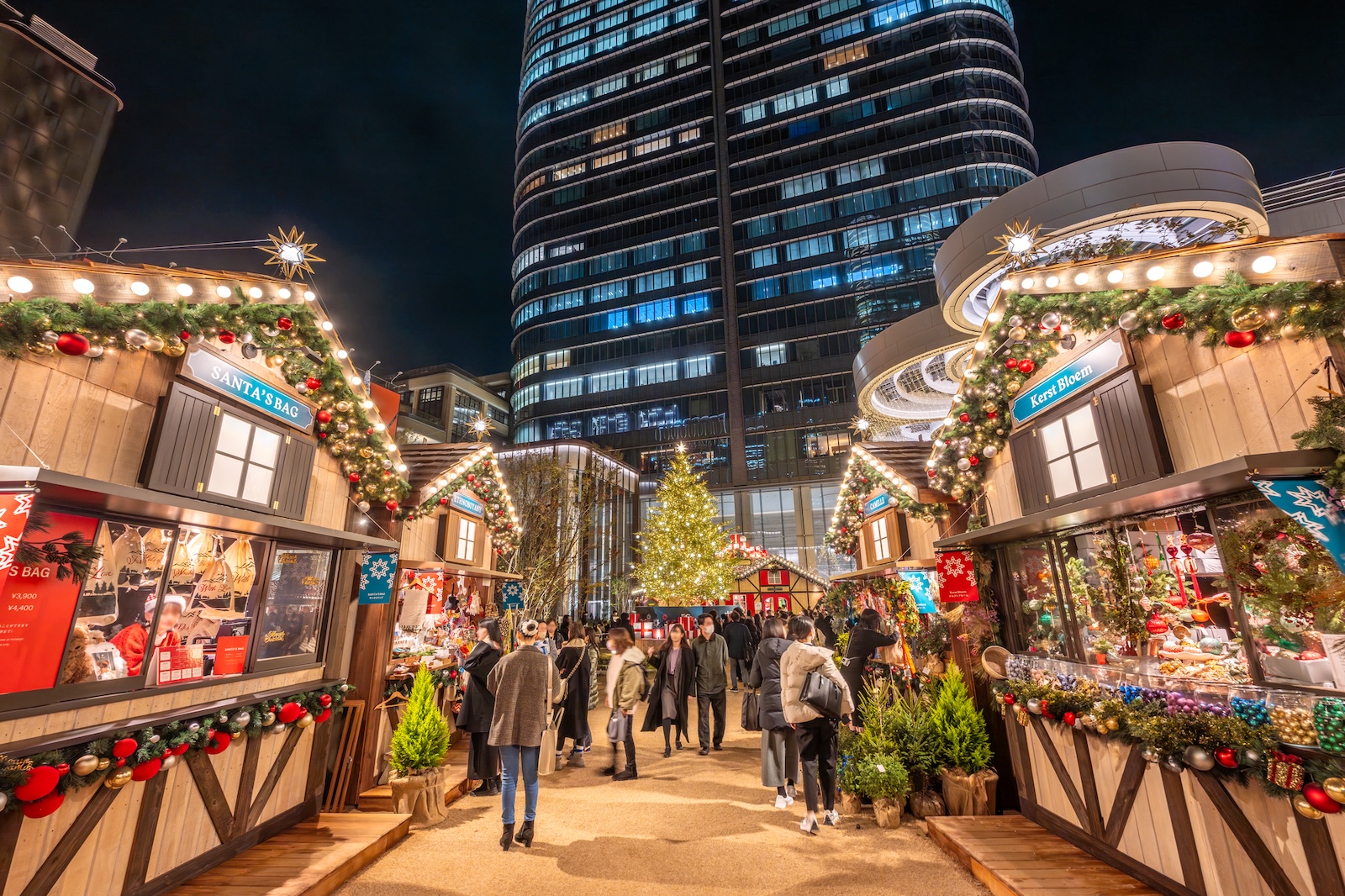
Azabudai Hills in Tokyo may be a relatively new Christmas market, but it still captures the nostalgia and romance of the holidays. Image: genki/Pixta
Throughout Japan, cities big and small organize Christmas markets with their own themes and traditions. While the largest ones tend to draw the most attention, there are plenty of smaller regional ones, as well.
Christmas Market in Kosaka
While the Christmas Market in Kosaka is relatively modest in size and only open for a single weekend, it offers a uniquely local market experience. The Kosaka Nanadaki Winery will be selling bottles of Christmas Nouveau and musicians from the community will be taking the stage for live performances. After sunset, there will also be a winter fireworks display.
Sapporo Munich Christmas Market
Sapporo Munich Christmas Market features one of the oldest light-ups in the country, the Sapporo White Illumination. The event includes interactive experiences, including a chance to meet Santa himself and a mystery game with a prize for successful sleuths.
Christmas Market in Fairy Tale Books
While it might not be the biggest or oldest Christmas market in the capital, Christmas Market in Fairy Tale Books is the only one in the shadow of Tokyo Sky Tree. One of the highlights is a 4-meter-long stollen that will slowly be consumed over the course of the event.
Yokohama Red Brick Warehouse Christmas Market
Yokohama’s historic Red Brick Warehouse is one of the most popular Christmas markets around Tokyo. This year’s tree is the tallest in the event’s history at 12 meters high. Also, there is a chance to meet a Santa Claus recognized by the official Finnish home of Saint Nick, Rovaniemi. In an effort to be more eco-friendly, the market will use sustainable tableware and energy initiatives.
Christmas Market in Hikari no Machi Hakata
Inspired by Parisian Christmas markets, the Hakata market stalls come in white as opposed to natural wood or red and white ones. The popular sanchan-yaki, a grilled shaped-Santa bun filled with sweet bean or custard, returns for another year to give a Japanese spin on Saint Nick. For the 2025 edition, limited-edition Super Mario-themed mugs celebrate the grand opening of the official Nintendo store in JR Amu Plaza.
German Christmas Market Hiroshima
Launched in 2015, German Christmas Market Hiroshima was created by a German expat living in Hiroshima. Missing the Christmas markets of his youth, Stephan Ballin designed a market capturing the look, feel and culinary traditions of the German holiday season.
© Japan Today
AloJapan.com