
Why book?
Tucked between Kyoto’s oldest Zen Buddhist temple and a traditional theater that hosts geiko and maiko dance performances, this beautifully considered townhouse-style bolthole of latticed wood designed by the incomparable Japanese architect Kengo Kuma is a living, breathing immersion into the mysterious culture and ancient craft of its city, with an exquisitely expressive root-to-blossom dining destination by Sonoma, California’s Michelin-decorated SingleThread as its culinary star.

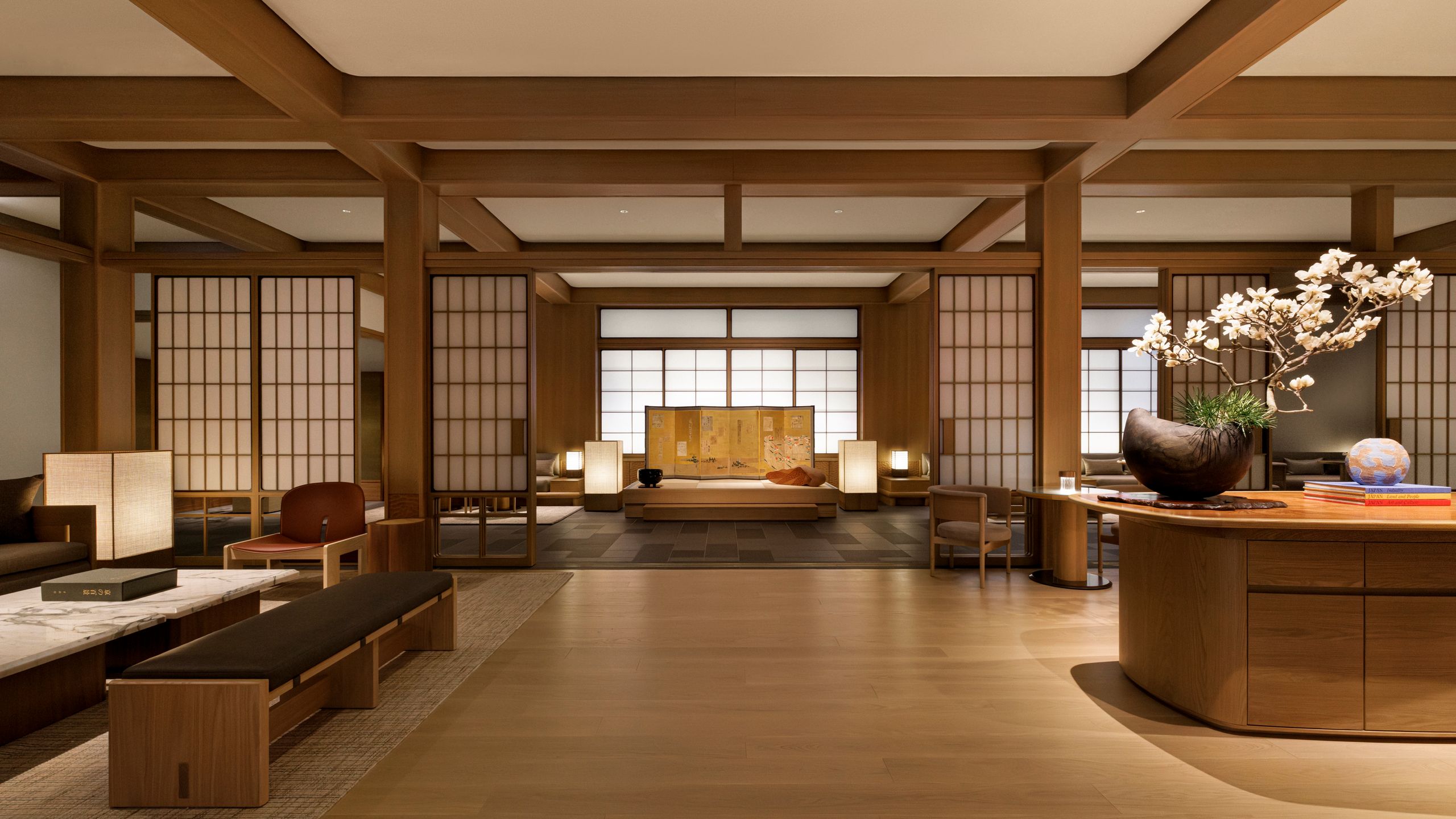
Sliding screens break up serene space after serene space at the Capella Kyoto.
Apple Photos Clean Up
Set the scene
A combination of bamboo siding, criss-cross stacked timber ceiling, and an evergreen-tasseled noren—the traditional Japanese fabric divider whose kanji characters mean “warm curtain”—drew me like a magnet toward the wide entry of Capella Kyoto, low and humble at four stories tall. I couldn’t help but smile as I, the very first guest, ducked under the textile’s playful pink and green patchwork, an expression of the almost-spring in which the hotel would open, March 22. Kyoto-based Dutch textile designer Mae Engelgeer created it for the hotel using antique Japanese fabrics sourced from historic shops and local markets, and it’ll change seasonally. Like the ancient city’s many cherry blossom trees, it seemed on the verge of blooming.
Along the winding path into the heart of Kuma’s interpretation of a local townhouse, called machiya, are small glimpses through sliding screens, whispers of scent and sound, bamboo-veiled expanses. Quiet, moody, soft, and veiled, this Miyagawa-cho geisha district hotel is a newcomer with an old soul. Like the legendary performers for which the area is known with their elaborate kimono and coy reveals of skin, it’s a study in layering shadow and sheer.
In this environment of diffused light and reverent craftsmanship are 89 guest rooms and suites plus three completely unique dining concepts. Extreme thoughtfulness went into the property built on the site of a former prominent elementary school, with some of its sakura (cherry blossom) and Japanese maple trees now waving in the breeze after being carefully moved pre-construction and replanted upon completion.
True to Capella form, there’s a relentless focus on the little things: the tiny fork presented with powdery yuzu mochi upon arrival, the delicately etched wood keycards, the locally made silver-threaded washi stationary, the braided cord keeper on my charging cable, and even hand warmers when heading out for tours in brisk weather. The programming is outstanding, too. Immersive Capella Curates experiences include a private visit to 150-year-old geta sandal (worn with kimono) atelier Gion Naito in which guests engage first-hand with the beguiling fifth-generation craftsman carrying on the rich footwear tradition in surprising ways, and an in-depth lacquerware-focused encounter.
The backstory
Capella Kyoto is inextricably linked to its immediate community, both past and future. In bringing to life the hotel, Kuma and his team effectively renovated and reinvigorated the entire Miyagawa-cho neighborhood, since the project also comprised the redesign and reconstruction of two vital buildings: the Miyagawa-cho Kaburenjo Theater, where geiko and meiko (the respectful name for geisha in Kyoto) have trained and performed since 1896. The hotel itself was built on the site of Shinmichi Elementary School, which closed in 2011 after 141 years of educating the Miyagawa-cho’s youth. A robust schedule of gratis hands-on Capella Moments—of which there are a dozen different sessions rotating throughout the week—carry on the legacy of it this beloved place of learning.
Kuma was hired by the hotel’s owner, NTT Urban Development Corporation, a branch of the historical Japanese telecommunications company Nippon Telegraph and Telephone Corporation, to take on all three structures, which share historical carved flourishes, wood construction and bamboo-heavy materiality. (NTT is also the owner of Capella Hotel Group’s Patina Osaka, which opened in 2025, however this is the first Capella Hotel in Japan.) Kuma pulled the curved awning in the hotel’s inner courtyard, for example, from the eye-catching karahafu gable roof on the front of the theater.
The three buildings are at the heart of Miyagawa-cho, where geiko and maiko can be observed entering their ochaya teahouses for the night or turning up for morning performing arts training at the Kaburenjo. The action isn’t only outside. Inside the Living Room each evening, one of the neighborhood’s 50 total geiko and meiko perform gracefully as a Capella Ritual on a small tatami-matted stage and amiably answer guests’ questions, pose for photos, and hand out signature sticker hanameishi collectible “business cards” afterward, to be kept for good luck. When there are seasonal performances at the Miyagawa-cho Kaburenjo there will be a presentation of traditional music; Culturists can easily source tickets for the show, which runs each spring and autumn.

Romeyn’s bedroom at the Capella Kyoto.
The rooms
Quietly radiant, the 89 accommodations are aesthetically a lovely contrast to the public zones, featuring deeper, warmer tones of wood in curvaceous silhouettes that evoke femininity, with plush carpeting that echoes tatami mats. Graphite leather is found behind the pillows but atop the nightstands and bar, too, and throw pillows and upholstery are richly textured. The ethereal, contemplative headboards were a multi-year collaboration between Kyoto-based artist Daichiro Shinjo and HOSOO Textile (founded in 1688). His artwork depicting calligraphy characters for “spring, summer, autumn, winter” that take inspiration from Zen temples’ restrained stone kare-sansui gardens was woven into the subtly metallic nishijin fabric panels. Other rooms and suites feature the Zen phrase “kaza kissa,” meaning “sitting for a while and drinking tea,” on the traditional kimono textile repurposed as artful furnishings.
The hot springs obsessed should consider an Onsen Suite, of which there are six with dedicated onsen baths, or the two-bedroom Capella Suite, which is a 2,217-square-foot jewel box with a washi paper–ceilinged bedroom, tatami mat dining platform with floor chairs, and showpiece wooden ofuro tub. From there, Higashiyama’s famously tiered Yasaka Pagoda is visible against the mountain ridge. Entry-level rooms are Deluxe City King.
I took up residence in a 538-square-foot Premier Temple King, which claims the best view, not only for the peacefulness provided by the Zen architecture of Kennin-ji Temple backed by gentle hills but the luminous daylight that softly flooded the room each morning through a linen sheer—particularly dreamy for a non-blackout shade person like me. The room can quickly be darkened, however, with the flick of a curtain switch. I appreciated, too, that the TV could be tucked away beyond movable textured screens, removing the glare of modern technology, and a discreet Bang & Olufsen bluetooth speaker used for music.
Turndown is a thoughtful affair with a flask of aromatic herbal tea alongside a locally crafted little gift—say lavender sachets or ema wooden plaques dedicated to dieties at Shinto shrines—plus explanation. Each night, total silence only made my sleep in the plump, 600-thread-count Frette sheet–dressed bed I wished to never leave even deeper. I always look forward to pajamas at nice Japanese hotels, and the custom jammies here, made of silky, lightweight white birch fiber fabric, were the most sublime I’ve ever worn.

Wagyu katsu sandwiches at Yoi, the evenings-only concept.
Food and drink
For some, SoNoMa by SingleThread—the highly engaging three-hour dinner experience—will be reason enough to book a room (reservations for overnight guests are prioritized). And rightfully so. The 12-seat chef’s counter concept destined for Michelin wattage was born of SingleThread co-founders Kyle and Katina Connaughton’s connections to Japan. SingleThread chef Keita Tominaga is leading the pristine open kitchen here. A highly adept team of hosts, chefs, and sommelier guide diners through intimate 11-course meals that rouse every sense.
The characters of SoNoMa translate to “a space for imagination,” which is in abundant supply. There was a rich yet springy light spin on classic sakura mochi made of lily bulb with SingleThread’s classic duck liver parfait, toasted domiyoji-ko breading and a salted sakura leaf on top. A jewelry-like sashimi course that gloriously melded California olive oil and local shiranui citrus–infused ponzu (made with fish bones and heads for zero waste) alongside luscious Chiba Prefecture line-caught kinmedai and Oita Prefecture jack mackerel with crushed liquid nitrogen–frozen pulp cells on top. The airy melted Hokkaido potato dish with chawanmushi, lightly pickled spring onion, and Cristal caviar was seductive and unexpected. And I hesitated before finishing the fragrant sakura masu (cherry trout) course, smoked on sakura chips, topped with dried ume plum sauce, and finished with seasonal peppercorn—paired with a creamy, umami sake—because I couldn’t bear for it to end.
Lanterne is the bright, all-day French brasserie made of marble with herringbone floors offering a satisfying breakfast buffet featuring a plethora of vibrant fruits, baked goods, salad ingredients, smoked charcuterie and Japanese bites that change daily, plus fresh juices bursting with saturated flavor. At lunch and dinner you’ll French cuisine with Japanese accents. Highlights included the subtly sweet King Crab Pain Perdu with kumquat and bisque, savory mushroom-abetted Chicken Farce Crépinette, and a bluefin tuna crudo with yuzu and sauce vierge, of which my daughter asked for a second serving. When the weather is warm, the best tables are those in the meditative interior courtyard open to blue sky, drifting clouds and the breeze ruffling sudare screens. For coffees and imaginative sweet treats, the adjacent SingleThread Elements is a takeaway-focused patisserie counter by powerhouse executive pastry chef Emma Horowitz from SingleThread and chef Miu Morita (formerly of Tokyo’s three-Michelin star L’Effervescence).
At Yoi, which means “twilight,” I couldn’t help but order a second Gion at Dusk—an addictive clarified milk punch of sorts that marries whisky and pineapple juice. The venue is open from 6 p.m. to midnight (virtually everything else in the area closing at 9 p.m.) and centers around Japan’s kappo counter culture, an informal multi-course meal that’s prepared in front of you according to the chef’s whims and the seasons. Creatively crafted cocktails are shaken up behind a bar clad in timber reclaimed from the school’s music room floor and served on coasters that double as drinking game pieces. Rollicking Japanese City Pop era tunes from the ‘80s and ‘90s keep energy levels up; on Sundays, off-duty geiko or maiko may be sitting at a cozy banquette nearby—they’re given a discount to encourage a local patronage, too. There’s also a menu featuring bites like blanched gomae with chrysanthemum, spinach, and young bamboo shoot; black truffle dashimaki egg sliders, Kuroge wagyu katsu sandwiches, and chilled Osetra caviar–topped Miwa somen noodles, all plated to be easily shared yet far more exquisitely than one would expect.
The spa
The hinoki-scented, lunar cycle–inspired Auriga Spa is perfectly sized, with wet and dry saunas for men and women, four treatment rooms including one for couples, a spacious and comprehensive fitness center, and three private Ofuro Suites for traditional Japanese bathing. My daughter and I spent an hour in the onsen and had a ball soaking in the heavenly 07.6 degree Fahrenheit spring water while looking out to a private Zen garden. It was the perfect salve after a red-eye flight.
Several exclusive, bespoke massage treatments feature a handmade oil blend native to Kyoto, and facials use Japanese prestige skincare brand The Ginza. I found the 90-minute New Moon therapy with its dynamic copper gua sha strokes particularly invigorating and feel-good after wearing a kimono and platform geta sandals for several hours. Mornings dependably start with a peaceful light stretching, breath work and sound bath ritual in front of the substantial waterfall whose blond boulders were personally selected by Kuma’s team from a quarry in the Shiga Prefecture to recreate the enchantment of a natural mountain waterfall in the city.
The neighborhood
The hotel’s Miyagawa-cho geisha district beside Gion is filled with treasures—shoebox-sized omakase sushi spots, hidden high-end kaiseki restaurants, traditional shops selling maiko accessories, homogenous members-only ochaya teahouse exteriors, temples—and is highly walkable. I didn’t get in a car once except for the drives to and from Osaka’s Kansai International Airport some 90 minutes away. It’s an easy train ride, too.
The city’s oldest Zen Buddhist temple, Kennin-ji Temple is across the street, and one of the hotel’s many offerings is a quiet early morning walking meditation led by a monk in the dry gardens of its sub-temple Ryosokuin. Wide Shijō-dori Street, known for shopping, the Kamo River for picnics, and lively Nishiki Market are not far on foot, and Yasaka-dori Street is also nearby for street food and quaint shops in a throwback setting en route to the ancient orange-painted hillside Kiyomizu-dera Temple. For further-afield jaunts, the hotel has complimentary bicycles to borrow that allow guests to try locals’ preferred mode of transportation.
The service
Finessed but friendly, high touch but never pretentious. The Capella Kyoto team bring a beautiful humanity to their exacting brand of hospitality. The Culturists, who act as tapped-in, neighborhood-savvy concierge, have built close relationships with the area’s renowned restaurants and minuscule off-the-radar kaiseki destinations where it would be difficult to get a reservation without speaking Japanese. All of them exude the spirit of Kyoto and speak fluent Japanese.
For families
The Capella Kyoto team made it a dream to stay with my five-year-old daughter. Universally I found that the staff extraordinary with kids—patient and playful. They took it upon themselves to set a special seat each time we dined for my daughter’s raggedy stuffed elephant, Paradise, complete with bamboo baby utensils, bowl and cushioned booster pillow, and greeted them both by name. At one dinner, my daughter’s milk was adorably served in a Champagne flute.
The expected baby and kids amenities are complimentary, including cribs, high chairs, small-sized bathrobes, pajamas and slippers, colored pencils, star-shaped sponges and clean toiletries. Twice-daily Capella Moments are mostly age-inclusive—even the sake tasting can be adapted with non-alcoholic beverage sips. My daughter got into the amulet-making activity that involved writing a wish to tuck inside a pouch she stitched. Additional fun kid-friendly options include a ramen-making class at nearby Musoshin and traditional kimono dressing and hair styling, which my dress-up loving daughter adored, paired with a lively rickshaw ride.
Eco effort
As a brand Capella is free of single-use plastics, and that edict is held up here. Straws were made of bamboo or bamboo fiber, water is only in glass bottles, and even the disposable underwear in the spa was tied cutely in a cloth in the style of eco-conscious furoshiki fabric-wrapping art. In the restaurants, especially SoNoMa, there is particular focus on responsibly local and environmentally friendly sourcing, with the team gunning to start a comprehensive composting system.
Accessibility
Access to the hotel from the street is handicap-accessible, as are the restaurants (however there is no wheelchair-accessible counter seat at SoNoMa), and there is one ADA room in the Premier Temple King category. The hotel has several wheelchair-friendly public restrooms that also feature baby changing stations.
Anything left to mention?
Even as Capella Kyoto excels at crafting meaningful discoveries outside its textured walls (especially the fascinating visit to a neighborhood sandal atelier with more than 150 years of history), I’m already hungry for a return stay to dine again at SoNoMa by SingleThread. I need more of that joyful, fun, and passionate gastronomic storytelling.
AloJapan.com