
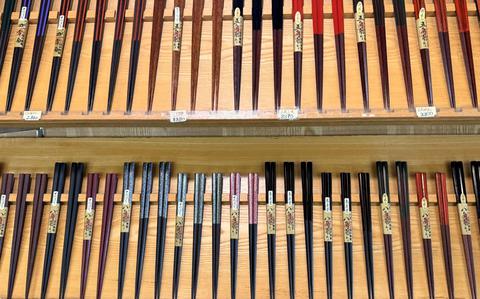
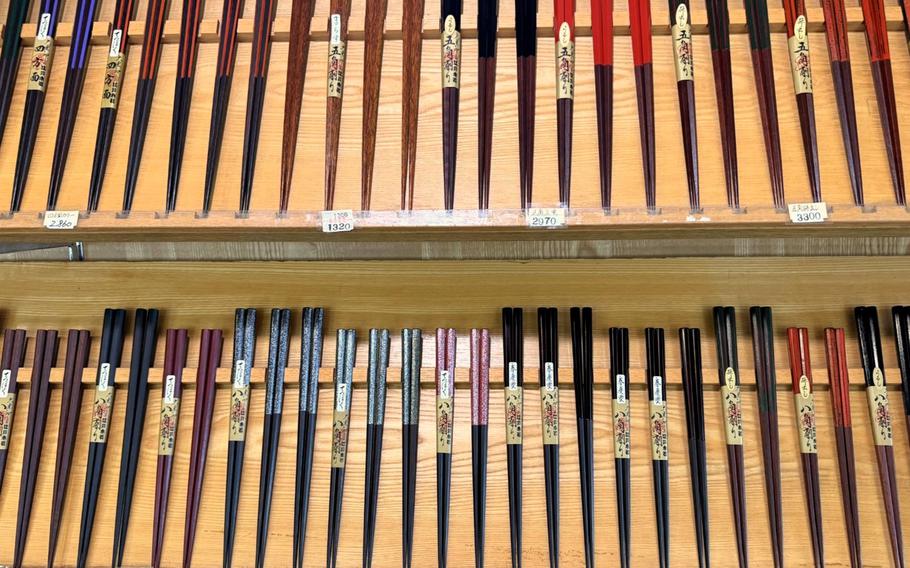
Rows of handmade chopsticks for sale at Daikokuya in Tokyo on Jan. 16, 2026. (Claire Jenq/Stars and Stripes)
If a Japanese sword is outside your budget, consider taking home a premium set of handmade chopsticks.
Daikokuya, a handmade chopstick store in the Sumida ward of Tokyo, combines an ancient craft with a modern twist. From triangular- to nonagonal-sided chopsticks, the shop promises well-made utensils designed for each person’s unique grip.
I first encountered Daikokuya’s chopsticks at a Japanese seafood restaurant in Fujisawa, near Enoshima. The chopsticks, resting on a piece of bleached coral, were reddish in color and had a fine tip, perfect for pulling out fish bones.
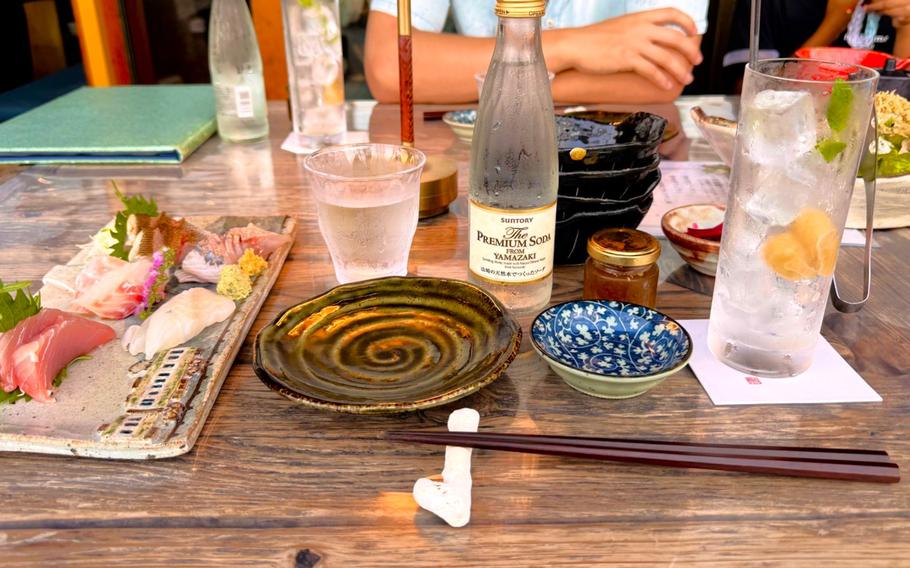
A pair of Daikokuya’s handmade chopsticks rests on a piece of bleached coral at Enoshima Koya restaurant on July 3, 2025. (Claire Jenq/Stars and Stripes)
My husband and I both raved about the chopsticks, and when we saw they were for sale at the restaurant, we bought them on the spot for around $20 each and used them regularly at home. We loved them so much, we decided to purchase more chopsticks from the Daikokuya shop in Tokyo.
The store is about a five-minute walk from Hikifune Station, in a residential area. A sign in the window instructs visitors to knock at the neighboring house or call the business number.
We did both, anxiously knocking at the house next door, hoping not to disturb anyone. Finally, a man came, unlocked the storefront and let us inside. He spoke no English but let us browse and would occasionally tell us facts and answer questions using an online translator.
According to Daikokuya’s website, founder and craftsman Katsuhiko Takeda trademarked his chopsticks under the name “Edo wooden chopsticks.” They’re often made of rare wood, such as ebony, snakewood and rosewood, but there are more affordable versions made from different hardwoods.
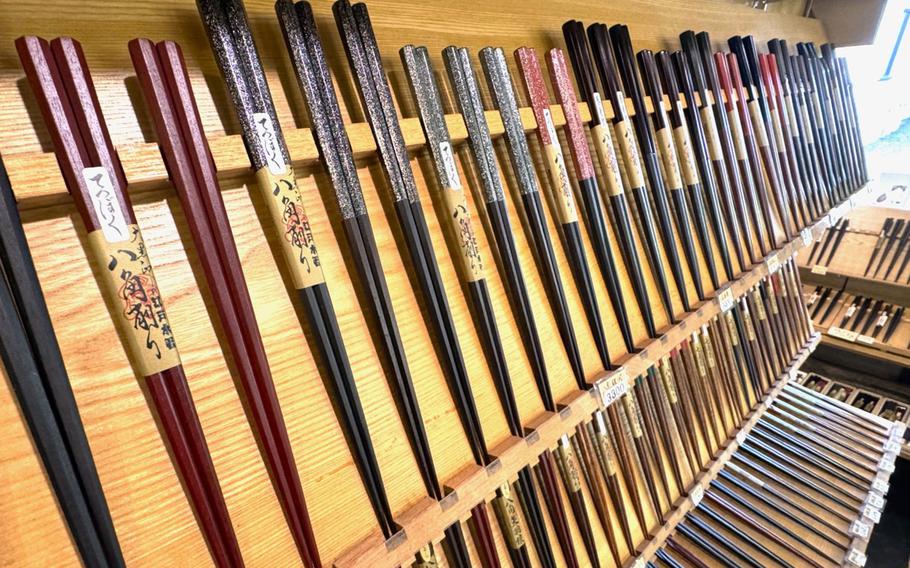
Rows of handmade chopsticks for sale at Daikokuya in Tokyo on Jan. 16, 2026. (Claire Jenq/Stars and Stripes)
The store contains more than 200 varieties of chopsticks designed for various uses. While most had Daikokuya’s distinctive tapered tip, there were rectangular-ended chopsticks for picking up noodles and round-tipped chopsticks for grabbing natto. There were also chopsticks to fit all hand sizes.
My husband and I decided to purchase a premium set for ourselves and four sets of everyday chopsticks. I was intrigued by a longer, torpedo-shaped set. It’s among the shop’s top sellers, carved with seven sides that end in a fine point and were lacquered a dark black. The thicker middle section felt well-balanced in my palm, but for about $106, were a bit above budget.
Daikokuya will reapply lacquer when it eventually wears away. However, I wanted chopsticks that I could more easily maintain and didn’t require a new lacquer.
My husband chose a pair of gray wood chopsticks with a natural finish, while I chose a pair of sleek, black chopsticks made of African ebony. They need only a light coating of olive oil every six months.
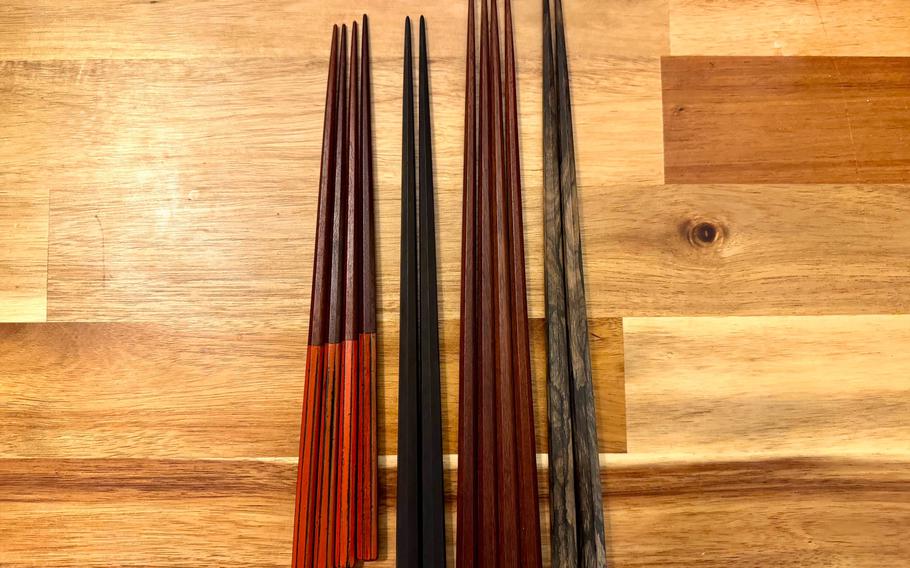
Daikokuya, a handmade chopstick store in the Sumida ward of Tokyo, combines an ancient craft with a modern twist. (Claire Jenq/Stars and Stripes)
For our everyday chopsticks, we chose octagonal-sided ones made from lacquered ironwood with retro-looking painted red tops.
The shop threw in a pair of long cooking chopsticks and some handmade wooden chopstick rests with our purchase.
Daikokuya also sells some of its products on an online storefront and through Amazon Japan, but nothing compares to visiting in person and finding the exact pair of chopsticks that fit your hands.
On the QT
Directions: A five-minute walk from Hikifune Station at 2-3-6 Higashimukojima, Sumida-ku, Tokyo, Japan.
Times: Open 10 a.m. to 5 p.m., Monday through Saturday
Costs: Expect to pay between $2 and $120 per set.
Food: Discover restaurants and shops nearby.
Information: Online: edokibashi-daikokuya.com
AloJapan.com