
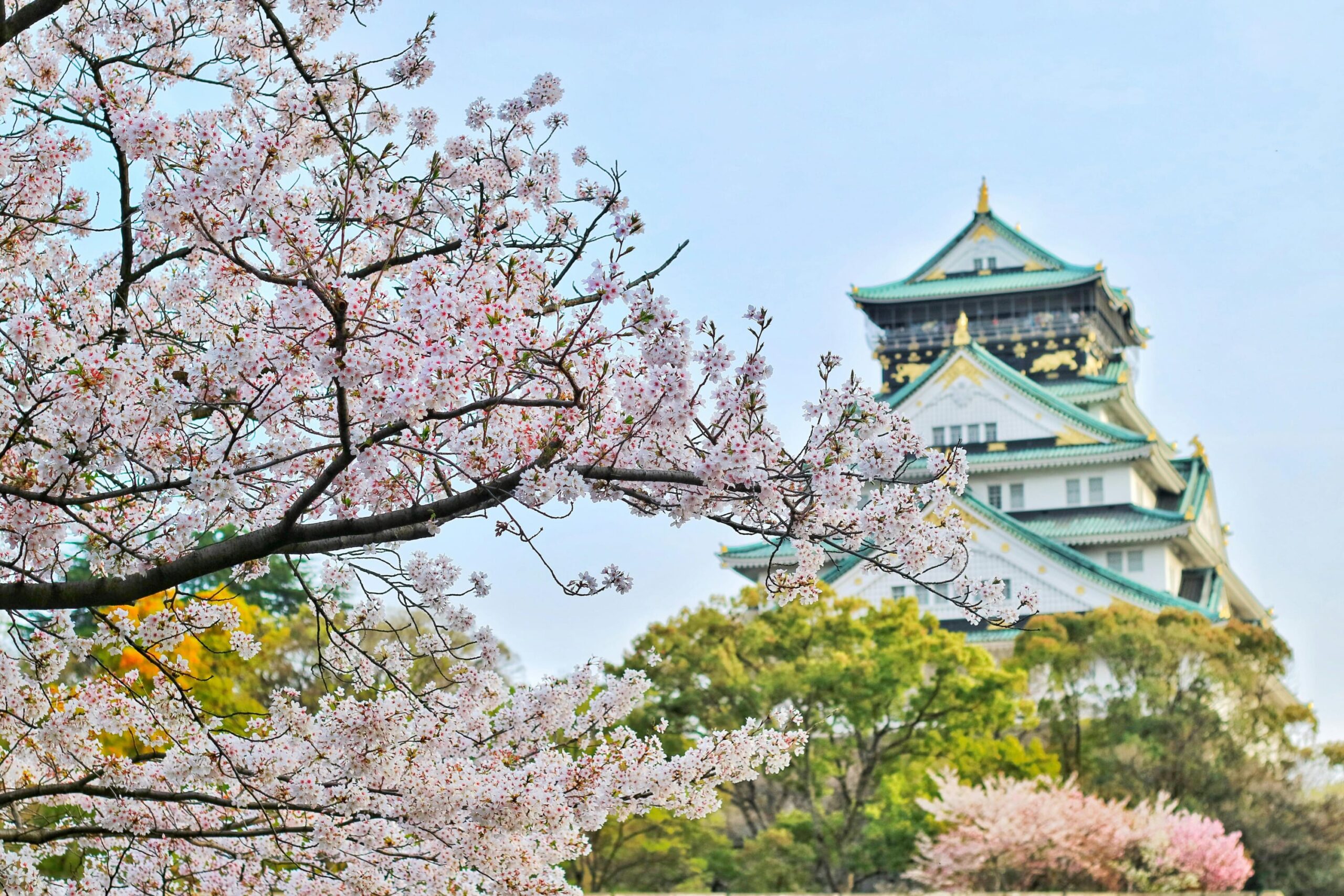
Every spring, Japan turns pink. Cherry blossom season draws millions of visitors eager to witness sakura in full bloom; people pause their busy lives to gather beneath the pale petals and witness their beauty drift and fade right before their eyes.
Sakura has long been synonymous with spring in Japan, immortalized in centuries of poetry, painting and tradition. Yet before the cherry trees bloom, another flower draws attention. Blooming in the lingering chill of winter, plum blossoms (ume), with their red and white petals, can be surprisingly vibrant and are often mistaken by tourists for cherry blossoms. Met with far less fanfare and smaller crowds than their cherry counterparts, plum blossoms signal the first hints of spring and offer a quieter, more intimate story about Japan’s seasonal beauty.
The Shift From Ume to Sakura
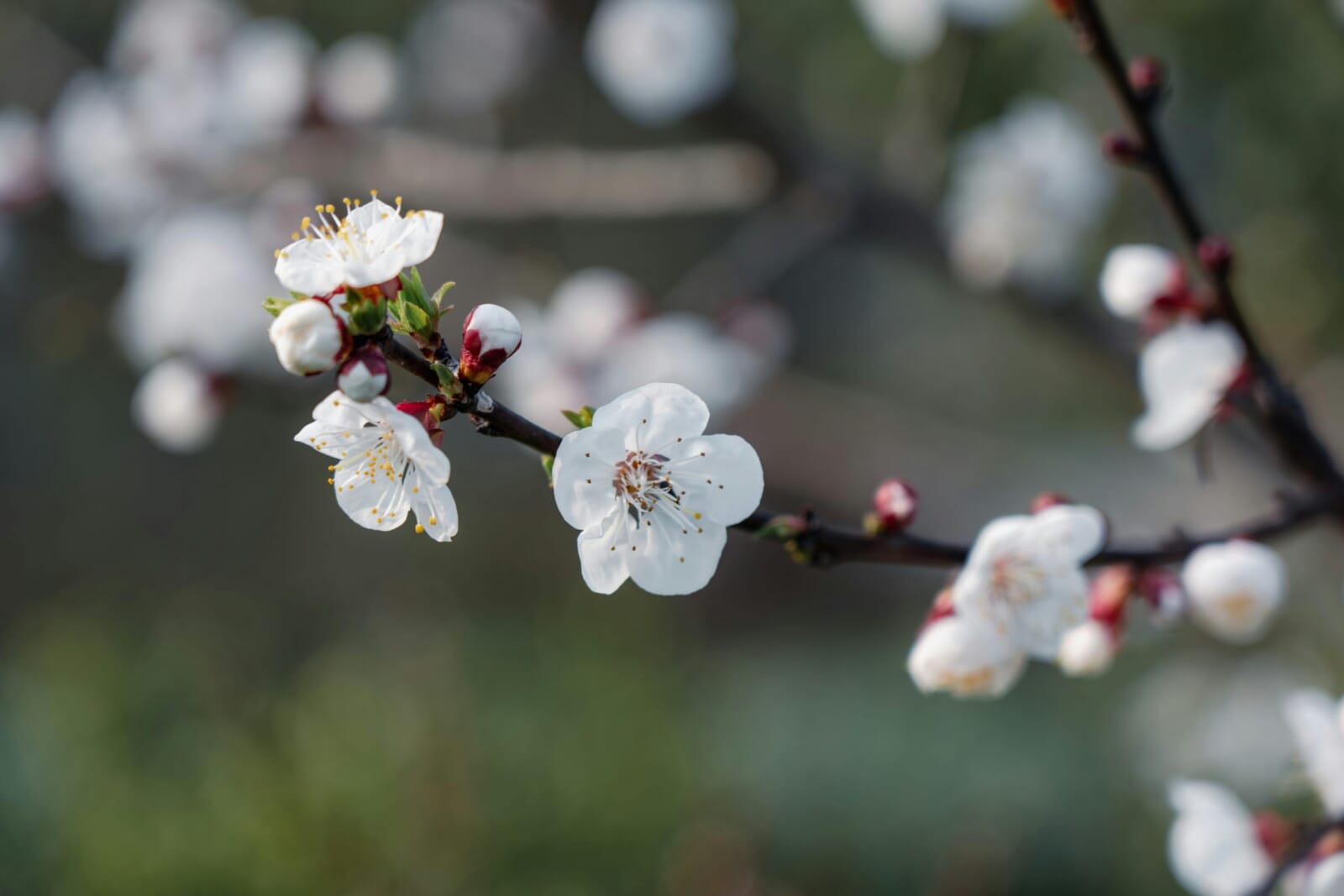
The tradition of flower viewing did not begin with cherry blossoms. In its earliest form, seasonal appreciation centered on plum blossoms, which bloom earlier and last longer. Introduced from China, ume were admired by scholars and courtiers for their subtle beauty, fragrance and resilience.
This focus began to shift in the early Heian period, when the imperial court turned its attention toward cherry trees. Emperor Saga is often credited with popularizing sakura viewing after hosting a blossom-viewing gathering beneath cherry trees, an event that helped elevate them within aristocratic culture.
But cherry blossoms were more than just a fashionable preference of the court: They carried older agricultural and spiritual meaning. Cherry trees were believed to be inhabited by the gods of the rice fields, and their blooming marked the time to begin planting rice. As these courtly gatherings became more common and these beliefs took hold, cherry blossoms gradually replaced plum blossoms at the heart of springtime celebration, eventually shaping hanami as it is known today.
Plum Blossoms (Ume) — Winter’s Silent Beauty
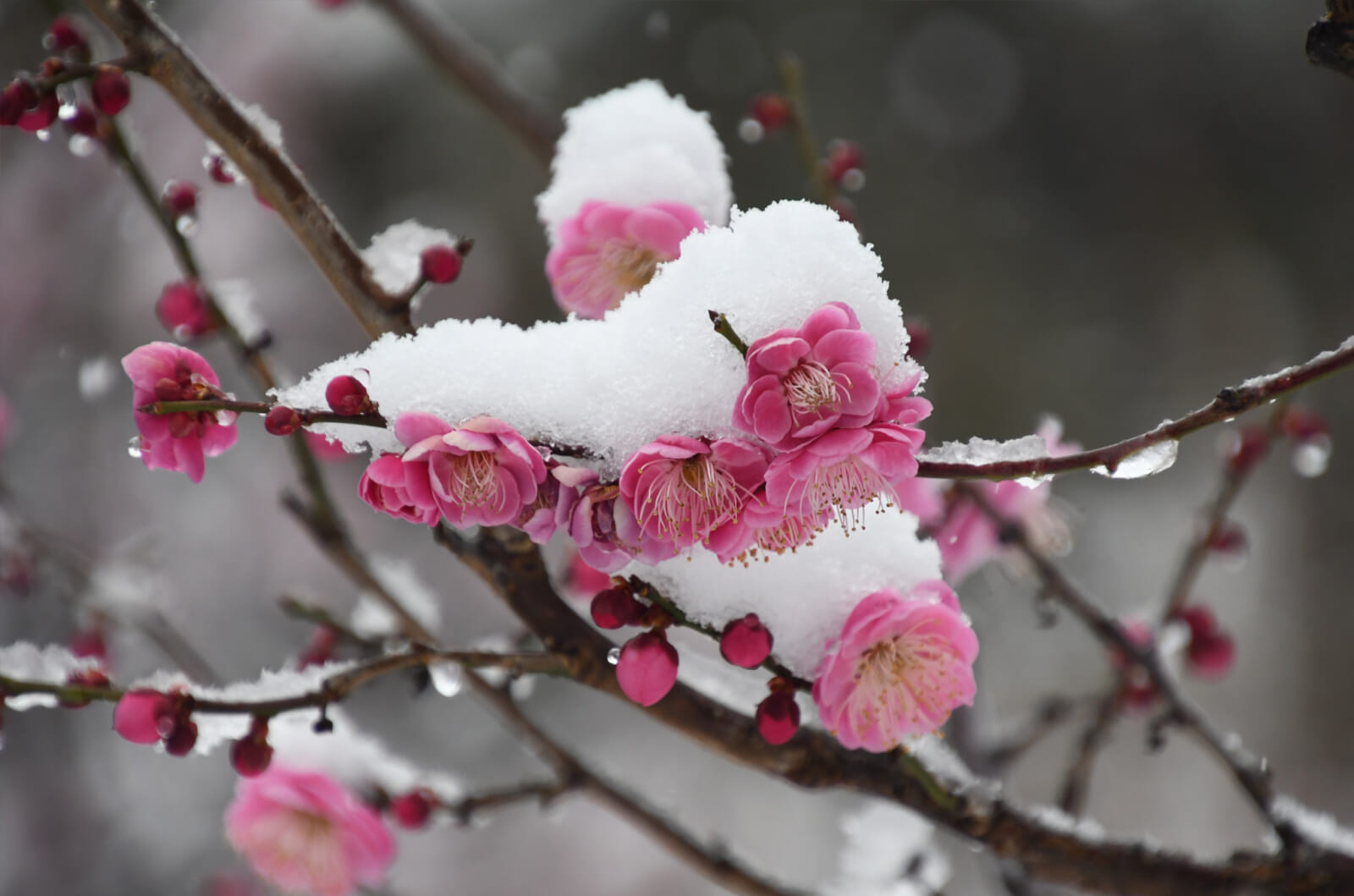
Unlike cherry blossoms, which dangle freely, plum blossoms grow on very short stems, clinging tightly to dark, twisting branches. While sakura scatters at the slightest breeze, ume stand steadfast. Blooming as early as late January and lasting through February, plum blossoms release a distinct fragrance — sweet, sharp, unmistakable — that lingers in the cold winter air.
Because they bloom in late winter, even in the snow, plum blossoms have long been associated with perseverance. In Japanese culture, ume symbolizes the ability to endure hardship and emerge intact, even beautiful. Where sakura reminds viewers of impermanence, plum blossoms speak to resilience.
This symbolism is reflected in the wide variety of plum blossoms found across Japan. White ume, often the earliest to bloom, symbolizes purity and new beginnings. Red and deep pink varieties carry stronger emotional weight, suggesting vitality and protection.
Cherry Blossoms (Sakura): The Fleeting Beauty of Life
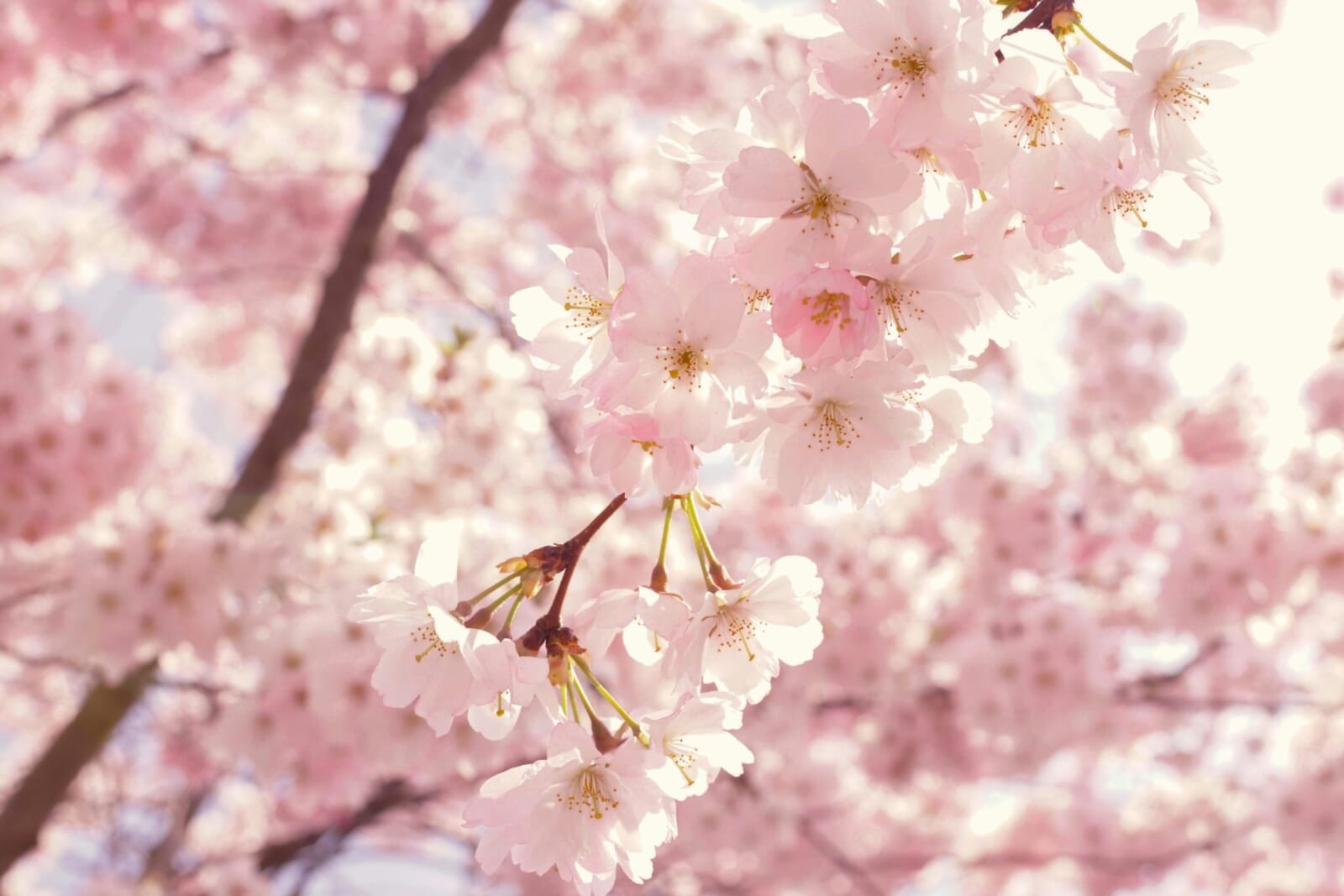
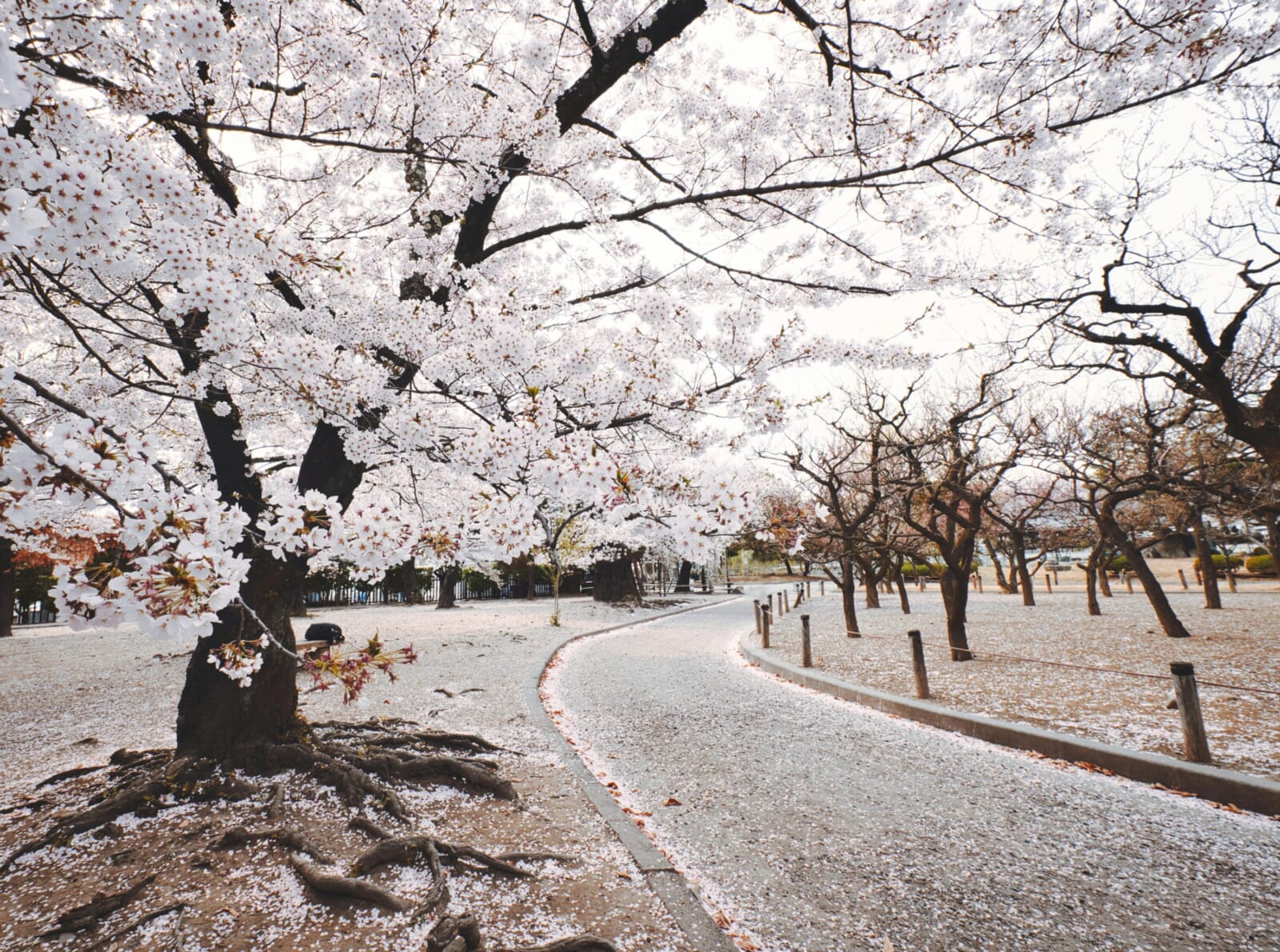
Unlike plum blossoms, cherry blossoms extend outward from their branches on long, delicate stems. Their pale petals gather in soft clusters, forming cloud-like canopies that seem to float around the trees rather than cling to them. Blooming from late March to early April, cherry blossoms reach their peak for only a brief window, often no more than a week, before falling all at once. They carry little fragrance; instead, their presence is defined by movement, visibility, and the speed with which they disappear.
Because their full bloom lasts only a few days, cherry blossoms have come to symbolize impermanence in its purest form. Their beauty is most striking at the very moment it begins to fade, reminding viewers that nothing can be held, only witnessed. In Japanese culture, this fleeting quality is not a flaw but the source of sakura’s meaning.
Two Flowers, Two Ways of Seeing Spring
Together, plum blossoms and cherry blossoms form a quiet dialogue about how beauty is understood in Japan. Ume blooms early, enduring cold and hardship, offering its sweet fragrance patiently to those who notice. Sakura arrives later, sudden and overwhelming, reminding everyone at once that beauty is fleeting and time is unforgiving.
To notice ume is to appreciate the beauty of perseverance; to celebrate sakura is to accept that the most beautiful moments cannot be preserved. Between the two, a deeper understanding of life emerges: one that honors both patience rewarded and the moments that slip away.
Related Posts
Discover Tokyo, Every Week
Get the city’s best stories, under-the-radar spots and exclusive invites delivered straight to your inbox.
AloJapan.com