
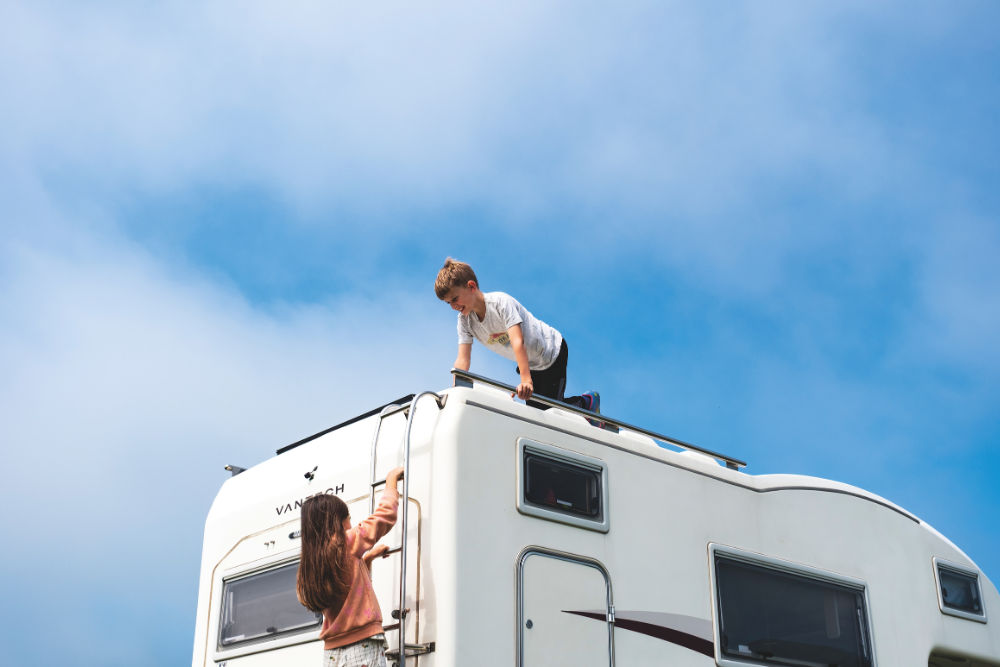
Children playing on top of their home for a two-week roadtrip across Hokkaido.
We pulled out of sapporo in a rented RV that felt both over- and undersized at once—too bulky for Japan’s narrow streets, too tight for three people to share for two weeks. My son called down from the top bunk, staking his claim. My wife took the wheel. I took a deep breath and wondered if we’d made a mistake. We were setting out on a two-week road trip across Japan’s northernmost island.
Outside, Hokkaido opened wide: mountains on the horizon, sky so big it seemed to swallow us whole. Inside, we were already learning how close “close” can be. Another family—good friends from Tokyo—had rented their own camper, and together we caravanned north toward the island’s wilder edge.
In winter, Hokkaido’s story was snow: ski fields, steam, powder measured in metres. But in summer, the island exhales. Hills rolled green, rivers swelled with meltwater, and roads stretched out almost empty. While the rest of Japan seemed to simmer and swarm, up here the air stayed cool and the crowds thinned to almost none.
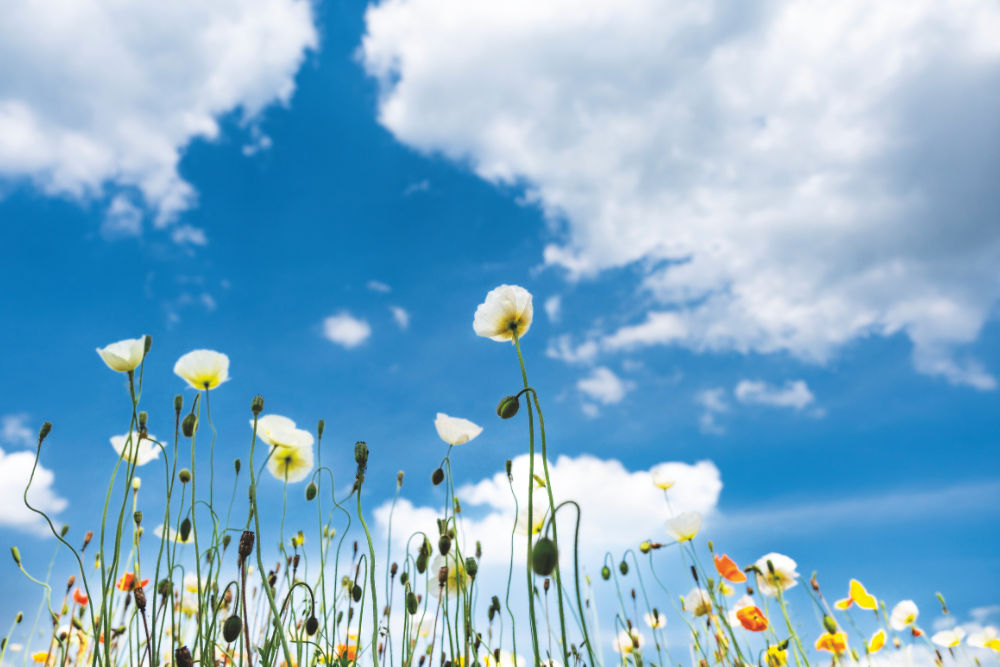 Hokkaido is abundant with blooms in its off season.
I had anticipated an immediate rush of freedom, invoked by the open road and endless horizon. But instead, the first hours of the journey were a clumsy chorus of cramped limbs and mismatched moods. Eventually, the wild and verdant landscapes of Hokkaido had softened our edges and steadied our breath to match its own.
Our first real stop was the Daisetsuzan range, the “roof of Hokkaido” and home to its highest peaks. We took a gondola to get our bearings. As we levitated up, the world below diminished, forests folding into an emerald carpet, rivers twisting like silver threads. At the top, a trail unfurled across alpine meadows. We walked slowly, stopping often, my son stomping on patches of the lingering snow. The scene was immense, accented by the crunch of boots and the occasional whistle of wind. In a few months these slopes will turn to fire with autumn, and soon after, vanish beneath snow so famous it lures almost 8 million visitors each year with the promise of good ski.
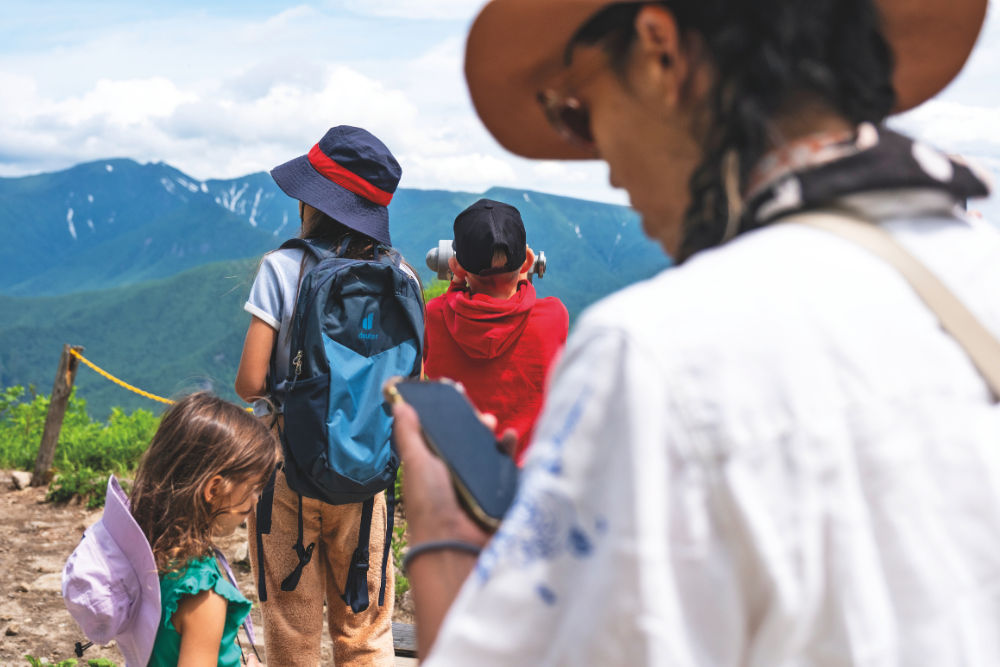 Exploring the island’s green summertime peaks.
Farther east, the scenery softened into forested lakes and caldera country. Lake Akan, known for its » marimo—spherical algae found almost nowhere else in the world—was our next stop. The area is home to one of the largest Ainu settlements in Hokkaido, and around Lake Akan their traditions are still visible in local craft, performance, and language. Above it all loomed Mt. Meakan, one of the island’s most active volcanoes and our destination for the day’s hike.
We followed a narrow trail that wound from cedar forest into barren rock, the air sharper with every step. My son darted ahead, thrilled by the sight of steam hissing straight out of the ground. At the summit, the fumaroles were alive—spitting, rumbling, the earth itself breathing hot and loud. The air was sulfur, but it felt electric to stand there observing Hokkaido’s continuous formation.
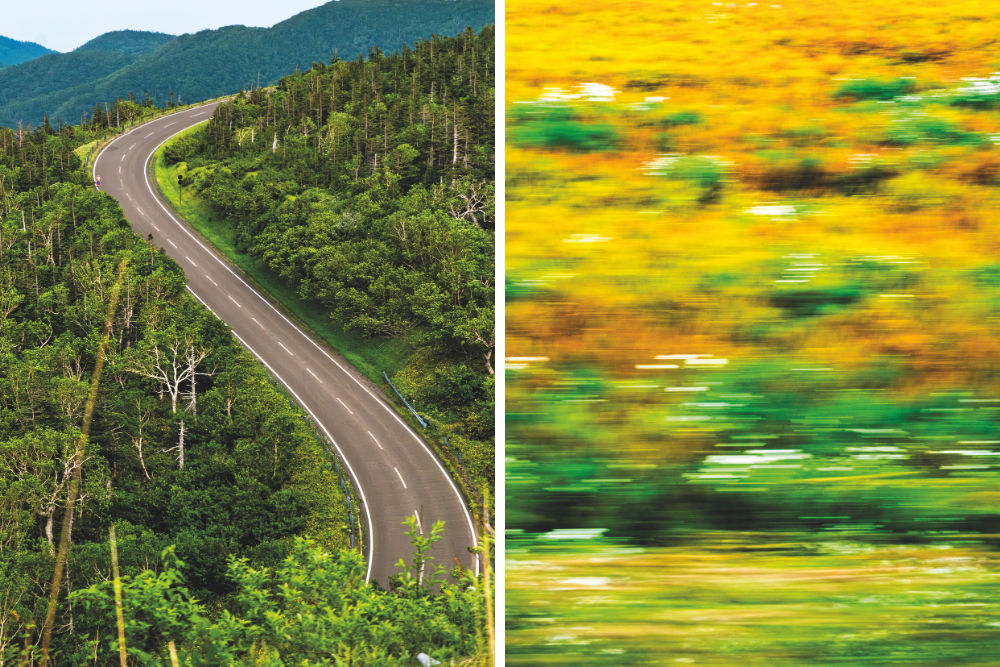
Nights settled into their own kind of order. Campsites across Hokkaido are remarkably well equipped—some with onsen baths, others with kitchens and communal fire pits. The bunks inside the RV were narrow, the air heavy with summer, but the smallness forced a kind of efficiency. We cooked simple dinners on the gas stove, often eating outside as the light faded. The smell of woodsmoke drifted from neighbouring sites, and the night air carried a damp, mineral edge from the nearby lakes. Afterward, we played cards by the lantern, listening to rain tap against the roof or insects hum in the grass. Travel has a way of stripping things back, and in our cottage on wheels, with firelight and night sounds around us, even the plain moments felt full.
Wildlife sightings became a regular part of the drive. Sika deer appeared on the roadside at dawn; red foxes trotted across fields with tails like white-tipped paintbrushes. Once, a tanuki—a “racoon dog”—waddled out from the trees, pausing long enough for my son whisper a made-up song about it against the window.
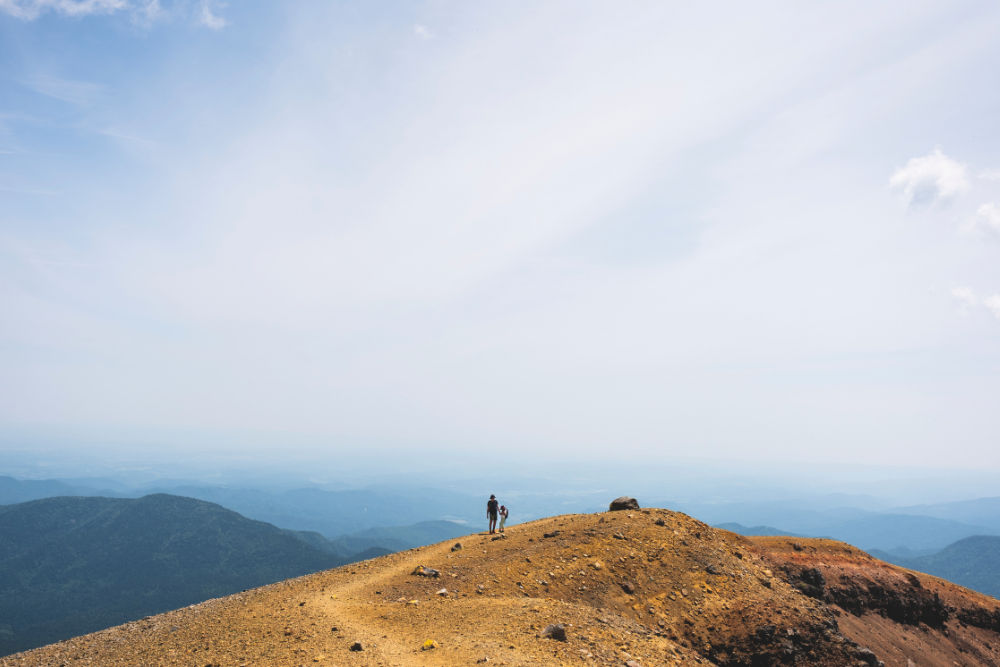 Endless horizons at Mt. Meakan.
The farther north we drove, the more untamed the island became. Our final destination was Shiretoko, a peninsula that juts into the Sea of Okhotsk and marks the northeastern tip of Japan. Much of it is protected as Shiretoko National Park, a UNESCO World Heritage Site recognised for its untouched ecosystems and rare seasonal sea ice that sustains everything from salmon runs to brown bears. The name comes from the Ainu “sir etok” meaning “where the earth protrudes.”
Here, the landscape felt elemental—mountain meeting ocean without much in between. The forests were thick with moss, streams ran cold and clear, and wooden signs along the trails warned of bears. Once, we came across paw prints pressed deep into the mud—broad and fresh enough to make us stop talking for a while.
By the second week, the RV no longer felt cramped. The same walls that had once hemmed us in had become a kind of comfort. I grew fond of waking to the shuffle of my son above me, of boiling water for instant coffee on the tiny stove. Our world had shrunk to a few square metres, and that smallness drew us close. Inside was intimacy; outside, immensity. That balance—that paradox—was the heart of the trip.
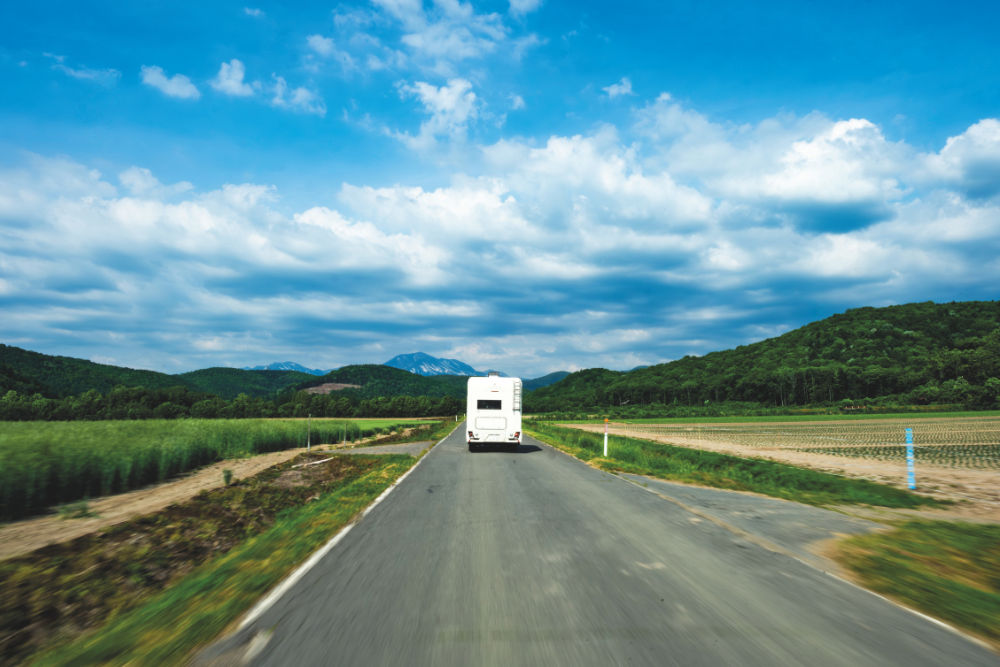 On the road.
Some of our best nights were spent at seaside campgrounds. We’d park in earshot from the shore, the waves slapping against the rocks while we grilled dinner outside. Salt hung in the air, and the chilly breeze through the open windows beat out the camper’s air conditioner. My son collected rocks until the light was gone; my wife and I sat with a bottle of sake and watched the sun disappear. Without the distractions of the city, we started to notice each other again.
When we finally rolled back into Sapporo and handed over the camper keys, the city felt sharper, faster, louder than we remembered. But I carried something with me: the sense that family is made not only in the grand views, but in simple routines, the small compromises, the evenings when the only thing to do is to be. Together.
Share:

Written By

Andrew Faulk
AloJapan.com