
Triggered by U.S. and Israeli attacks on Iran, the government is embarking on one of its largest-ever evacuations of Japanese nationals, which could involve nearly 1,000 people.
Chartered aircraft are being deployed as many travelers have been left stranded in the Middle East alongside local Japanese residents due to cancellations of commercial flights.
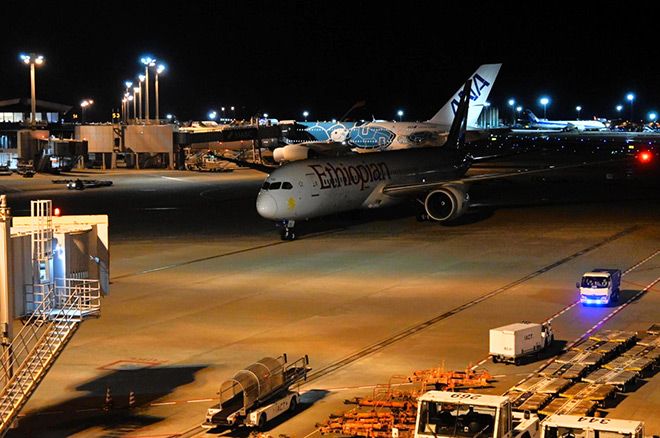
The first charter flight arrived at Narita Airport from Oman on March 8, carrying 107 Japanese nationals and others hoping to leave the United Arab Emirates and Oman.
Boarding priority was given to elderly people, children and short-term visitors because the number of people seeking to return exceeded the aircraft’s capacity, a Foreign Ministry source said.
Another charter flight departed from Saudi Arabia on March 9, and two additional flights are planned.
“We are carefully responding to the concerns and inquiries of Japanese residents and travelers stranded in the region,” Chief Cabinet Secretary Minoru Kihara told a news conference on March 9.
The evacuation plan calls for transporting Japanese nationals by land from surrounding countries to Oman or Saudi Arabia and then flying them back to Japan from there.
The government’s evacuation assistance began on March 2, when Japanese nationals were transferred by bus from Israel to neighboring Jordan.
The number of people involved in the evacuation effort is exceptionally large.
An estimated 11,000 Japanese nationals are currently spread across nine countries, including Israel and the Gulf states around Iran, according to the Foreign Ministry.
The figure includes more than 7,000 long-term residents as well as short-term travelers registered with the ministry’s Tabi-Regi emergency travel information service.
The government on March 5 raised its travel advisory for the UAE and five other countries to Level 3, advising against all travel. It continues to provide updates to those registered with Tabi-Regi three times a day.
In a previous major evacuation, the government repatriated 828 people from Wuhan, China, on five chartered flights between January and February 2020 amid the novel coronavirus pandemic.
“This is, once again, going to be among the largest evacuations of Japanese nationals we have ever undertaken,” said a senior Foreign Ministry official. “The total number of evacuees could approach 1,000.”
The government also evacuated Japanese nationals by bus during the Twelve-Day War between Israel and Iran in June.
It is chartering aircraft this time because Gulf countries hosting U.S. military bases have come under Iranian attack, leading to airport closures and widespread flight cancellations.
Commercial flight operations remain limited in the UAE, where the hub airport in the capital of Abu Dhabi was attacked.
Consequently, many travelers have been left stranded across the Middle East as the crisis coincided with the peak season for graduation trips.
In principle, passengers are charged for charter flights. But the government has provided them free of charge this time due to the “sudden and largely unavoidable situation,” according to a senior Foreign Ministry official.
Past evacuation efforts have also left lessons learned.
In August 2021, when the Islamist group Taliban seized power in Afghanistan, the capital Kabul fell faster than expected.
Of about 500 people eligible for evacuation, only one Japanese national and 14 Afghans were able to leave aboard Self-Defense Forces aircraft due to a delayed decision to dispatch the SDF.
The government has stationed an SDF transport aircraft on standby in the Maldives in the Indian Ocean since March 8 to ensure that the SDF “can respond swiftly should it be needed,” Kihara said.
“At a certain point, the approach shifted to the mindset that it is acceptable even if preparations end up being unnecessary,” a government source explained.
AloJapan.com