
The discoveries stem from the June 2025 Ocean Census expedition, conducted aboard JAMSTEC’s research vessel Yokosuka. Scientists used the renowned Shinkai 6500 manned submersible to conduct deep-sea dives across the study regions.
In total, researchers collected more than 528 specimens, which were catalogued, imaged, and preserved for morphological and molecular analysis.
In October 2025, taxonomists from Japan and around the world gathered at JAMSTEC headquarters in Yokosuka for a dedicated Species Discovery Workshop. There they confirmed the newly discovered and potentially new species and coordinated the next stages of scientific publication.
“This is about Japan leading global ocean science,” said Dr Akinori Yabuki, Principal Investigator. “Deep-sea discovery requires long-term commitment and world-class technology, and Japan is one of the few nations that are uniquely positioned to drive this work.”
Beyond the Nankai Trough, the expedition also explored the remote Shichiyo Seamount Chain, a series of submerged volcanic peaks located 500–700 kilometres southeast of Tokyo. Many of these offshore mountains had remained largely unexplored biologically prior to the 2025 mission.
Dives conducted using the Shinkai 6500 revealed diverse ecosystems, including coral gardens and seafloor habitats densely populated with sponges.
One study, led by Naoto Jimi and published in the Zoological Journal of the Linnean Society, describes two newly identified species of polychaete worms living symbiotically within a single glass sponge: Dalhousiella yabukii and Leocratides watanabeae.
Glass sponges build intricate skeletons from silica – the same material used to make glass – forming rigid lattice-like structures that create protected internal cavities for other organisms. For the worms living inside them, the structure functions like a “glass castle”.
Despite sharing the same host sponge, researchers found that the worms’ symbiotic lifestyles appear to have evolved independently.
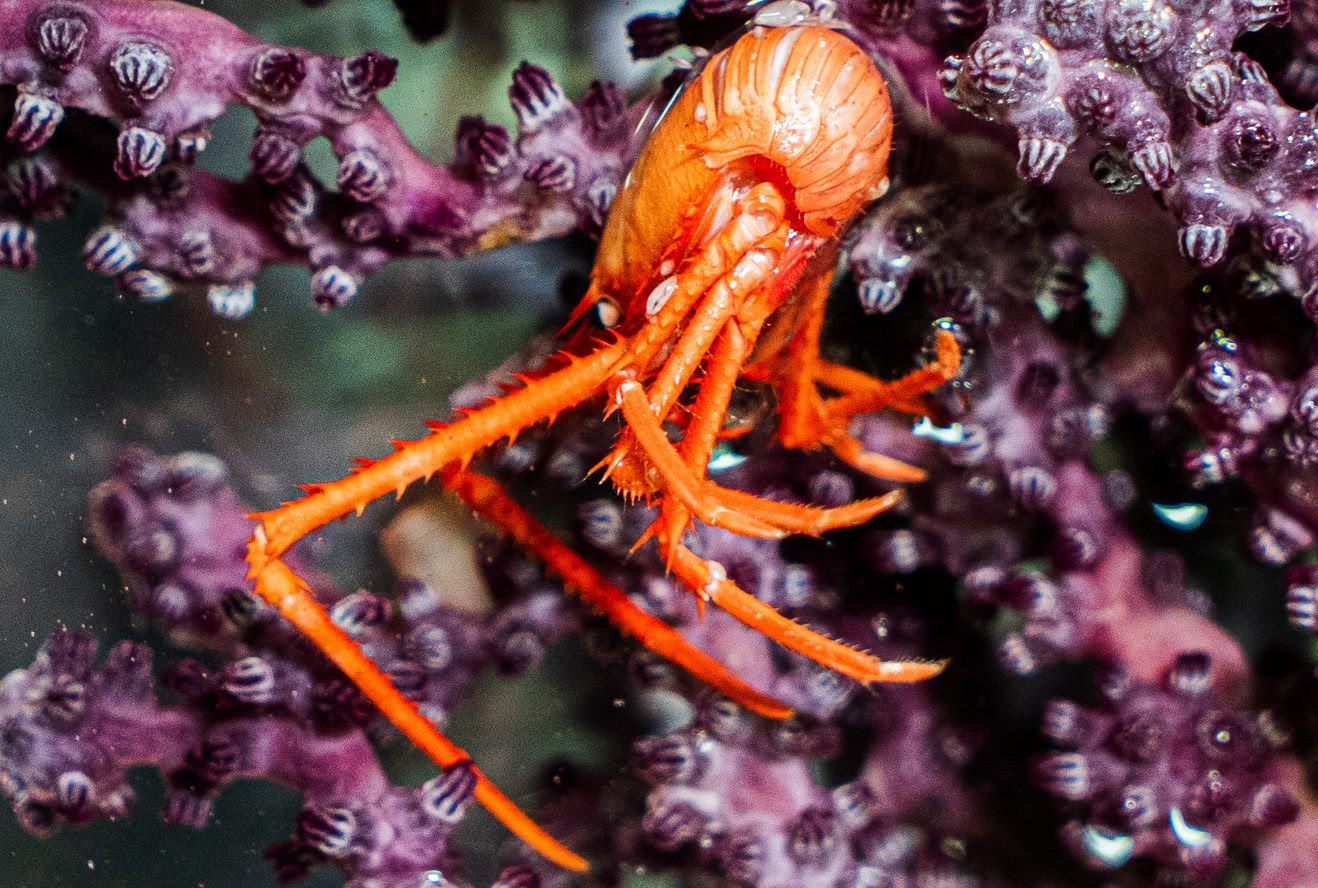
The Shichiyo dives also revealed five new species of squat lobsters, including members of the deep-sea genus Munidopsis, along with newly observed octocorals, nemerteans, amphipods, gastropods and kinorhynchs. Several species were also recorded in Japanese waters for the first time.
Together, the findings highlight both the Nankai Trough and the Shichiyo Seamount Chain as regions of significant scientific interest – offering new insight into deep-sea ecosystems that have remained largely hidden until now.
Click here for more from the Oceanographic Newsroom.
AloJapan.com