
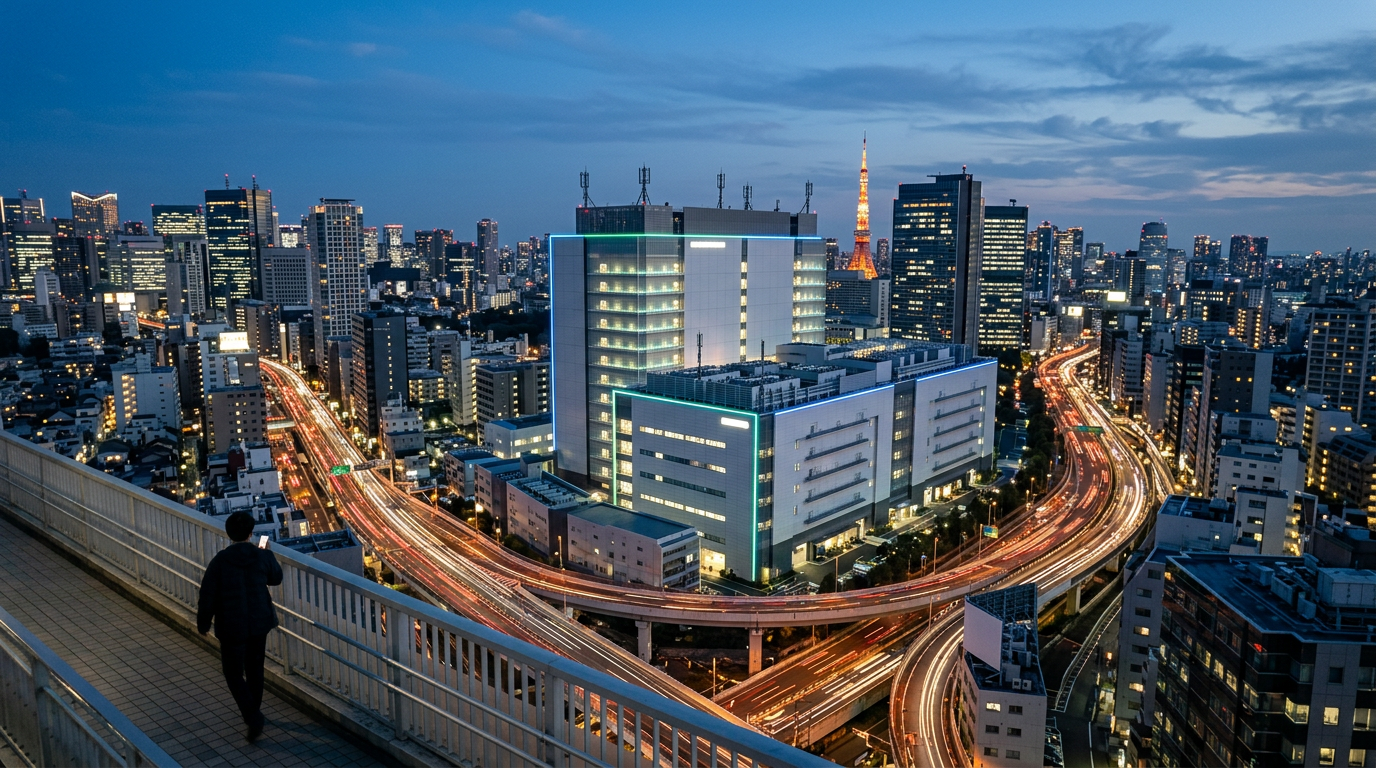
In the quiet, high-stakes corridors of global finance, a definitive shift in infrastructure priorities has crystallized in Tokyo. AirTrunk, the hyperscale data center specialist founded by Robin Khuda, has finalized a USD 1.2 billion (approximately KES 156 billion) loan facility aimed at aggressively expanding its Tokyo data center footprint. This move, while centered in Japan, is a bellwether for the surging demand for artificial intelligence and cloud computing infrastructure that is currently reshaping capital flows from Sydney to Nairobi.
The financing, which serves as a massive infusion of capital into the company’s Japanese operations, arrives at a critical juncture for the digital economy. As enterprises worldwide race to integrate generative AI, the bottleneck is no longer just algorithm development or semiconductor availability it is the physical, tangible capacity to process, store, and cool data at an industrial scale. For investors, this loan is not merely a debt instrument it is a declaration of confidence in the long-term utility of physical internet architecture.
The Architecture of a Global AI Powerhouse
The USD 1.2 billion facility—roughly KES 156 billion—is specifically earmarked for the expansion of AirTrunk’s Tokyo West and Tokyo East campuses. These facilities are designed to support the voracious appetite of hyperscalers—global cloud providers such as Amazon Web Services, Microsoft Azure, and Google Cloud—which act as the backbone of the modern digital economy. The demand metrics are staggering, with regional analysts suggesting that Tokyo is rapidly solidifying its position as the premier data hub for the Asia-Pacific region, outstripping competing cities in energy reliability and connectivity.
Robin Khuda, the visionary behind AirTrunk, has consistently argued that the future of digital connectivity rests on the capability to build larger, more efficient, and more sustainable data centers. This expansion is not just about raw square footage it is about density. Modern AI workloads require exponentially higher power density per rack than traditional IT services. The new financing allows AirTrunk to deploy advanced cooling technologies and power management systems capable of sustaining the next generation of AI-ready server clusters.
The strategic importance of this expansion is underlined by the ownership structure. Last year, the world’s largest alternative asset manager, Blackstone, completed its acquisition of AirTrunk in a deal that valued the company at billions. This loan facility demonstrates the capacity of Blackstone to leverage institutional capital to dominate the physical infrastructure layer of the AI revolution. It signals a move away from fragmented data center markets toward consolidated, high-performance hubs managed by sophisticated capital operators.
Data Point: The Infrastructure Boom in Numbers
Loan Amount: USD 1.2 billion (approximately KES 156 billion).
Primary Market: Tokyo, Japan (Tokyo West and Tokyo East campuses).
Core Driver: Surge in Generative AI and cloud computing throughput requirements.
Institutional Backing: Blackstone, global leader in alternative asset management.
Regional Comparison: Tokyo’s infrastructure investment scale eclipses current individual facility budgets in emerging markets by an order of magnitude.
The Nairobi Mirror: What This Means for East Africa
While the immediate impact of this investment is felt in the Kanto region of Japan, the ripples extend to rapidly digitizing economies like Kenya. For a Nairobi-based entrepreneur, a tech developer in Westlands, or a digital banking officer, the Tokyo expansion serves as a blueprint for the future of domestic infrastructure. Nairobi is currently undergoing its own, albeit smaller, data center revolution. Investments by firms like IXAfrica and Africa Data Centres are increasingly focused on the same principles: reliability, latency, and proximity to submarine cable landing points.
The lesson from Tokyo is one of scale and foresight. Kenya’s digital economy, which relies on the stability of the internet for sectors ranging from M-Pesa transactions to remote-work freelancing, depends on the hardening of its own digital foundations. As global players like AirTrunk set the standard for what a hyperscale facility looks like, East African regulators and investors must grapple with the same fundamental challenges: the need for massive, reliable power grids and the necessity of high-capacity fiber connectivity. The Japanese model demonstrates that the most successful data hubs are those integrated into the national energy strategy, not operating in parallel to it.
Sustainability and the Energy Dilemma
The inherent tension in this expansion lies in energy consumption. Large-scale data centers are notoriously power-hungry, and Japan, like Kenya, faces a delicate balancing act between industrial growth and aggressive carbon-neutrality goals. The financing secured by AirTrunk includes strict covenants regarding environmental, social, and governance (ESG) standards, reflecting a broader trend where financiers are no longer willing to fund “dirty” digital growth.
Analysts note that this loan is partially structured to incentivize the use of renewable energy. As the facility scales, the requirement to integrate grid-scale battery storage and potential off-grid renewable power becomes paramount. This is a critical observation for the Kenyan context, where the push for green energy—geothermal and solar—is often cited as a competitive advantage for attracting international data center operators. If Kenya can prove that it can offer the same scale of stable, green energy as developed hubs like Tokyo, it could leapfrog the intermediate stages of infrastructure development.
The Future of the Physical Internet
As the capital flows into the concrete and steel of Tokyo’s tech corridors, the broader narrative is one of entrenchment. The physical internet is becoming more concentrated, more expensive, and more critical than ever before. Robin Khuda and his team at AirTrunk are betting that the demand for AI processing will not only continue but will accelerate beyond current projections. For the rest of the world, this is a signal to prepare for a digital landscape where the distance between the user and the data is measured in milliseconds, and where the winners are those who own the pipes and the processors.
The question remains whether emerging markets can mirror this level of institutional investment to secure their own digital future. As Tokyo’s capacity expands, it sets a global benchmark for performance and investment, leaving little room for error in the race to build the infrastructure of the next century. The capital has been deployed now, the engineering challenge begins.
AloJapan.com