
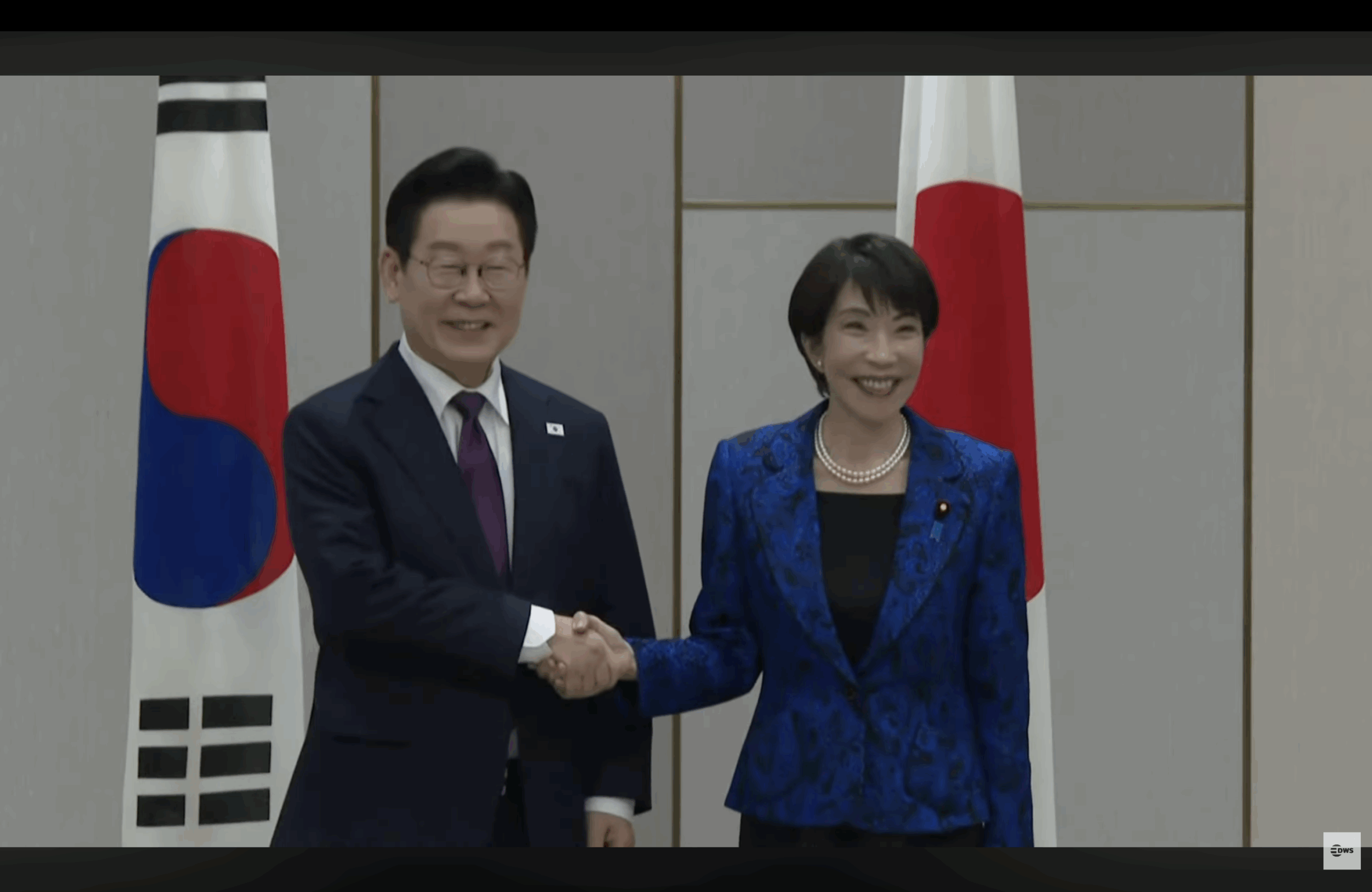
This year, Japan’s snap parliamentary election resulted in a historic landslide victory for Prime Minister Sanae Takaichi and her ruling party. For the first time in Japanese postwar history, the ruling Liberal Democratic Party (LDP) won an outright two-thirds majority of seats in Japan’s lower house of parliament. With her leadership securely consolidated, Takaichi will likely continue her aspiration to shore up Japan’s strategic deterrence in Northeast Asia.
Takaichi’s policy agenda includes an increase in the defense budget, the establishment of a national intelligence agency, and the relaxation of restrictions on Japan’s arms exports. Takaichi is also committed to revising Japan’s “peace constitution” to legally recognize Japan’s Self-Defense Force (SDF) as its military. Her foreign policy has been met with criticism from China, while receiving endorsement from the U.S. Trump administration.
South Korea’s response to Japan’s shifting defense posture has been ambivalent. Traditionally, South Korea’s history of colonization by Japan has shaped the former’s perception of Japan’s rearmament. More recently, however, significant changes have taken place within South Korean politics. As South Korea has come to view threats from North Korea and China as more severe, there has been increased recognition of shared security interests with Japan.
Such geopolitical shifts have contributed to South Korean President Lee Jae-Myung’s initial positive encounter with Takaichi. Though in the past, Lee has been critical toward Japan, as President Lee has committed to a “future-oriented partnership” with Japan. For South Korea and Japan, a “future-oriented” partnership signifies efforts to move beyond the conflicts of the first half of the 20th century, when Japan colonized Korea from 1905 to the end of WWII. The two countries would instead collaborate on contemporary challenges such as regional security, economic growth, and technological innovation to enhance mutual security and prosperity.
To some analysts, South Korea has been perceived as the country that needs to show a greater openness toward a bilateral partnership with Japan. Recurrent domestic opposition has been cited for constraining successive South Korean governments from developing the relationship—and for backtracking from previous bilateral agreements. Despite more recent shifts in public perceptions of growing threats from China and North Korea (as well as changes in U.S. foreign policy since the Trump presidency), some analysts remain concerned that South Korean public’s enduring “past-driven” grievances and suspicion toward Japan would stymie Lee and Takaichi’s efforts to strengthen the “future-oriented” partnership.
As South Korea navigates heightened uncertainty stemming from U.S.–China rivalry and the United States’ turn toward protectionist trade policy, the strategic importance of maintaining a stable, constructive relationship with neighboring Japan has increased substantially. As South Korea explores strategies for strengthening its economic and military capacity, Japan’s similar concerns about its security should be recognized as an opportunity for collaboration. Even as the two countries may have divergent foreign policy preferences, for example, toward ensuring stability in the Taiwan Strait, such disagreements heighten the importance of bilateral (and trilateral, including the United States) consultations to harmonize their strategies.
A successful bilateral partnership, however, requires commitment from both countries to move beyond past disputes. Unfortunately, Japanese political figures have also engaged in rhetoric and actions that have reignited—rather than defused—historical controversies between the two countries. Despite Japan’s formal apologies for past wrongs, ongoing political controversies over three specific issues have led many Koreans to believe Japan’s remorse is insincere: the Yasukuni Shrine, which honors, among others, convicted Japanese war criminals, the Korean “comfort women,” and territorial disputes over Dokdo/Takeshima Island.
Japan’s prime ministers have regularly sent offerings to Yasukuni Shrine, despite its controversial reputation for memorializing Japanese leaders associated with World War II. In contrast to the Japanese government’s formal acknowledgments of past wrongs, prominent political figures have continued to dispute the Japanese military’s role in the forced abduction of “comfort women” during World War II. Finally, Japan has continued to claim sovereignty over South Korea-owned Dokdo Island (known as Takeshima in Japan) and has sent government officials to attend the annual “Takeshima Day” event.
Takaichi herself also took part in these controversies before becoming prime minister. She has personally visited Yasukuni Shrine in the past and has denied Japan’s role regarding Korean “comfort women.” During the LDP’s leadership race, Takaichi endorsed sending a government minister to attend the “Takeshima Day” event. As prime minister, Takaichi has softened her stance and rhetoric. Yet concerns remain that her government’s future handling of these issues could renew bilateral tensions. The South Korean foreign ministry, for example, has recently issued a formal protest when the Takaichi government sent a deputy minister to attend the “Takeshima Day” event, regarding such actions as an affront against its territorial sovereignty.
For Takaichi and political figures on the Japanese right, the motivation to participate in these controversies is likely to target voters with more nationalist, unapologetic sentiments toward Japan’s 20th century history. The perception that Japanese politics is endorsing “historical revisionism” subsequently provokes South Korean politics to retrench its grievances against Japan. Though the changing geopolitical circumstances have motivated the contemporary South Korean government to pursue rapprochement with Japan, a substantive bilateral partnership will remain elusive until Japan’s government also makes an effort to move beyond giving contradictory signals toward resolving its past historical relations with Korea.
It may be difficult for Takaichi to resolve Japan’s domestic political divide over its history. However, as Japan’s Prime Minister, she has a responsibility to prevent disputes over the past from dominating present and future political discourse. With her strengthened post-election leadership, Takaichi should refrain from politicizing historical controversies for political gain. Distancing her government from commemorating Yasukuni Shrine as well as acknowledging Korea’s territorial sovereignty over Dokdo and Japan’s role with the “comfort women” as settled historical issues will likely lead to divisions within Takaichi’s ruling center-right Liberal Democratic Party, even causing defections to Japan’s hard right. But it will convey to Korea that Takaichi is reducing the political salience of history-related disputes to prioritize Japan’s current strategic interests and aspirations.
Such diplomatic gestures, in turn, would bolster the South Korean government’s efforts to do the same. Though some South Koreans may continue to perceive them as insufficient, Takaichi’s display of prudence in refraining from behaviors that antagonize South Korea will be instrumental in pursuit of a lasting bilateral partnership. The challenges of historical reconciliation should not be trivialized. However, just as France and Britain set aside their difference in the late 19th century in recognition of the threat from Germany, Takaichi can contribute to fostering a Japan-South Korea strategic partnership that addresses the two nations’ common strategic interests in East Asia and beyond.
AloJapan.com