
Meguro River (File photo)
Planning your dream trip to Japan in spring for cherry blossom season? Here is where and when is the best time to see the cherry blossoms in Japan!
In this deep dive, we share the Japan cherry blossom forecast, talk about sakura viewing culture, and see where are the best places to see cherry blossoms in Japan.
When does the 2026 cherry blossom season start?
The timing of cherry blossom season in Japan varies by region, with blooming typically beginning in late March and peaking in early April in central areas.
When is peak cherry blossom season in Japan in 2026?
Cherry blossoms typically reach full bloom about five to seven days after first flowering, though timing can shift depending on temperature, rain, and wind. In most locations, peak viewing lasts around one week under stable conditions.
– Late March: Major Cities in Full Bloom
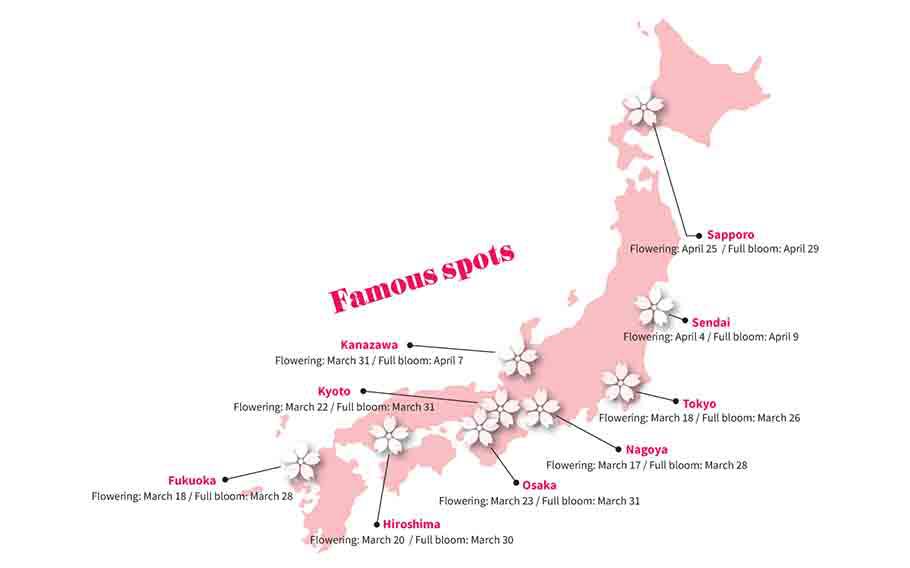
Peak season begins in the final days of March across western and central Japan. Tokyo (around March 26), Nagoya (around March 28), Fukuoka (around March 28), Hiroshima (around March 30), Osaka (around March 31), Kyoto (around March 31), Nara (around March 31), Shizuoka (around March 29), and Kochi (around March 27) will be at their best from late March into early April. Wakayama follows shortly after, reaching full bloom around April 2.
– Early to Mid-April: Central & Northern Honshu
The bloom front moves north in early April. Kanazawa (around April 7), Fukushima (around April 6), Sendai (around April 9), Niigata (around April 11), Nagano (around April 10), Yamagata (around April 13), Akita (around April 17), and the Mount Fuji area at Kawaguchiko (around April 11) follow through early to mid-April.
– Mid to Late April: Tohoku to Hokkaido
Northern regions peak last. Morioka (around April 19), Aomori (around April 22), and Sapporo (around April 29) bring the season to a close from mid- to late April.
Early-blooming varieties can still be enjoyed in southern areas such as Kawazu and Miurakaigan until early March.
Where to see early and late-blooming sakura
If you want to see cherry blossoms before the main season, head south of Tokyo, where some varieties bloom as early as January.
– Atami (Shizuoka)
Located about 1.5 hours from Tokyo, about 58 Atami-zakura trees bloom along a peaceful stream in late January to early February, about a month ahead of Japan’s standard cherry blossoms.
– Kawazu (Shizuoka)
About three hours from Tokyo, Kawazu-zakura is a unique cherry blossom variety that blooms in late Febraury to early March, nearly a month earlier than typical sakura. About 850 vibrant pink flowers line a 4km stretch of the Kawazu River, creating a stunning early spring scene.
– Miurakaigan (Kanagawa)
About 1.5 hours from Tokyo, Miurakaigan offers a smaller-scale but picturesque cherry blossom viewing experience in mid-to-late February.
Where to see cherry blossoms in April-May
Blossoms in the Greater Tokyo region may bloom from March to April.
– Tohoku Region (Sendai and beyond)
In Sendai, sakura usually start blooming at the end of March, slightly later than in Tokyo.
– Hokkaido (Sapporo and beyond)
The last cherry blossoms in Japan typically bloom in late April to early May, making Hokkaido one of the final places to enjoy sakura season.
Cherry blossom forecast
The Japan Meteorological Corporation issued its latest forecast for Japan’s cherry blossom season on February 20, 2026. The forecast is as below. These dates can serve as a reference for planning your trip.
Where is the best place to see the cherry blossoms?
Japan has over 1,000 stunning cherry blossom spots, so choosing the best one can be tough. To help, we’ve listed beautiful locations by region.
Northern Japan: Hokkaido
Moerenuma Park (Sapporo)
Designed by sculptor Isamu Noguchi, this artistic park has big sculptures and bursts with bright pink cherry blossoms in spring.
Goryokaku Tower and Fort Goryokaku (Hakodate)
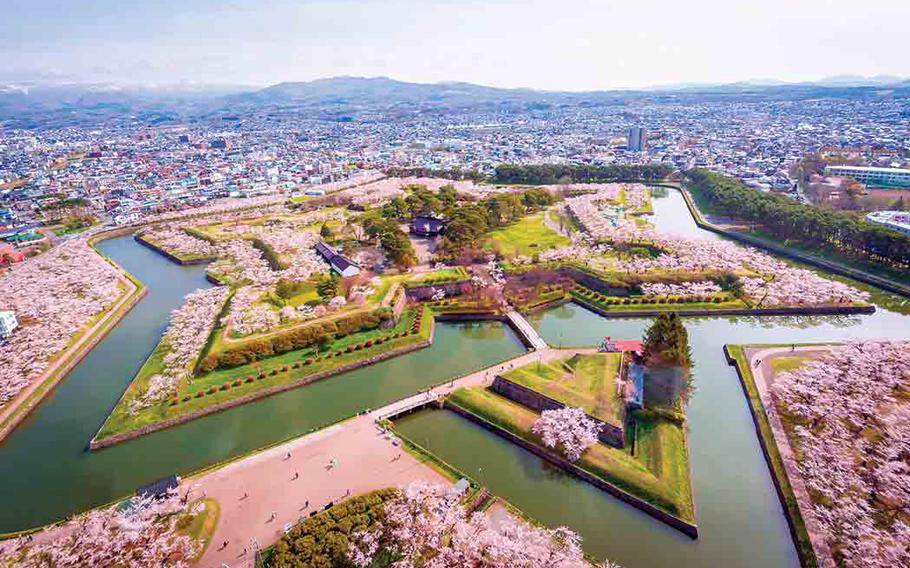
A star-shaped, French-style fort and national historic site surrounded by famous cherry blossoms. The 107m-high Goryokaku Tower gives a unique bird’s-eye view of Hokkaido’s blooms.
Asahigaoka Park (Furano)
One of Japan’s Hundred Views, this spot offers amazing views of the Furano Basin and Tokachi mountains, with 3,000 cherry trees adding to the beauty.
Mt. Tengu (Otaru)
Named after mythical creatures, this mountain has great views of Otaru and the Sea of Japan. In spring, lighted cherry trees create a striking scene.
Asahikawa Park (Asahikawa)
With about 3,500 cherry trees, this popular Hokkaido park lights up the blossoms at night during the season.
Northeastern Japan: Tohoku Region
Hirosaki Park (Aomori)
Covering 49 hectares with about 2,600 cherry trees, Hirosaki Park is one of Japan’s best sakura spots.
Mt. Iwaki (Aomori)
sacred mountain with around 6,500 cherry trees along a 20km road, Mt. Iwaki blooms beautifully from late April to early May.
Kakunodate Bukeyashiki-dori (Akita)
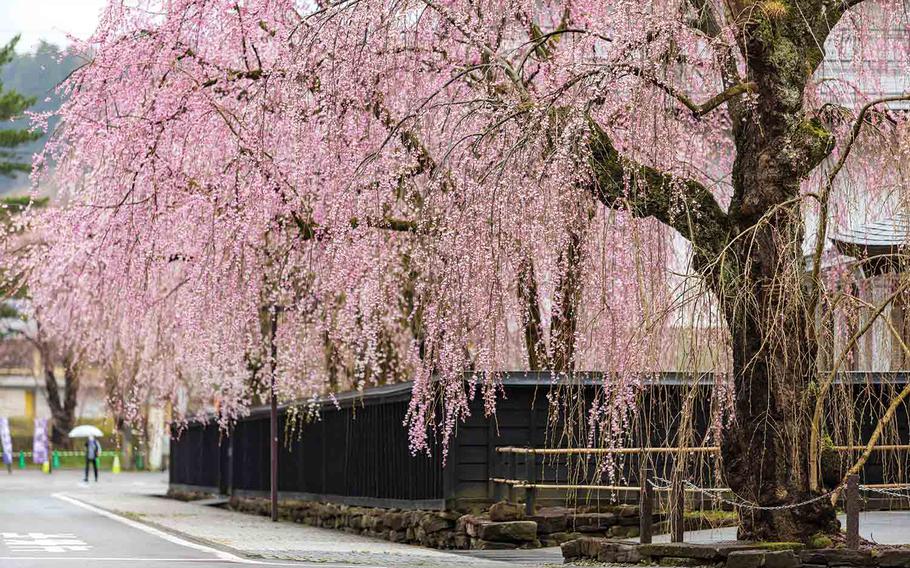
Kakunodate Bukeyashiki-dori (File photo)
Famous for its preserved samurai district, Kakunodate lights up with pink weeping cherry trees in late April, contrasting with the black fences of samurai homes.
Miharu Takizakura (Fukushima)
A national treasure and one of Japan’s Three Most Famous Cherry Blossom Trees, this 1,000-year-old weeping cherry is surrounded by a visitor path.
Hitome Senbonzakura (Miyagi)
Spanning 8 kilometers along the Shiroishi River, this spot offers a gorgeous view of cherry trees with the snowy Zao Mountains behind.
Tsutsujigaoka Park (Miyagi)
Three hundred years ago, Date Tsunamura of the Date Clan planted 1,000 sakura trees here. Despite challenges over the years, replanting efforts have maintained the park’s allure, now featuring over 360 diverse sakura trees.
Eastern Japan: Kanto-Koshin Region
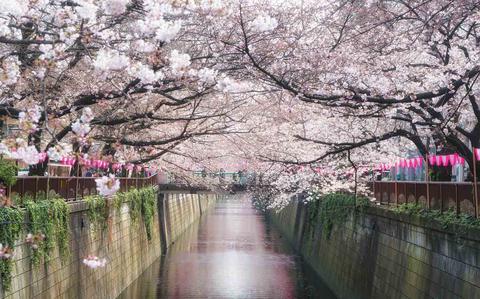
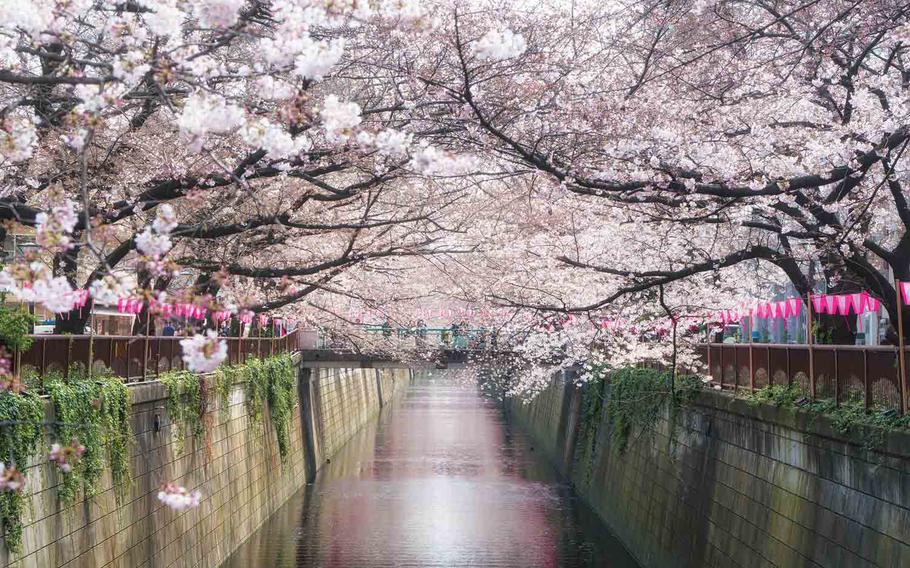
Meguro River (Tokyo)
Stretching 3.8 kilometers, this river is lined with about 800 cherry trees that bloom vibrantly in spring, enhanced by nearby cafes and restaurants for dining and drinks.
Rikugien Gardens (Tokyo)
A tranquil, historic Japanese landscape garden, recognized as a Special Place of Scenic Beauty, famous for its graceful weeping cherry trees during spring.
Shinjuku Gyoen National Garden (Tokyo)
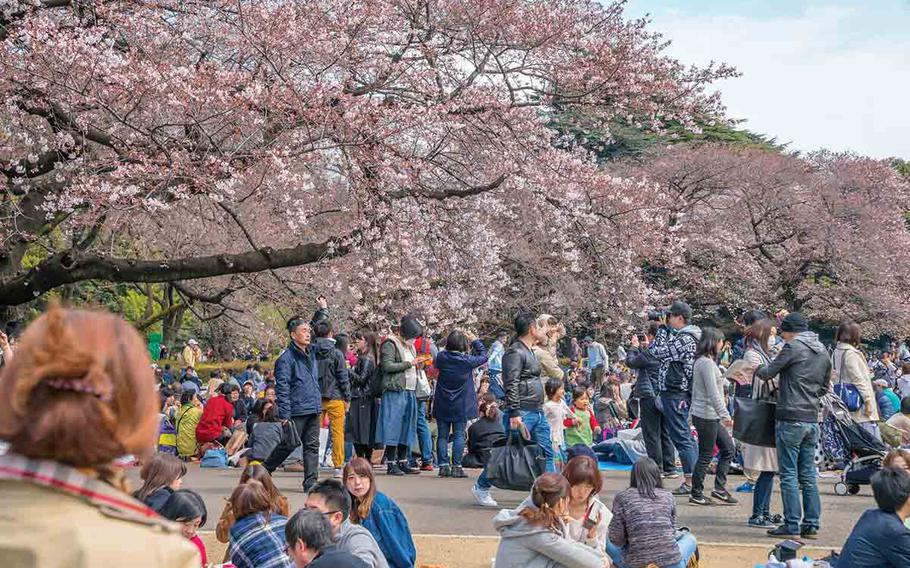
Shinjuku Gyoen (File photo)
Celebrated as a masterpiece of Japanese garden design, Shinjuku Gyoen boasts around 1,000 cherry trees across 65 varieties, delivering a spectacular spring display.
Ueno Park (Tokyo)
Home to roughly 1,200 cherry trees, Ueno Park is a leading spot for sakura viewing, attracting nearly 2 million visitors each spring—especially enchanting in the evening with illuminated bonbori lanterns.
Yoyogi Park (Tokyo)
One of Tokyo’s largest parks, Yoyogi Park draws crowds in spring for hanami under its sprawling cherry blossoms, perfect for gatherings.
Lake Kawaguchi (Yamanashi)
Nestled against the stunning backdrop of Mount Fuji, the shores of Lake Kawaguchi become a captivating cherry blossom retreat each spring. Nearby, Arakurayama Sengen Park (Chureito Pagoda) is also a popular stop worth exploring.
Central Japan Hokuriku and Tokai Region
Nagoya Castle (Aichi)
A major Nagoya attraction, this castle is encircled by about 1,000 cherry trees of 10 types, like Yoshino and Shidare, making for gorgeous spring scenery. Its annual Spring Festival, held from late March to early April, includes a light-up event that showcases the blossoms and castle, plus local Nagoya food and drinks at Shachihokodo and traditional Japanese games.
Matsumoto Castle (Nagano)
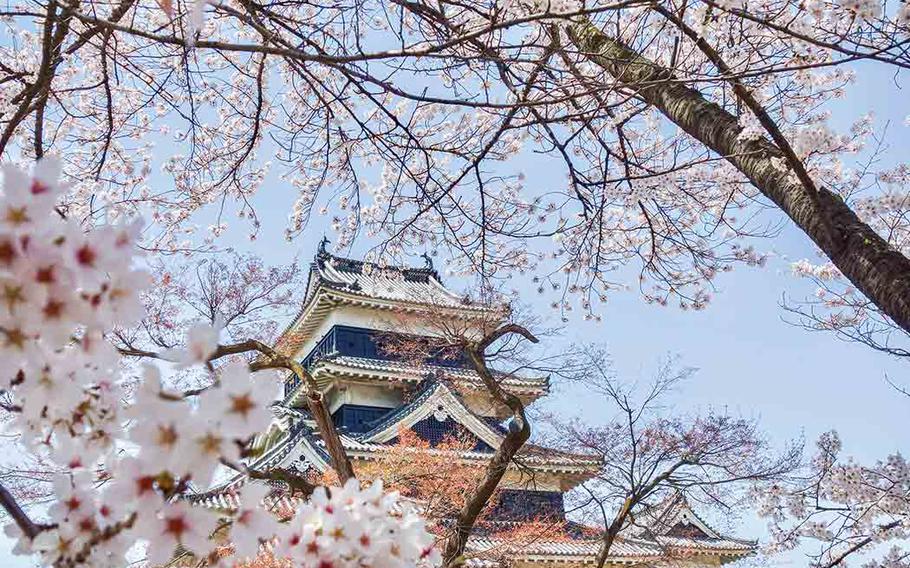
Matsumoto Castle (File photo)
Japan’s oldest five-tiered, six-story castle, Matsumoto Castle shines in spring with its cherry blossoms. The evening illumination along the outer moat creates a romantic, enchanting vibe.
Shinshu Zenkoji Temple (Nagano)
Established in 642, this historic temple is surrounded by a beautiful mix of cherry trees and weeping cherry blossoms, enhancing its spiritual charm.
Takato Castle Ruins Park (Nagano)
With about 1,500 cherry trees, this park ranks among Japan’s top 100 cherry blossom spots and is a must-see during peak bloom season.
Ueda Castle Park (Nagano)
Built in 1583, Ueda Castle is famous for its surrounding area, where over 1,000 cherry trees bloom, forming a stunning spring spectacle.
Kenrokuen Garden (Ishikawa)
One of Japan’s three most famous gardens, Kenrokuen features around 420 cherry trees across 40 varieties, blooming in mid-April. It’s also listed among Japan’s 100 Best Sakura Spots.
West Japan: Kyushu Region
Fukuoka Castle (Fukuoka)
At Fukuoka Castle, history meets nature during its spring cherry blossom festival. The event brings illuminations, local food, traditional performances, and a variety of fun activities.
Kumamoto Castle (Kumamoto)
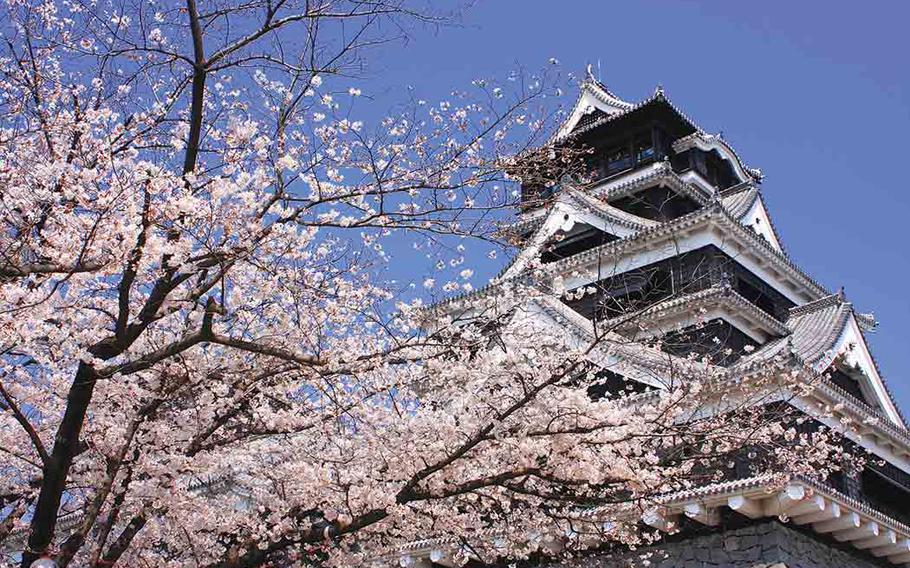
Kumamoto Castle (File photo)
One of Japan’s most famous castles, Kumamoto Castle provides a striking setting for cherry blossom viewing. Its wide grounds are filled with cherry trees, offering a perfect mix of spring beauty and historic architecture.
Mid-Western Japan: Kansai/Kinki Region
Himeji Castle (Hyogo)
Known for its over 1,000 cherry trees, Himeji Castle provides a special sakura experience, including boat tours in the moat beneath pink petals during its cherry blossom festival.
Tō-ji Temple (Kyoto)
Home to Japan’s tallest wooden pagoda, Tō-ji Temple is surrounded by about 200 striking cherry trees, creating a captivating sight. Nearby Kyoto restaurants offer a chance to dine with blossom views.
Ninna-ji Temple (Kyoto)
Famous for its late-blooming Omuro-zakura cherry trees, Ninna-ji pairs them with a five-story pagoda. This scenic spot is a national beauty and one of Japan’s top 100 sakura locations.
Yoshimine-dera Temple (Kyoto)
Founded in 1029, Yoshimine-dera is renowned for its lovely weeping cherry blossoms, nestled among Kyoto’s western mountains.
Mount Yoshino (Nara)
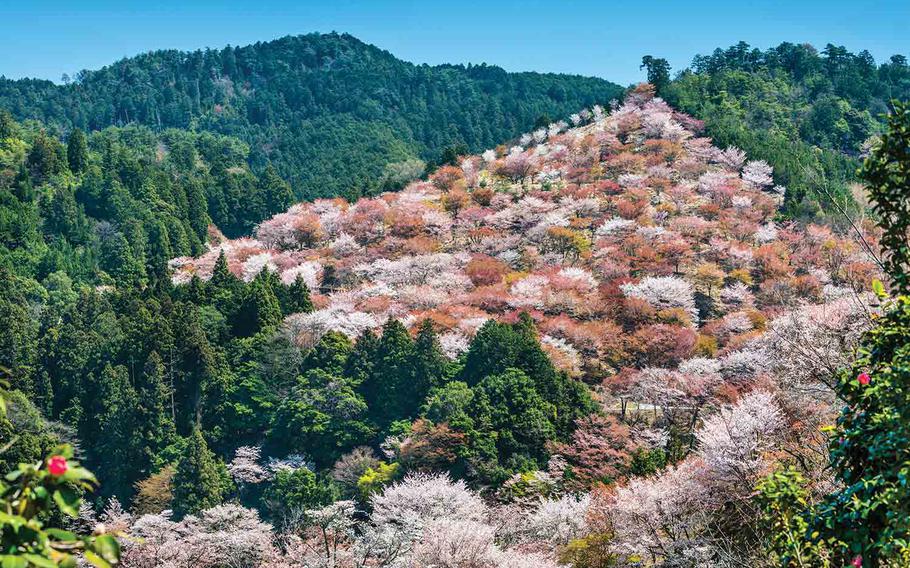
Mount Yoshino features around 30,000 white wild cherry trees across its valleys and ridges, delivering an incredible springtime sakura display.
Southwestern Japan: Chugoku and Shikoku Region
Hijiyama Park (Hiroshima)
Famous for its 1,300 cherry trees and sweeping city views, Hijiyama Park is Hiroshima’s top hanami spot. It offers great photo ops near Henry Moore’s Arch, family-friendly areas by the Manga Library, and lively evening picnics along winding paths under the blossoms.
Hiroshima Castle (Hiroshima)
Surrounded by about 350 cherry trees along its grounds and moat banks, Hiroshima Castle blooms in early April, creating classic Japanese scenery.
Matsuyama Castle (Ehime)
One of Japan’s 12 pre-Edo Period castles still standing, Matsuyama Castle is a beautiful spot for cherry blossom viewing. Its historic grounds are dotted with many cherry trees, blending natural splendor with historical charm during the spring bloom.
Ritsurin Garden (Kagawa)
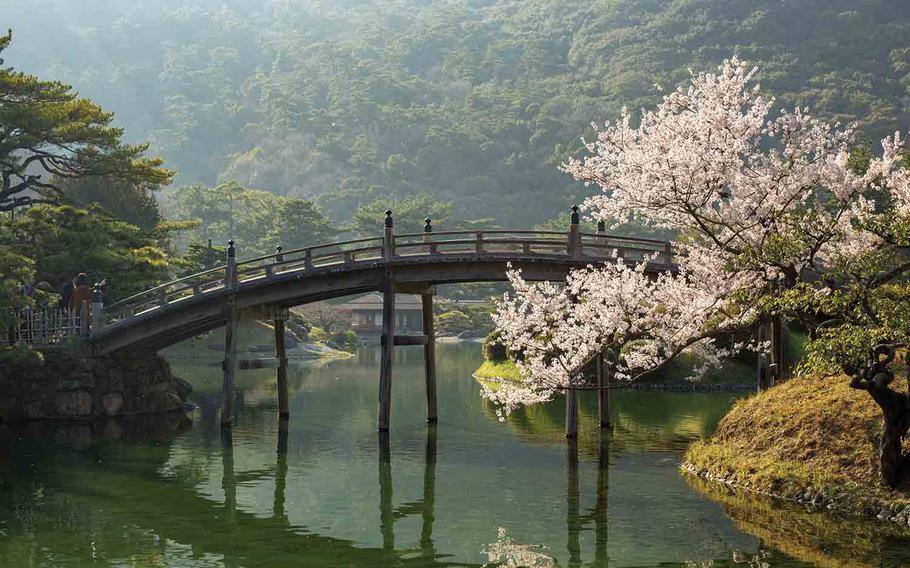
Ritsurin Park (File photo)
Celebrated for its scenic charm, Ritsurin Garden offers a peaceful setting for cherry blossom viewing. Its tidy paths and ponds are framed by delicate cherry tree blooms, making it a calm and picturesque retreat for visitors.
Why is the season important?
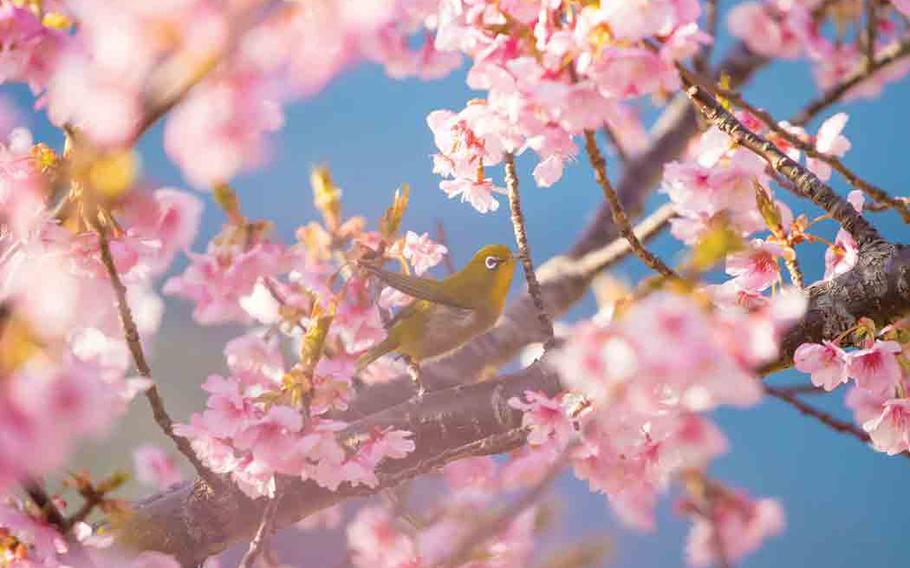
Celebrated for its scenic charm, Ritsurin Garden offers a peaceful setting for cherry blossom viewing. Its tidy paths and ponds are framed by delicate cherry tree blooms, making it a calm and picturesque retreat for visitors.
Cherry blossom season is significant in Japan due to its historical and cultural importance. Originating as a national pastime in the 8th century, the practice of viewing cherry blossoms, or ‘sakura’, symbolizes the transient nature of life.
This concept, known as “mono no aware” in Japanese, repreciation of sakura’s fleeting beauty has deeply influenced the Japanese mindset, emphasizing the impermanence of life and the importance of cherishing each moment.
Does Japan have cherry blossom festivals?
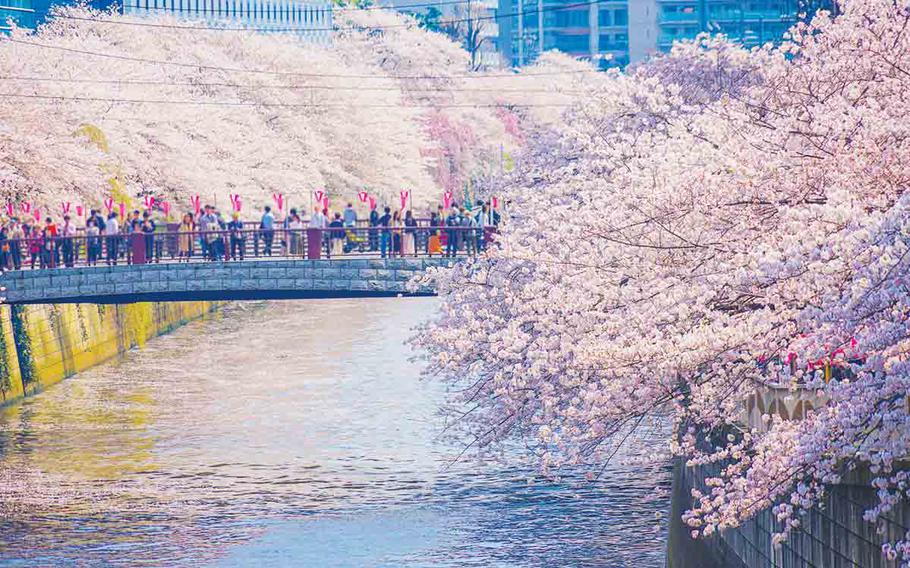
Meguro River (File photo)
Yes, Japan hosts numerous cherry blossom festivals centered around the traditional practice of “hanami,” or flower viewing. These festivals occur during the brief cherry blossom season, which lasts only a few weeks.
People gather in parks and streets lined with sakura trees to enjoy picnics and celebrate the blossoms. The timing of these festivals varies across Japan, starting in the warmer southwest and ending in the colder north.
Additionally, “yozakura,” the viewing of illuminated cherry blossoms at night, is a popular activity during these festivals.
Can I join hanami events?
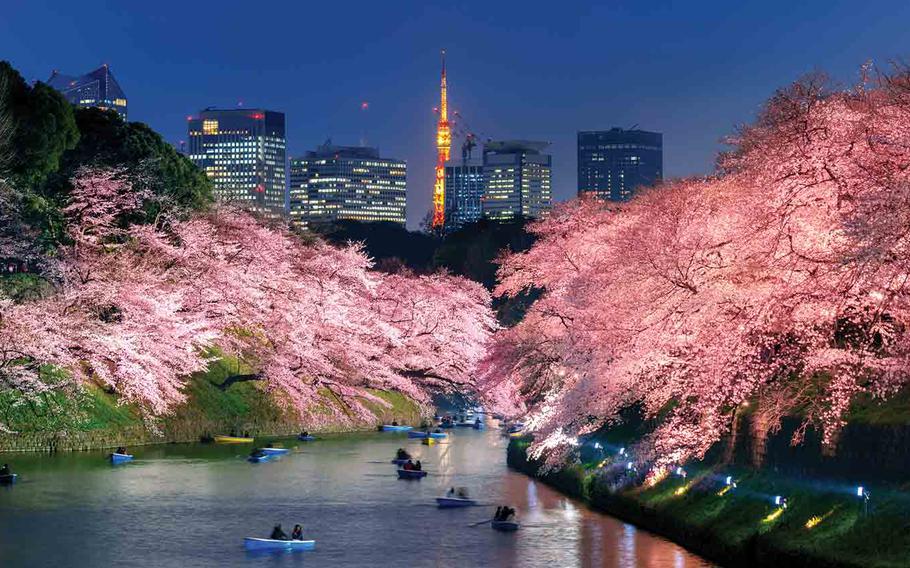
Chidorigafuchi (File photo)
Yes, you can definitely participate in hanami events in Japan! To enjoy these cherry blossom viewing parties, you’ll need a few essentials.
Bring a waterproof tarp or picnic blanket, easily available at 100 yen shops, or use a large plastic garbage bag.
Stock up on your favorite drinks and sakura-themed bentos or snacks from convenience stores or supermarkets.
Don’t forget wet wipes, chopsticks, a garbage bag, a camera, and warm clothing for the cooler evenings of early spring.
For an extra special experience, consider renting a kimono for daytime strolling and photo opportunities.
Via Live Japan
AloJapan.com