
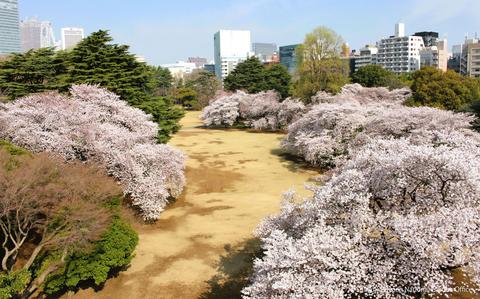
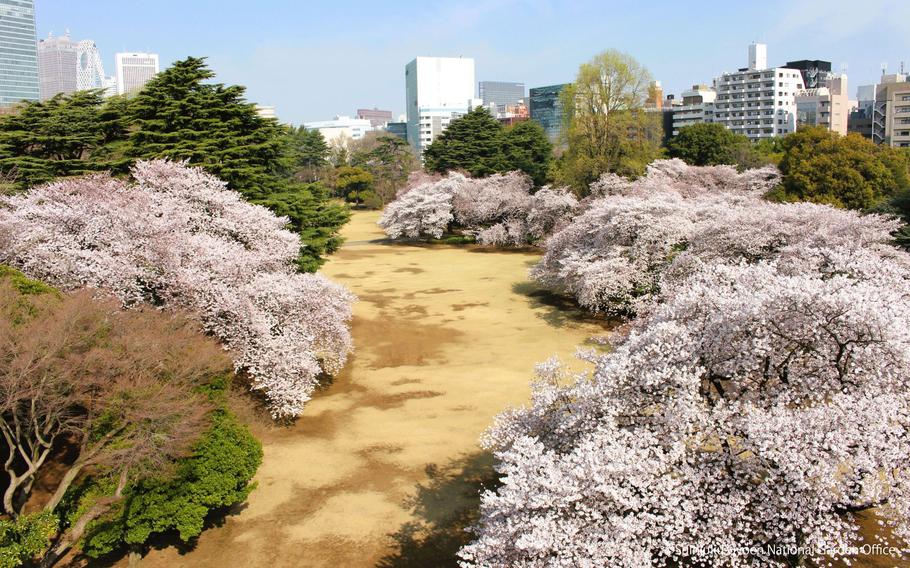
Shinjuku Gyoen (Photo courtesy of (c)Shinjuku Gyoen National Garden Office)
The long-awaited sakura season is quickly upon us!
The Japan Meteorological Agency’s forecast shows March 21 to be the start of the beloved cherry blossom season on Japan’s mainland; just in time for the Spring Equinox holiday on March 20! Soon the landscape will go from drab winter to the much-awaited soft blush and pink tones of spring.
Head out to enjoy a refreshing stroll. I guarantee that you will enjoy not only the stunning views, but also the touch of elegance the cherry blossoms bring with them.
During the season, a lot of sakura festivals are also scheduled throughout the city. Don’t miss them, as they give great visitors chances to communicate with locals in some Japanese spring traditions as well.
The blooms don’t stay for long, so catch them before they’re gone!
In Tokyo, there are many places to enjoy hanami, cherry blossom-viewing parties, thanks to the many parks and traditional gardens the 400-year-old capital is home to. Here are a few of my favorites.
————————————————————————————————–
Ueno Park (Taito-ku)
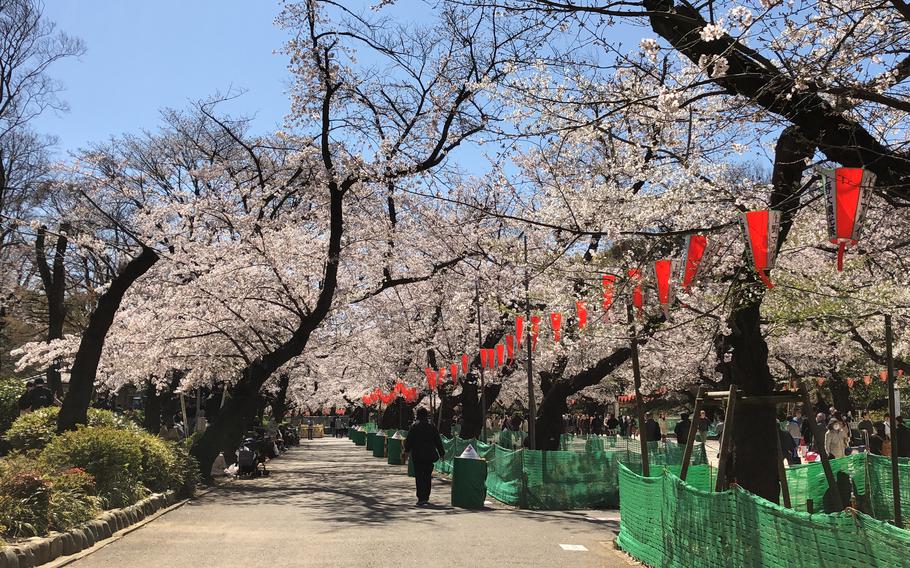
Ueno Park (Photo by Takahiro Takiguchi/Stripes Japan)
For hundreds of years, Ueno Park has been the spot for hanami picnics during cherry blossom season. The park is home to around 1,200 cherry blossom trees and brings in nearly two million people every year. Visitors can enjoy countless cherry blossoms setting against the backdrop of scenic Shinobazu Pond and historic sites, like Ueno Toshogu (Shinto shrine) and Kiyomizu Kannondo (Buddhist temple). In the evening, the blooms are softly illuminated by strings of glowing traditional paper lanterns. During the season, the Ueno Sakura Festival adds to the charm with food stalls and illuminated night-time viewing that let you fully enjoy the blossoms.
Ueno Sakura Matsuri: Mar. 14 – Apr. 5 (bonbori lantern light up 5 – 8 p.m.)
For more information, visit https://www.japan.travel/en/spot/1673/
Shinjuku Gyoen (Shinjuku-ku)
Shinjuku Gyoen (Photo courtesy of (c)Shinjuku Gyoen National Garden Office)
Shinjuku Gyoen is a 144-acre garden constructed in 1906 on the site of the feudal lord, offering an oasis in the heart of Tokyo. This beautiful garden has blended styles from a French formal garden, English landscape garden and Japanese traditional garden and has developed as a palace garden for international diplomacy. The garden is home to historical buildings relating to the Imperial family and various museums. Here you’ll find over 1,000 cherry blossom trees of over 70 (from early to late) varieties blooming one after another for nearly two months (from late Feb. to late April). In the Japanese garden, you can enjoy a fantastic view including weeping cherry blossom trees, blush somei‑yoshino and magenta yaezakura overlooking the pond and bridges.
For more information, visit https://fng.or.jp/shinjuku/en/
Hamarikyu Garden (Chuo-ku)
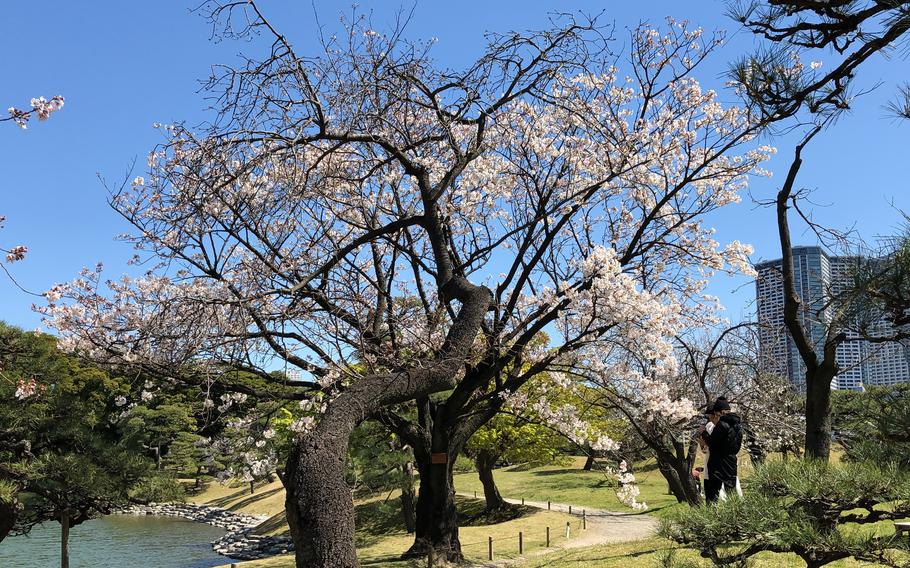
Hamarikyu Garden (Photo by Takahiro Takiguchi/Stripes Japan)
Hamarikyu is a representative daimyo garden of the Edo period, once owned by the Tokugawa Shogunate family, which features a tidal pond fed by sea water and two traditional duck-hunting grounds, making it one of the most distinctive historical gardens in Tokyo. Although this traditional garden accommodates only 80 sakura trees, the site is worth a visit to enjoy the spring scenery reminiscent of a ukiyo-e wooden art print.
For more information, visit https://www.japan.travel/en/spot/1653/
Aoyama Reien cemetery (Minato-ku)
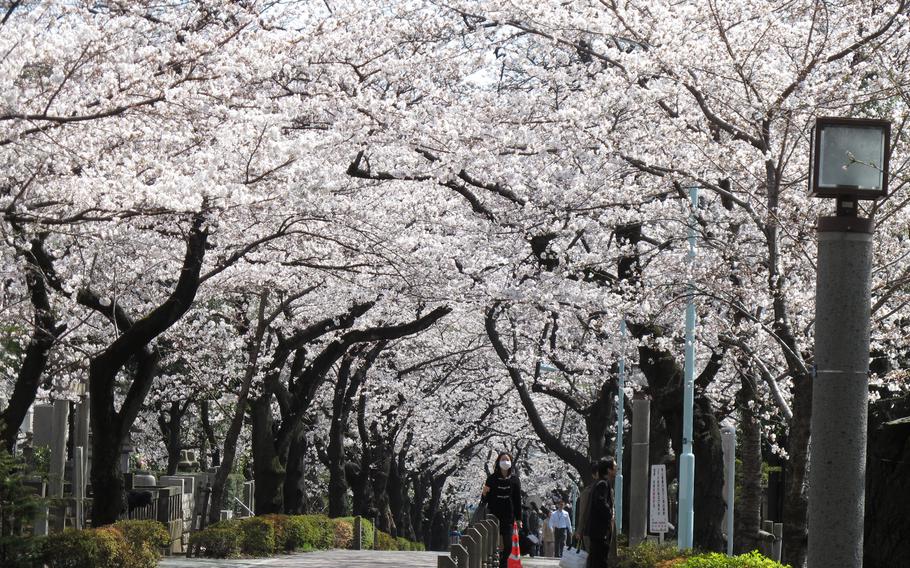
Aoyama Cemetery (Photo by Takahiro Takiguchi/Stripes Japan)
Aoyama Cemetery is just up the street from Hardy Barracks in Roppongi and features a long road down its center lined with cherry blossom trees. A brisk walk in the large cemetery filled with sakura will make you forget you’re in the city. During the season, I often head here for a quick bento lunch under the trees. Though the cemetery’s blossoms definitely draw crowds, it is also the final resting place of many famous Japanese historical, political and cultural figures, so do a little research if you want to stop by to pay your respects.
For more information, https://www.tokyo-park.or.jp/reien/aoyama/
Tokyo Midtown (Minato-ku)
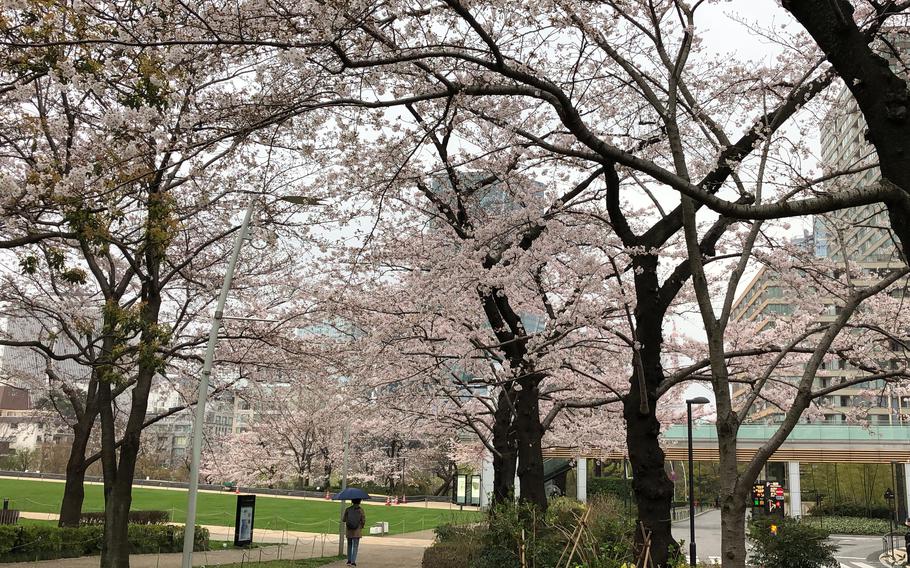
Tokyo Midtown (Photo by Takahiro Takiguchi/Stripes Japan)
Tokyo Midtown is home to a 248-meter-high tower with numerous shopping, restaurants, residences and the Ritz-Carlton Tokyo hotel. In the spring, crowds flock to Midtown’s 200-meter-long promenade filled with large cherry blossom trees in the adjacent greenspace and park. At night, the blossoms are illuminated and a temporary pop-up lounge selling snacks and cocktails lets you enjoy the area into the evening hours.
Midtown Blossom 2026: Mar. 13 – Apr. 12, noon – 8 p.m.
For more information, visit https://www.tokyo-midtown.com/jp/event/7852/?stt_lang=en
The Meguro River (Meguro-ku)
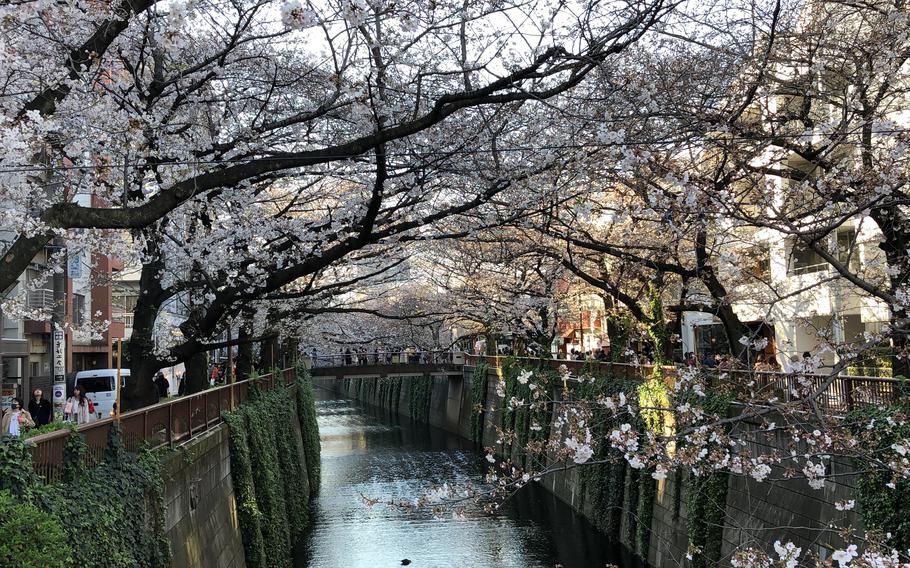
The Meguro River (Photo by Takahiro Takiguchi/Stripes Japan)
The Meguro River promenade is one of the most famous yozakura or night cherry blossom viewing spots in Tokyo. The riverside streets stretch across four kilometers and are home to about 800 cherry blossom trees. The district is packed with many shops, restaurants and izakayas, so you can enjoy a nice meal, drinks and an ethereal pink view. After sunset, traditional bonbori lanterns give colorful glimmer over the water, offering great photo opportunities.
Nakameguro Sakura Matsuri: Mar. 28 and 29 (light-up from late Mar. to early Apr. 5 – 8 p.m.)
For more information, visit https://www.kanpai-japan.com/tokyo/meguro-gawa
Imperial Palace around Chidorigafuchi Moat (Chiyoda-ku)
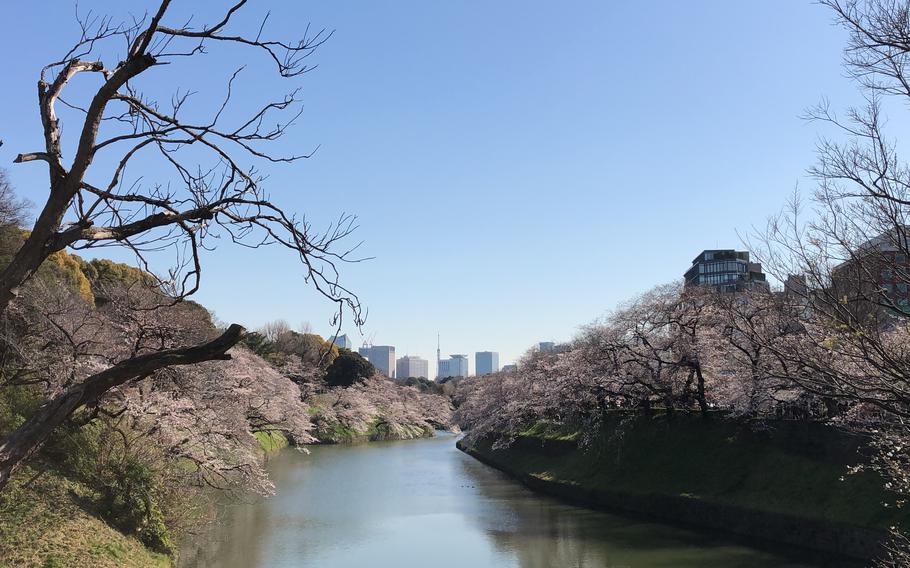
Chidorigafuchi, Imperial Palace (Photo by Takahiro Takiguchi/Stripes Japan)
The Chidorigafuchi Moat at the Imperial Palace offers scenic views of the city and cherry blossom trees reflected on the water. From the bloom peak onward, the water’s surface is temporarily covered with cherry blossom petals as the flowers begin to disappear. Rent a boat and take your hanami off dry land as you paddle under the cherry blossoms.
Chiyoda Sakura Matsuri: Mar. 5 – Apr. 22 (Light-up from late Mar. to early Apr., 5 – 9 p.m.)
For more information, visit https://visit-chiyoda.tokyo/app/spot/detail/446
AloJapan.com