
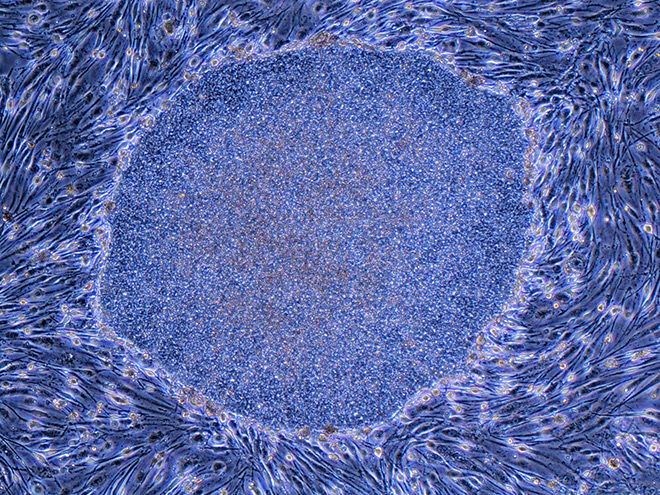
Japan has formally approved the world’s first regenerative medical products utilizing induced pluripotent stem (iPS) cells, paving the way for use in patients as early as this summer.
Health Minister Kenichiro Ueno granted approval for the two products on March 6 under a fast-track provisional certification system.
They mark the world’s first practical use of medical treatments derived from iPS cells.
The approved drugs are ReHeart, developed by the Osaka University–originated venture Cuorips Inc., for the treatment of severe heart failure, and Amchepry, a neural cell therapy, developed by Sumitomo Pharma Co., for the treatment of Parkinson’s disease.
Both products use third‑party iPS cells stocked by the CiRA Foundation, which was established by Kyoto University.
With the drugs now approved, prices will be set and will be authorized for use in treatments covered by the national health insurance system.
For regenerative medical products, drug prices are generally determined within four to five months after approval. The treatments using these drugs could be available for patients as early as this summer.
Both products were approved under the conditional and time‑limited approval system, which is designed to deliver regenerative medical products to patients as quickly as possible.
This system is a kind of provisional license, allowing safety and efficacy to be assessed using data from fewer patients than is required for clinical trials of conventional drugs.
For this reason, companies are required to study treatment outcomes during the seven‑year period following the start of sales and obtain “full approval” after reassessing efficacy and other factors.
ReHeart will be assessed under the treatment of 75 patients and Amchepry for 35 patients, including 30 who are 65 or younger. The clinical outcomes of all patients who are treated using these products will be examined.
The iPS cell was created by Shinya Yamanaka, a professor at Kyoto University, who received the Nobel Prize in Physiology or Medicine in 2012 for his groundbreaking work with iPS cells.
This year marks the 20th anniversary since Yamanaka first generated iPS cells using mice in 2006.
AloJapan.com