
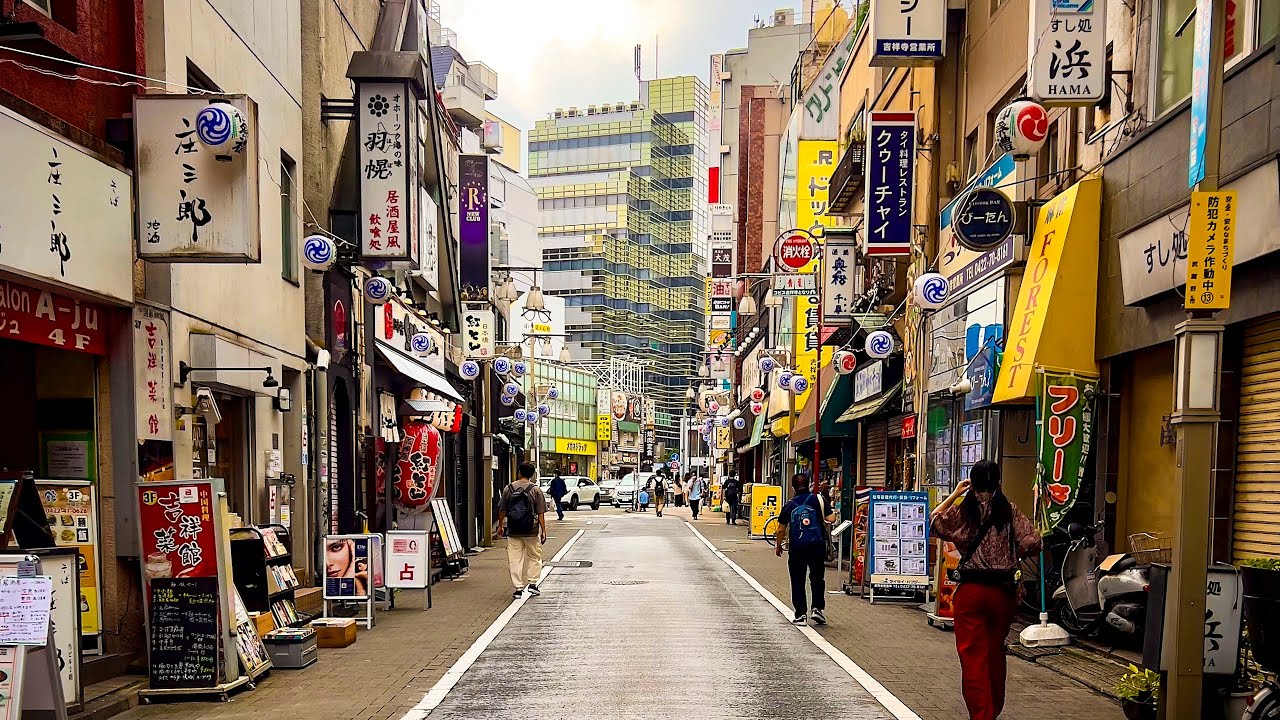
Japan Walking Tour: Kichijoji & Inokashira Park | 4 Hours Through Tokyo’s Most Livable District
This time, I walked for four hours through Kichijoji, the western Tokyo neighborhood that consistently ranks as one of Japan’s most desirable places to live. This Kichijoji walking tour shows why—a district where dense urban shopping streets meet one of Tokyo’s most beautiful parks, all within walking distance of the station.
KICHIJOJI WALKING TOUR: COMPLETE ROUTE
Kichijoji Station Area (0:00-59:26):
The walk begins at Kichijoji Station, the transportation hub that connects this western Tokyo district to central Shibuya in 15 minutes. You’ll experience the immediate energy of the north exit shopping district, where covered arcades and narrow streets create the density that defines Kichijoji’s commercial character. The transition from station crowds to quieter residential streets happens within blocks.
Sunroad Shopping Arcade Walking Tour (59:26-1:59:53):
Sunroad is Kichijoji’s main covered shopping street—600 meters of retail that runs straight north from the station. This Kichijoji walking section shows the arcade at full activity: local shoppers, small businesses that have operated here for decades, the specific atmosphere of a neighborhood shopping street that serves residents rather than tourists. The covered roof creates its own acoustic environment—footsteps echo differently, announcements from individual shops blend into ambient sound.
Harmonica Alley Walking Tour (1:59:53-2:49:51):
Harmonica Yokocho (Harmonica Alley) sits near the station’s north exit—a dense grid of tiny bars and restaurants built in the post-war years when space was scarce. The buildings are narrow, the corridors tight, the layout organic rather than planned. Most establishments seat fewer than ten people. This section of the Kichijoji walk shows Tokyo’s older commercial DNA: small-scale, high-density, stubbornly unchanged despite the modern developments around it.
Inokashira Park Walking Tour (2:49:51-3:30:51):
Inokashira Park opens five minutes south of Kichijoji Station—a 90-acre green space built around a central pond. This Tokyo park walking tour covers the lakeside paths where locals jog and walk dogs, the wooded sections where the city noise drops to background, the areas where swan boats drift across water that’s been here since the park opened in 1917. Cherry trees line the water—famous during sakura season, but the park functions year-round as Kichijoji’s breathing space.
The park contains a small shrine, a pond-side temple, areas of carefully maintained forest, and sections of open lawn. You’ll see how Tokyo residents use the park: morning exercise, lunch breaks, afternoon strolls, the rhythms of a neighborhood green space rather than a tourist destination.
Residential Kichijoji (3:30:51-end):
The walk concludes through Kichijoji’s residential streets south of the park—quiet blocks where single-family homes and low-rise apartments create the suburban character that makes this area livable despite Tokyo density. Streets are narrow, well-maintained, lined with the vending machines and small shrines that mark Japanese residential neighborhoods.
WHY KICHIJOJI RANKS AS TOKYO’S MOST DESIRABLE NEIGHBORHOOD
Four-hour Kichijoji walking tours reveal what makes this district work: everything is walkable. Station to shopping to park to quiet residential streets—all within 20 minutes on foot. The commercial density provides urban convenience. Inokashira Park provides nature access. The residential streets provide calm. It’s the balance that defines livability.
You’ll see how a Tokyo neighborhood functions when it’s designed for residents: grocery stores rather than luxury boutiques, local restaurants rather than tourist traps, a park that serves daily life rather than special occasions. By the second hour of walking, you understand why Kichijoji consistently tops surveys of where Japanese people want to live.
INOKASHIRA PARK: TOKYO’S NATURE WITHIN THE CITY
Inokashira Park walking tours show one of Tokyo’s most successful urban parks. The pond at the center creates openness—you can see sky, water, the opposite shore. The forested sections create enclosure—you can forget you’re in a city of 14 million. The paths connect both, creating a walking experience that alternates between open and intimate.
The park was designed in 1917 as public space, before Tokyo’s explosive growth. It’s survived wars, earthquakes, and development pressure.
8 Comments
❤😻🇯🇵
さっきまで吉祥寺いたけど
লকিয় পুর কোতব দোকান মালিক পুলিশ উপর রাগ দেখাওয়া কিগেয় মাডার করছে আমার শরিল কিদমকিয় দিযার আরগেয় গষারয় স্যার কেউ আমার মারে মাডার করছেয় মাডায়র কৈউস আসামি কউরয় আমারে দোরতয়না আমার মা মরাবার সময় তার টাইনয় মানুষটাইন কইছোয়নয় আমার পোয়া মরতয়নায় দনিয়ার সবটিন মরলে আমার পোয়া মরতয়নায়
🐈⬛ヤマトみつけ隊
武蔵野市
吉祥寺本町1-38-5
クール軽🚚
38:37
吉祥寺東町3-1-22
🟩営業所
39:37
吉祥寺本町1-15-1
👨台車🟨
1:45:29
吉祥寺本町1-14-11
😾台車
1:57:37
吉祥寺本町1-7-2
📦⬜台車 🟨
2:04:56
御殿山1-6-10
🟨台車👨
2:34:28
三鷹市 井の頭4-9-14
😸🚚
3:05:49
💥💥✌👍👌💥💥☑✅😊
fantastic long walk …. thankYou …. greetings from Heidenheim an der Brenz .
吉祥寺は大好きな街なので散歩動画として取り上げてくれてありがとうございます!あと、投稿者さんは日本人ですか? それとも外国人ですか?
Awesome Inokashira park