
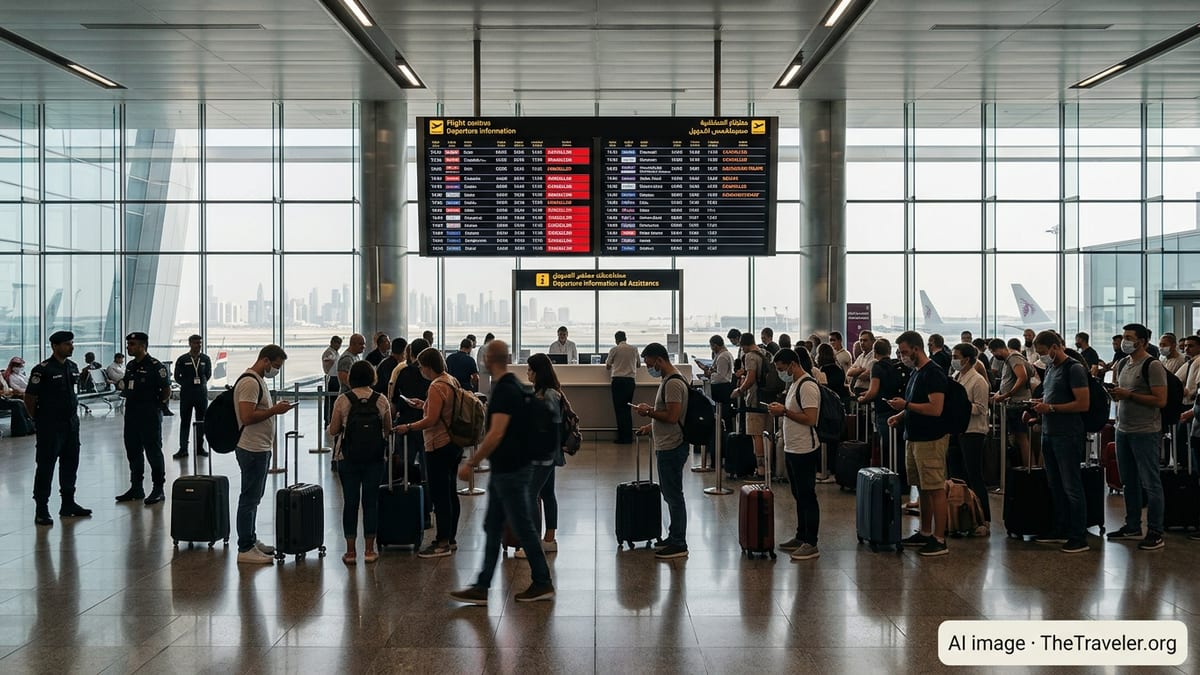
Japan has sharply raised its travel alert for six Gulf states and begun preparing evacuations of its nationals as expanding regional conflict and a cascade of Western warnings push the United Arab Emirates, Qatar, Saudi Arabia, Bahrain, Kuwait and Oman into a new phase of heightened security risk for international travelers.
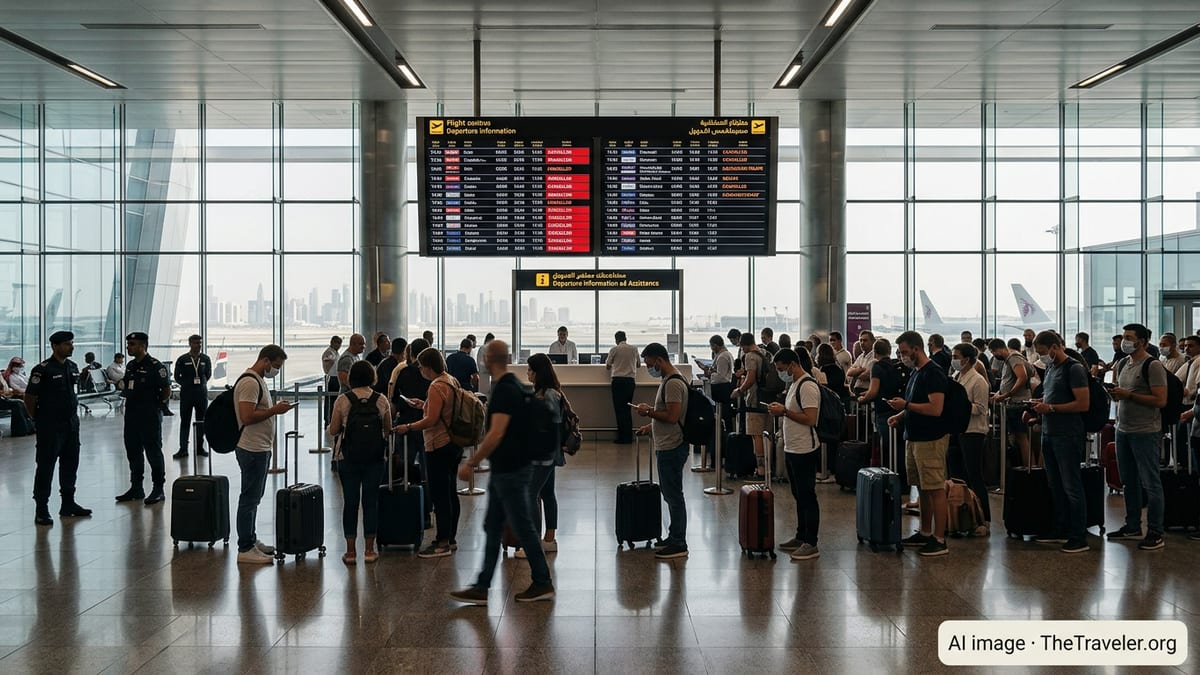 Japan Moves to Level 3 Alert Across Key Gulf Destinations
Japan’s Foreign Ministry on Thursday, 5 March, lifted its travel advisory for Kuwait, Bahrain, Qatar, the United Arab Emirates, Oman and eastern Saudi Arabia to Level 3, the second-highest tier in its four-step system. The move formally urges Japanese nationals to avoid all travel to these destinations and calls on residents already in the region to consider or prepare for evacuation as conditions worsen.
Officials in Tokyo said the change follows a rapid deterioration in security linked to the intensifying U.S.-Israeli campaign against Iran and retaliatory strikes that have drawn Gulf states closer to the front line of the conflict. The upgraded advisory aligns Japan more closely with the severe warnings already issued by the United States and several European governments for the same group of countries.
In practical terms, the Level 3 designation signals that travel to these Gulf hubs, long marketed as safe and stable stopovers between Asia and Europe, now carries unacceptably high risks in the view of Japanese authorities. It also paves the way for the deployment of government-chartered aircraft and other measures to help citizens leave should commercial options continue to shrink.
The advisory specifically highlights the possibility of further missile and drone attacks, disruptions to airspace, and sudden changes in local security measures that could leave travelers stranded. Japanese nationals are being urged not only to postpone nonessential trips but also to familiarize themselves with evacuation routes and embassy contacts if they must remain.
Evacuation Planning and Limited Flights Out of the Gulf
As Japan raised its alert, diplomats confirmed that preparations are underway to use chartered aircraft to extract nationals from at least four Gulf countries, including Kuwait, Bahrain, Qatar and the United Arab Emirates. These plans mirror similar operations by other governments that have already begun moving their citizens out on emergency flights.
In the United Arab Emirates, a small number of evacuation and repatriation flights have started operating from Dubai and Abu Dhabi, though most commercial services across the wider region remain suspended or sharply curtailed. Travel industry sources say capacity is a fraction of normal levels, with seats on outbound flights selling out within minutes when they appear.
The bottleneck reflects not only closed or partially closed airports but also widespread airspace restrictions over Iran, Iraq, Qatar, Bahrain and the UAE that have complicated routing and raised insurance costs for airlines. Aviation safety authorities in Europe are currently designating much of the Gulf and surrounding air corridors as high risk, prompting many carriers to cancel or reroute services rather than attempt complex detours.
For Japanese travelers on the ground, this means the traditional strategy of waiting for the next available commercial flight may no longer be reliable. Embassies are advising nationals to register their presence, keep mobile phones charged, travel documents close at hand, and monitor official channels in case they are offered a place on a charter flight with limited notice.
Western Governments Tighten Security Guidance for the Gulf
Japan’s heightened alert closely follows a series of stronger warnings from the United States, which in recent days has shifted multiple Gulf states, including Saudi Arabia, Qatar, Bahrain, Kuwait, Oman and the UAE, to Level 3 advisories that urge travelers to reconsider or avoid travel due to terrorism and other security threats. American officials have gone further by telling citizens already in many Middle Eastern countries to depart as soon as commercial options allow, citing the risk of further escalation.
The U.S. State Department has also authorized the departure of nonessential embassy staff and families from several missions in the region, signaling concern that diplomatic posts themselves could be targeted or become difficult to secure. This drawdown underlines the seriousness of the threat environment that tourists and business travelers would face if they chose to remain.
European governments are reviewing their own travel advice in parallel. While language and alert levels differ by country, there is a growing consensus that the six Gulf Cooperation Council states, once marketed collectively as safe havens in a turbulent neighborhood, can no longer be treated as low-risk destinations while the current conflict continues.
For the travel industry, these overlapping advisories from major outbound markets in Asia, North America and Europe create a powerful disincentive for new bookings and make it more difficult for airlines and tour operators to justify maintaining even skeleton services to Gulf hubs.
Impact on Travelers and the Wider Tourism Market
The immediate impact for travelers is a wave of uncertainty. Passengers connecting through Dubai, Doha, Riyadh, Kuwait City, Manama or Muscat are seeing itineraries repeatedly canceled or rerouted, sometimes with only a few hours’ notice. Some airlines are accepting transit passengers only if both the inbound and onward flights are confirmed to operate, leaving many stranded mid-journey.
Hotels in Gulf gateway cities report a sudden shift in clientele, from leisure visitors and trade fair attendees to stranded transit passengers and expatriates weighing whether to leave. Front desk staff and concierges are fielding more questions about airport access, border crossings and embassy locations than about restaurant recommendations or sightseeing tours.
Travel insurers, meanwhile, are updating their coverage rules to reflect the Level 3 status now applied by multiple governments. Policies may exclude trips that go ahead against explicit advisories, and travelers who continue to the region despite official warnings could find that cancellations or emergency evacuations are not fully covered.
Industry analysts warn that even if the security situation stabilizes in the coming weeks, the reputational damage to Gulf destinations as reliable hubs may linger. The combination of missile and drone incidents, airspace closures and images of evacuation queues could reshape traveler perceptions, especially among risk-averse markets such as Japan, for months or years to come.
What Japanese and Other International Travelers Should Do Now
For Japanese nationals currently in the United Arab Emirates, Qatar, Saudi Arabia, Bahrain, Kuwait or Oman, officials stress that the most important step is to stay closely informed. That means registering with local embassies, monitoring official advisories and checking airline updates frequently, as the operational status of flights can change several times in a single day.
Travelers are being urged to review the location of nearest shelters and to understand basic emergency procedures at hotels, airports and major public facilities. In some Gulf airports, recent drone and missile alerts have triggered temporary evacuations of terminal areas, with passengers moved to secure zones until authorities give the all clear.
Those planning future trips have been asked to reconsider nonessential travel and, where possible, to postpone or reroute journeys that would normally connect through Gulf hubs. Alternative routings through South Asia, Central Asia or northern Europe are likely to add time and cost but may offer greater reliability while airspace around the Gulf remains constrained.
For now, travel experts say the dominant theme is caution. With multiple governments aligning their advisories and airlines still struggling to operate consistent schedules, Japan’s decision to raise its alert underscores a broader message to international travelers: monitor evacuation procedures, keep flexible plans and be prepared for sudden changes as the security picture across the Gulf remains fluid.
AloJapan.com