
This March, Tokyo’s art scene is anchored by the return of Art Fair Tokyo, the city’s largest annual gathering of galleries and collectors. Alongside the fair, the month sees several significant solo exhibitions, including the Japanese debuts of painters Robert Nava and Raymond Lemstra. A massive career-spanning showcase for Hajime Sorayama is another must-see, especially for fans of his iconic sexy robots. From ornate nihonga at the National Museum of Modern Art to experimental sound installations in Ginza, here are seven art exhibitions to see in Tokyo this month.
© Nacasa & Partners Inc. / Courtesy of Fondation D’Entreprise Hermès
Andrius Arutiunian: ‘Obol’
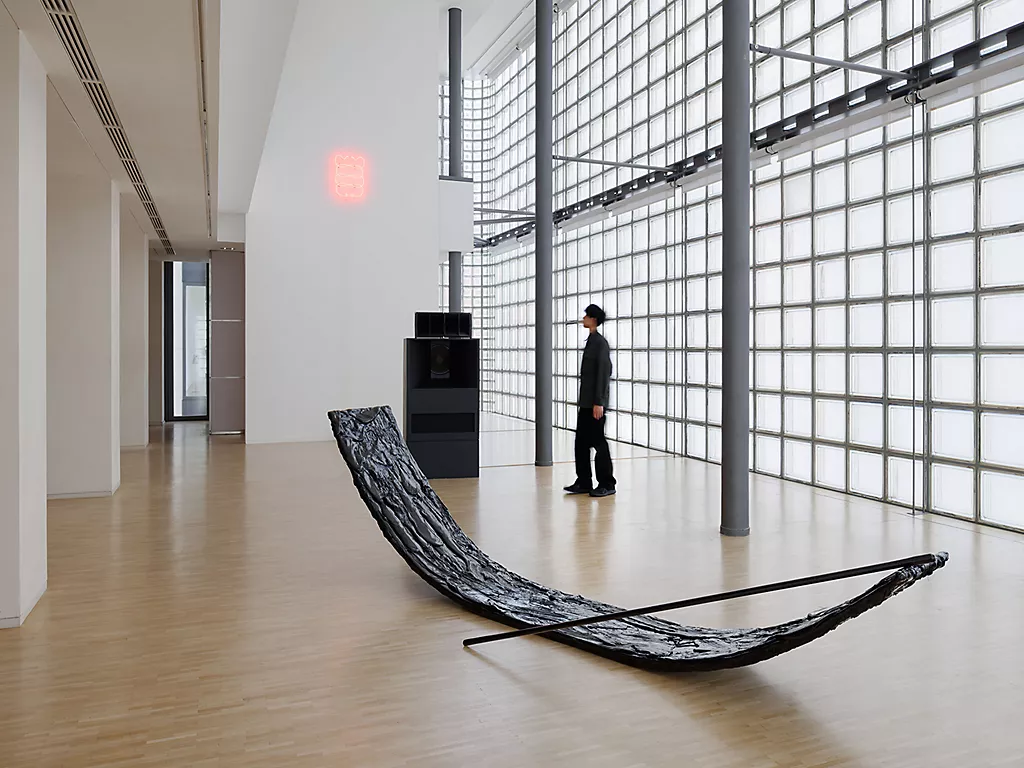
This March, Ginza’s Maison Hermès Le Forum presents “Obol,” the first Japanese solo exhibition by Armenian-Lithuanian artist and composer Andrius Arutiunian. Representing Armenia at the 59th Venice Biennale, Arutiunian explores the relationship between music and distorted forms, using hypnotic soundscapes and sacred motifs to create installations that are at once mythological and futuristic.
The exhibition infuses the gallery space — a glass-encased architectural marvel worth admiring in itself — with a sleek, underground rave-esque aesthetic. It centers on a series of new works inspired by bitumen, a viscous, pitch-black petroleum substance that once held holy significance but is now used for secular purposes. Through this dark material, Arutiunian pays homage to Charon, the mythological ferryman of the dead, scattering obol — ancient greek silver coins — and serpentine imagery throughout the space.
Where: Maison Hermès Le Forum (Location)
When: February 20–May 31 (Closed on Wednesdays)
Price: Free
courtesty of art fair tokyo, via PR Times
Art Fair Tokyo 2026
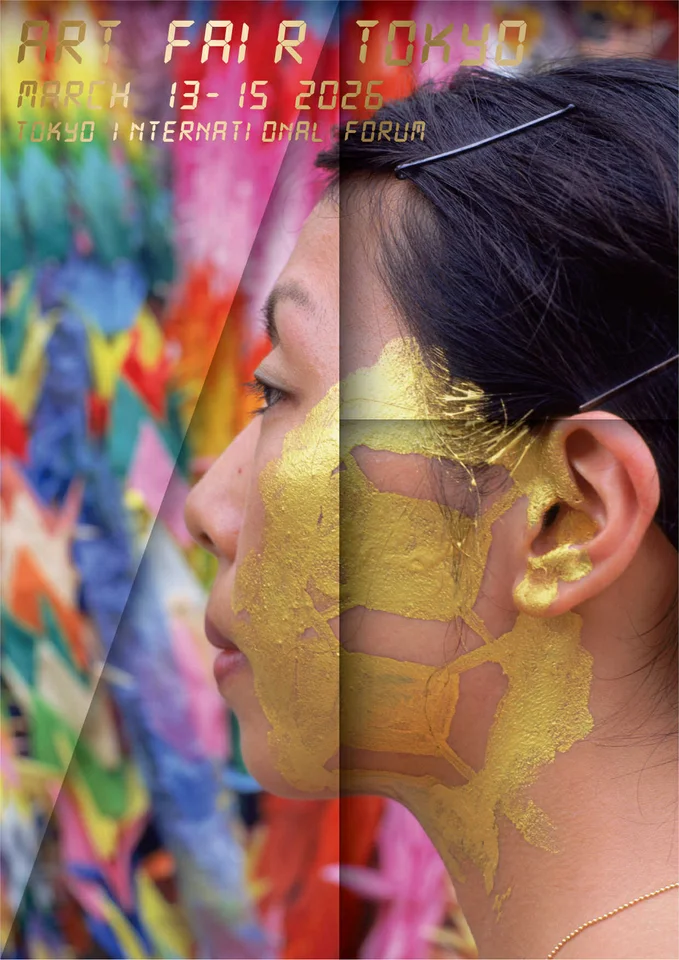
Art Fair Tokyo returns to the Tokyo International Forum from March 13 to 15, bringing together a massive group of 141 galleries under one roof. As Asia’s oldest art fair and one of the city’s biggest annual art events, it’s a must-visit event for collectors and enthusiasts.
What makes the fair unique is the sheer variety of art you’ll see — everything from ancient antiques and traditional lacquerware to high-concept contemporary installations and expressionistic paintings. Some of Tokyo’s most prominent galleries like Tomio Koyama Gallery, ShugoArts and Taro Nasu are back in the lineup, as well as a handful of international players.
This year, there’s a stronger focus on video art and moving image installations, looking into the medium’s history and helping collectors understand how to actually “own” a piece of digital art.
Where: Tokyo International Forum, Hall E / Lobby Gallery (Location)
When: March 13–15
Price: Advance ¥4,000 | Door ¥5,000
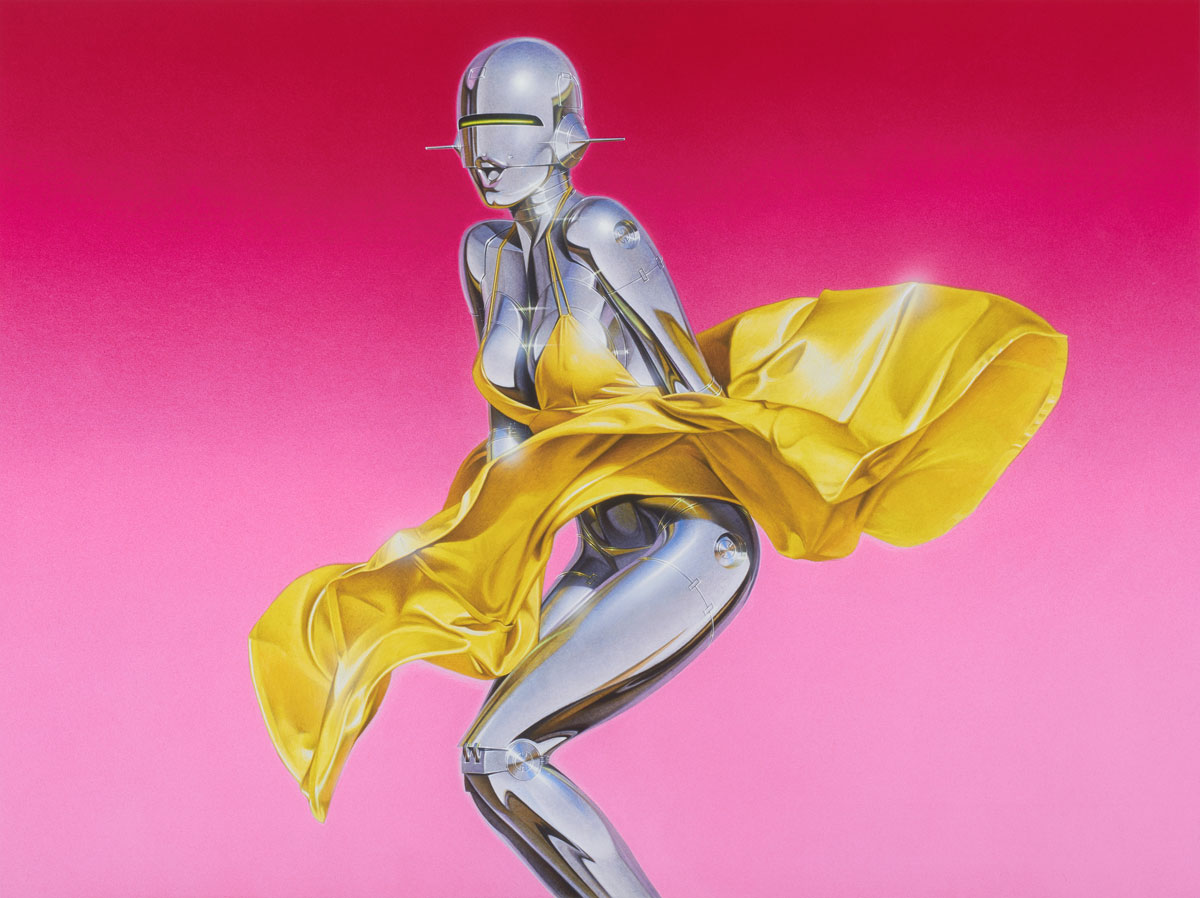
Hajime Sorayama, “Untitled” (1982). © Hajime Sorayama, Courtesy of Nanzuka.
‘Sorayama: Light, Reflection, Transparency -Tokyo-’
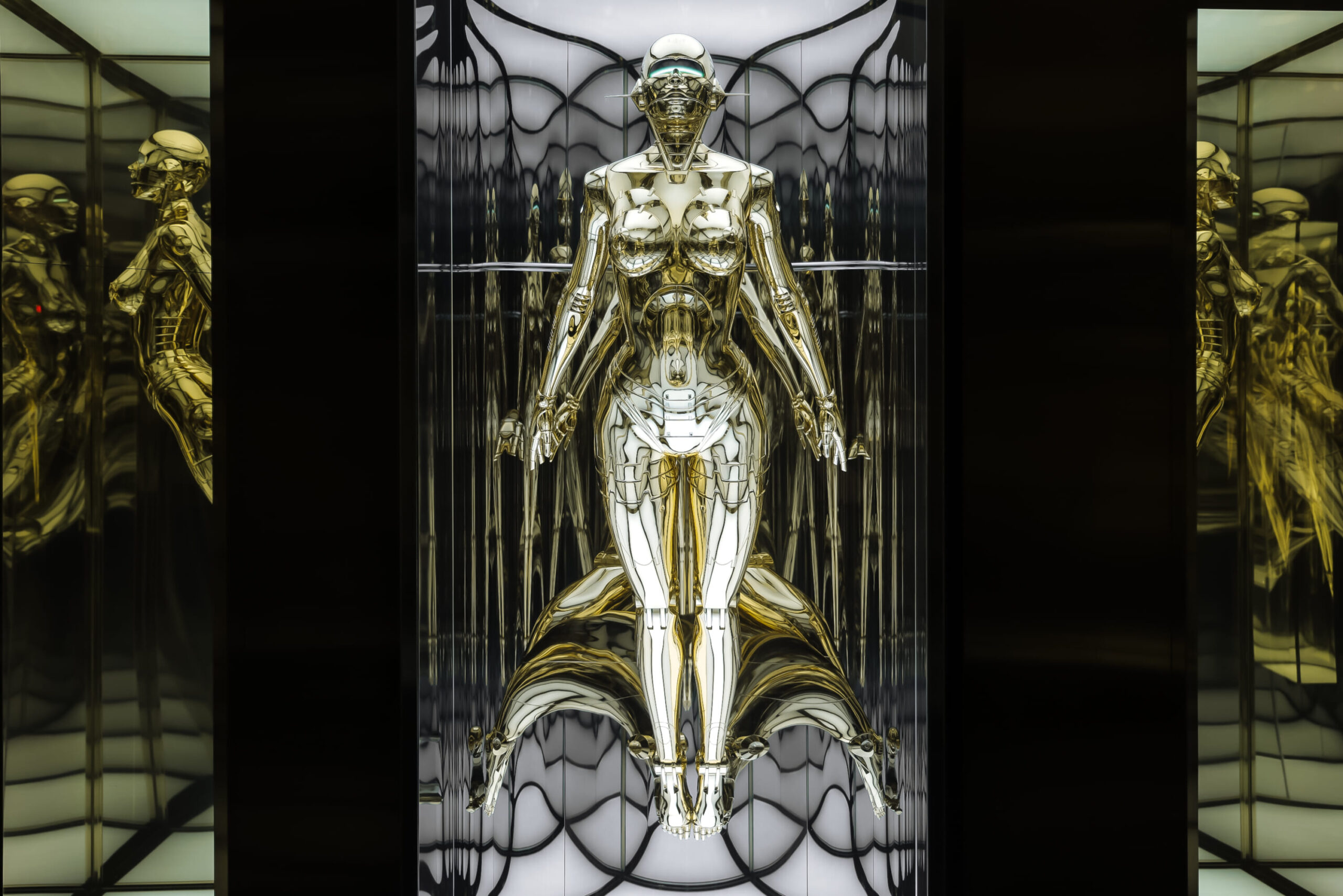
If you’re a fan of Hajime Sorayama, you can’t miss this one. Curated by Nanzuka, this exhibition is the largest retrospective ever dedicated to the artist’s oeuvre. Spanning nearly five decades, the show explores Sorayama’s lifelong obsession with hyperrealism and the aesthetic fusion of the human form with metallic luster. You can of course spot his revolutionary “Sexy Robot” series — a vision that famously influenced everything from the design of RoboCop to the haute couture of Thierry Mugler.
The retrospective offers an immersive, multisensory journey through thematic sections, featuring everything from his first 1978 robot painting to contemporary installations. For instance, the “Pink Tea Room” houses original drawings for Sony’s AIBO and the iconic Just Push Play album cover for Aerosmith. Other highlights include a mesmerizing mirror maze installation, “Sexy Robot type II floating_gold,” and depictions of robotic dinosaurs and sharks. Even if you’re somehow not familiar with Sorayama’s work, it’s sure to be a spectacular and thought-provoking display, asking how we define authenticity in an era of artificial intelligence.
Where: Creative Museum Tokyo (Location)
When: March 14–May 31
Price: Advance ¥2,300 | Door ¥2,500
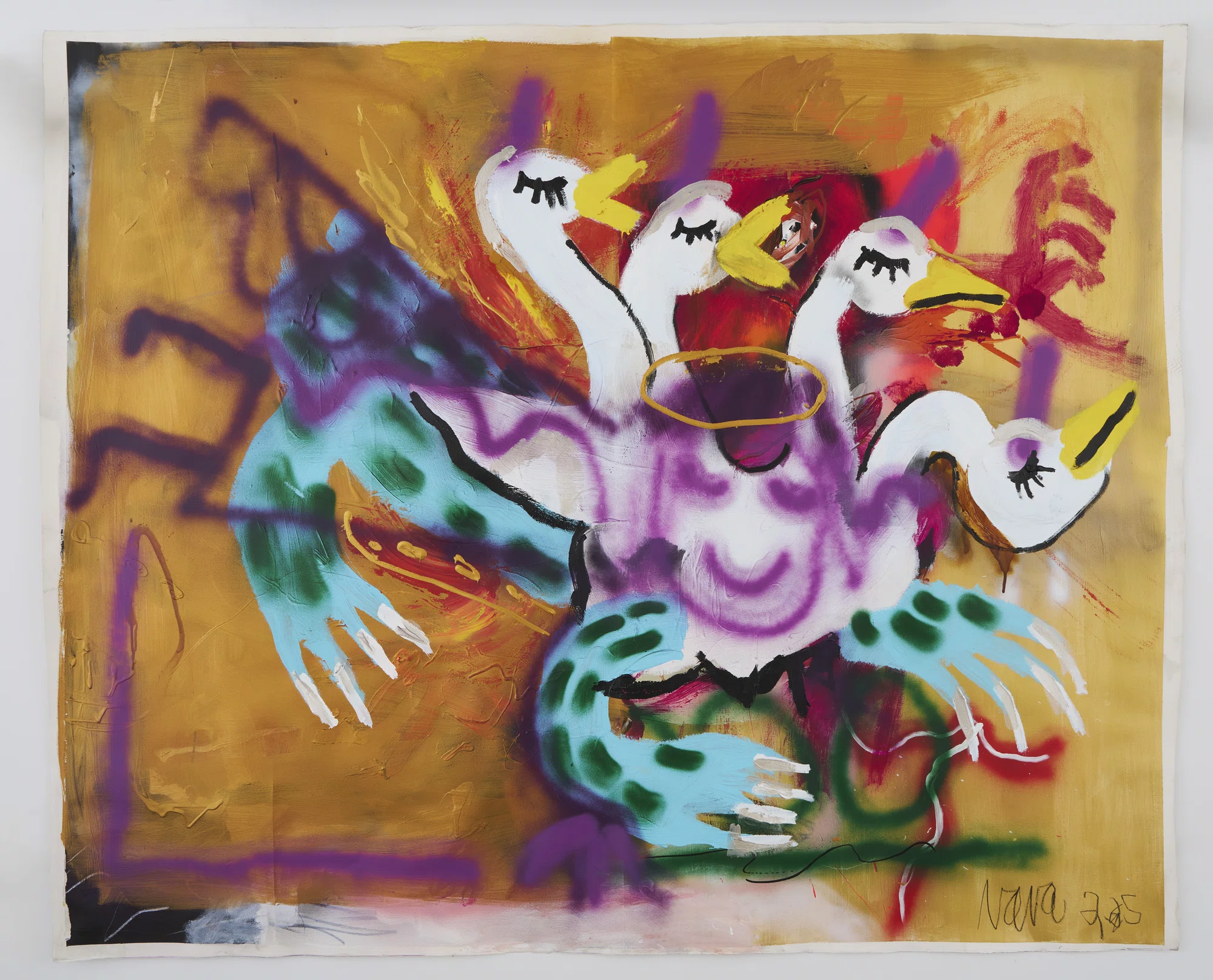
Robert Nava, “Song of Armor” (2025) © Robert Nava, courtesy Pace Gallery.
Robert Nava: ‘Supercharger’
Robert Nava’s first solo exhibition in Japan introduces a world where childhood imagination meets existential chaos. The exhibition showcases a new series of paintings and works on paper featuring a chimerical cast of dragons, angels and metamorphic beasts. Inspired by everything from prehistoric cave art to techno music, Nava’s style is intentionally raw — a blend of spray paint, acrylics and grease pencil — rendering scenes that feel both playful and unsettling.
A graduate of Yale’s MFA program, Nava stripped away traditional academic conventions to develop a style often associated with the irreverent “bad painting” movement. Despite the seemingly chaotic application of color and graffiti-like marks, his practice is deeply rooted in a daily discipline of drawing and sketchbook invention. His works often reference classical mythology and art history, and are now held in collections at the Art Institute of Chicago and MoMA Paris.
Where: Pace Gallery Tokyo (Location)
When: February 19–April 1 (Closed on Mondays)
Price: Free
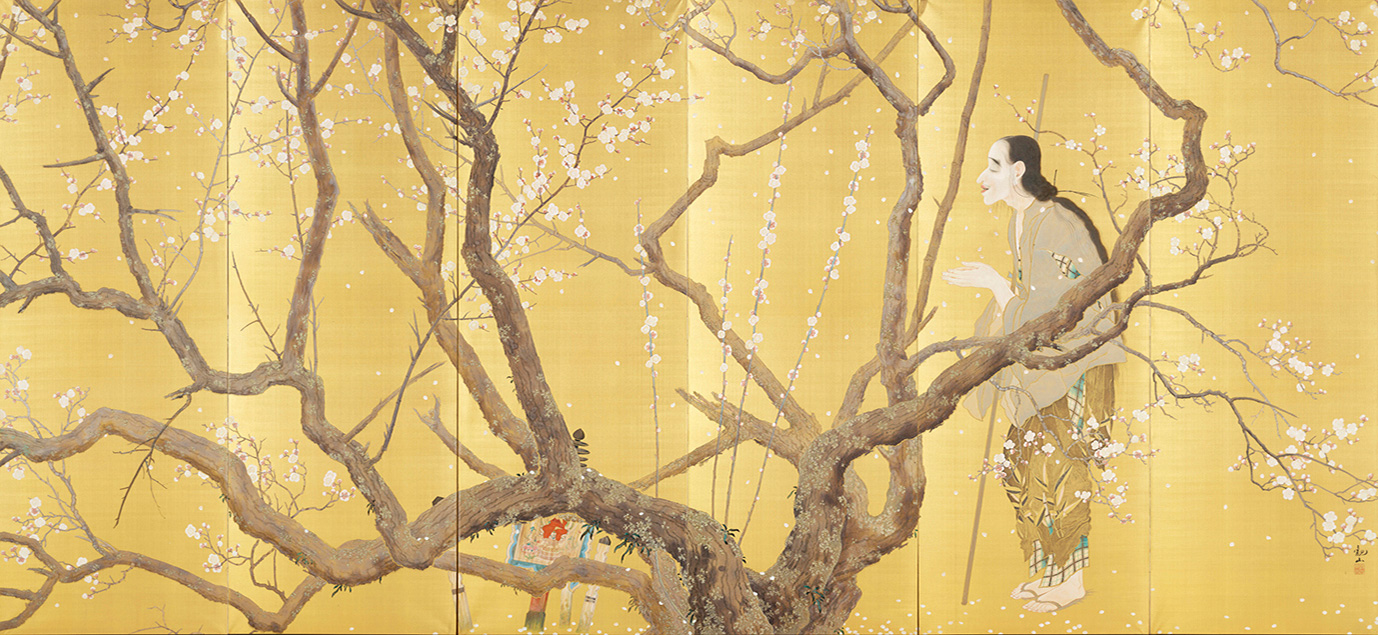
Shimomura Kanzan, “Yoroboshi (Young blind beggar),” (1915). National Important Cultural Property, Tokyo National Museum, Image: TNM Image Archives (display period: 3/17-4/12).
‘Shimomura Kanzan: Life, Art and Society’
Born into a family of Noh performers and trained as a prodigy in traditional Kano-school techniques, Shimomura Kanzan is a central figure in modern Japanese painting. Along with his mentor Okakura Tenshin and fellow artists like Yokoyama Taikan, he founded the Nihon Bijutsu-in (Japan Art Institute) to redefine what “Japanese style” could mean in a rapidly changing world. Featuring 150 works, the exhibition follows his journey from a young artist in Tokyo to his time studying in Britain, which allowed him to master Western shading techniques.
Shimomura’s significance in art history lies in his unique ability to act as a bridge between seemingly opposing worlds — bold yet delicate, his works seamlessly fused a Western atmospheric perspective with the decorativeness of the Rinpa school. Balancing the organic depth of classical Japanese motifs with the precision of Western painting techniques, Shimomura was an artist who preserved and evolved artistic tradition.
Where: The National Museum of Modern Art, Tokyo (Location)
When: March 17–May 10
Price: Advance ¥1,800 | Door ¥2,000
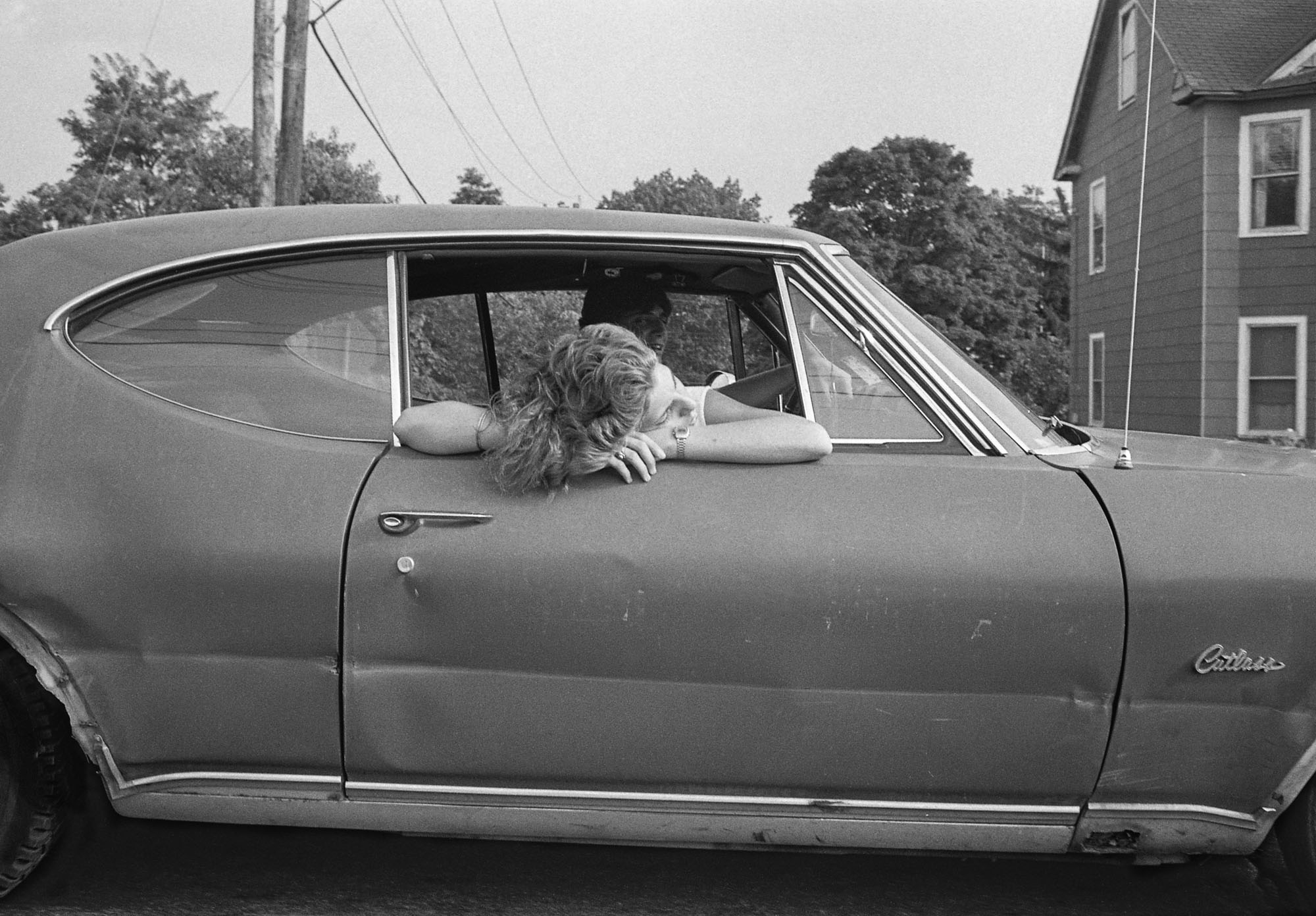
Shelton, Connecticut, 1985. from the series: Summertime © Mark Steinmetz
Mark Steinmetz: ‘Summer’s Children’
At his first-ever solo exhibition in Japan, photographer Mark Steinmetz immerses us in quiet, sun-drenched portraits of childhood. Captured during the late 80s and early 90s across North Carolina, Georgia, Massachusetts and beyond, these black-and-white photographs focus on classic pillars of American youth — baseball and summer camp. Steinmetz captured these scenes while in his twenties, drawn to the way children live entirely in the moment. These shots take us back to the slow, wandering pace of a summer before smartphones.
Based in Athens, Georgia, Steinmetz earned his MFA from Yale and spent a formative year working with street photographer Garry Winogrand. He is best known for his quiet and restrained depictions of everyday life in the American South, finding profound beauty in the most mundane moments.
Where: PGI Gallery (Location)
When: March 16–May 13 (Closed on Sundays)
Price: Free
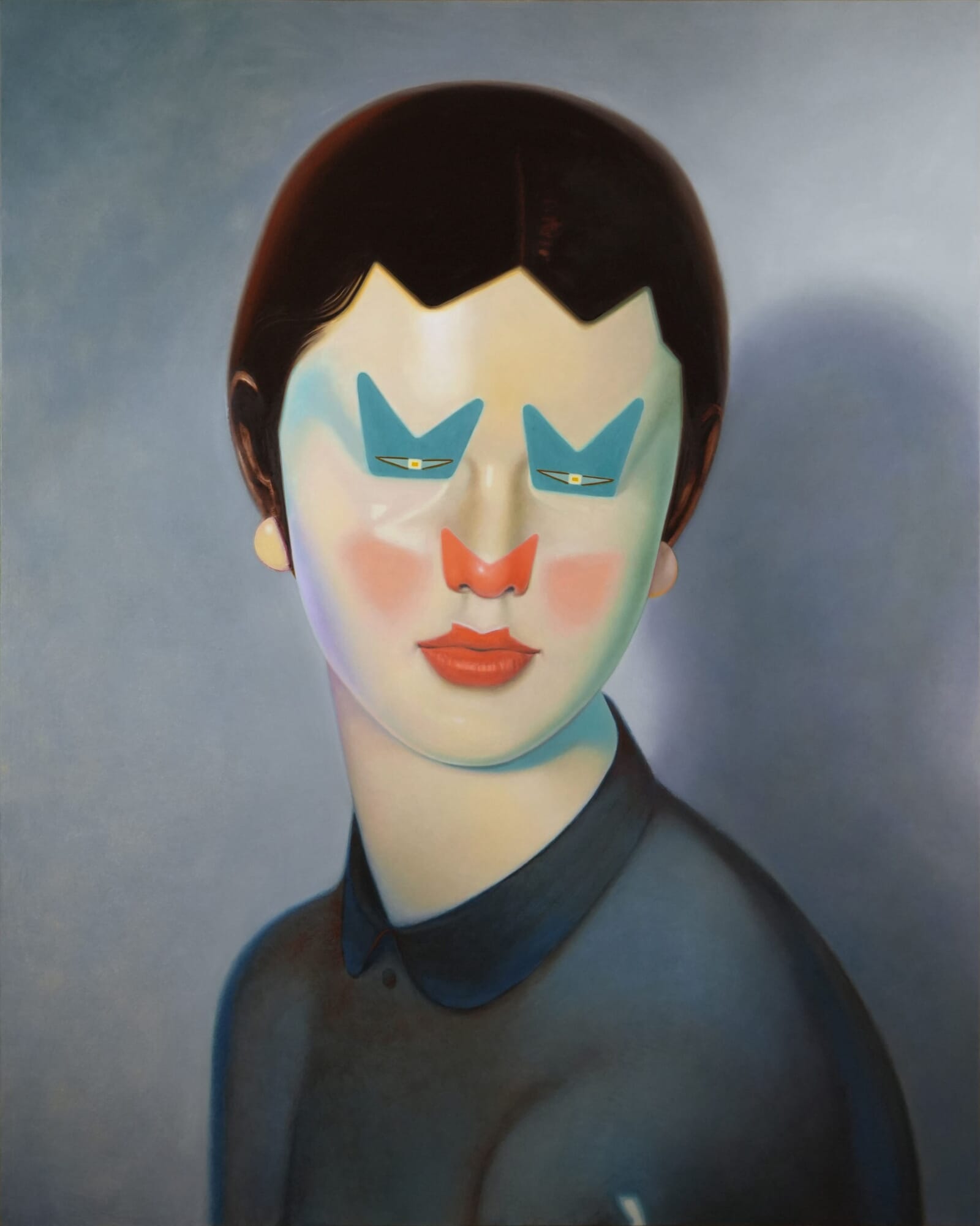
Raymond Lemstra, “Personnage Fictionnel” (2026). Courtesy of Nanzuka.
Raymond Lemstra: ‘Good Looking’
“Good Looking” marks the return of Dutch artist Raymond Lemstra to Tokyo with a fresh look at his “Personnage Fictionnel” series. Now based in Seoul, Lemstra creates meticulously detailed portraits that aren’t actually of anyone at all. Instead, he uses a blend of playful distortion and technical precision to tap into our natural instinct to find human faces in abstract shapes. These characters sit in a strange middle ground — partly realistic, partly cynical, and entirely imaginary.
The exhibition also serves as the debut for Lemstra’s newest paintings, which reflect his cross-cultural journey between Europe and Asia. In these works, he layers traditional Dutch oil painting techniques onto hanji (handmade Korean mulberry paper), creating a striking texture that bridges the gap between old-world craftsmanship and modern abstraction.
Where: Nanzuka Underground (Location)
When: March 7–April 4 (Closed on Sundays & Mondays)
Price: Free
Related Posts
Discover Tokyo, Every Week
Get the city’s best stories, under-the-radar spots and exclusive invites delivered straight to your inbox.
Updated On March 2, 2026
AloJapan.com