
Grand, sprawling, and by turns jaw-droppingly futuristic and breathtakingly historic, Japan is a hugely exciting place to visit – and it’s impossible to predict what your abiding memory from your first trip to the country will be.
A lost afternoon exploring Osaka’s food markets? A chance encounter with the immense pagoda on the streets of old Kyoto? A smoky, sake-fuelled night in a precarious second-floor micro-bar in Tokyo’s densely packed Golden Gai district? There’s simply no way of knowing.
What it is possible to do, however, is prepare yourself effectively for the trip of a lifetime. Here’s a travel itinerary perfect for the first-time visitor – taking you off the beaten track whilst still hitting all the crucial landmarks.
BEFORE YOU TRAVEL:
Remember – there’s more than just cherry blossom season…
Yes, there’s an obvious argument for travelling in March and April in order to witness the spectacular pink and white sakura (cherry blossom) which heralds the arrival of spring. However. There are also a series of salient arguments againsttravelling at that time of year; namely, it’s the highest of high season, making everything both more crowded and more expensive, and it’s also, actually, a little bit sticky and hot.
As a sublime alternative, venture out in October. The weather’s generally clement – the heat has gone, and the humidity has lifted – and the streets are less packed. It’s gorgeous, autumnal, and infinitely more relaxed.
Think Japan, think Helsinki. (No, that’s not a typo)
When seeking out the most civilised means of reaching Tokyo from London, consider Finnair, whose offering combines slick, spacious aircraft with robustly straightforward Scandinavian service. Whilst they don’t fly direct, their routes are often more competitively priced than those carriers who do travel directly. What’s more, you’ll experience a notably painless transfer in Helsinki Airport, a sleek modernist environment (with plentiful soft seating in which lying down is actively encouraged) before flying onwards to Tokyo. Plus, crucially, all the blueberry juice you can drink.
Make sure you arrange a JR Pass.
Japan runs on tickets – old school, paper documents. And among the most crucial tickets you’ll require is that of the Japan Rail, or JR, pass, which offers you unlimited travel over 7, 14, or 21 days, according to your needs, on local trains and buses plus, most importantly, the Shinkansen – that is, Japan’s bullet train.
Spacious, elegant, infamously swift and unbelievably punctual, with seat reservations assiduously honoured, the Shinkansen is, possibly, the single greatest means of travel that the human race has yet devised.
And once you’ve begun to acclimatise to that, then treat yourself to the Green Car (the equivalent of First Class), with added leg room, wider seats, and complimentary snacks. Be warned; there really is no way of going back to non-Shinkansen travel that isn’t, ultimately, emotionally devastating.
THE ITINERARY:
Embark on The Golden Route – with a twist
Taking in a combination of megacities and countryside, the culinary and the cultural, there’s a reason that the so-called ‘Golden Route’ (typically Tokyo, Hakone, Kyoto, and Osaka) is a tried-and-tested means of experiencing Japan for the first time. So don’t re-write the rulebook – but do, perhaps, give it a tweak.
Having landed in Tokyo, it’s tempting to dive directly into the heaving madness of the city. Consider, instead, gritting your teeth and travelling a few more hours out to the countryside (via the sublime Shinkansen, obviously), and beginning your journey with a restorative trip to a ryokan – a Japanese inn.
HAMAMATSU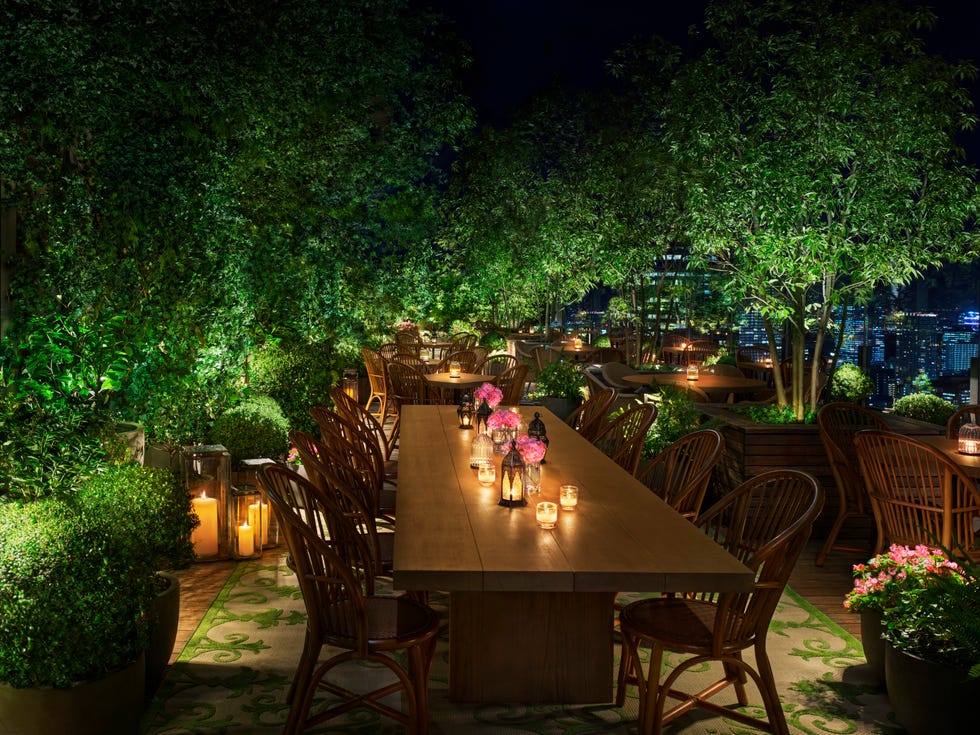
KAI Enshu
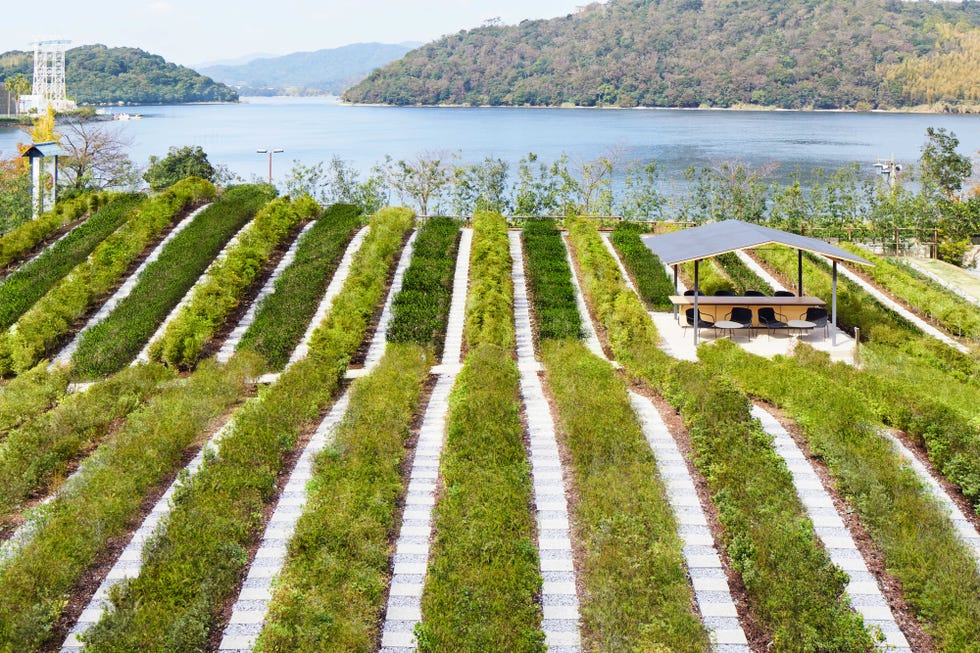
STAY: A calm, blissfully sedate waterside retreat, KAI Enshu offers a traditional ryokan experience, overlooking Lake Hamana and fields of green tea (which is a local speciality). The space is intensely relaxing – you’ll don a cotton kimono, or yukata, which you’ll wear throughout the stay, except during the time you’ll inevitably spend soaking in the waters of the geothermal onsen hot springs.
KAI Enshu is run by Hoshino Resorts, a fourth-generation family-owned Japanese hospitality group, with over sixty properties. The company is notable for notably chic and well-designed stays at all price points – from budget-friendly urban bolt-holes (their OMO sub-brand) through to ultra-high-end boutique hotels (HOSHINOYA). KAI is the name of their range of traditional ryokans, and their Hamamatsu outpost is a dreamlike spot in which to begin your travels.
KAI Enshu
EXPLORE: Hamamatsu is a little sleepy, but it’s the perfect place to gain your bearings –and taking in the Hamamatsu Flower Park, maybe dropping by the local zoo, exploring the shamelessly whimsical tourist trap that is fairytale village Nukomori-no-Mori, and sampling the wonders of the local 7-Eleven (Japan’s snack ecosystem is astonishing – though the ‘salted dried plums’ are not for the faint of heart). But frankly, you’re mainly here to soak in the onsen, drink vast amounts of hojicha toasted green tea, become acquainted with traditional Japanese dining, and prepare for the adventures ahead.
TOKYO
EXPLORE:
You’ve arrived at the largest metropolitan area on the planet, and there are infinite possibilities. But here are some pointers on where to begin…
Experience the grandeur of the Imperial Palace, and its huge surrounding gardens (and beware of its rather precise opening hours – the inner-palace effectively ‘closes for lunch’ in between morning and afternoon tours). Visit the Arashio-beya sumo stables, which offer free viewing platforms at which to watch the trainee sumos in action.
The legendary Tsukiji Outer Market remains the place to witness frenzied 5am tuna auctions – but you can get almost as much of a taste of the chaos (along with some of the freshest and finest sashimi you’ll ever experience) if you visit between 9am and lunchtime. Toyosu market is the other, more modern alternative, should you wish to compare and contrast.
Lose yourself in Golden Gai – a maze of a billion and one tiny drinking spots, each entirely shaped by the predilections of the owners, who can generally be found behind the bar, mere metres away from you, as you enter. Likewise, take in nearby Omoide Yokocho, or ‘Memory Lane’ (more commonly affectionately known as ‘Piss alley’), a network of smoky yakitori bars, offering cheap beer and shoulder-to-shoulder informal dining. In both cases, venues frequently have a capacity of fewer than ten, so beware any attempt at visiting if travelling in a group larger than approximately two people.
Edition.
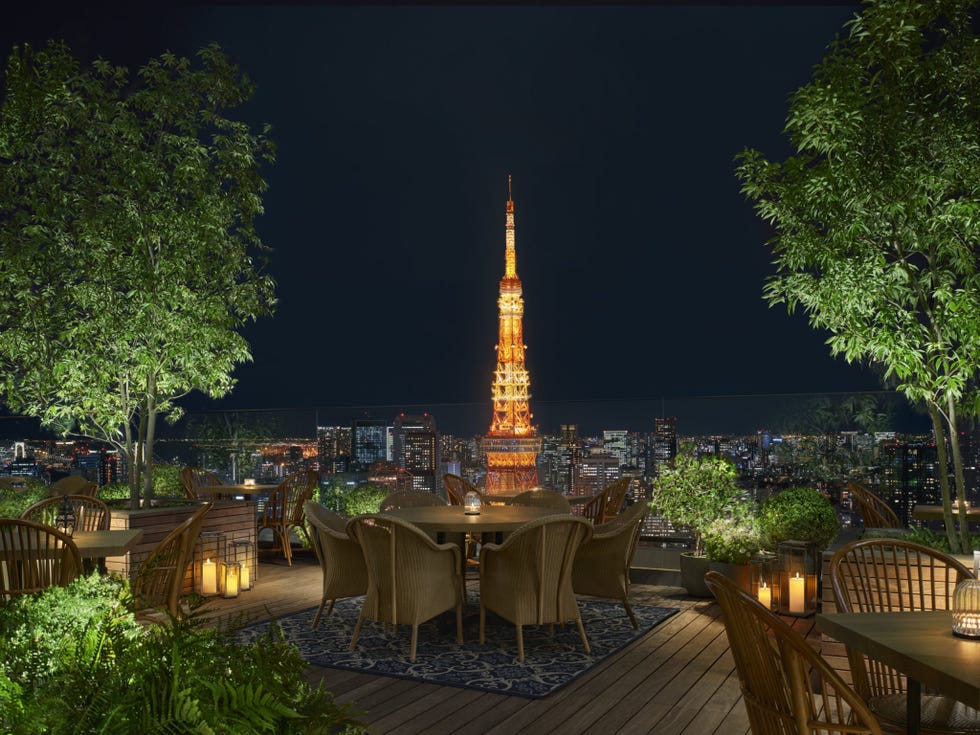
Find a moment to admire the skyline. The Tokyo Toranomon EDITION, as well as boasting chic Ian Schrager-designed interiors and plush, beautifully-appointed rooms, offers truly enviable views – their Jade Room restaurant (led by celebrated British chef Tom Aikens) is a gorgeous dining room looking out on a frankly jaw-dropping city-wide panorama, with as spectacular a view of the Eiffel-esque Tokyo Tower as you’ll find.
You should probably stop for a cocktail at their Gold Bar on the ground floor, too, which boasts a drinks menu which manages the rare feat of being both innovative and genuinely tasty, courtesy of the acclaimed Andrei Marcu, formerly of Coupette in Bethnal Green…
OMO5
STAY:
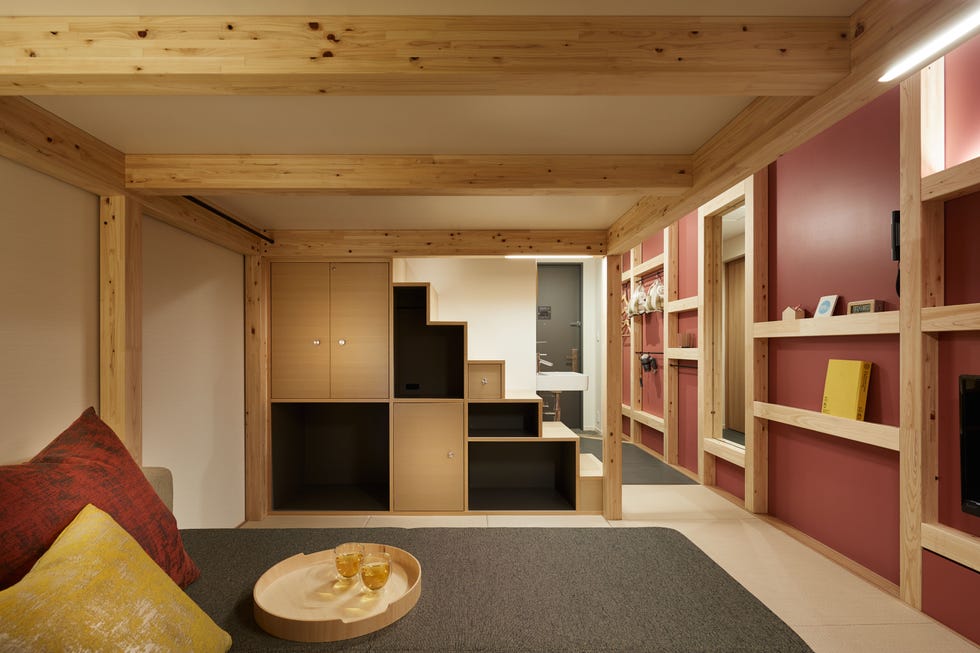
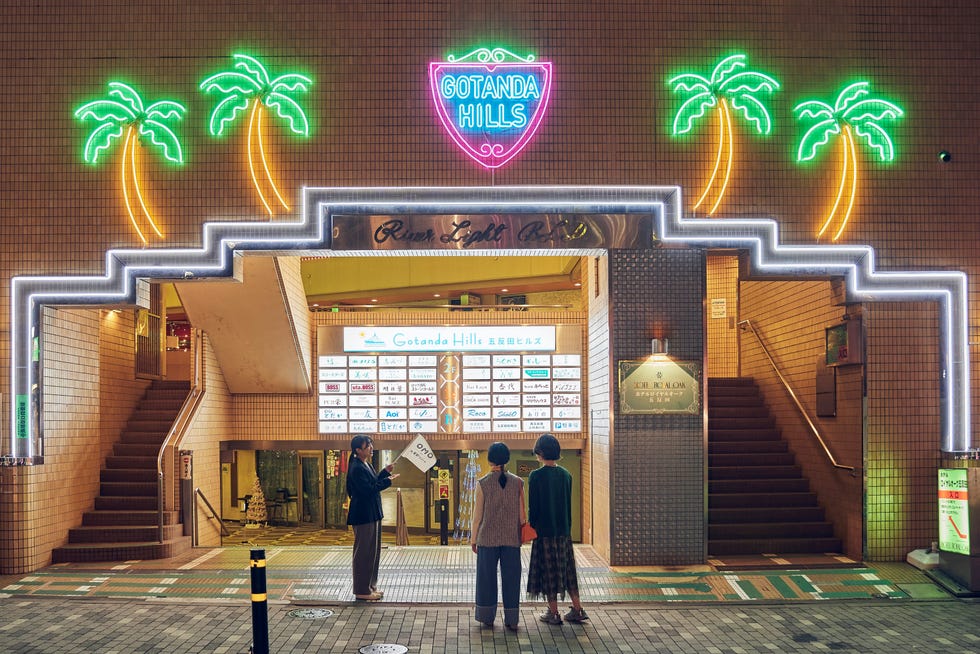
If you can, move around. Tokyo is vast, and basing yourself in just one location means you’ll likely end up depriving yourself of whole tranches of experience. For relaxed, low budget options, an OMO5 is your best bet. Competitively priced, they offer budget-friendly yet beautifully-designed options, with ingenious storage solutions and traditional tatami mat flooring and futon-style beds, in the slightly off-beat areas of Otsuka and Gotanda.
OMO5
What’s more, their local ‘rangers’ should on no account be overlooked. Part of the company’s Go-KINJO (or ‘enjoying your neighbourhood’) initiative, the enthusiastic and knowledgeable guides are on hand to lead you on a tour, allowing you to truly explore and experience neighbourhood life – and comparatively under-the-radar bars and restaurants (such as Otsuka Toricho, a traditional family-run spot offering chicken yakitori and cold beer) – in local neighbourhoods, far from the fervid chaos of the Shibuya scramble crossing (which, to be clear, you should also experience).
The Peninsula Tokyo
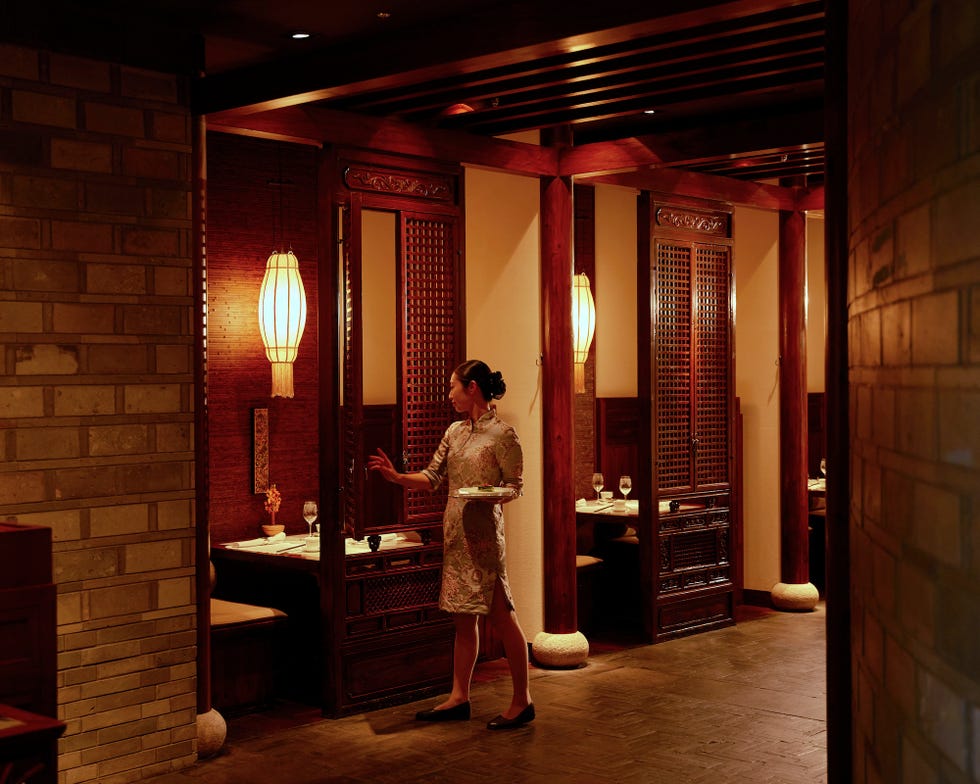
But Tokyo also does ‘flashy’ exceptionally well, and the Peninsula Tokyo is one of the grandest of the city’s grand hotels. The spectacle begins prior to arrival – you’ll be transferred in a chauffeur-driven Toyota Century, and greeted by a fever dream of immaculately-uniformed staff (Japan gives truly great uniform).
The hotel itself offers spacious, thoughtfully-designed rooms and suites filled with technology that would have been state-of-the-art when they were first installed, and which now has an almost retro timelessness (‘nail drying station’, anyone?). The soaring atrium of the lobby (with a grand piano placed high on an upper level, overlooking the room!) is home to the Peninsula’s celebrated afternoon tea. There’s a lavishly well-appointed spa, and a genuinely good gym. The overall effect is enthralling.
It’s also impeccably-located – next to zhuzhy Ginza, the city’s luxe shopping district, but also looking out on serene Hibiya Park, and the Imperial Palace Gardens.
HAKONE
EXPLORE:
A little outside Tokyo, Mount Fuji is the main attraction here. Depending on your energy levels/appetite for a trek, summit climbs are available – but a view from afar is also breath-taking. For a double cultural experience, visit Narukawa Art Museum and, after taking in the exhibitions, pay your respects to Fuji-san from a distance – she is generally visible across Lake Ashi on a clear day, via the museum’s viewing deck and nearby garden. Restore your energy with a Hakone manjyu sweet steamed bun.
(Also, if you take one single piece of advice from this feature, it is this: eat at Kamakō Restaurant, a one minute walk from Hakone station, and enjoy a simple dish of cold udon noodles in dashi broth which will haunt your dreams.)
kai hakone
STAY:
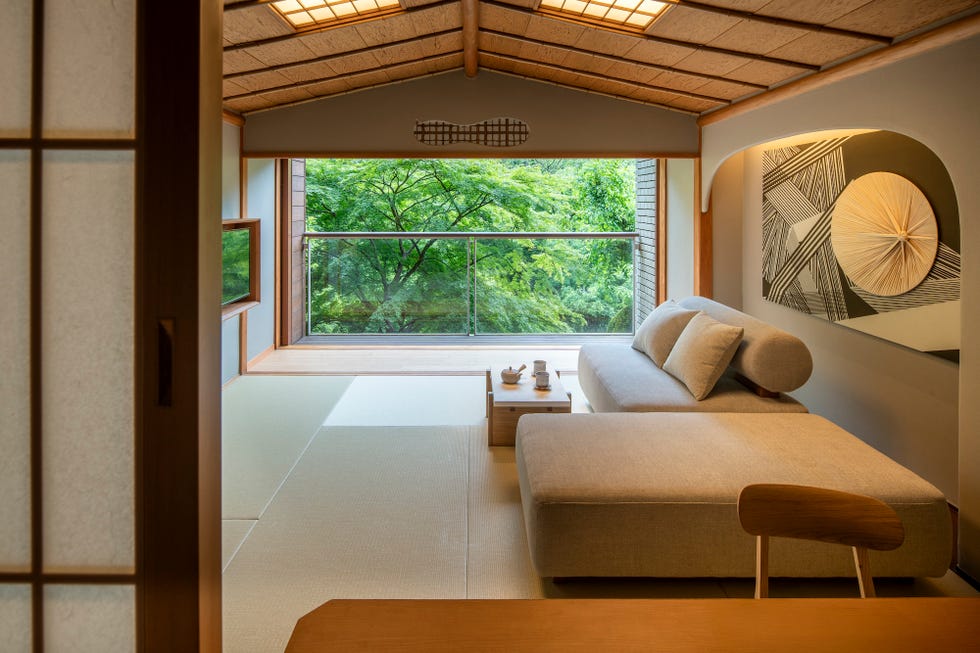
There are umpteen ryokans to choose from – including the beautiful KAI Hakone, which boasts an extraordinary outdoor onsen with spectacular mountainside views – but, in truth, Hakone can be experienced in a day trip. Unless you’re packing your climbing gear and tackling Mount Fuji like a pro – in which case, very best of luck to you.
OSAKA
EXPLORE:
A little grittier than Tokyo, Osaka is a boundless culinary paradise, and many of your core experiences will likely be food-centric.
You’ll want to try local speciality kushikatsu – skewered, battered, deep-fried delicacies, from onions to cheese to meat, served with a piquant deep brown Worcestershire-esque sauce (visit Fujiyama if you get the chance, for a deep-fried masterclass). At Kuromon market one can graze on everything from skewers of premium A5 wagyu – freshly blowtorched – to enormous king crab legs, to endless nigiri variations (you’ll also enjoy multiple encounters with Billiken, a chubby, smiling-faced, folk-luck deity and mascot of the local area, generally with the inscrutable phrase ‘Things-as-they’ inscribed on his feet). And the heady, chaotic, Dotonbori offers an overwhelming sensory experience – immense neon advertisements, impossibly-huge mechanical restaurant signage (such as the immense moving crab outside Kani Doraku), bustling bars, and lively river cruises. It’s like pleasure island.
There are other, non-gluttonous ways to entertain yourself, too. Nakazakicho offers a maze-like neighbourhood of relaxed, understated, independent hipster boutiques. Karaoke is also huge in Osaka, and as with Tokyo it can be experienced in slick, big-ticket format (such as Big Echo), but Osaka offers another way, too. In the somewhat run-down Kamagasaki neighbourhood, near Shin-Imamiya Station, there are a series of old, nearly empty shopping arcades. Here, dotted in between faded shops, there are tiny bars, each offering ultra-reasonably priced beers, sake, and lemon highballs…and karaoke. As you walk past you’ll be lured closer by the dulcet tones of lone middle-aged businessmen stopping by for a post-work beer and a heartfelt solo song. It’s an entirely different approach to karaoke, low-fi and oddly intimate, and well worth taking the plunge and joining for a duet or eleven.
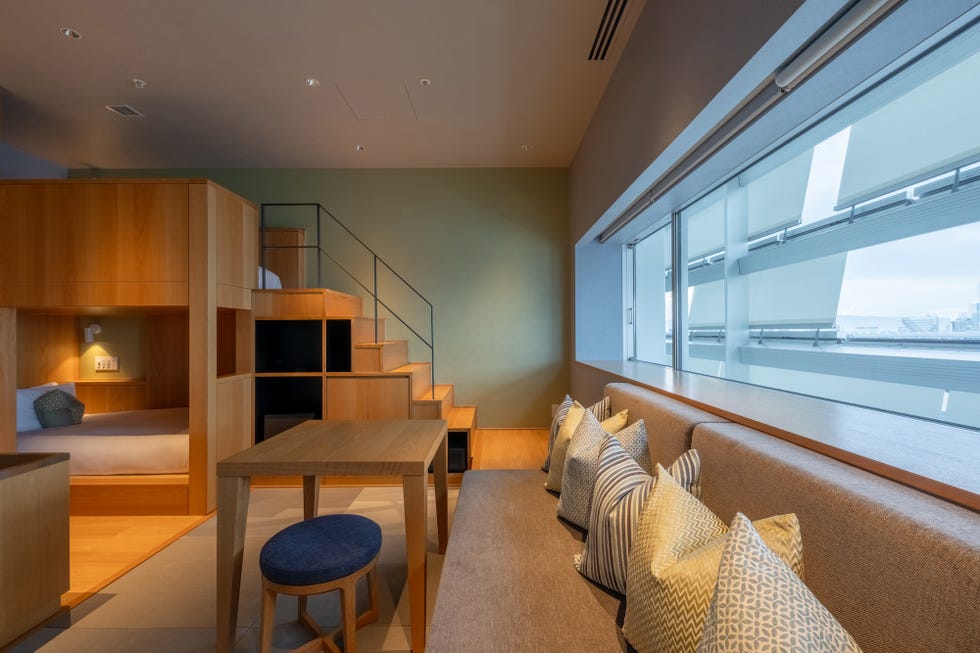
OMO7 Osaka
STAY: OMO7 Osaka is in the heart of the action – right beside in the midst of the bustling, hyper-real chaos. You’ll have inevitably developed a taste for / addiction to the onsen experience by this point – and happily OMO7 boasts its own onsen next door, offering a deeply cleansing start to your morning, prior to another day of alarming indulgence…
KYOTO
EXPLORE:
Calmer and more refined than Tokyo or Osaka, Kyoto – which is the former imperial capital – moves at a slower and more ceremonial place. It is an elegant, historic city, full of hugely beautiful shrines and temples. The 46 meter-tall Yasaka Pagoda is a spectacular sight in the midst of the lantern-lit Higashiyama district; the Fushimi Inari Taisha shrine is an extraordinary trail of thousands of vermilion torii gates leading through the forest of Mount Inari; the Kinkaku-ji Golden Pavilion, a Zen Buddhist temple with its upper floors clad entirely in gold leaf, is understandably a UNESCO World Heritage site; Nijō Castle, with its beautifully landscaped gardens and lavish, carefully-preserved interiors, is a tantalising glimpse into the world of the Tokugawa shogunate; and then there are simply the thousands and thousands of small Shinto and Buddhist shrines dotted around the city, spotlessly clean and serenely quiet, save for the occasional clap of hands or chime of a bell of worshippers signalling the beginning of prayer.
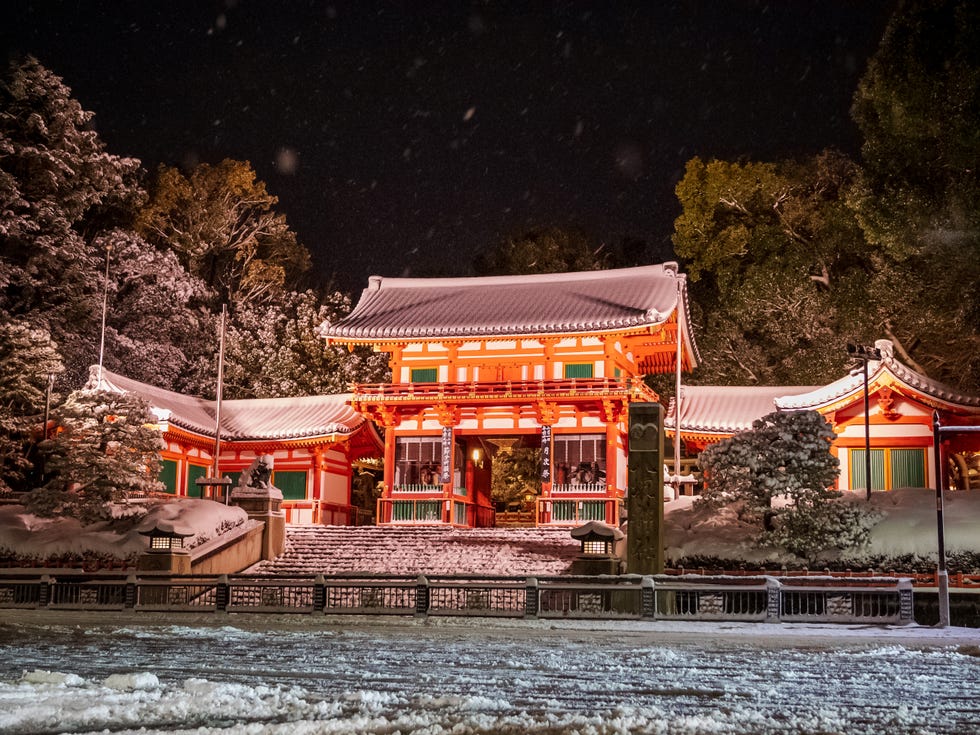
OMO5 Kyoto Gion by Hoshino Resorts
In Kyoto’s Gion district, with its low-rise timber buildings, you’ll experience the neighbourhoods still populated by practising maiko and geiko (Kyoto’s term for geisha) who continue to live and work as traditional entertainers, hosting guests in teahouses and performing music, dance, and conversation. The Gion Kagai Art Museum details their history, and the museum’s theatre hosts performances by maiko and geiko of the subtle, graceful kyōmai dance, perfected over five generations by the Inoue school – whose current head, Yachiyo Inoue V, is designated a Living National Treasure.
STAY:
HTMK
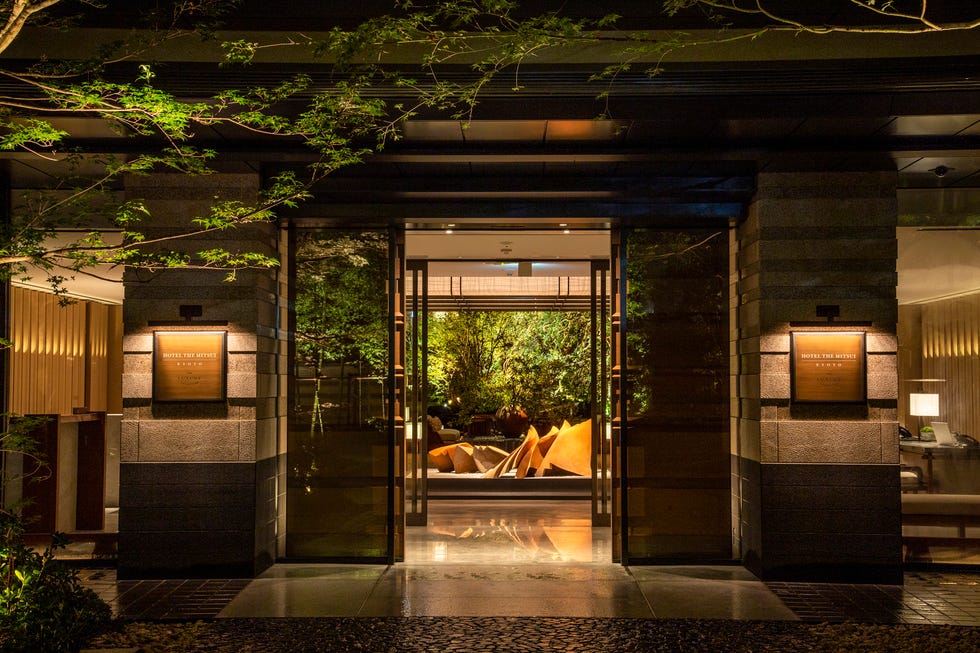
Hotel The Mitsui Kyoto is based in the heart of the city, in the Nakagyo-ku district of central Kyoto. Designed by the revered André Fu, the hotel is a masterclass in elegance, and the harmonious balance between architecture and nature. Entry is via a discreet gate, leading to a quiet courtyard with landscaped greenery and a stone path, arranged around the remains of a 300-year-old Mitsui family estate wall.
The hotel itself is organised around a central landscaped garden – an intensely beautiful arrangement of moss, trees, low shrubs, and a stone path, all looking out across a pond, with a private ceremonial tea house at one end. All of this can be comfortably observed from the bar, where classic craft cocktails are served, or Toki, the hotel’s restaurant which combines Japanese cuisine with French fine dining.
Below ground, the Mitsui’s thermal spa taps a natural onsen source, offering a sanctuary-like space in which to unwind. Unlike most traditional onsens, which are segregated by gender, the Hotel The Mistui Kyoto’s offering is mixed (the hotel also offers a suite with its own private onsen, for unmatched levels of relaxation).
It’s an ideal choice for those seeking to be in the heart of the city – mere minutes away from Nijō Castle, with the Mitsui’s rooms offering floor-to-ceiling windows with stunning views of the castle exterior. But Kyoto has an almost rural side to it – and to experience the quietude of the Japanese countryside, you’ll want to travel to the outskirts of West Kyoto, to Arashiyama, for a visit to HOSHINOYA Kyoto.
Hoshinoya Kyoto
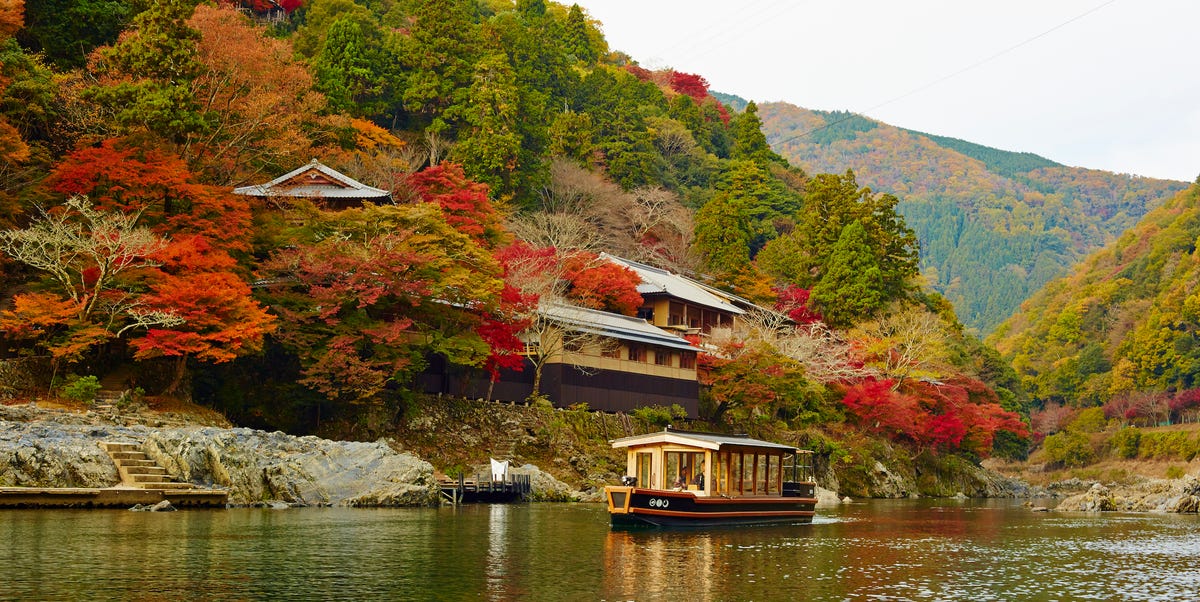
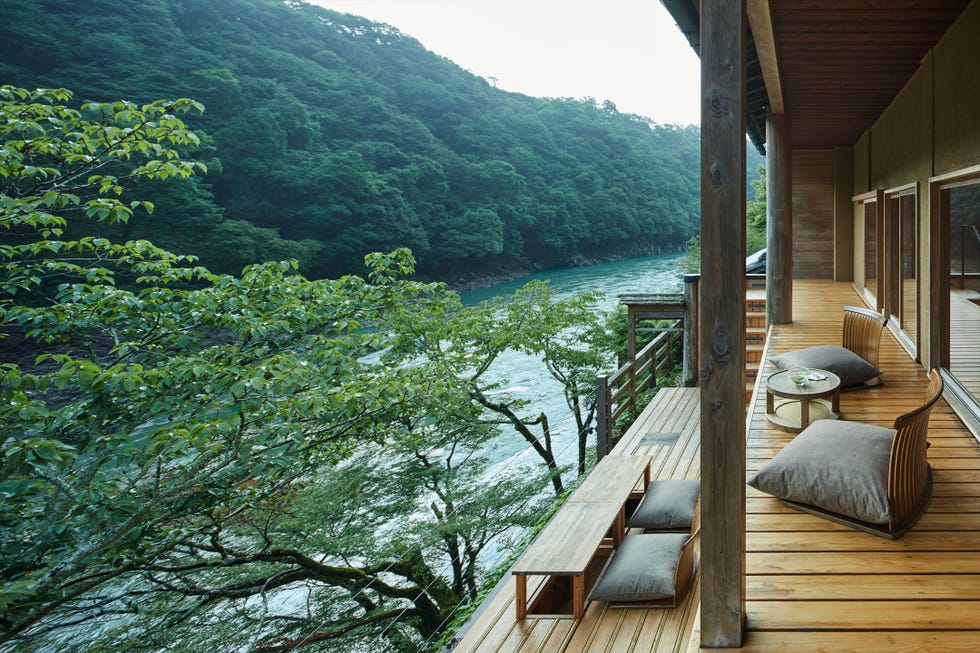
How secluded is HOSHINOYA Kyoto? Well, it’s accessible only via a 15 minute journey down the Katsura river on a traditional boat. (Fine, technically it can be reached by car, too, but the boat transfer really is the way to do it) On the other side, you’ll have reached a secret enclave that’s close to as calming and restorative as it’s possible for a space to be.
Each ‘room’ is, in fact, a stand-alone building, set next to one another along the riverbank and affording monumental views of the river and hillside. The main dining room offers traditional kaiseki dining – multiple courses, served in a formal setting (as with the start of your trip, you’ll wear a cotton yukata robe). Breakfasts are a multi-course affair too – with a nabe, or Japanese hot pot, brought to your room, allowing you to sit and gaze out onto the landscape, digesting both your meal and your experiences over the course of your trip.
What will your highlight prove to be? Again, it’s completely impossible to know in advance. But you’ll have an incredible time finding out.
FINAL WORDS OF WISDOM:
Utilise the sublime luggage forwarding service.
It’s magnificently simple, and bizarrely cheap. Your luggage leaves one hotel and arrives at the next.
Don’t over-plan.
Concoct a loose plan for your day, and allow yourself the freedom to go off-piste.
Some of the absolute best meals you eat…
Will be in train stations.
Yes, the toilets are astonishing.
And yes, returning to ‘the old ways’ will feel like an indignity. And yes, you’ll end up researching whether you can buy one for yourself (NB. you can).
It’s okay to give in.
It doesn’t all need to be thousand gate Shinto shrines and stunning museums – you can do the other stuff, too. The otter café. The micro-pig café. The capybara-and-kittens-and-also-there’s-a-Shar Pei-puppy-for-some-reason café. If that’s what you yearn to experience, you can. It’s fine. Follow your heart.
Don’t…
Attempt to see it all in one trip. You’ll be back.
Esquire was a guest of Hoshino Resorts and Finnair. JR Pass courtesy of JNTO. A return Finnair flight from London Heathrow to Tokyo Narita starts from £826 in Economy Class, £1,777 in Premium Economy and £4,104 in Business Class. Fares include all taxes and charges. Finnair flies from London Heathrow, Manchester, Edinburgh and Dublin, via Helsinki to Japan, all year round. The airline flies up to twice daily from Helsinki to Tokyo Narita and Tokyo Haneda, as well as to both Osaka and Nagoya. www.finnair.com
AloJapan.com