
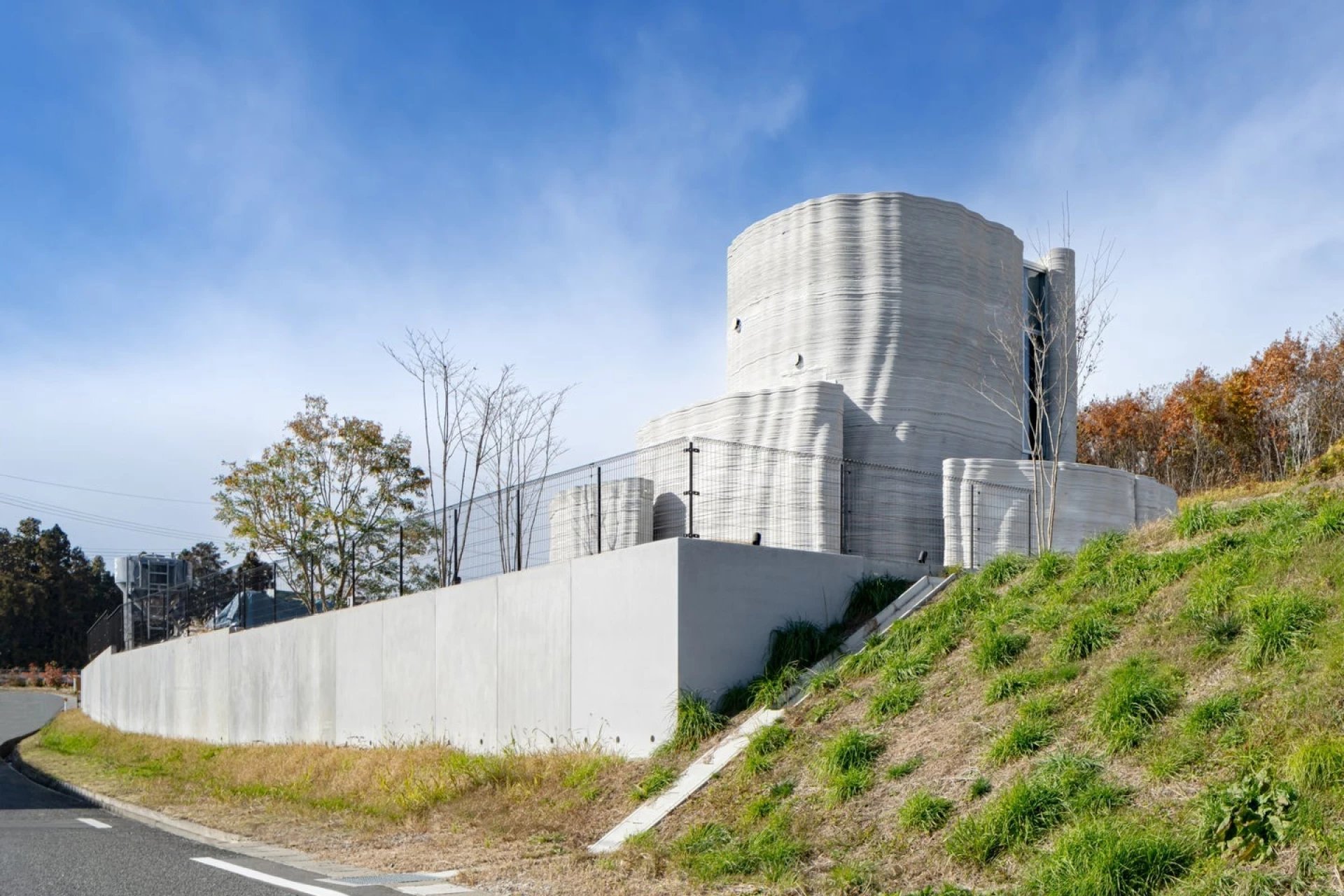
In Miyagi Prefecture, a compact two-story 3D-printed home built primarily from printed concrete has reached a major milestone. Known as the O House, the 50-square-meter (about 537 sq ft) residence is Japan’s first government-approved reinforced concrete house created through 3D construction printing and engineered to meet the country’s strict seismic codes. Traditionally, Japanese low-rise housing has used timber because of its long history and flexibility during earthquakes. This project shows that automated concrete printing can now meet those structural demands in one of the world’s most seismically active regions.
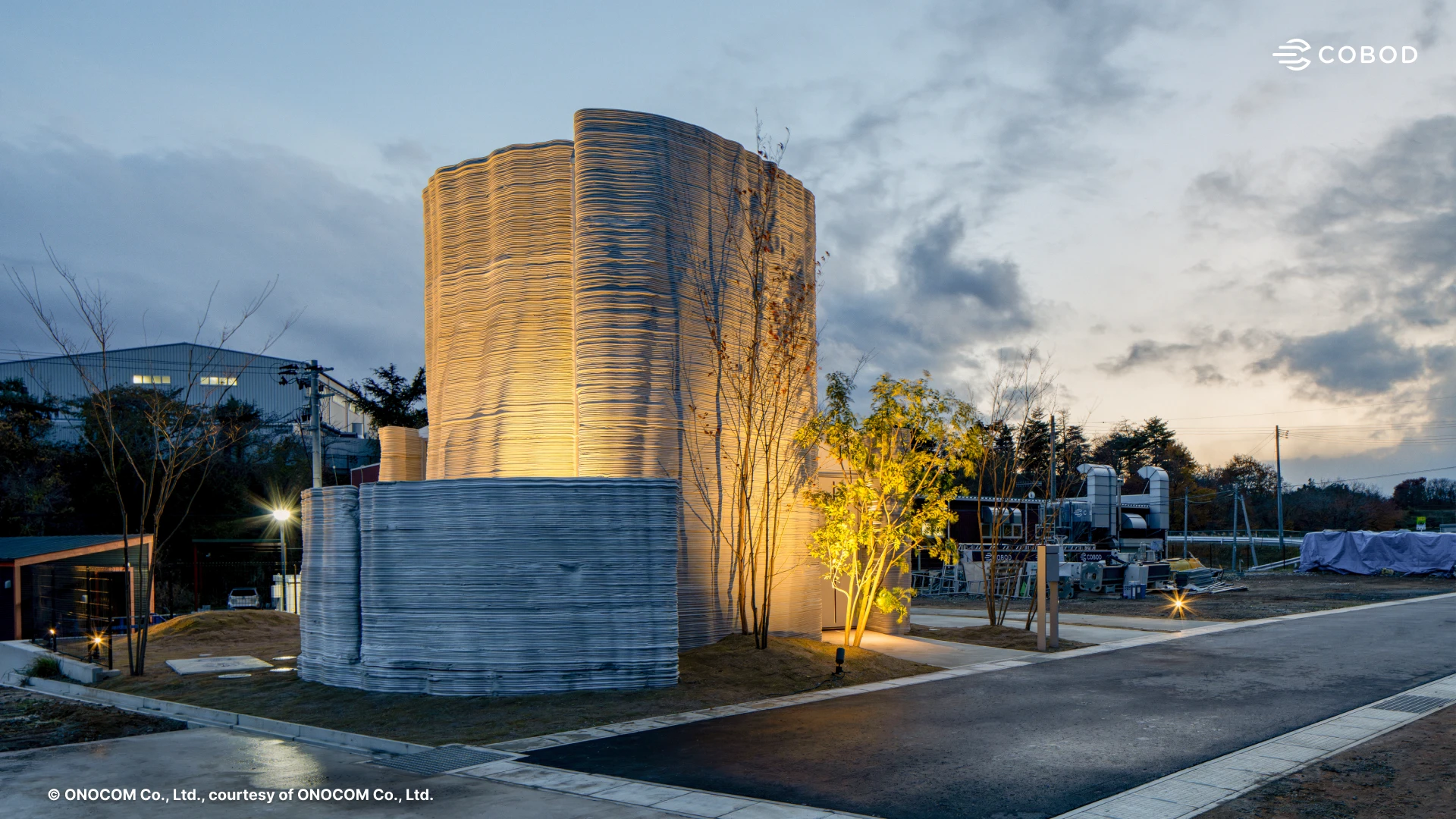
Built by construction tech firm Kizuki Co. Ltd. in partnership with Onocom Co. Ltd. and powered by a customized COBOD 3D printing system, the house rises from a foundation, partly printed 0.5 m below ground, to a full height of 7 m. A crew of four managed the printer on-site in weather ranging from near-freezing to hot summer conditions, laying down about 39 m³ of concrete material in continuous layers.
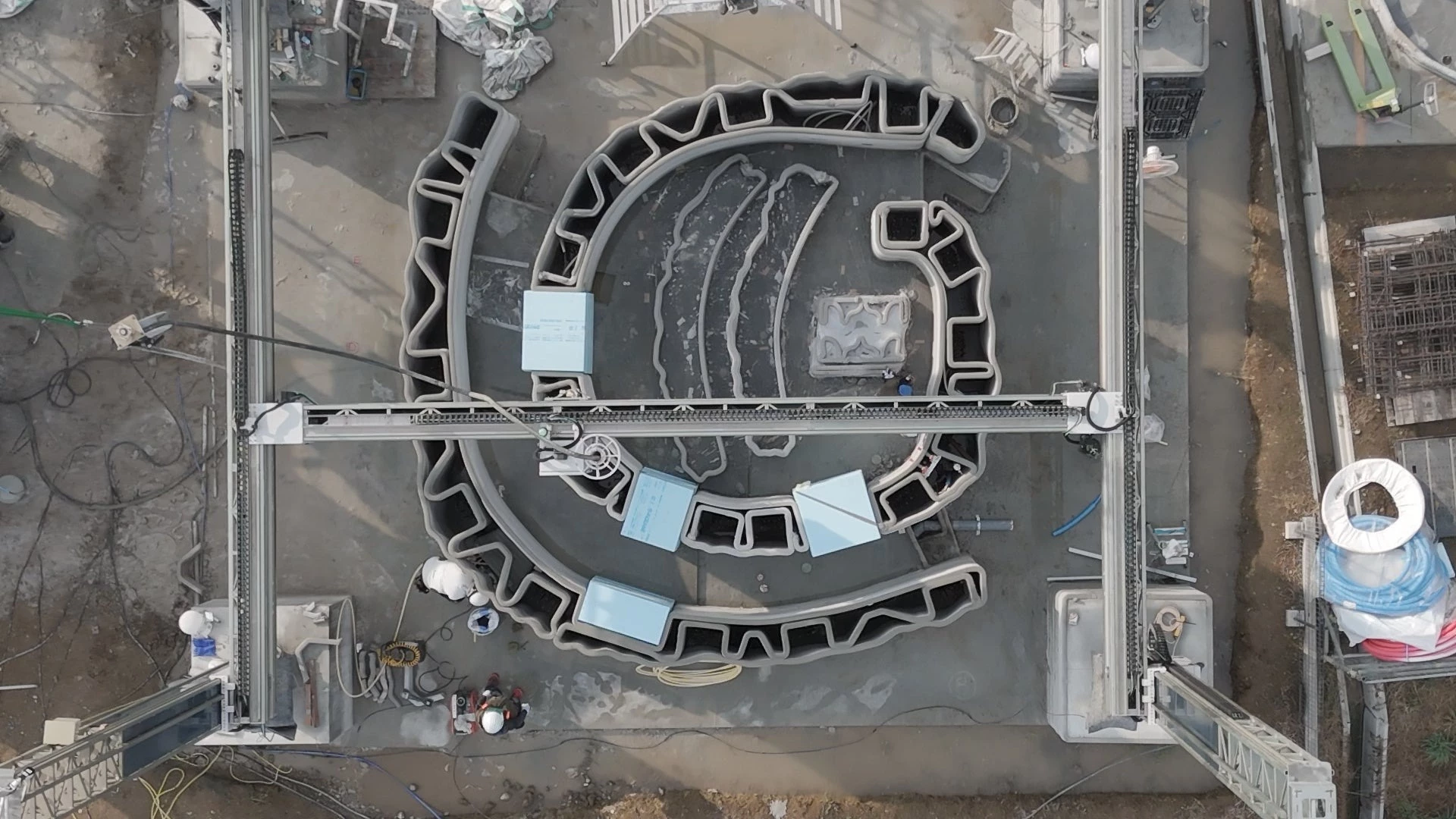
The O House mixes printing with conventional reinforced concrete framing. While the printed walls, floor slab, and roof slab form much of the shell, a reinforced frame provides the primary load-bearing backbone. This hybrid approach gives the structure both design freedom and the strength needed to satisfy Japan’s seismic design requirements, among the toughest in the world.
Design and Living Spaces of a 3D-Printed Home
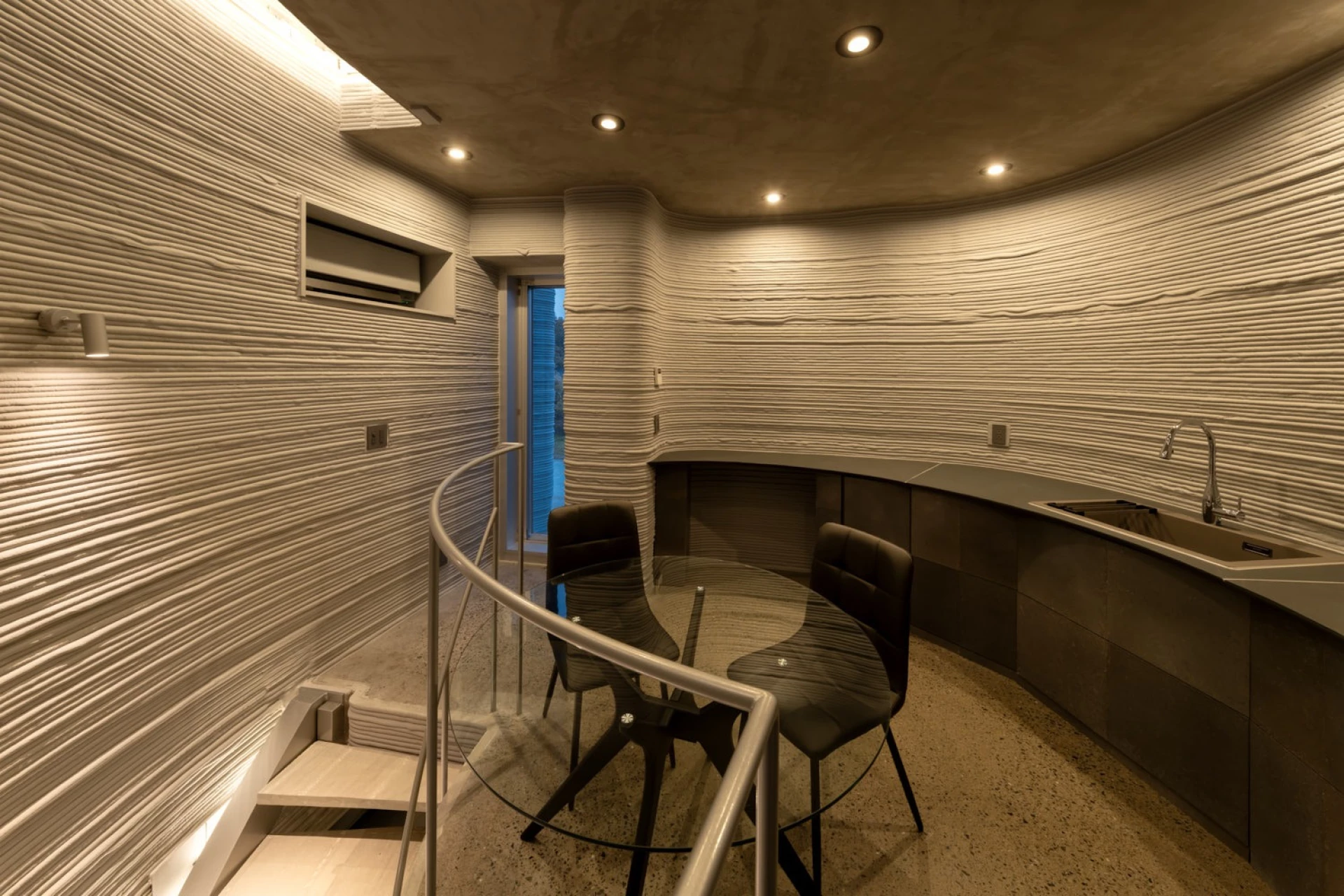
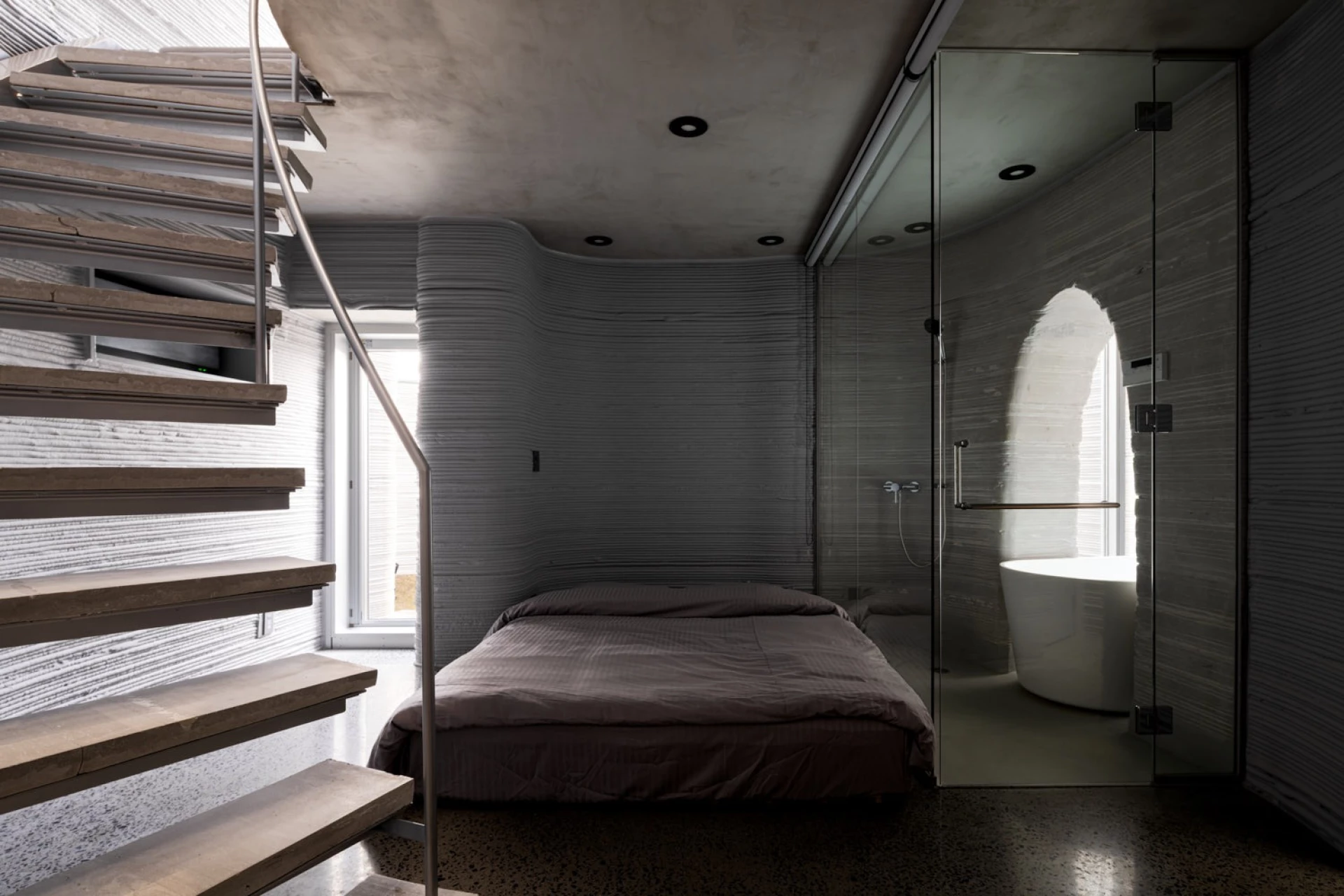
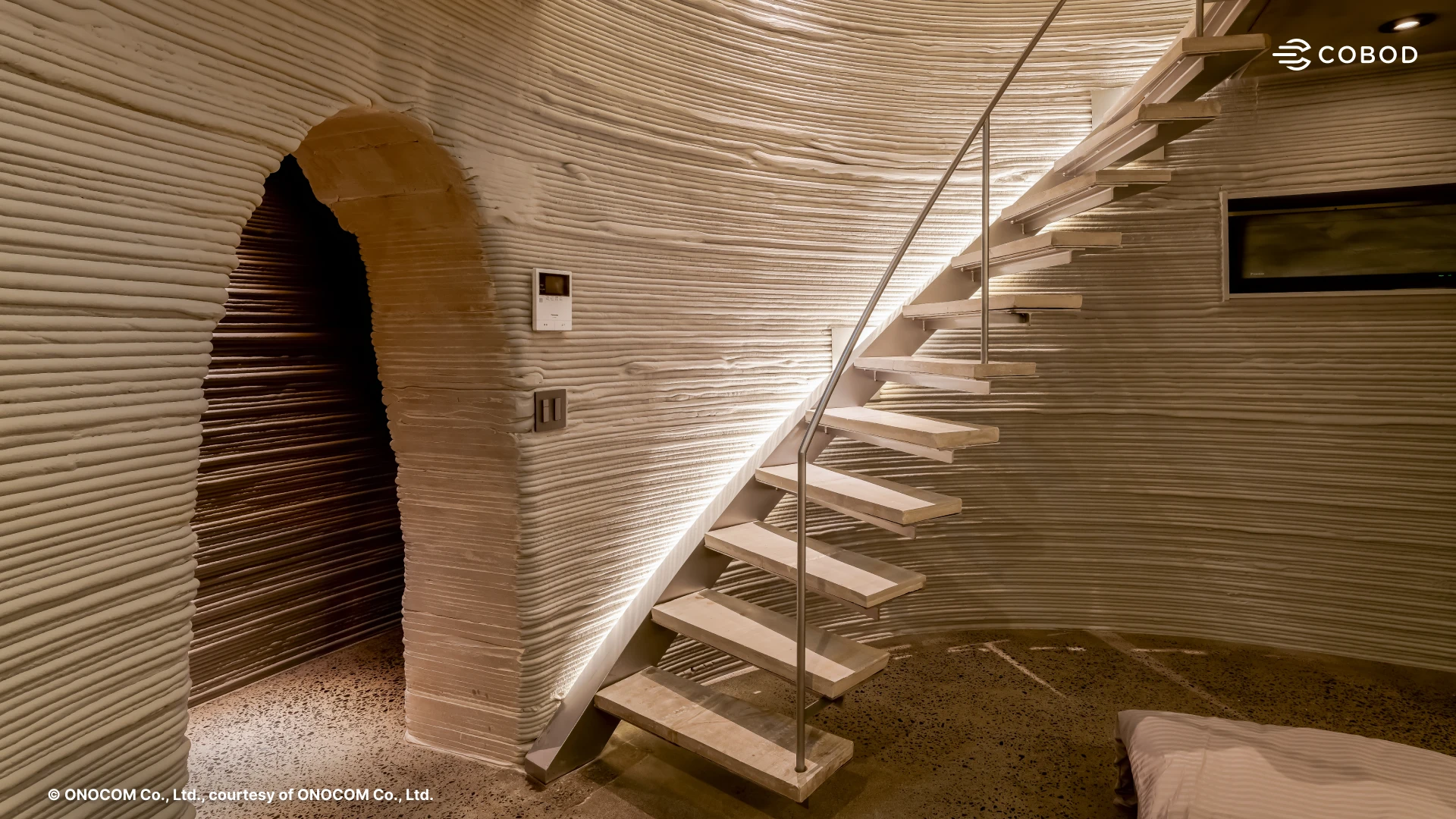
The O House takes cues from natural cave geometry. Its curved walls and arches reflect how 3D printing can shape continuous forms without conventional formwork. These curves extend inside, shaping spaces like the downstairs master bedroom with an en-suite bathroom and an upstairs open area that combines kitchen, dining, and living functions. Skylights bring daylight into parts of the house where traditional windows would be difficult to install.
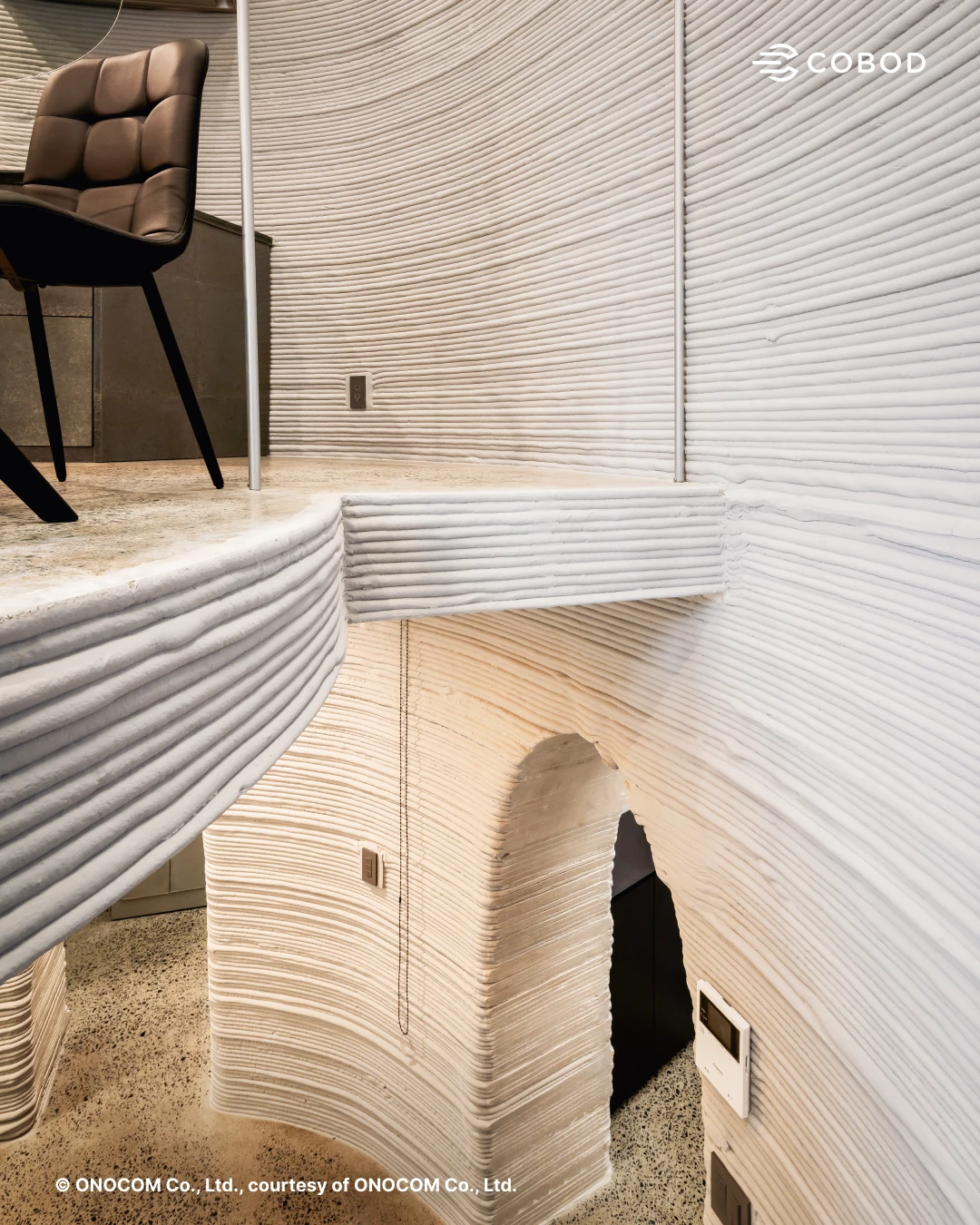
The interior plan inverts what many might expect: the upper floor has the living spaces, while private spaces are below. Custom curved cabinetry and finishes were integrated to fit the printed geometry, aligning form and function in a way that would be challenging with conventional building techniques.
Testing, Approval, and Construction
Getting approval under Japan’s building standards is a stiff test. The authorities evaluate materials and structures that will react under seismic loads that are common across the country. Passing these design checks, this 3D-printed home showcases new tech, and it stands up to real-world performance expectations.
The success of this project goes beyond a single demonstration house. As the government approved Japan’s first 3D-printed two-story home designed to meet seismic standards, it set a benchmark for what reinforced concrete 3D printing can achieve in earthquake-prone regions. It signals that this method can serve as a practical alternative to traditional construction for infrastructure, disaster-response housing, and projects in areas facing labor shortages. The teams behind the O House are already looking ahead to broader applications where seismic resilience, faster build times, and reduced reliance on manual labor are critical.
Image credit: ONOCOM/COBOD
AloJapan.com