
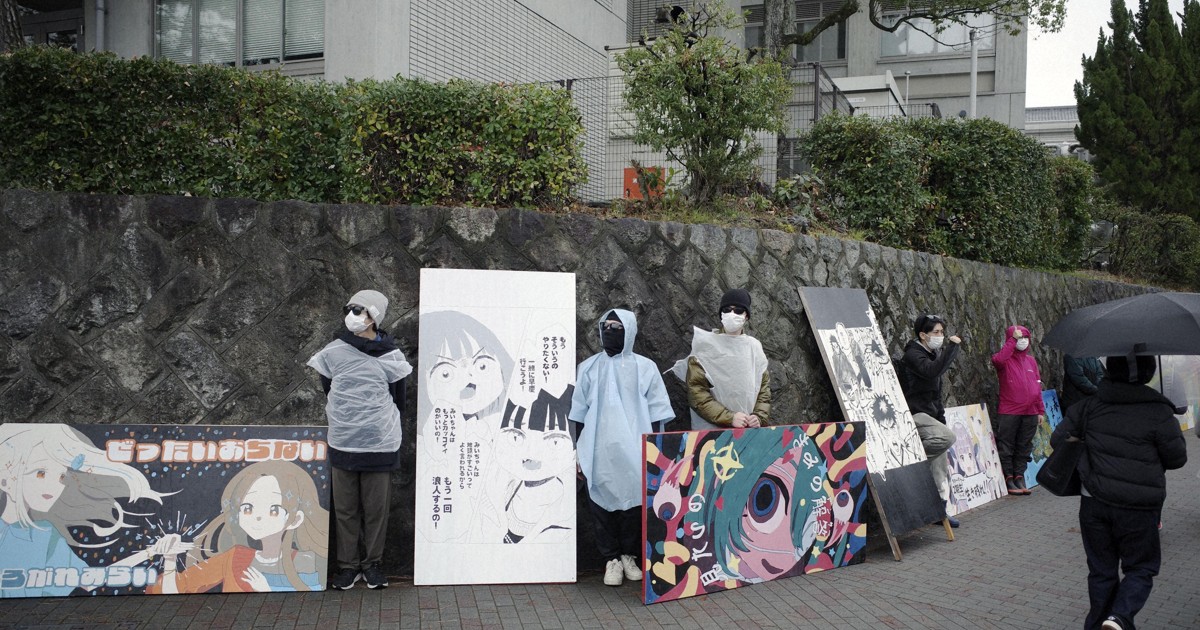
Signs and works of visual art are displayed just outside Kyoto University in Kyoto on Feb. 25, 2026. (Kyodo)
KYOTO (Kyodo) — A group of Kyoto University students defied university rules this week to display their signs and works of visual art just outside the school, a time-honored tradition they say they are determined to keep.
The displays on the sidewalk outside the school’s Yoshida Campus on Wednesday were timed for the start of the university’s entrance exam and came a day before an appeals court ruled on a case over the forced removal of similar signboards.
About 60 artworks and other items lined the sidewalk as group members stood wearing face masks for fear school administrators may punish them if their identities were discovered.
One display said, “College acceptance is coming.” Addressing those seeking to enter college months or even years after they graduated from high school, another said, “Aren’t you the main characters of university entrance exams?”
The student group was formed in 2018, the same year the school began imposing limits on displays. It has about 200 members.
A 21-year-old male student said support for the group’s cause is growing and questioned the administration’s policy toward displays. “While Kyoto University stresses that freedom is in its school culture, are we really free?”
Signs bearing messages and artwork, sometimes evoking the vibrant activism among the student body at one of the country’s leading universities, had been a constant feature for decades at the campus.
But after the municipal government flagged such displays, placed just outside school grounds, as violations of a landscape ordinance, the university started removing them in May 2018.
A labor union representing teachers and other campus employees sued the university and the city for damages, saying the removal of its signs violated their right to freedom of expression and interfered with union activities.
A district court dismissed its suit last June. On Thursday, an appeals court upheld the decision, saying it found little evidence that the outer perimeter of the campus served the purpose claimed by the plaintiff.
AloJapan.com