
The bears in Shimane prefecture in western Japan are getting bigger. It’s the result of a better diet, according to a bear hunter whom Tom Feiling interviews in Alone in Japan. As the rural population declines and people give up farming, bears are feasting on abandoned orange and persimmon groves. They are also getting more numerous and braver. Recently a bear looted a supermarket and attacks on people are more frequent.
Forty years ago Japan was regarded as the future for its dominance of the consumer-technology business. It’s now in a gloomier vanguard. Fertility is falling all over the world, but Japan is either further down the road or suffering a more extreme version of the problem than other countries. Its population is shrinking by about a million a year and retreating from the countryside to the cities, hence the advance of the bears.
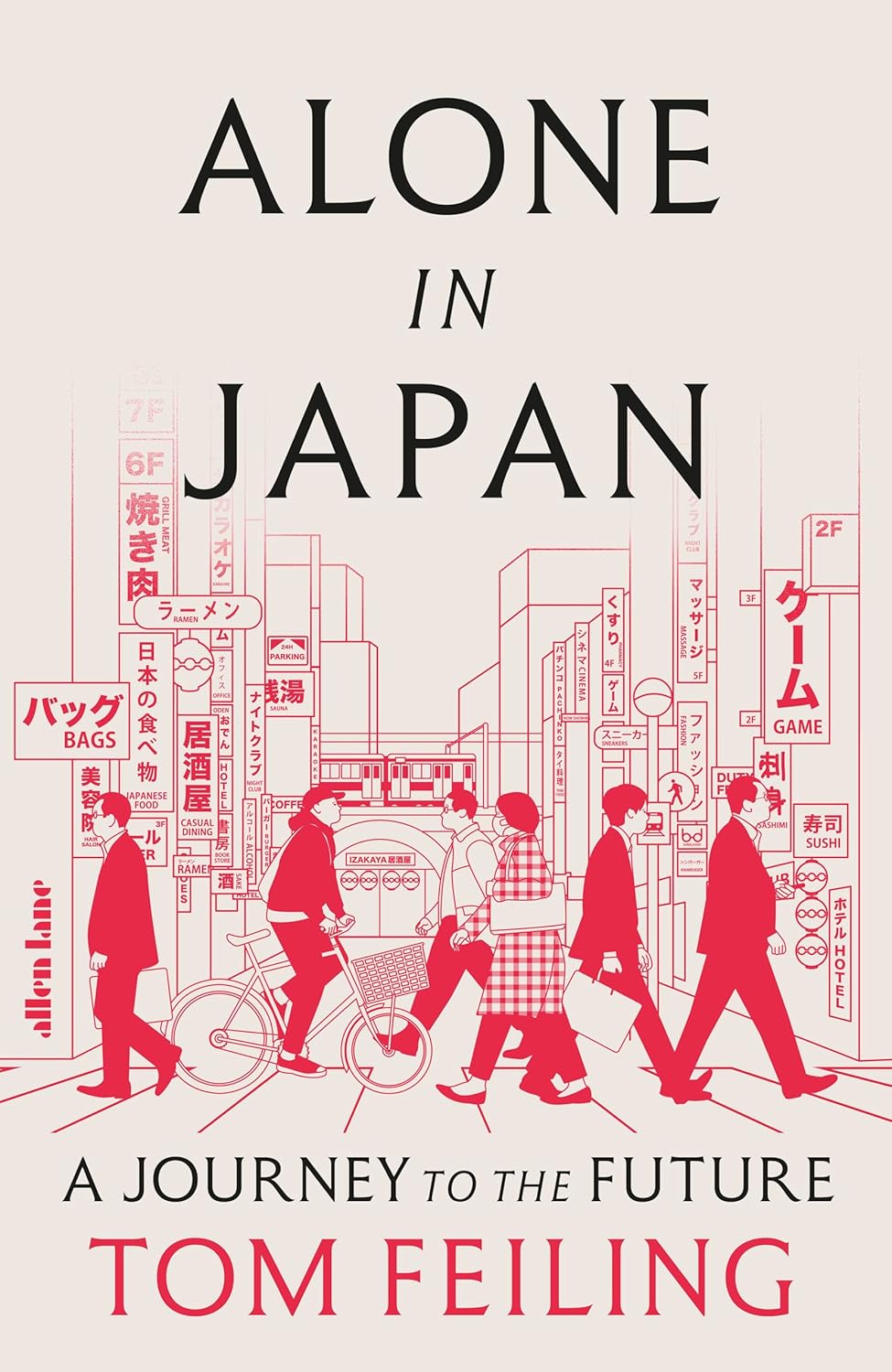
Feiling, a journalist who spent four years in Japan after university, returned to Japan on a whim aged 49 and became interested in its demographic disaster. Its roots, he believes, lie in the self-sacrifice of the postwar generation that rebuilt the country. The men gave their lives to the corporations for which they worked, the women to their families. Marriages were often arranged, sometimes by company managers. People did their duty by their country, their employer and their spouse — personal fulfilment wasn’t on offer.
In economic terms the postwar decades were a triumph. By the 1980s the Japanese were the principal foreign buyers of New York real estate and Hollywood studios. But the economy crashed in the early 1990s and has never recovered, largely because the birthrate also collapsed. The reasons and the consequences are the subject of Feiling’s fascinating book.
The core of the problem, according to Feiling, is that the country is only half modern. The economy, and the demands that corporate life puts on people are modern, but the cultural norms are traditional. Japanese women still expect their husbands to look after them, but as women get better jobs, the number of men who match up to their expectations shrinks. Hence the rise of the Revolutionary League of Unwanted Men, whose principles seem a little contradictory — they are hostile to women for treating men as cash cows, but want girlfriends — and who stage demonstrations every Valentine’s Day to call attention to their sad lot.
Japanese men, meanwhile, still expect their wives to do the housework. And as corporations demand long hours and have been known to schedule their female workers’ pregnancies for the company’s convenience, marriage looks like a rotten deal for women. One of Feiling’s interviewees tells him of a friend who was reprimanded for getting pregnant “before it was her turn”.
Elsewhere in the world sex and intimacy bring couples together even when the economic glue that once did so no longer sticks. The Japanese, however, seem uninterested in either. According to a survey, they have sex on average 42 times a year — less than any other country and a third as much as the libidinous (or boastful) Greeks, who top the list with 140 times on average.
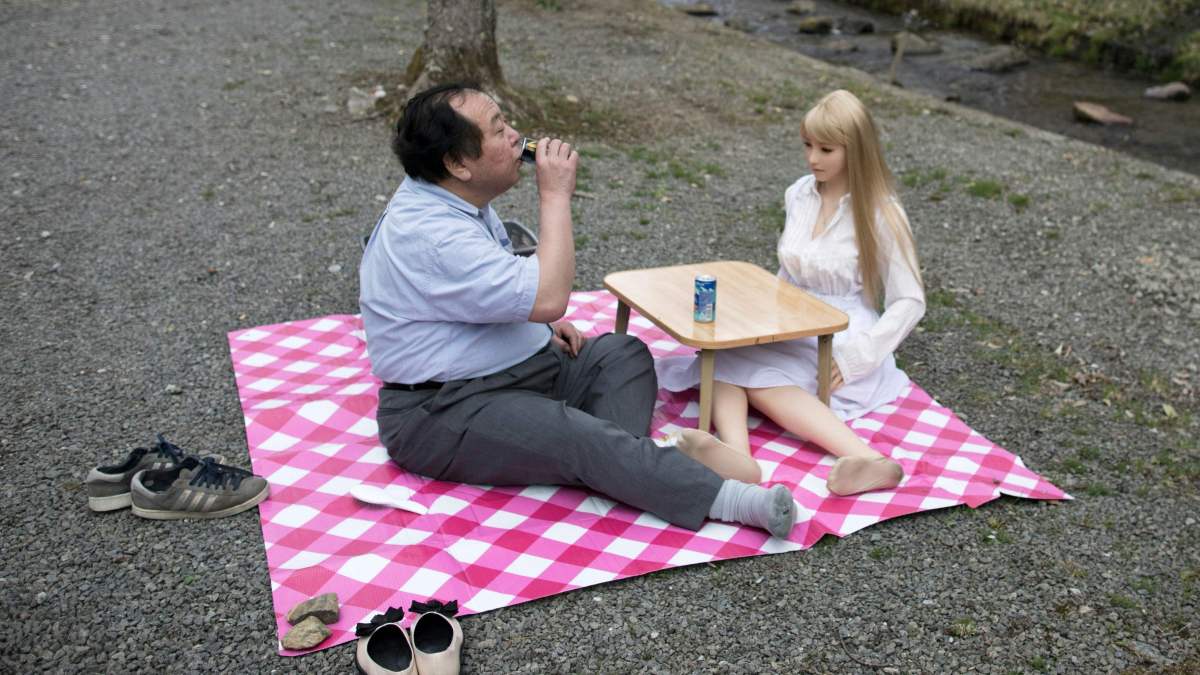
Why that should be is a matter for much speculation. Feiling observes that Japanese parents do not hug their children much. In a society obsessed with cleanliness, sex is regarded as dangerous. A psychology lecturer blames the persistent belief that a woman should not enjoy sex: “Even if she gets pleasure from sex, a woman cannot say so because people will think she is a slut.” And some Japanese men evidently prefer sex without actual women — the sex-doll business is booming. On the second-hand market, pre-loved sex dolls with detachable vaginas are available for those who can’t afford a new one.
• In Japan, cat and dogs fill the void left by a falling birthrate
Whatever the causes of the Japanese failure to couple up, its consequences are dramatic. One is the population decline. Villages are pockmarked by collapsing houses and nature is reclaiming the areas that people have abandoned. A labour shortage is dragging the economy down. The costs of pensions, health and social care are adding to a debt pile that is already the largest in the world. The country is in a downward fiscal spiral: the expense of looking after the old makes it hard for the state to pay for the childcare that would make it easier for women to bring up children.
The social consequence is solitariness. Its most extreme form is the hikikomori, the young men who shut themselves away from the world, playing video games and often living off their parents. But solitariness is visible everywhere: in the cafés and restaurants where people mostly sit and eat by themselves and depopulated villages where older people living alone struggle to cultivate the remains of a family farm.

Bears are benefiting from the decline of Japan’s rural population, feasting on abandoned orange and persimmon groves
GETTY IMAGES
There’s a psychological consequence too. Japan’s spirit is low. It’s suffering from a shortage of the energy and innovation that drove the economy in the boom years, and an excess of the pessimism and anxiety that go with old age. Fear of crime is rampant, although crime has virtually disappeared. Even the notorious yakuza, Japan’s tattooed gangsters, are too old to carry on working effectively.
Government after government has tried to raise the birthrate, offering people incentives to get them to breed and requiring companies to make employment compatible with parenting. None has worked — perhaps not surprisingly since international experience suggests culture has a more powerful impact on fertility than government policies.
Being a woman, Japan’s new prime minister, Sanae Takaichi, might be expected to take radical action. But her social conservatism makes that unlikely, and she is hostile to immigration — the only policy that would, in the short term at least, mitigate the economic consequences of the population decline.
• Read more book reviews and interviews — and see what’s top of the Sunday Times Bestsellers List
Feiling does not offer solutions to what is probably an insoluble problem, but he tells a gloomy story cheerfully, with colour and humour as well as lots of useful data. He infuses a bit of light into it, exploring efforts to revive towns and villages, including the likeable corporate refuseniks who have left the cities and taken up farming in depopulated rural areas. But they are sustained by subsidies and are too few to make a dent in the numbers.
The book’s subtitle, A Journey to the Future, suggests that the rest of the world will follow Japan’s path. It’s true that all rich countries have taken steps in that direction with more solitary living, less sex and a falling birthrate. Even the lustful Greeks have a fertility rate nearly as low as Japan’s. But because Feiling has written what is in part a travel book, he tends to emphasise the differences, not the similarities, between Japan and the west. The reader is left with the impression of a sad country living with the worst of modernity and tradition. At least the bears are having a good time.
Alone in Japan: A Journey to the Future by Tom Feiling (Allen Lane £25 pp368). To order a copy go to timesbookshop.co.uk. Free UK standard P&P on orders over £25. Special discount available for Times+ members
AloJapan.com