
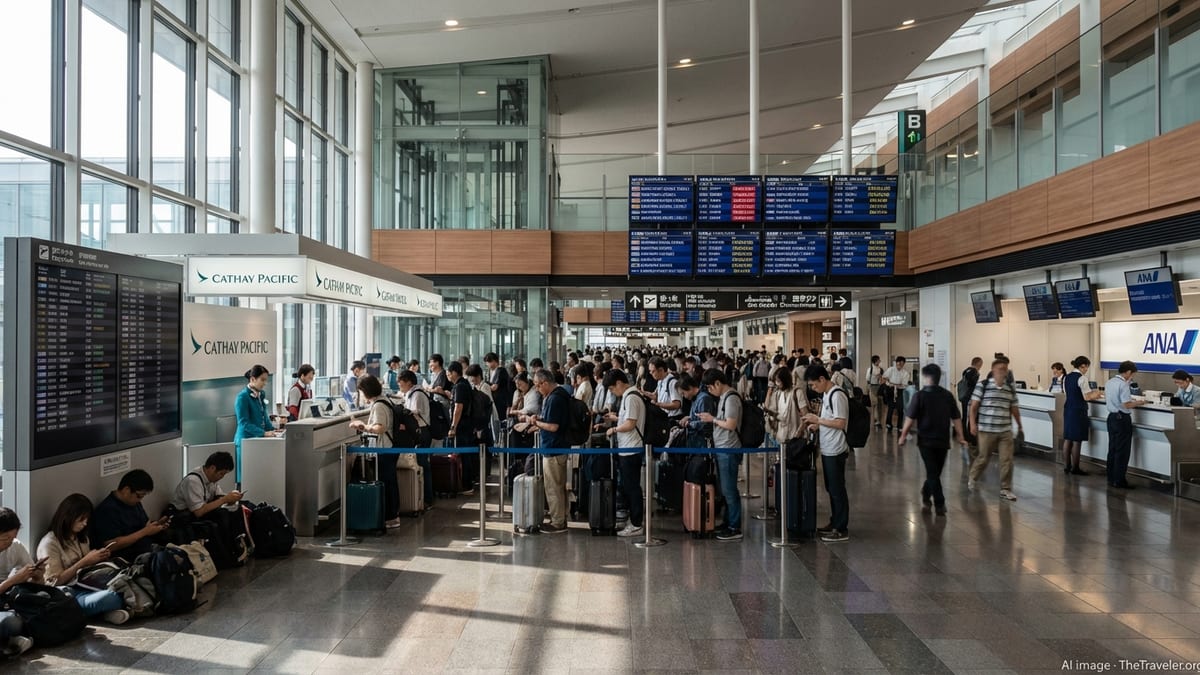
Travelers across Japan and the wider East Asia region are facing a new wave of disruption as Cathay Pacific, All Nippon Airways (ANA), Air Do and several domestic carriers cancel more than 20 flights, affecting busy routes linking Hong Kong, Tokyo, Okinawa and other key destinations.
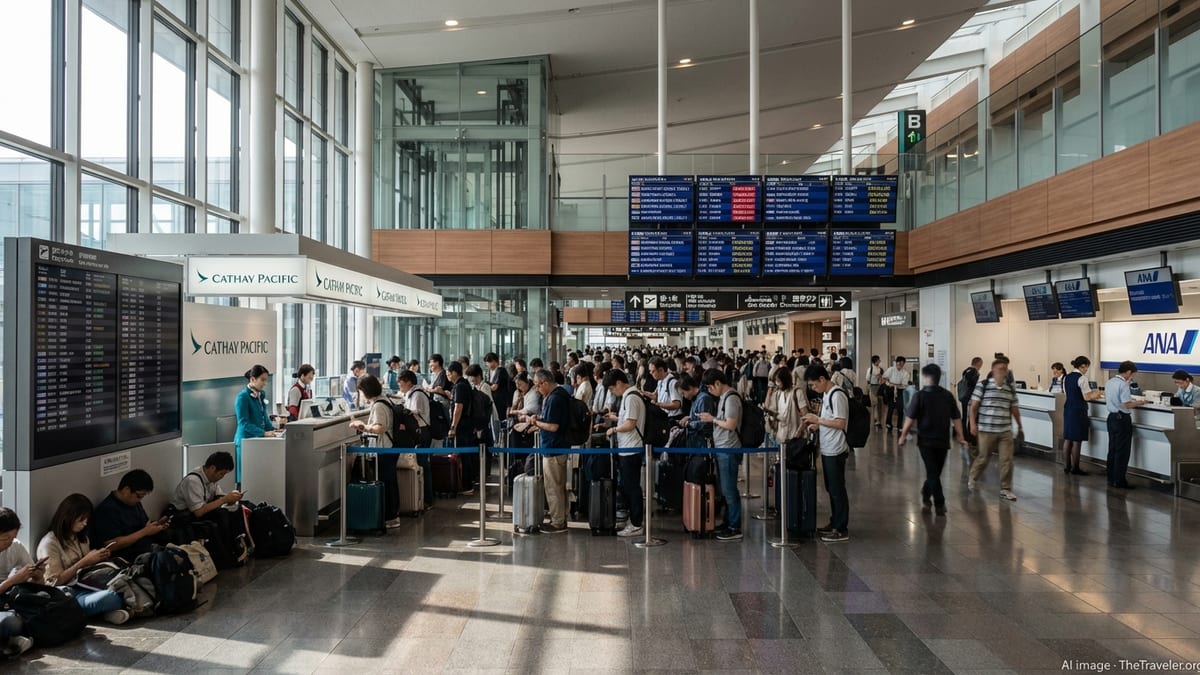 Fresh Cancellations Hit Hong Kong, Tokyo and Okinawa Routes
The latest disruption has concentrated on high-demand city pairs, including multiple services between Hong Kong and Tokyo as well as domestic flights linking Tokyo with Sapporo, Okinawa and other regional hubs. Industry trackers and airport operations data show that more than 20 departures and arrivals on Japan routes were either cancelled outright or heavily delayed within a single operating window, with Cathay Pacific, ANA and Air Do among the most affected operators.
On the Hong Kong to Tokyo corridor, Cathay Pacific adjusted its schedule after a cluster of services was pulled from operation, forcing passengers onto later departures or alternative routings via other Asian hubs. While core daily flights remain in service, the loss of several rotations compressed available capacity on a route that typically sees a dense schedule of departures from early morning through late evening.
Domestic connectivity within Japan was also hit, particularly flights linking Tokyo with Okinawa and Hokkaido, where Air Do and ANA operate an intensive network supporting both local travelers and international visitors making onward connections. Cancellations on these sectors left some travelers facing overnight stays and missed hotel and tour bookings, especially at the tail end of the busy winter travel period.
Airports including Tokyo Haneda, Tokyo Narita and Naha in Okinawa reported clusters of grounded departures, as check-in counters for the affected carriers handled queues of passengers seeking rebooking, compensation assessments and updated information on onward travel plans.
Operational Strains and Weather Add to Airline Challenges
While each carrier has cited slightly different causes, a mix of adverse weather conditions, tight aircraft rotations and staffing pressures appears to be driving the latest wave of cancellations. Seasonal weather systems across parts of Japan have led to periodic air traffic flow restrictions, especially at congested metropolitan airports, which can quickly cascade into missed connections and aircraft out of position.
For airlines like ANA and Air Do, which maintain dense domestic schedules using narrowbody fleets, even short disruptions can have outsized effects on the rest of the day’s operations. When a morning departure from Tokyo to Hokkaido or Okinawa is significantly delayed or cancelled, the aircraft is no longer available for subsequent rotations, prompting further schedule adjustments and, in some cases, preemptive cancellations later in the day.
Cathay Pacific has also been operating within a tightly balanced regional network, with aircraft serving multiple Asian destinations in quick succession. Any ground hold or diversion on Japan routes can impact later flights from Hong Kong to other regional gateways, prompting the carrier to consolidate services in order to stabilize its overall schedule. That approach, while operationally prudent, often means near-term disruption for passengers booked on the affected Japan-bound flights.
The situation underscores how vulnerable heavily trafficked regional networks remain to short-notice shocks, even as airlines continue to rebuild capacity after years of volatility in long-haul and intra-Asia demand.
Passengers Face Rebookings, Missed Connections and Longer Journeys
The human impact of the latest cancellations has been felt across departure halls in Hong Kong and Japan, as passengers navigated unexpectedly lengthened journeys. Travelers heading from Hong Kong to Tokyo reported being rebooked on later Cathay Pacific departures or rerouted through partner carriers on connecting itineraries, extending travel times by several hours or more.
Within Japan, ANA and Air Do customers faced missed domestic connections and last-minute itinerary changes, particularly those using Tokyo as a hub for onward travel to Okinawa, Hokkaido or regional cities. Some travelers reported having to switch airports between Haneda and Narita to make alternative flights, adding ground-transfer time and logistical complexity to already disrupted days.
Families returning from holidays in Okinawa and Hokkaido, as well as business travelers on tight schedules, were among those most affected. Travel agents and airline call centers experienced a surge in demand as passengers sought to rebook, secure hotel vouchers where eligible and adjust ground transportation and accommodation arrangements at short notice.
With hotel occupancy already elevated in popular destinations such as Tokyo and Okinawa, some stranded travelers encountered limited last-minute availability or higher prices for overnight stays, compounding the financial and practical impact of the cancellations.
Airlines Offer Fee Waivers and Flexible Options
In response to the disruption, Cathay Pacific, ANA and Air Do have moved to offer more flexible options for affected passengers. For select Japan routes, airlines have introduced short-term change-fee waivers, allowing customers to switch to alternative dates or flights without the usual penalties, subject to seat availability. Some carriers are also honoring rebookings onto nearby airports when that can help travelers reach their original destination with minimal delay.
Airport staff in Hong Kong and Japan have been deploying additional ground personnel to assist with rebooking and customer service queues, guiding passengers through revised boarding procedures and ensuring that those with tight onward connections are prioritized where possible. At key hubs such as Tokyo Haneda and Narita, additional signage and announcements have been used to direct affected passengers to dedicated service counters.
Passengers booked via travel agencies or online travel platforms are being urged to check their reservation status frequently and to monitor airline notifications, as further rolling adjustments remain possible while carriers work to restore normal operations. For travelers with non-urgent itineraries, airlines are advising the consideration of voluntary date changes to ease pressure on near-term departures.
Frequent flyer members on affected airlines may also be able to leverage priority waitlist or standby options on alternative flights, though these remain capacity-dependent and are most effective for solo travelers or small groups.
What Travelers Should Do If They Are Booked on Japan Routes
With schedules still being adjusted, travelers holding tickets on Cathay Pacific, ANA, Air Do or other carriers operating between Hong Kong, Tokyo, Okinawa and wider Japan are advised to take a proactive approach. Checking flight status on airline apps or official channels before departing for the airport is essential, particularly for early-morning and late-evening departures that are more vulnerable to operational reshuffles.
Experts recommend building in additional buffer time for connections through major hubs such as Tokyo Haneda and Narita, and avoiding extremely tight layovers where possible. Travelers connecting from domestic Japanese flights onto international services, or vice versa, should pay particular attention to minimum connection times and be prepared with backup options arranged through their airline or travel agent.
Passengers are also encouraged to keep receipts for any unexpected accommodation, meals or ground transport incurred due to cancellations, as these may support later reimbursement claims depending on airline policies and local regulations. Those with comprehensive travel insurance may have broader coverage for disruption-related costs, but policies vary widely and often require detailed documentation.
For upcoming travel later in the season, travelers considering Japan itineraries may wish to opt for slightly earlier arrivals before key events or holidays, allowing a cushion in case of schedule changes. While airlines are working to stabilize operations, the latest wave of cancellations highlights the importance of flexibility, real-time information and contingency planning when flying into and within Japan’s busy air network.
AloJapan.com