
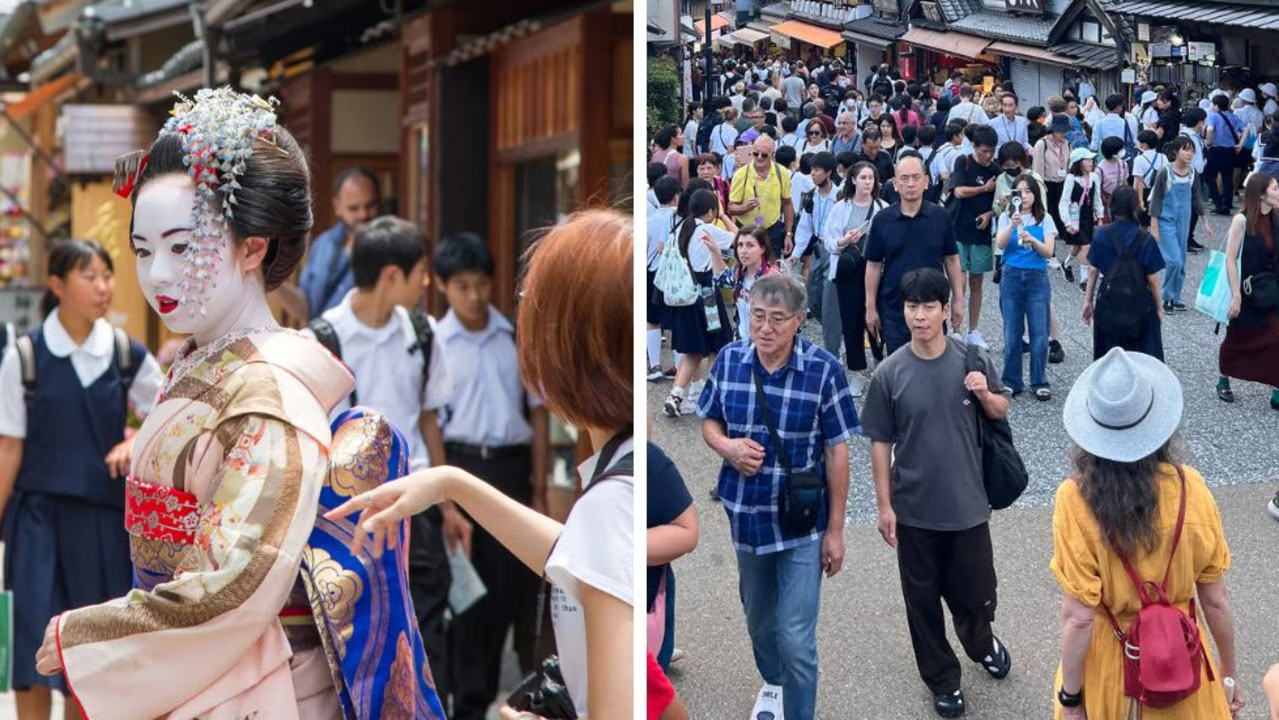
A famous Japanese city is hiking its accommodation tax from March 1.
Tourists will need to pay more per night to stay in Kyoto, the former capital of the country and an iconic tourist destination on what is known as the popular “Golden Route” itinerary.
While there has been chatter about the tax increasing tenfold, the charge actually varies based on the price of the accommodation, so only guests in luxury lodging will be hit with a tax 10 times as much as it was previously.
The tax applies to both domestic and international visitors.
If you are a budget traveller and your stay is under 6000 yen (about $55) per person per night, there is no increase, so the tax remains at 200 yen (about $2).
But for stays costing between 6000 and 19,999 yen (about $55-$185), the tax will double from 200 to 400 yen (about $2-$4), and for stays between 20,000 and 49,999 yen (about $185-$460), the tax increases from 500 to 1000 yen (about $5-$10).
If your accommodation is more than 50,000 yen (about $460) a night, that is when the big price hikes happen.
For stays between 50,000 and 99,999 yen (about $460-$915), the tax jumps from about 1000 to 4000 yen (about $10-$40), and for stays over 100,000 yen per night (about $920) the tax soars to 10,000 yen (just over $90), increasing tenfold.

MORE: 54yo quits Aus for Tokyo, exposes cash gap
The tax is charged per person, per night, which means if two people are staying in one room that costs 50,000 yen each night in total, the tax is calculated based on a room rate of 25,000 per person. Therefore, each person will be charged a tax of 1000 yen per night.
The changes to the tax, which was first introduced in 2018, are part of the city’s efforts to combat the threat of overtourism.
Kyoto is often referenced in the ongoing global debate about the impact massive crowds and misbehaving tourists are having on popular destinations across the world, creating fierce tensions between locals and foreigners.
While growing numbers of tourists bring economic benefits, an influx of visitors can also create serious challenges for a country.
The Japan National Tourism Organisation has been vocal about dispersing tourism numbers and wanting Australians to explore beyond the hotspots on the “Golden Route”.
However, Kyoto City tells news.com.au that they are not wanting to restrict visitors, they just don’t want them all in the same places at the same times.
“We hope visitors from Australia will be mindful of the local community and explore
the ‘hidden gems’ in various areas beyond the major sites to experience the true depth of Kyoto’s charm,” Kyoto City’s office of industry and tourism senior director Takamasa Kadono said.
MORE: Why families are abandoning Australia for life abroad
As well as fund tourism management and infrastructure improvements, it is hoped adding cost pressure to high-priced stays will encourage more people to stay during quieter seasons and in less busy areas.
Kyoto City Tourism Association director general Junichi Tanaka told news.com.au the tax would be used to address tourism issues like traffic congestion and litter, preserving the landscape, and promoting traditional culture.
More specifically the funds will subsidise traditional events like the Gion Festival in July, which is the country’s biggest festival, and the Gozan no Okuribi in August, where five giant bonfires are lit on mountains surrounding the city.
The extra money will also help preserve the traditional Kyoto townhouses and operate express tourist buses to alleviate overcrowding on city buses, Mr Tanaka said.
Tourists will pay the tax through their hotels and it is advised to check if the tax is already included in the room rate.
Ace Hotel Kyoto general manager Shiho Ikeuchi said she saw the tax as an investment in the long-term quality of Kyoto as a destination.
“As hoteliers, we support measures that protect the very things our guests come here to experience,” she said.
“A well-managed Kyoto is a more attractive Kyoto, and guests who feel they’re contributing to the city’s preservation tend to feel more positively about their visit, not less.”
Kyoto is certainly not the first city to use a tourist tax as a measure to better manage an influx of visitors.
From July, Scotland’s capital Edinburgh will join a number of cities now charging a tax on overnight accommodation. A 5 per cent charge will be added. Manchester had became the first city in the UK to impose a tourist tax for overnight visitors in April 2024.
As of 2025, Australians who had previously enjoyed visa-free travel to the UK – like tourists and business travellers visiting for less than six months – were required to apply for an Electronic Travel Authorisation (ETA). It started at 10 pounds but currently costs 16 pounds (about $30) and is expected to increase to 20 pounds (A$38).
Over in the US, Donald Trump introduced a A$150 per person surcharge for foreign tourists visiting popular national parks like Grand Canyon, Yosemite and Yellowstone in 2026.
The parks price hike came into effect just three months after the cost of an Electronic System for Travel Authorization (ESTA) jumped from US$21 (about A$30) to US$40 (about A$60).
In an effort to crack down on mass tourism and unruly foreigners in 2024, Indonesia famously introduced a 150,000IDR (about $15) fee for visitors entering Bali – with the funds going toward protecting its culture, customs, and environment.
The same year, European hotspot Venice made headlines for introducing a 5 euro entry fee for day-trippers to visit the popular Italian city in peak season.
Last year, the fee was doubled for any visitors who didn’t book more than four days in advance. It will return in 2026 with the number of days the levy applies to extended.
The measure is in addition to an existing tourist tax for nonresidents who stay overnight in a Venice hotel or Airbnb.
Also in 2024, a mandatory fee for hiking Japan’s Mount Fuji and requirement to book a limited spot was introduced. That fee then doubled to 4000 yen (just under $40) per person for the peak season in 2025.
In January, Japan National Tourism Organization revealed a new record for Australian travellers, with 1,058,300 visiting Japan during 2025, an increase of 15 per cent on 2024.
It is the first time more than 1 million Aussies visited the Land of the Rising Sun in a calendar year.
AloJapan.com