
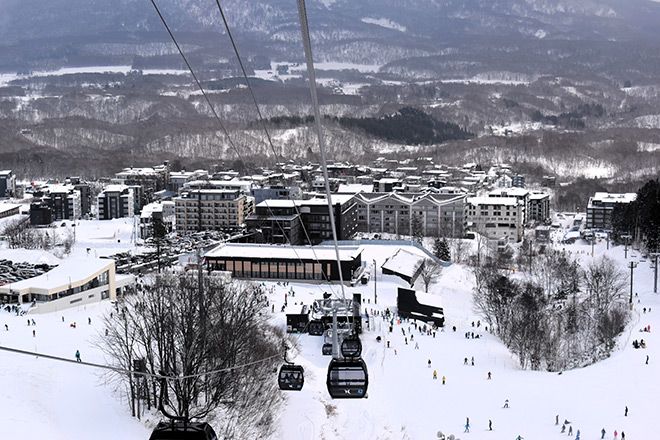
Lift ticket prices at ski resorts across Japan have risen by more than 40 percent over the last four years, with surges particularly pronounced at hills serving high proportions of overseas visitors.
A survey carried out by general travel research institute Tabiris showed that a one-day lift ticket for weekends and national holidays cost an average of 5,062 yen ($32) in 2022.
The figure began to increase after the COVID-19 pandemic subsided and has since swelled by around 10 percent annually.
This winter season, daily pass rates at 65 leading ski resorts rose 8 percent year on year to an average of 7,143 yen.
Excluding communal passes for multiple facilities across wide areas, lift passes cost 9,500 yen or more at six of the 65 surveyed resorts.
According to Tabiris, a price of around 10,000 yen is projected to eventually become the new standard.
“The rate of 10,000 yen in Japan still appears relatively cheap from a global perspective, given the effects of the weak yen,” said Jun Kamakura, head of Tabiris, indicating that prices will grow further.
Costs for food, drinks, parking and ski rental equipment and clothing are also rising.
Niseko Tokyu Grand Hirafu in Hokkaido set its ski lift ticket rate, which also covers the neighboring Hanazono slope, at more than 10,000 yen this season for the first time.
The year-on-year increase of 16 percent far exceeded the rise in the Consumer Price Index of about 3 percent.
The Niseko region and its world-class snow quality draw hordes of skiers and snowboarders from around the world, and they often stay for extended periods.
Large resort operators try to provide affluent and refined services to attract wealthy individuals and make them repeat customers.
Niseko Tokyu Grand Hirafu, for example, is investing more than 10 billion yen over three years to install a high-end restaurant and a heated ski lift.
“Investment is essential to improve our equipment,” said Keisuke Miyata, a divisional chief in the resort business department of Tokyu Land Corp., which is responsible for Niseko Tokyu Grand Hirafu. “We will raise prices but pass the proceeds on to customers by simultaneously upgrading our intangible resources as well.”
Soaring labor expenses stemming from worker shortages are also having a dramatic impact.
Many foreign laborers travel all the way to Niseko to secure winter jobs, and resort operators are pressed to provide accommodations for these seasonal staffers.
RESORT FOR LOCALS KEEPS RATE LOW
Smaller resorts that primarily serve local skiers and snowboarders are not following the trend of raising prices and investing in cultivating a luxury image.
They say that bloated prices could drive away their main customers.
Sapporo Moiwa Snow Square Ski and Snowboard had kept the price of a seven-hour daily lift pass at 4,100 yen for three years.
It raised the daily ticket rate to 7,000 yen this season but still offers the special discounted fee of 4,100 yen for local residents.
“We have no intention of altering the facility’s concept as a civic ski slope for the local community,” said Masafumi Katsuki, president of Hokkaido Square Inc., which took over the operation of Sapporo Moiwa Snow Square Ski and Snowboard in 2025.
When Sapporo city sought a new operator for the ski resort, Hokkaido Square emerged as the only qualified applicant among three candidates from both within and outside Hokkaido.
The municipal government, which owns part of the land and buildings at the beloved ski resort, the city’s oldest, had found it difficult to renew aging equipment by itself due to the hill’s deteriorating profitability.
President Katsuki does not intend to follow the examples of leading resort developers.
“Considering its long-term profitability, not limited to five to 10 years, we will be able to recoup our investment, just as we do in our group’s core business of running gas stations,” Katsuki stressed.
CONTINUING PROBLEMS
Many ski resorts throughout Japan are struggling with aging facilities, declining earnings, shrinking customer numbers and skyrocketing fuel expenditures.
According to Sumitomo Mitsui Trust Research Institute Co., the nationwide total of ski resorts has dropped by 40 percent to 417 compared with 25 years ago.
The population of skiers and snowboarders has nose-dived since peaking at 18.6 million in 1993 following the bursting of the asset-inflated bubble economy. Their total now, including international visitors, is less than a third of that record.
Meanwhile, the number of resorts per 100,000 skiers and snowboarders is more than double the figure 25 years earlier.
Operators are fiercely competing for a small share of the pie, driving resident-oriented hills into a corner because they cannot expect an influx of visitors from abroad.
“The era in which everyone devoted themselves to skiing is over, and user demand is increasingly diversifying,” said Hironori Sasaki, a deputy chief researcher at Sumitomo Mitsui Trust Research Institute, who has examined the circumstances faced by winter resort facilities.
Sasaki recommended that operators “explore a range of business formats” to win over unconventional patrons.
Some foreign visitors prefer simply enjoying snowy scenery and tasty delicacies. Even families from elsewhere in Japan spend their holidays without sliding down the slopes.
This trend has led to a growing number of establishments whose selling points involve local cuisine and services.
The traditional business model that spread during the ski boom of the bubble economy is no longer effective, and the winter leisure industry is now entering a major turning point.
AloJapan.com