
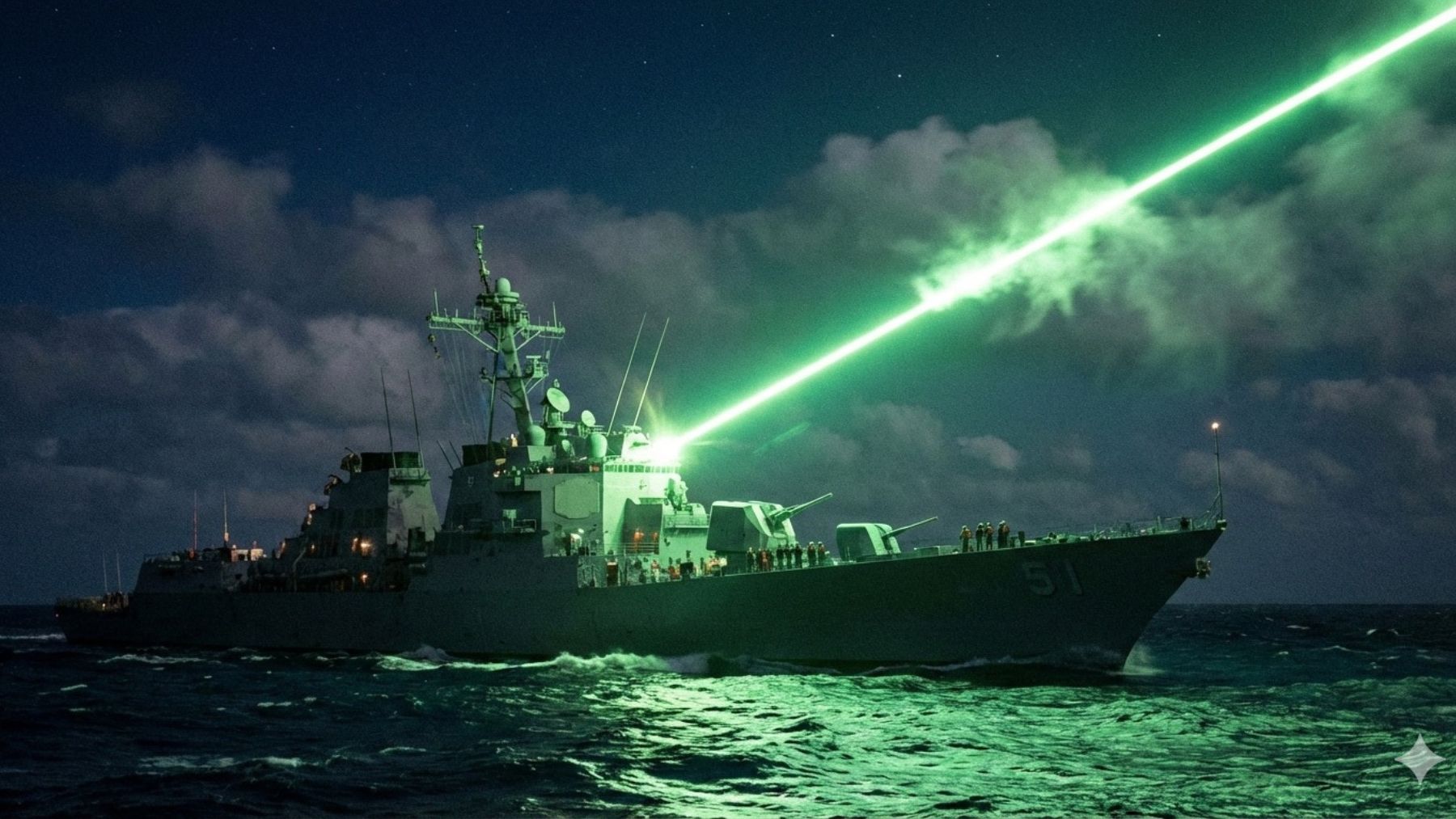
It sounds like a contradiction at first. A weapon strong enough to slice through metal and knock drones out of the sky, yet completely silent when it does so. No explosions. No smoke. No obvious sign that anything even happened. Japan has begun testing a new defense system at sea that challenges almost everything we normally associate with modern weapons. During most of the trial, there is no dramatic moment to watch. The danger doesn’t announce itself. It simply appears, does its job, and disappears again, leaving only a disabled target behind.
This quiet approach is exactly what makes the system so unsettling. In an age where weapons are usually loud, fast, and destructive, this one feels almost calm. And that calm is precisely what makes it powerful.
A system designed for threats that didn’t exist a decade ago
Modern battlefields look very different than they did even ten years ago. Threats are smaller, cheaper, and far harder to detect. Drones that cost a few thousand dollars can now scout, disrupt, or attack targets that once required expensive aircraft or missiles. These flying devices are fast, flexible, and increasingly common, especially in naval environments.
Traditional defenses struggle to keep up. Missiles work, but they are costly and limited in number. Guns need ammunition, tracking systems, and precious seconds to respond. Against swarms of small drones or fast-moving airborne threats, even advanced systems can be overwhelmed.
Japan’s latest system was built with this new reality in mind. Instead of relying on physical projectiles, it was designed to respond instantly, as soon as a threat is detected. There is no reload time, no waiting for impact, and no need to calculate a ballistic path. During recent trials, the system showed it could destroy drones while they were still flying and cut through solid metal surfaces, all without what most people would recognize as a conventional strike.
No ammunition, no explosions, no visible impact
What makes this system so unusual isn’t just what it can do, but how quietly it does it. There is no launch sequence, no flash in the sky, no debris raining down afterward. From a distance, observers might not even realize a weapon was used at all.
In many tests, the moment of impact is almost invisible. One second the target is functioning normally. The next, it isn’t. A drone loses control and falls. A metal surface weakens, warps, or fails. The system doesn’t punch through targets the way a missile would. Instead, it overwhelms them in a far more subtle way.
This method offers a major advantage in situations where speed, precision, and safety matter more than raw force. At sea, where reaction time can be the difference between defense and disaster, the ability to neutralize a threat instantly and without collateral damage is extremely valuable.
Why navies are paying close attention
Naval forces around the world are watching these tests closely, and for good reason. Unlike traditional weapons, this system doesn’t depend on stockpiles of ammunition. As long as the ship has power, the system can keep operating.
That changes the math completely. Each engagement costs far less than firing a missile. There are fewer logistical challenges. There is no need to resupply ammunition after every encounter. The system can engage multiple targets in quick succession without pause, something conventional defenses struggle to do.
For ships facing increasing numbers of airborne threats, especially inexpensive drones, this could represent a fundamental shift in naval defense. It’s not just about stopping one threat. It’s about staying operational for long periods without running out of options.
The detail Japan didn’t highlight at first
Only near the end of the testing phase does the true nature of the system become clear. This weapon doesn’t fire bullets, shells, or rockets. It doesn’t throw anything at its target at all.
Instead, it concentrates energy into a single, focused beam. Japan is testing a 100-kilowatt laser weapon, powerful enough to rapidly heat metal until it weakens and to disable drones in seconds. The energy travels at the speed of light, meaning there is effectively no delay between firing and impact.
There is no sound because nothing is moving through the air. No explosion because nothing detonates. The damage happens silently, precisely, and almost instantly.
A glimpse of warfare’s next phase
For now, the system remains in the testing stage. Engineers are studying how it performs in real maritime conditions, including rough seas, bad weather, and long-term operation. Questions remain about durability, power management, and how the system integrates with existing naval defenses.
Still, one thing is already clear. Weapons that once belonged to science fiction are no longer theoretical concepts. They are being tested quietly, far from public view, and refined step by step.
In this case, the most powerful shot isn’t loud or dramatic. It doesn’t announce itself. It simply arrives, does its work, and leaves behind a result that is impossible to ignore.
AloJapan.com