
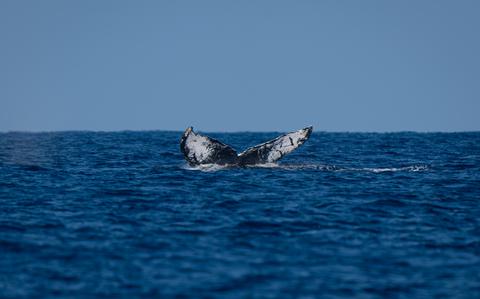
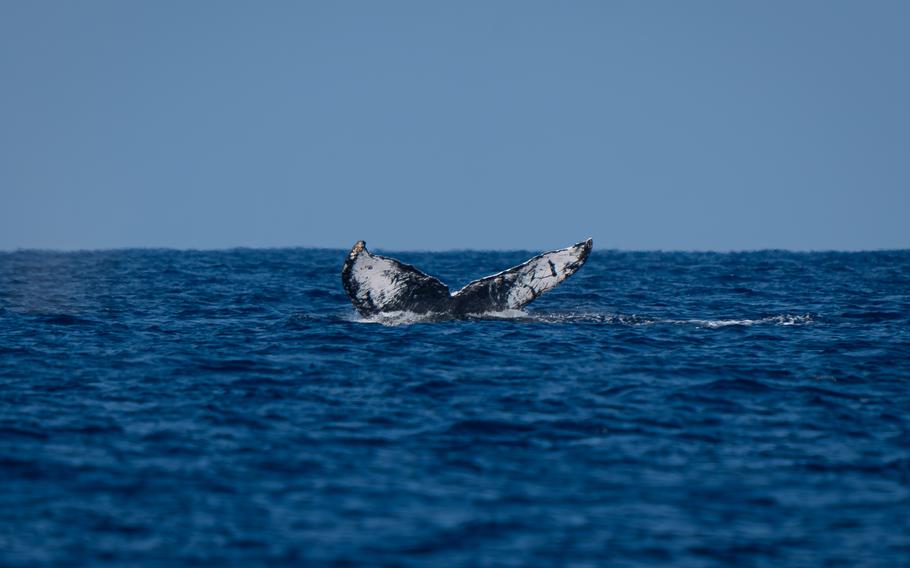
A humpback whale known locally as “Zed” dives off the coast of Okinawa on Feb. 21. The distinct markings on the underside of his fluke have allowed observers to identify him for decades. (Photo courtesy of Cerulean Blue Okinawa)
NAHA, Okinawa — On Feb. 21, spotters off the coast of Okinawa confirmed the return of a familiar visitor: a humpback whale known locally as “Zed,” identified by the distinctive markings on the underside of his tail fluke.
For more than three decades, Zed has been recorded making the long migration from northern feeding grounds to the warmer waters around Okinawa each winter. Researchers and tour operators alike recognize him by the black-and-white pattern on his fluke — nature’s version of a fingerprint. When that tail rises cleanly above the surface before a deep dive, there’s little doubt who it is.
Humpback whales begin arriving in Okinawan waters in late December, traveling thousands of miles from areas near Russia and Alaska. They spend the winter months here to mate and give birth before heading north again in the spring. Peak sightings typically occur in February and March.
While whale watching tours operate throughout the season, experienced captains rely on a network of spotters and radio communication to locate activity offshore. A distant spout on the horizon often signals the beginning of the search. On calm days, the blow can be visible from miles away — a brief mist against the blue.
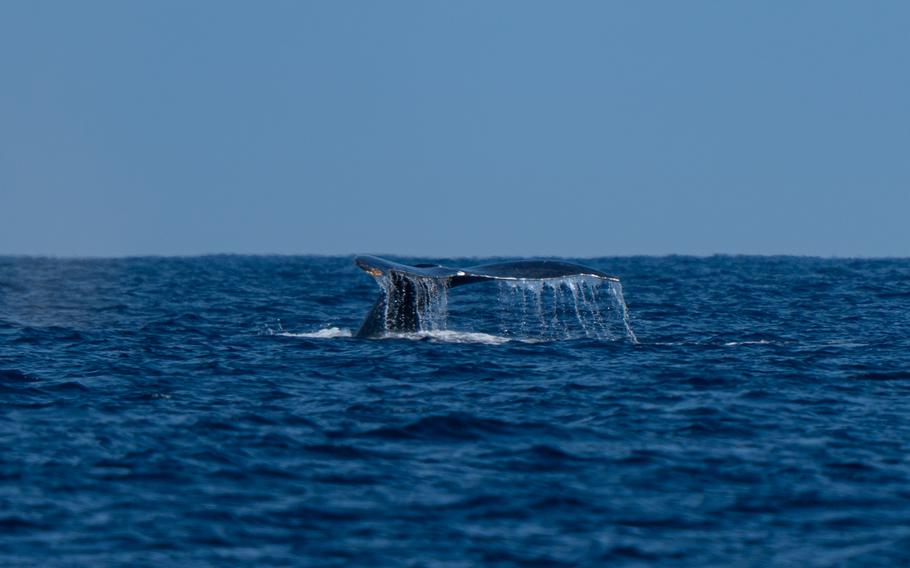
(Photo courtesy of Cerulean Blue Okinawa)
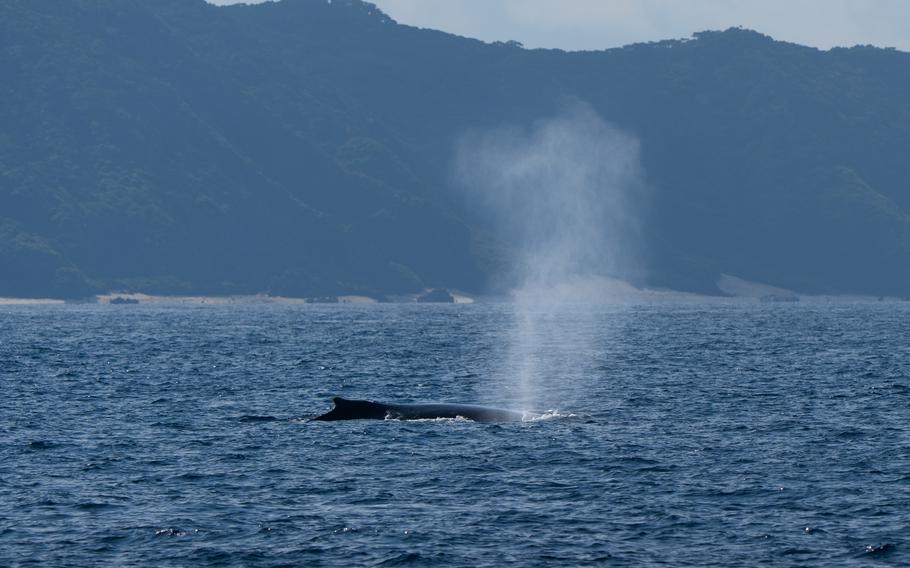
(Photo courtesy of Cerulean Blue Okinawa)
Encounters vary. Some days offer only a glimpse of a dorsal fin rolling through the swell. Other days bring the explosive crack of a breach, when a whale launches its body clear of the water before crashing back into the sea. But for many who head out during the winter months, simply witnessing the slow lift of a fluke — especially one as recognizable as Zed’s — is enough.
Marine biologists note that humpbacks return to the same breeding grounds year after year, a behaviour known as site fidelity. Okinawa’s relatively warm, sheltered waters provide an important seasonal habitat in the western Pacific.
For residents stationed in Okinawa, the migration offers a reminder that the surrounding ocean is far from empty. Each winter, the whales return — and sometimes, if you’re lucky, so does a familiar tail.

Cerulean Blue Okinawa (Image courtesy of Cerulean Blue Okinawa)
To enjoy whale watching and many other tours please contact Cerulean Blue Okinawa optional tour Cerulean blue
Reservations and inquiries TEL: +81-98-941-6828
E-mail Address: info@cerulean-blue.co.jp
AloJapan.com