
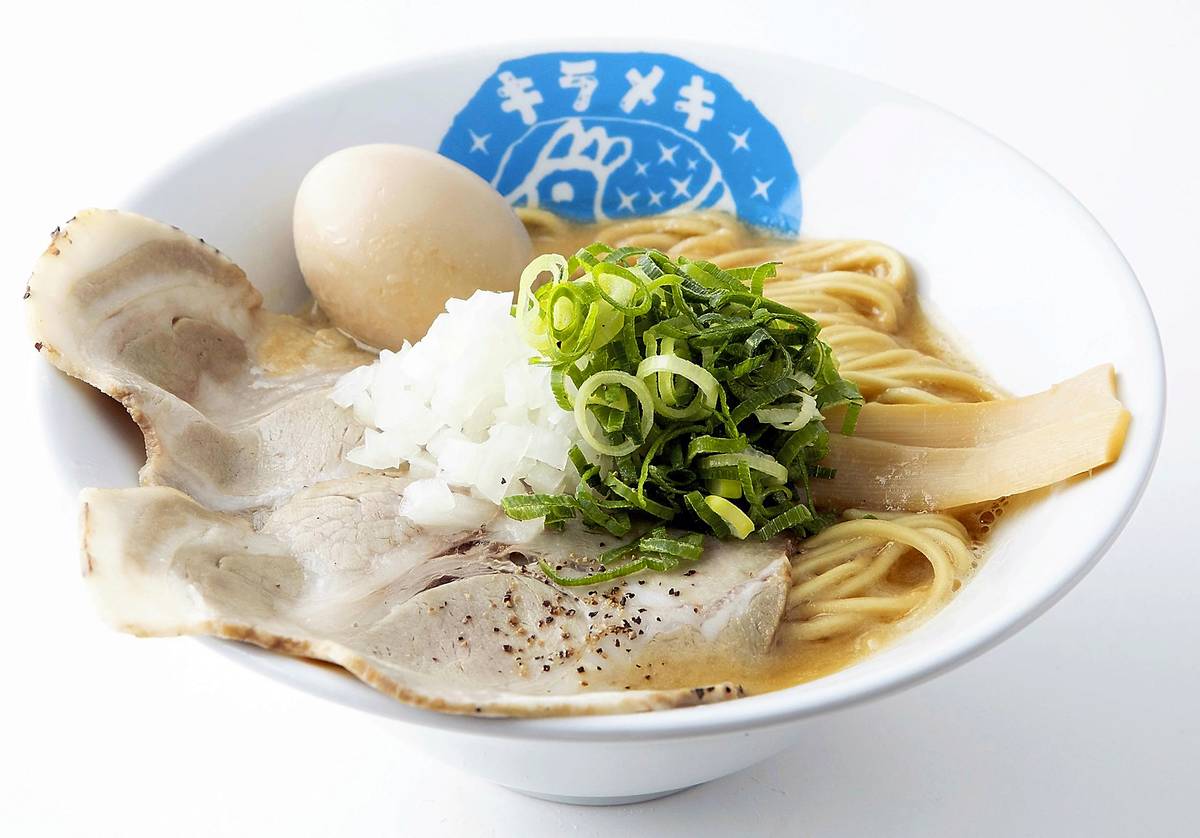
Courtesy of KiramekinoMirai
Ramen made with Kyoto-produced menma
14:20 JST, February 22, 2026
KYOTO — A ramen chain based in Kyoto Prefecture has launched a project to transform abandoned bamboo forests into menma — a common topping for ramen — helping tackle a local issue.
KiramekinoMirai, which operates over 20 stores in and around the prefecture, is focusing on a project to purchase young bamboo shoots measuring about 2 meters tall to process into menma. So far, the chain has produced about 2 tons of the handmade menma, using ramen to contribute to curbing the spread of abandoned bamboo forests in Kyoto, a famous bamboo shoot production area.
In 2013, the company opened its first store, KiramekinoTori, in Kamigyo Ward. Now, it has additional locations in Osaka, Nara and Shiga prefectures while still operating mainly within Kyoto. In November, the chain opened its first overseas location in Shanghai, capitalizing on its famous chicken paitan ramen and mazesoba noodles.
Cheap imported menma has flooded the market in recent years, causing domestic demand to decline. Meanwhile, neglected bamboo forests are increasing with aging caretakers and a shortage of successors. When bamboo grows unchecked, sunlight cannot reach the ground, which hinders other plant growth. Moreover, since bamboo does not develop deep roots, the soil becomes unstable, increasing the risk of landslides.

The Yomiuri Shimbun
KiramekinoMirai President Masahiko Kubota speaks about his company’s project.
In the summer of 2023, the company’s president, Masahiko Kubota, launched the “Kyoto-produced menma project” after meeting with local volunteers who are engaged in tackling these issues. While handmade menma costs about three times more than a ready-made product, he said, “We want to effectively utilize the resource and contribute to the community.”
The bamboo shoot harvesting season is from March to April. After this period, the flavor and texture of the plant start to decline, so farmers and bamboo forest management volunteers traditionally cut and discard slightly overgrown young shoots. Under the project, these shoots are purchased and processed.
Bamboo forests spread across areas like the city of Yawata and Nishikyo Ward, which are known as, major bamboo shoot production areas. In 2024, the project produced about 700 kilograms of menma from 300-400 young bamboo shoots. In 2025, it produced 1,200 kilograms.
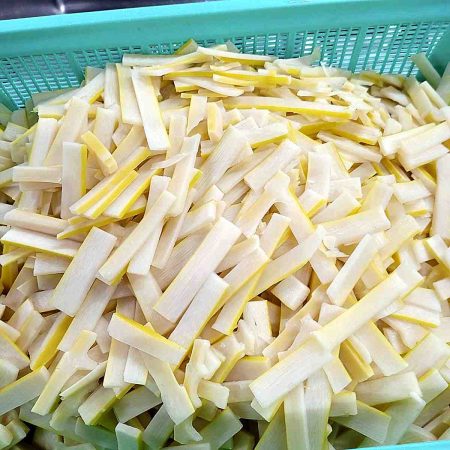
Courtesy of KiramekinoMirai
Young bamboo shoots processed into menma
The product is sold at four stores in Kyoto and Otsu. Its unique, crisp, crunchy texture, similar to fresh bamboo shoots and distinct from imported products, is highly praised and an important selling point.
Last year, the shoots were sold for ¥1,000 per kilogram, roughly double the price in 2024. “Harvesting is also a significant burden, and we want to approach this with sustainability in mind,” said Kubota.
The project also aims to promote youth participation in society. Last year, students from Kyoto Prefectural Yawata Shien School in Yawata and Kyoto University of the Arts in Sakyo Ward took part in the project’s activities.
There are plans to keep the project going beyond the current year. “We want to focus on the quality of the activity, not just numbers or quantity, and increase the number of people involved,” said Kubota. “We’ll consider what social contributions only a ramen shop can make.”
AloJapan.com