
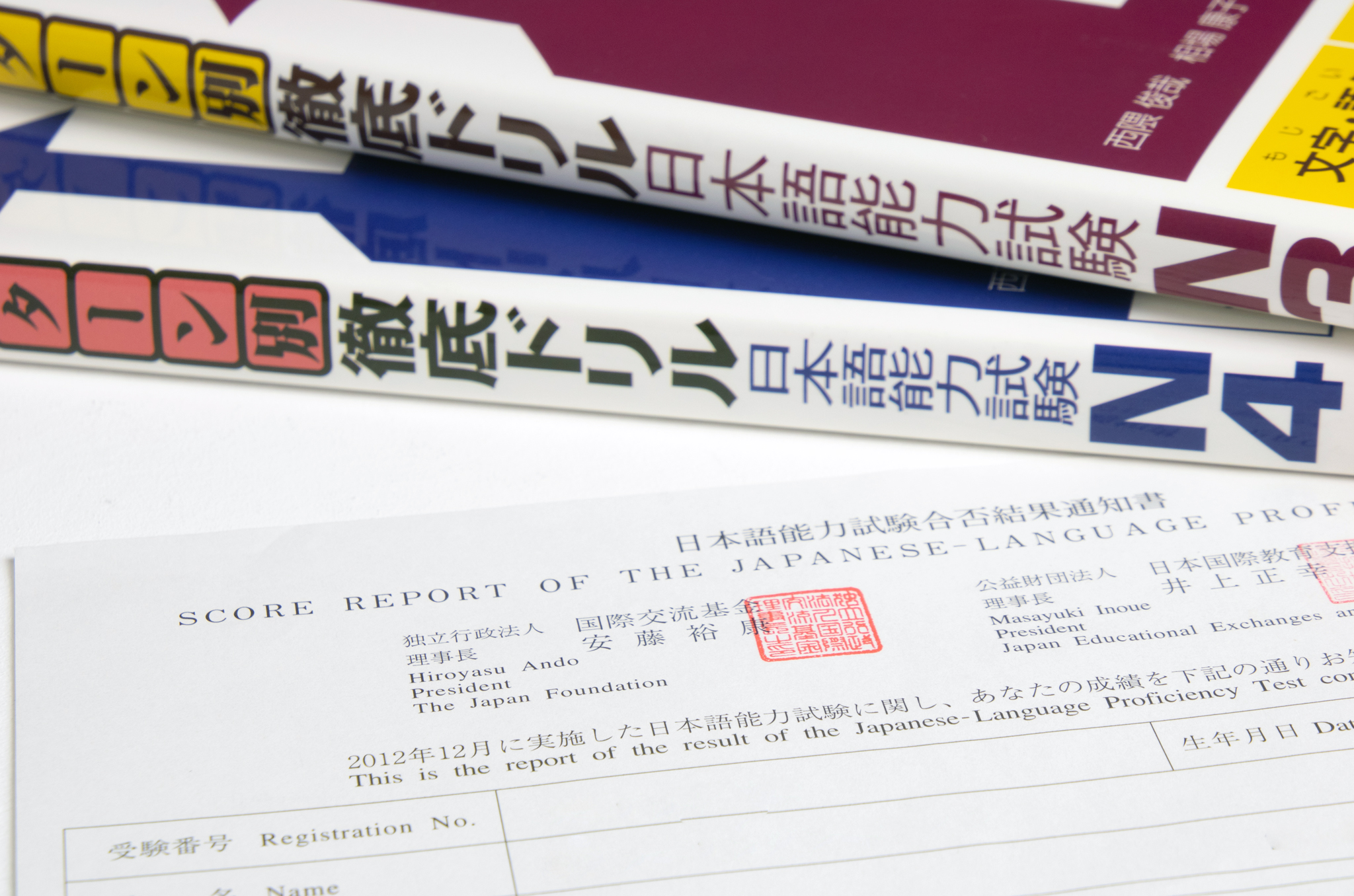
For decades, the Japanese-Language Proficiency Test (JLPT) — Japan’s most prominent language exam — has been open to anyone in the country, regardless of their visa status. But a major policy shift is on the horizon. Starting this year, international travelers and short-term visitors will no longer be permitted to take the JLPT within Japan.
This decision, recently announced by the exam’s administrators, establishes a new standard for domestic testing. Moving forward, the application process will require proof of residency. “The 2026 JLPT is primarily intended for non-native Japanese speakers who are mid-to-long-term residents or special permanent residents,” reads the announcement.

New JLPT Eligibility Rules
The upcoming change is primarily a response to logistical and administrative challenges. According to Japan Educational Exchanges and Services, the surge in overseas applicants using domestic addresses without permission has become unsustainable. Invalid phone numbers and unreliable contact information have led to frequent failures in delivering essential physical documents, such as test vouchers and score reports.
To combat these issues, domestic applicants must now hold mid- to long-term residency or special permanent residency. During the online application via the MyJLPT portal, testers will be required to provide a valid residence card number along with its expiration date.
While this effectively bars those on 90-day tourist visas, certain groups remain exempt from the residency card requirement. These exceptions include naturalized Japanese citizens who are non-native speakers, individuals on diplomatic or official visas, and those stationed in Japan under United States or United Nations forces agreements.

What is the JLPT?
The JLPT serves as the worldwide benchmark for measuring the Japanese language skills of non-native speakers. First introduced in 1984, the test has grown into a massive global operation, with a record 1.47 million people sitting for the exam in 2024 around the world.
Jointly managed by the Japan Foundation and Japan Educational Exchanges and Services, the exam is divided into five difficulty levels, ranging from N5 for beginners to N1 for advanced proficiency. It focuses on evaluating reading and listening skills rather than speaking.
Beyond personal achievement, the JLPT holds significant weight in the professional world; a passing score — particularly at the N2 or N1 levels — is often a prerequisite for employment at Japanese companies, admission to universities and earning points toward preferential immigration status.
While the test is held in all 47 Japanese prefectures twice a year in July and December, overseas availability varies, with some locations only offering the test once per year.
Related Posts
Discover Tokyo, Every Week
Get the city’s best stories, under-the-radar spots and exclusive invites delivered straight to your inbox.
AloJapan.com