
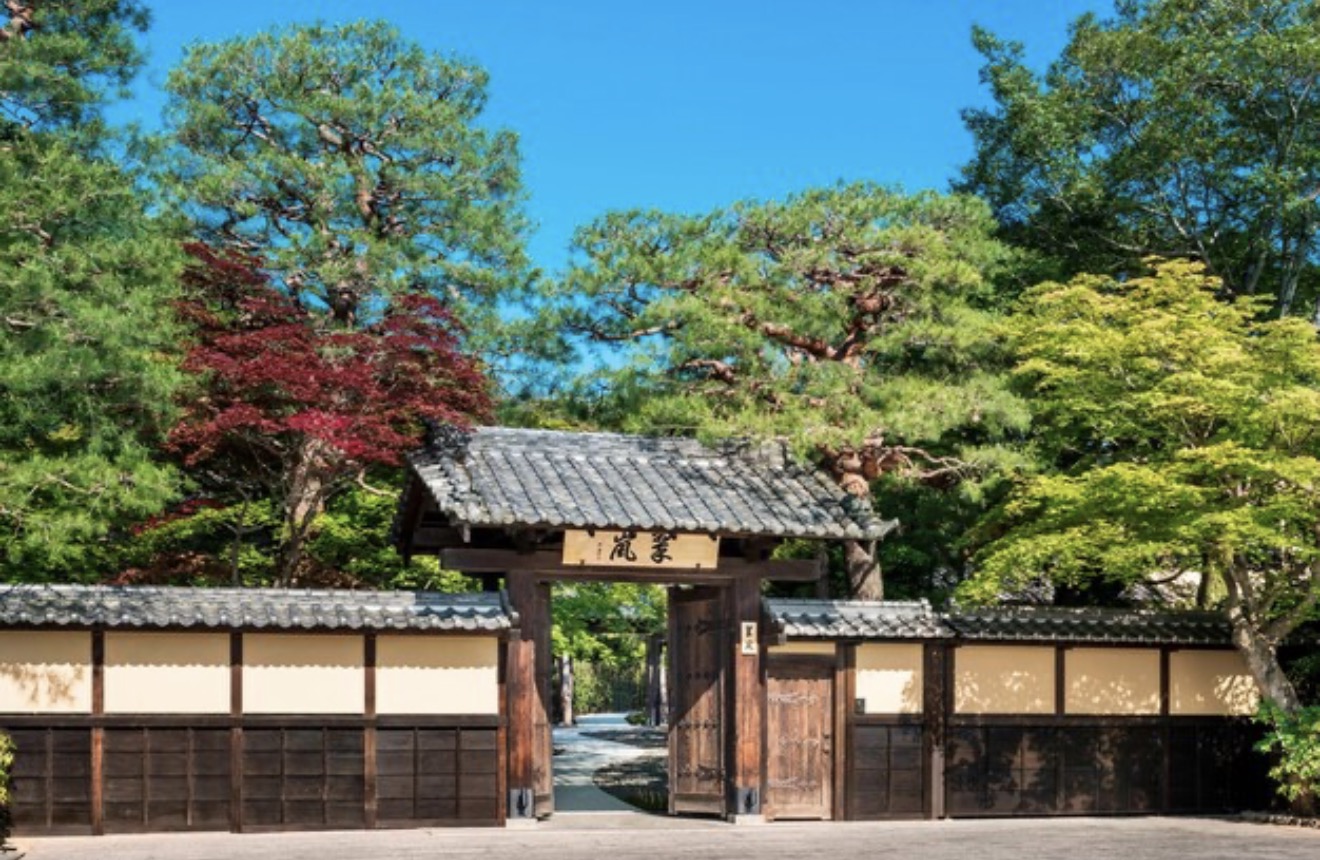
Suiran, a Luxury Collection Hotel, Kyoto is a destination for all seasons, from the first cherry blossoms, when the evening cicadas sing, to when the maple leaves turn yellow. Set on the banks of the jade-green Hozu River in Arashiyama, with a thousand years of imperial history beneath its moss-carpeted gardens, this hotel truly awakens the senses. Framed by the famous forested hillsides of western Kyoto, this is a 39-room onsen hotel, with a fine dining restaurant, a tea house and two private onsen hot springs, immersing you into Japan’s celebrated micro seasons, the country’s unique and thoughtful understanding of time, nature, and beauty.
This spectacular corner of Kyoto was first developed as an imperial palace in the 13th century, later absorbed into the great Tenryu-ji temple complex, and then acquired by Baron Shozo Kawasaki, the industrialist whose family company would become the world-renowned Kawasaki Heavy Industries.


Suiran, a Luxury Collection Hotel, opened on this site in 2015, amd has careful retained historical elements, including Kawasaki’s 1899 summer villa, which is now the Kyo-Suiran restaurant.
The Arrival
Arashiyama undoubtedly draws crowds. The bamboo groves, the Togetsu-kyo bridge, the riverboats and the temple gardens are all captivating experiences that bring international day trippers. But pass through the hotel’s private gate and all the bustle disappears. We arrived late afternoon, when the sunlight filtered through the delicate leaves of the maple trees in dappled patterns of amber and green. Through the branches, you could catch glimpses of the river, where visitors in little blue wooden rowing boats were enjoying the last of the afternoon sunshine, their gentle chatter and laughter carrying faintly across the water. A majestic cedarwood entrance gate opens onto a path shaded by twisted pines and maples, meandering through gardens carpeted in soft, verdant moss and decorated with stone lantern sculptures. The only sounds were birdsong and the distant murmur of life on the river. This has to have been one of the most magical hotel entrances I have experienced.

The team, in elegant modern Japanese uniforms, take your bags as you leave the car, leaving you free to meander to the reception pavilion. Check-in is in the lounge. There is no wait at a check in desk, just a warm smile, a welcoming tea, seasonal treats, and time to flick through the coffee table books as you ID is checked.
The Room
We stayed in a Tsukinone Superior Twin on an upper floor, a 39 sq m room with a long terrace balcony running the length of the exterior wall. Floor-to-ceiling glass sliding doors opened onto a spellbinding view of the forested Arashiyama hillside in full autumn blaze, scarlet and gold maples against the grandeur of cedars and pines.
The room was a mix of western and Asian décor, with a distinctly Japanese balance of simplicity and quality. On the table, a black lacquered tray held a sturdy iron teapot, two dark ceramic bowl cups on saucers, a gift tin of seasonal sweets and a plate of shining fresh mandarins alongside the welcome card. The minibar had the ubiquitous hotel coffee machine and a wonderful selection of premium Japanese teas.


Beds can be King or twin queen, and at turndown, expect a tray placed on the bed with tea and a little wooden gift box of seasonal dried fruits as an evening treat.
In the bathroom, details included glossy black lacquered boxes on the vanity that discreetly held amenity items, while the handmade Kyoto soap, wrapped in rice paper and tied with a silver cord, was a yuzu citrus blend with mandarin orange, bitter orange, gardenia, myrtle and cedarwood bark, presented on a scarlet wood lacquered dish. The bathroom cups were hand-crafted Japanese ceramics. Le Chemin by Byredo provided the shower and bath amenities.
The bathroom itself could be left open plan, with the vanity extending into the room to share the panoramic hillside views or closed off with a sliding partition for privacy.
The next morning, I woke just before seven and slid open the balcony doors, greeted by a chorus of songbirds and the early sun igniting the colours of the tree-covered slopes. It was one of those unforgettable travel moments that stay with you. I can imagine this setting is remarkable in every season, wityh the luminous green of spring, the balmy warmth of summer evenings, the blaze of autumn, the stillness of the hillside covered in snow.


The Onsen Hot Springs
Suiran is an onsen hotel, so a hot springs experience is a requisite. Seventeen ground floor rooms have their own private open-air onsen bath, but all guests can also book one of two private hot springs set within secluded Japanese gardens. There’s one with a contemporary design with bamboo detailing, or the classic which we chose, with a natural style with river stones and boulders.


In the suite, I changed into the hotel yukata, a beautiful blue and white cotton robe printed with scenes of birds, a crescent moon, bamboo, and maple leaves. Then over it, a blue yukata jacket for warmth, and spa slippers. A spa attendant arrived to escort us to the onsen, a small ritual in itself that builds the sense of occasion.


 Screenshot
The private cabin had showers and all the amenities you need. Outside, a landscaped bamboo garden with carefully placed stones included the large open-air onsen, where you soak with your partner and use a bamboo bucket to bathe yourself, or simply sit and enjoy the moment of mindfulness. The soft and mineral-rich water, drawn from the Arashiyama hot springs, is surprisingly hot at first, but your body adapts within moments, and the heat accelerates a deep, full-body relaxation. As you lie there, looking at the sky, watching bamboo leaves drifting down you begin to reset.
The Gardens and beyond
Continuing with the theme quiet contemplation philosophy of mindfulness, we found a small Shinto shrine overlooking the banks of the river. The team at the hotel told me it’s not so much a place of formal worship, but more a focus of mindfulness and good fortune for the hotel. Beyond the beautiful gardens is a riverside trail leading to local sights and taking you into the forest.


Gastronomy
Kyo-Suiran restaurant occupies Baron Kawasaki’s 1899 summer villa, originally named Enmeikaku, the Villa of Longevity. The story goes that Masayoshi Matsukata, Japan’s 4th and 6th Prime Minister, visited the baron, looked out at the view of the river and the Arashiyama hills and declared that the beauty of the scene made his life feel longer, inspiring the villa’s name. His calligraphy of those words was gifted to the baron and still hangs in the restaurant today.


The building is a beautiful piece of Meiji-era architecture, raised from the ground for protection against the river’s historical seasonal fluctuations, a detail that has been retained. Inside, exposed timber and floor-to-ceiling windows looking onto a manicured Japanese garden set the scene for the washoku cuisine, the traditional multi-course Japanese style, here prepared with French techniques.
We took the seasonal tasting menu on an autumn evening. The table itself was simple and precise with a crisp linen cloth, silverware, and chopsticks set on a small glass rest to the right of the place setting, the napkin rolled and tied with a thin, fine gold cord.
Tasting Menu
The amuse was a plate of three small items including salmon, local chicken, and dengaku miso with coffee beans, bottarga, watermelon radish and cheese, served on a bed of vivid green juniper leaves. The seasonal vegetable course was squid with caviar, cauliflower, yuba and endive. The owan was matsutake mushroom with pike conger and ginkgo nuts, served in a ceramic teapot so that you could eat the fish and mushroom with chopsticks through the lip, and pour the rich miso stock into the accompanying cup.
A warm lobster snack with bell pepper followed, then amadai with kujo green onion, taro, aosa seaweed and shellfish. The grilled course was wagyu beef with black garlic, set on a circle of carrot and burdock, with sansho pepper and grapes. A beautiful dish that embodies the autumn colours of the season. To finish, Ryu no Hitomi premium rice with miso soup, and a dessert of sweet potato with vanilla ice cream.
One detail I particularly loved, was that we were invited to choose our own sake cup, the sommelier presents a tray, where each design is different, from delicate glass to little silver ones with a hammered texture and gold interiors. The sake was then decanted at the table into a small, low contemporary silver jug. It is a beautiful gesture that captures everything about the Japanese attention to ritual and personal service.
Café Hassui
The second of the property’s historic buildings, Café Hassui was built in 1910 and sits alongside the river under a thatched roof and a canopy of natural foliage. This was once a gathering place for poets, and something of that ambiance remains. On the wall above the bar hangs a framed calligraphy poem, read left to right, which depicts the micro-seasons of Japan as experienced in Arashiyama. Japan’s traditional calendar divides the year into 72 micro-seasons, each lasting around five days, and this corner of Kyoto, which has inspired artists and writers for over a thousand years, is one of the places where you probably feel those shifts most keenly.


In the afternoon, Hassui serves Japanese-style afternoon tea and its signature hisui-mochi. In the early evening, it becomes the setting for the hotel’s complimentary aperitif hour, with glasses of Perrier-Jouët Belle Epoque champagne accompanied by a small bento box of sweet and savoury nibbles.
Breakfast
Breakfast is served in Kyo-Suiran, with a choice of Western or Japanese. Naturally, we chose Japanese, and it was magnificent. Expect a generous array of trays and bento boxes with river white fish, bitter plum, miso, radishes, fruit, and the full works of a traditional Kyoto morning meal, together with a selection of fresh juices served in shot glasses, from green juice to fruit blends. It is a serious, beautiful way to begin a day.
 Screenshot
The Location
Arashiyama has been admired for over a thousand years for its outstanding natural beauty. The hotel sits on the western edge of Kyoto, on the banks of the Hozu River, directly adjacent to the World Heritage Tenryu-ji Temple. The famous Arashiyama Bamboo Grove is a ten-minute walk. For a quieter alternative, take a short taxi ride to Adashino Nenbutsu-ji, a remarkable temple with its own intimate bamboo forest and thousands of ancient moss-covered stone statues representing the souls of the forgotten dead. It is one of the most atmospheric places in Kyoto. The Arashiyama Yusai-Tei Gallery, which requires advance booking online, is also well worth a visit.
Kyoto Station is approximately 30 minutes away by car, and the hotel offers a complimentary one-way taxi transfer from the station on arrival. A complimentary one-way rickshaw ride is also available to or from Saga-Arashiyama or Keifuku Arashiyama stations. Beyond Arashiyama, the wider treasures of Kyoto, from the Golden Pavilion to Fushimi Inari, are easily accessible by taxi.
Final Thought
Suiran, a Luxury Collection Hotel, Kyoto is certainly a hotel for all seasons. The natural surroundings, the private onsen, the century-old restaurant and café, the Shinto shrine by the river, the gardens; every detail has a sense of place and season.
Contact Details
Website: www.marriott.com
Address: 12 Susukinobaba-cho, Saga-Tenryuji, Ukyo-ku, Kyoto, Japan
AloJapan.com