
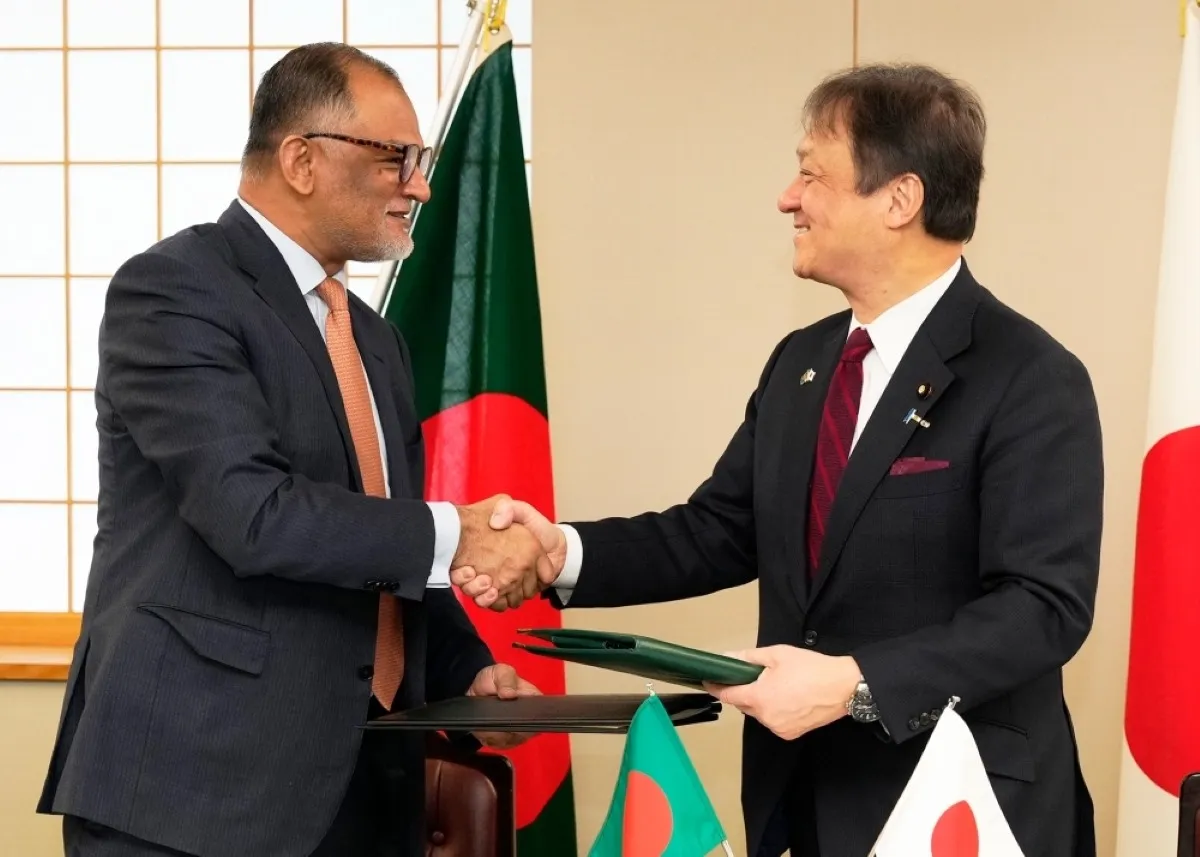
In November 2025, Bangladesh and Japan showed interest in expanding cooperation in skilled migration. A memorandum of understanding between the Bangladesh Bureau of Manpower Employment, and Training (BMET) and Japanese partners was signed. It aimed to send at least 100,000 people to Japan over the next five years to work in various skilled and semi-skilled jobs.
During the Honorable Chief Adviser Dr Muhammad Yunus’s visit to Japan that May, two memoranda of understanding were signed to recruit 100,000 Bangladeshi workers over the next five years. With these initiatives, both sides reaffirmed their shared commitment to strengthening workforce mobility and investment partnerships under an evolving bilateral framework. This was also part of Japan’s expansion of soft power in Bangladesh.
This article examines the recent convergence of interests and potential implications for Japan-Bangladesh ties.
Historical Linkage
Historically, Bangladesh and Japan have maintained diplomatic relations since 1972. Japan was the first developed country among Organization for Economic Cooperation and Development members to call for recognition of the newly born, postwar South Asian country. In 2014, Prime Minister Sheikh Hasina and Japan’s Prime Minister Shinzo Abe signed the Japan-Bangladesh Comprehensive Partnership Agreement. This agreement led to extensive development cooperation.
Among other issues, the agreement stressed the facilitation of Bangladesh’s multiple development projects and focused on the extension of all forms of bilateral cooperation across defense, economic, and cultural agendas. For Japan, the economic cooperation falls mainly under the BIG-B (Bay of Bengal Industrial Growth Belt) initiative.
Currently, Japan’s evolving foreign policy is based on the “Free and Open Indo-Pacific” vision, conceived by former Japanese Prime Minister Abe and continued by successive governments. As part of the same, Japan has been working to ensure that a rules-based order is maintained in the Indo-Pacific region. Bangladesh occupies a sweet spot in this framework due to its strategic position in the Indian Ocean.
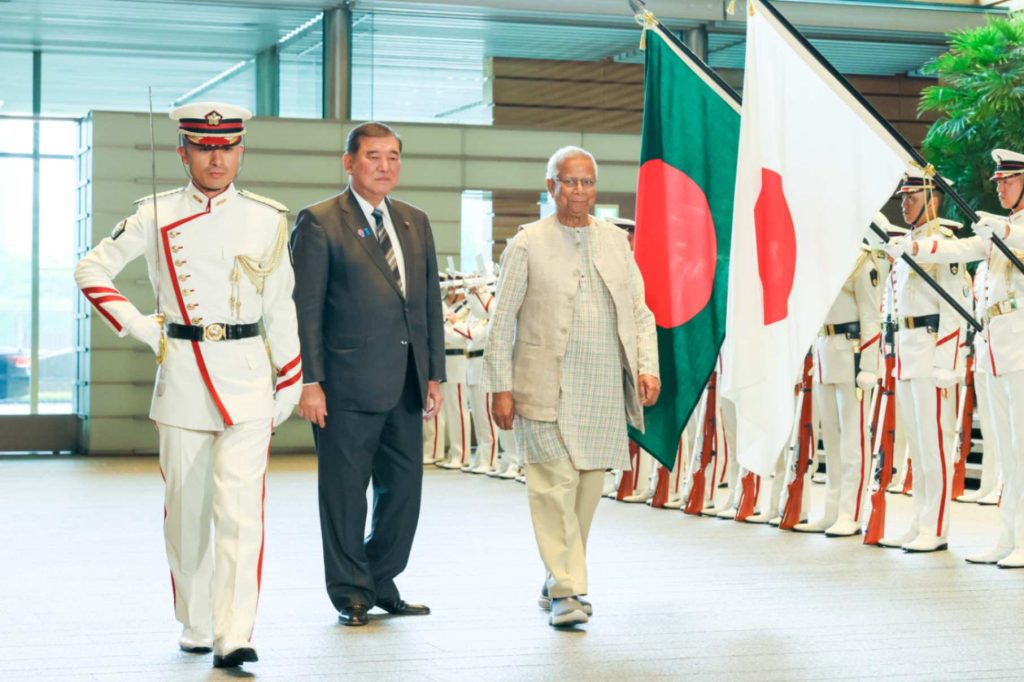 Then-PM Shigeru Ishiba escorts Chief Advisor Dr Muhammad Yunus past the honor guard during his welcome ceremony to Japan in May 2025. (©Prime Minister’s Office)
What is the New Proposition?
Japan is experiencing a shrinking workforce amid an aging population. This has led to severe labor shortages among some Japanese companies. In the face of a looming crisis, various government and non-governmental agencies in Japan have reached out to Southeast Asian countries, including Vietnam, Myanmar, the Philippines, and Cambodia.
This outreach initiative is now expanding extensively towards the South Asian region, with India, Sri Lanka, and Bangladesh joining the league. The focus remains on teaching, training, and motivating young people for immigration to Japan on short-term work visas.
There is a growing alignment between Japan’s need for foreign workers amid its aging population and Bangladesh’s broader effort to expand overseas employment opportunities. Skilled workforce development has become a new zone of confluence and integration. It also helps strengthen ties with Japan while easing its domestic jobs crisis.

The Skilled Workforce Concept
The idea of skilled workforce integration is not a new proposition, with Bangladesh having a five-decade experience as a major manpower-exporting nation. It has contributed significantly to Japan’s construction, caregiving, manufacturing, and information technology (IT) sectors. With the recent agreement, its role is to grow further.
In April 2019, Japan established a new status of residency, Specified Skilled Worker (SSW), to welcome capable specialists from overseas to work in specific Japanese industrial fields. These are workers ready to take on jobs without prior training. The sectors where most foreigners are employed today include manufacturing, services, and wholesale/retail.
Furthermore, Japan has initiated SSW field tests in Bangladesh. Additional sectors are also being considered for deeper involvement, including industrial manufacturing, food processing, aviation, automobile maintenance, and shipbuilding.
The initiation of Japan’s Technical Intern Training Program in 1993 was a milestone phenomenon. For more than three decades, it was the primary pathway for recruiting foreign labor and training them for skilled and semi-skilled jobs. More recently, the establishment of a dedicated Japan Cell has led to progressive developments. It has been tasked with several responsibilities, including surveying demand in the Japanese labor market, arranging Japanese language training, identifying employment opportunities, conducting digital testing, strengthening coordination with Japanese and Bangladeshi institutions, and supporting quality certification centers.
It also coordinates Japanese-language and skills training across government and private institutions through which potential workers receive skill development, etiquette lessons, language training, and history education.
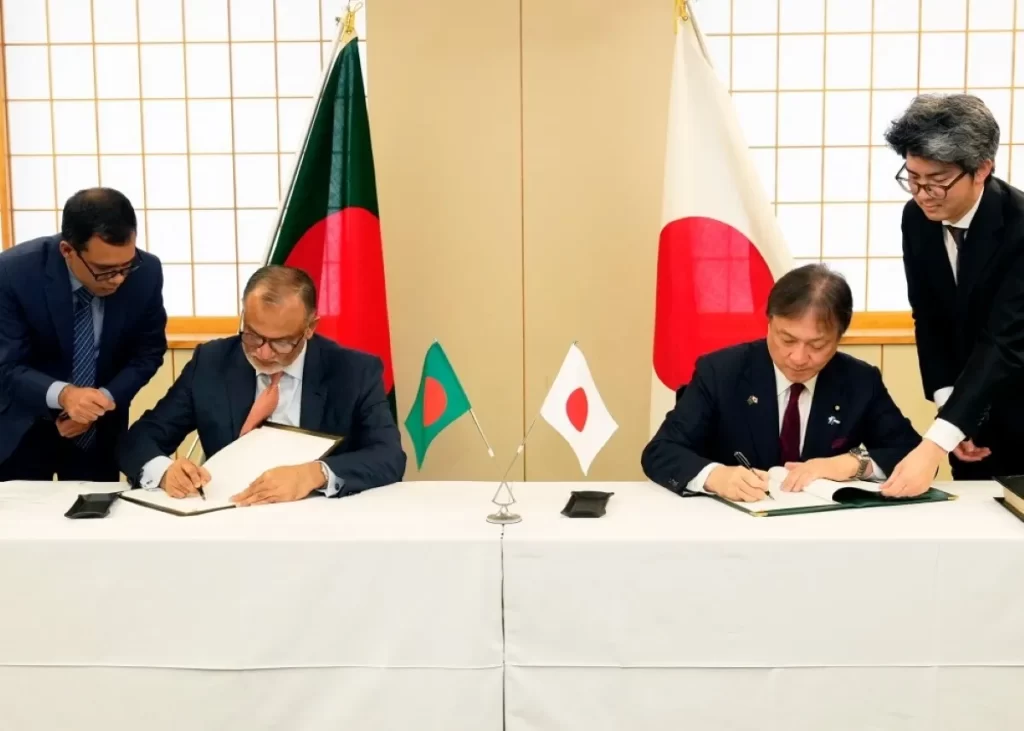 Japan’s State Minister for Foreign Affairs, and Bangladesh’s Adviser for Commerce, Textiles and Jute, and Civil Aviation and Tourism, sign an economic partnership agreement on February 6, 2026, in Tokyo.
Skill Sector as a Force Multiplier in Bilateral Ties
While Bangladesh will maintain a nearly 25 million working-age surplus, Japan could require around 11 million foreign workers by 2040. According to Japanese foreign ministry data, the Bangladeshi presence in Japan had grown to 20,954 individuals by June 2022. That is a testament to the ongoing expansion of opportunities and mutual collaboration between the two nations.
BMET data reveal that, from 1999 to May 2023, Bangladesh sent only a total of 3,030 migrant workers to Japan. Meanwhile, in 2023’s first five months alone, 290 individuals embarked on this journey. And in the year 2022, 508 Bangladeshis secured employment in Japan. These numbers highlight the scope for growth in this field.
The convergence in the skill sector creates a massive employment opportunity for Bangladeshi youths. It also leverages the country’s economy, injecting millions of dollars in remittances. Bangladesh Bank (BB) data show that $112.99 million in remittance inflows came from Japan in FY 2022-23. These also help maintain financial stability, supporting significant development and growth without external debt.
Learning in Japan
Moreover, working in Japan offers significant benefits beyond monetary compensation. Trainees gain valuable skills development and education in management philosophy. Japan’s workplaces are famous for practices like the 5S methodology (a disciplined 5-step approach to organizing the workplace) and Kaizen (continuous improvement). Bangladeshi workers can gain immense knowledge of time management, lean production, total quality management (TQM), job rotation, and other relevant skills.
Over time, this knowledge could elevate Bangladesh’s industries. Additionally, employees returning from Japan might prefer working in Japanese institutions in Bangladesh. This flow of workers fosters deeper cultural connections and increasing soft-power diplomacy between the two countries, while Bangladeshi workers serve as informal ambassadors of their own country in Japan.
Democratic Dividends
Bangladesh’s population growth rate is higher than that of other developing countries. Meanwhile, a well-trained young labor force is crucial to reaping the benefits of the demographic dividend. With the current global demand for skilled, educated workers at competitively low wages, there is a need to ramp up this cooperation.
This potential resource remains underutilized, as unemployed graduates lacking technical skills are on the rise in Bangladesh. BMET training needs to gear up for the necessary tasks, including job-matching (aligning candidates’ skills with in-demand roles), pre-deployment training (in job-specific skills, workplace etiquette, cultural adaptation, and language proficiency). It also needs to prepare post-employment support with career counseling and upskilling programs to help workers stay competitive in global markets.
Japan prioritizes Bangladesh’s skills development sector to assist the nation in achieving the SDGs and to import skilled manpower into Japan’s already declining labor market. It serves the twin objectives of improving Bangladesh’s standing in the global labor market and meeting the nation’s need for skilled people. Consequently, there is a massive number of Japanese investments in Bangladesh’s skills development sector.
Initiatives to Support Cooperation
In addition, Japan has created numerous initiatives and opportunities for Bangladesh, such as the IM Japan Program, the Japan International Cooperation Agency Training Program, and engineers training in the Bangladesh-Japan information and communications technology sector, the B-JET program, to help prepare less-skilled people seeking job opportunities overseas. Furthermore, 33 Technical Training Centers have been designated to prepare manpower for the Japanese market, with scope for expansion if needed.
Japanese industries also need a substantial share of skilled labor in Bangladesh to balance their demand-supply chains. With the skill development program, Bangladesh is now developing talent across many vital sectors, for instance, through education and training programs for IT engineers. Employees interested in joining the labor force should be professional and sufficiently trained to enter the competitive market.
Attractions for Japan
From Japan’s perspective, Bangladesh’s extensive and relatively inexpensive labor supply makes it an attractive destination for Japanese firms seeking qualified personnel. Bangladesh’s enormous labor force, with a high share of young people, provides a demographic edge.
The aging population has negatively impacted Japan’s labor force. As a result, it recognized Bangladesh’s young people’s capacity to complement its labor force and contribute to its economic development. Japan’s long support for South Asia through aid and development assistance, a soft power exercise, might be an effective tool to ensure its geopolitical interest in the region. Hence, Japan’s growing labor demand and Bangladesh’s surplus workforce create a win-win situation for both countries.
A New Horizon
A chance to work in Japan, a developed country, can be a life-changing experience for a Bangladeshi citizen. Nevertheless, the country’s growing labor force requires sufficient knowledge and training to boost productivity and meet burgeoning skill demands.
As the Fourth Industrial Revolution demands ever-higher technological and intellectual skills, the government of Bangladesh’s investment in training young people to work overseas becomes non-negotiable. And as more trained workers establish themselves in Japan, they share knowledge, build reputations, and open pathways that make it easier for future generations of Bangladeshi workers to find opportunities there.
Bangladesh is a good option for Japanese investment in skills development programs. As Bangladesh and Japan continue to fortify their diplomatic and economic ties, the collaborative efforts on human resources development underscore the depth and potential of this evolving partnership. They share a commitment to harnessing the potential of skilled human resources, signaling a bright future.
RELATED:
Author: Varuna Shankar
Associate Fellow, India’s World Magazine, New Delhi, and Non-Resident Vasey Fellow, Pacific Forum.
Continue Reading
AloJapan.com