

February 18, 2026 — 5:00am
Save
You have reached your maximum number of saved items.
Remove items from your saved list to add more.
Save this article for later
Add articles to your saved list and come back to them anytime.
Got it
AAA
This article is part of Traveller’s guide to luxury cruising. See all stories.
Across the Japanese city of Hakodate, maple trees blaze in a sweep of scarlet. Viewed from the observation platform of Goryokaku Tower, the fortress and garden below are a molten tapestry of gold, amber and crimson glowing in the morning light. At ground level, families stretch out beneath the radiant canopies, gazing up at the scorched leaves that tremble like paper ornaments.
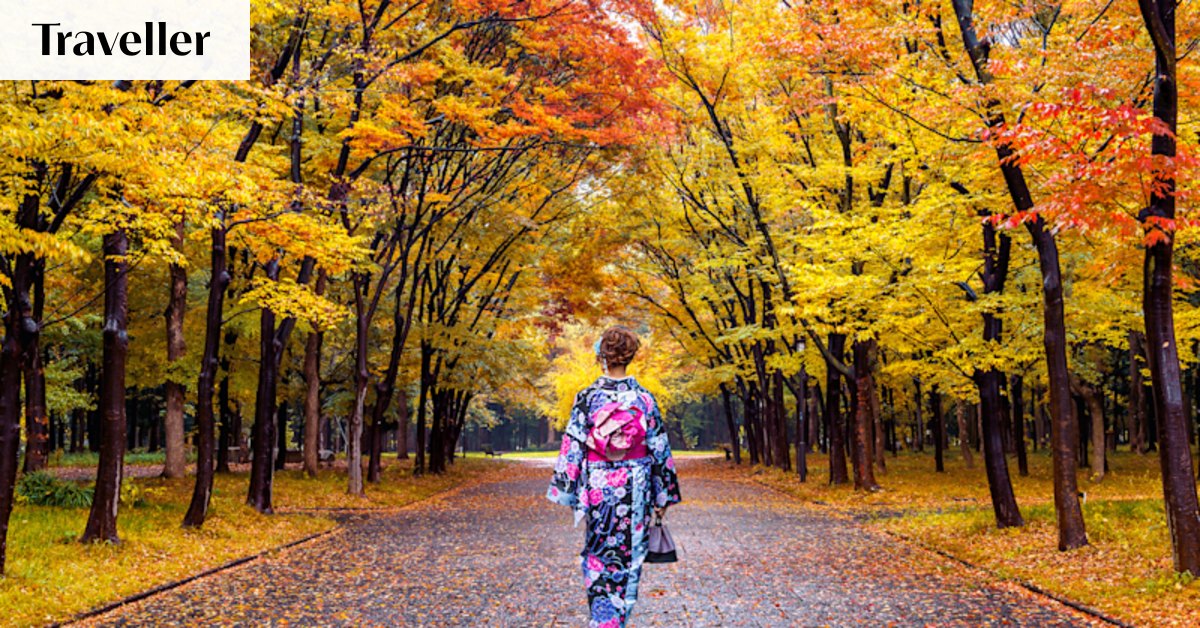
To the Japanese, autumn – or aki – is a time for reflection and gratitude. Like spring blossoms, these revered koyo leaves are a reminder of the impermanence of life and the beauty of nature. As October fades into November, people slip into momijigari mode, embracing the ritual of “red-leaf hunting”.
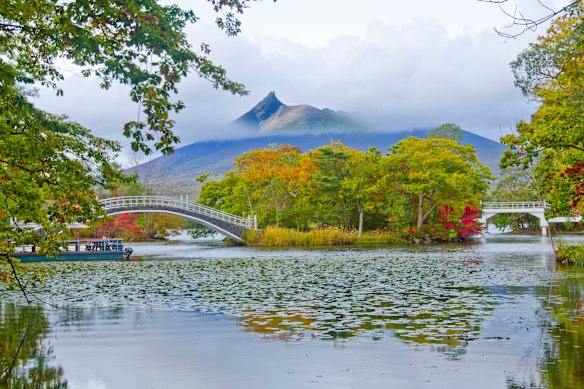 Autumn is just as beautiful in Japan as spring’s cherry-blossom seasons, but without the crowds.iStock
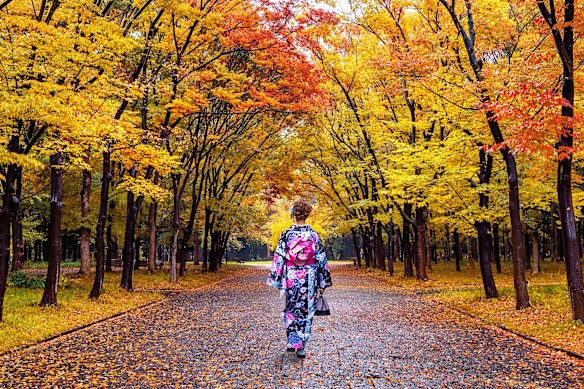 As October fades into November, people slip into momijigari mode, embracing the ritual of “red-leaf hunting”.iStock
My husband and I have joined the red-leaf hunters, arriving in Hakodate on the northernmost island of Hokkaido aboard the 458-passenger Seabourn Quest towards the end of our 12-day circumnavigation cruise. Here in the north, cooler temperatures signal an early autumn, and with it, the best chance of seeing the season in full blaze.
What we are not seeing is crowds. Our well-crafted itinerary – tracing the southern coast of Shikoku, through the Kanmon Straits to Busan in South Korea and on to Japan’s northern ports such as Niigata, Akita and Hakodate – follows a path less travelled. I’d expected the dazzling foliage and crisp weather, but to see a food-obsessed culture hit its annual peak is pure pleasure.
Sign up for the Traveller Deals newsletter
Get exclusive travel deals delivered straight to your inbox. Sign up now.
In Hakodate, as passengers set out on shore excursions (all are optional add-ons) we peel off on our own, exploring the city by tram, an unmistakable part of the city’s character. Painted in jaunty colours, these workhorses zip past weatherboard houses, alongside the Bay Area waterfront and through neighbourhoods, giving the streets a charm that sets Hakodate apart.
From the top of Hakodate Tower, I see the fort’s star-shaped symmetry, but it’s only by walking the perimeter and tracing the sharp angles of its moats that I gain a sense of how it once stood as a formidable defence during the Hakodate War of 1868.
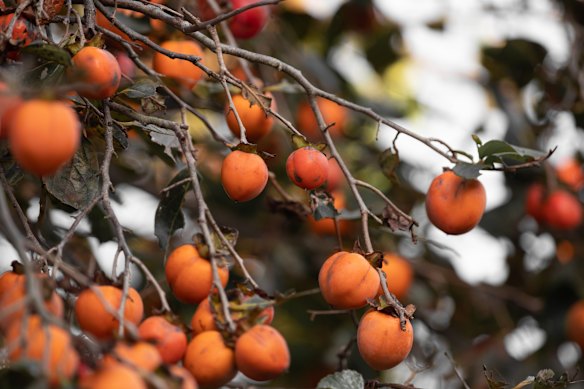 Persimmon … ripe for new tastes.iStock
On a shore excursion in Tokushima, our first stop after boarding in Kobe, the red maple leaves of Hakodate are a palette swap from the orange persimmons gleaming like lanterns along the footpaths.
“We call them kaki,” says guide Kurokawa Atsuko, plucking one from the sidewalk as we wander through the historical district of Udatsu. “Not just a seasonal treat, but a reminder of nature’s gifts and the coming of winter.”
The old town is lined with timber-framed houses that once belonged to indigo merchants who prospered here during the Edo period. While some remain as grand residences, others have been converted into galleries, studios and textile centres.
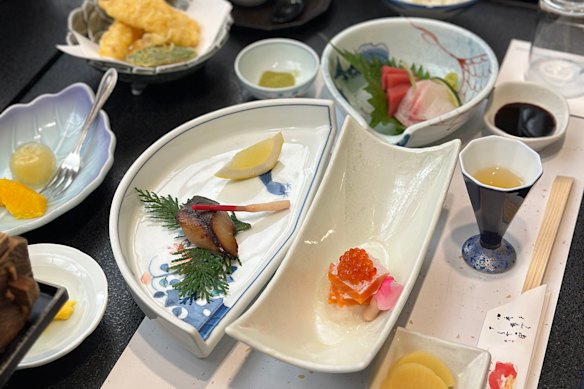 An autumn-inspired meal aboard Seaborn Quest.
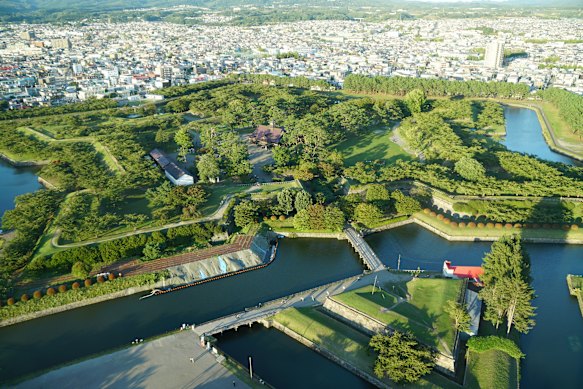 Goryokaku Fort.iStockj
A stop at the Aizumicho Historical Museum takes us deeper into the story of Tokushima’s prized awa-ai indigo. Known as “Japan Blue”, we watch as skilled artisans stir deep vats of fermented indigo, the surface gleaming like polished obsidian. Afterwards, Atsuko passes around candied persimmons, a thoughtful gesture that perfectly caps the day.
We spot the persimmons again at breakfast, where they take pride of place beside a mountain of Fuji apples, musa basjoo bananas and shine muscat grapes, all sourced by executive chef Trevor Connolly from local markets.
In Japan, autumn is shokuyoku no aki, or “the season of appetite”, a philosophy our chef takes to heart. Stretchy pants at the ready, I’m with him all the way.
Food options range from international favourites in The Colonnade to modern Mediterranean in Solis or tapas-style treats in the Observation Bar. The menu in The Restaurant is a three or four course extravaganza, but my taste runs to the local specialties such as grilled sake-marinated salmon or teriyaki-glazed beef strip.
We’re also drawn to The Club for made-to-order sushi and sashimi, and Earth and Ocean at The Patio for its innovative (and often surprising) menu. Seabourn’s all-inclusive luxury extends to complimentary champagne and caviar, served anytime.
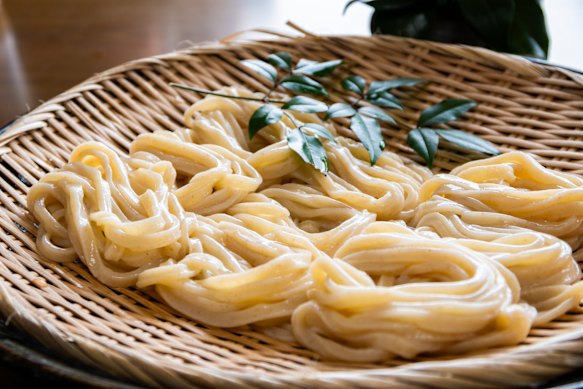 Sanuki udon… slurping sensations.Getty Images
Shore excursions take culinary experiences to another level. In Takamatsu, on the island of Shikoku, we take a class in making Sanuki udon, one of the most famous varieties of noodles in Japan. “Thick and chewy, Sanuki udon is different – and in my opinion more slurpable – than any other,” says Atsuko proudly. Stomping udon dough with our bare feet, while shaking maracas in time to the Village People, is not something I’ll forget any time soon.
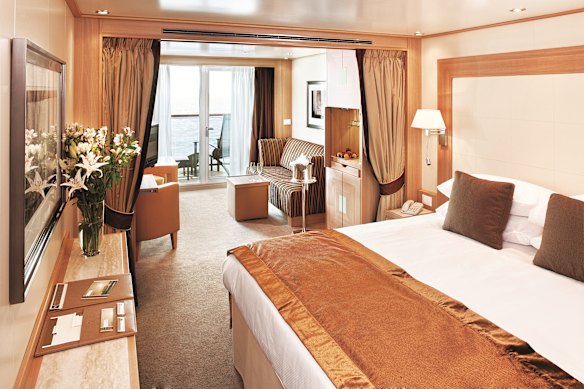 Room to move… Verandah Suite.
It’s easy to see why so many guests return to Seabourn time and again for the depth and variety of its shore excursions alone.
Kanmon Straits are a swathe of steel blue as we cruise through the narrow passage between Honshu and Kyushu islands. It’s a mild 22 degrees on deck as guest lecturer Dr John Freedman regales us with stories about feudal wars and naval battles. A blast of the ship’s horn, a splash of champagne and we are under the Kanmon Bridge, its massive arches looming overhead like an iron cathedral.
The pace changes at Sakaiminato, where, following a soak in the hot springs of Kaike onsen, we enjoy a traditional, autumn-inspired lunch. There’s Spanish mackerel from the Kaike coast, beef and broccoli grown on the fertile slopes of Mount Daisen, and a dozen delicious morsels I still have no hope of naming (is this soup or a dipping sauce?).
After a full day ashore, Seabourn Quest provides a soft and luxurious landing. Our verandah suite includes a walk-in robe, customised mini bar, spacious living area and 24-hour in-suite dining. And the real luxury? A full-length bathtub. The only decision is to stay in and soak my tired feet, sign up for a relaxing treatment at the spa or chill out to live music on the pool deck. Regardless, the one constant is the ever-attentive, always caring staff.
One day we are in Tsuruga, tasting kombu (dried seaweed), the next we are in Niigata, taking a deep dive into the 1400-year history of Yasuda tiles. An exclusive tour of the Kawara Production Company, where raw clay is shaped into traditional roof tiles, is a treat enough, but lunch cooked and served on a sizzling roof tile is the pinnacle.
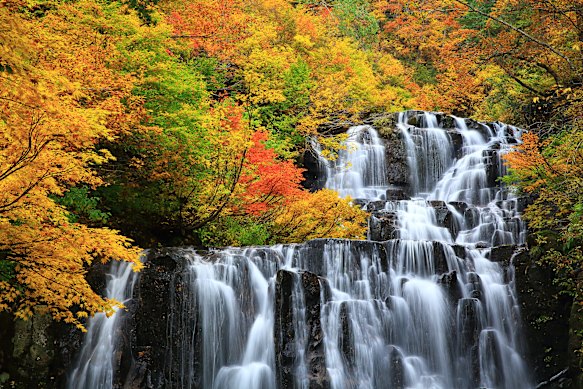 Waterfall wonder in Akita Prefecture.Getty Images
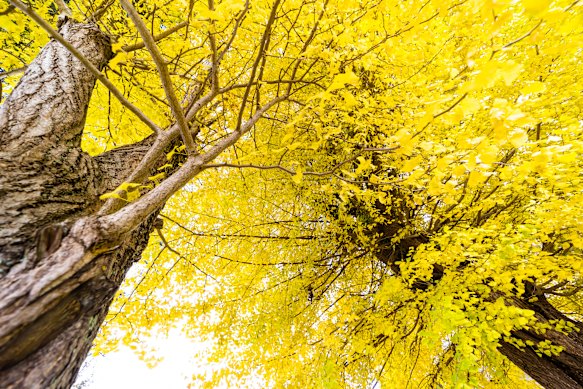 Ginkgo trees … Japan’s parks are transformed in autumn.Getty Images/iStockphoto
In the port of Akita, the colour wheel turns again, this time to the fluorescent yellow of ginkgo trees. The town is full of treasures, yet nearing the end of the itinerary I’m content to explore at my own pace.
Related Article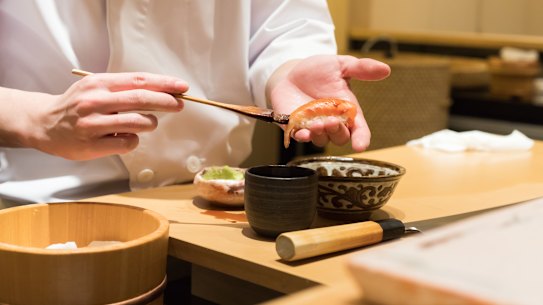
The ginkgo trees are in full show-off mode – shooting from the sidewalks like bursts of fireworks. On narrow backstreets, they arc overhead forming tunnels of gold, their delicate leaves falling and catching in my hair. Known as icho, ginkgo trees are regarded as guardians, believed to carry ancient dragon energy.
On our final leg towards Tokyo, I hold on tight to that dragon magic as a reminder that autumn is the perfect time to cruise Japan; there’s a calmness to it, a feeling of generosity and bounty, qualities that speak for the country itself.
THE DETAILS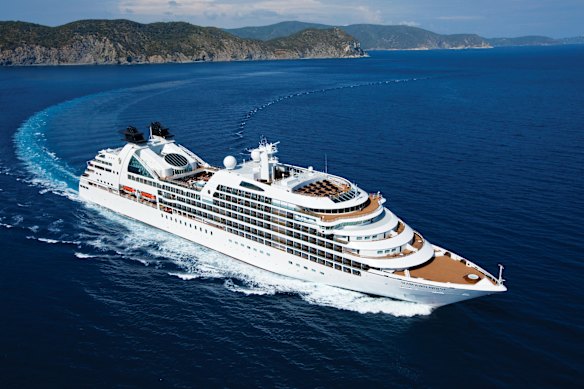 Seabourn Quest.
FLY
Qantas flies daily direct from Sydney and Melbourne to Tokyo. See qantas.com
CRUISE
Experience autumn on Seabourns 12-day Harvest Horizons: Japan’s Coastal Charms from Osaka to Tokyo. From $16,198 a person, based on double occupancy. The 14-day Craft and Cherry Blossoms cruise follows a similar itinerary during springtime, from $17,798. Seabourn Encore sails in Japan in 2026 and 2027 in spring and autumn. See seabourn.com
MORE
japan.travel
The writer was a guest of Seabourn.
Save
You have reached your maximum number of saved items.
Remove items from your saved list to add more.
 Kerry van der Jagt is a Sydney-based freelance writer with expertise in Australia’s Indigenous cultures, sustainable travel and wildlife conservation, and a descendant of the Awabakal people of the mid-north coast of NSW.Traveller GuidesFrom our partners
AloJapan.com