

On 11 February, the International Centre for Defence and Security held a seminar to launch its annual Japan Chair Report.
The event started with a statement by Bart Gaens, Japan Chair at the ICDS, who summarised the main takeaways from the newly released report. Raymond Yamamoto provided insights into the evolution of Japan’s Official Security Assistance (OSA), pointing to significant shifts in Japan’s security engagement in Southeast Asia and explaining the programme’s historical roots.
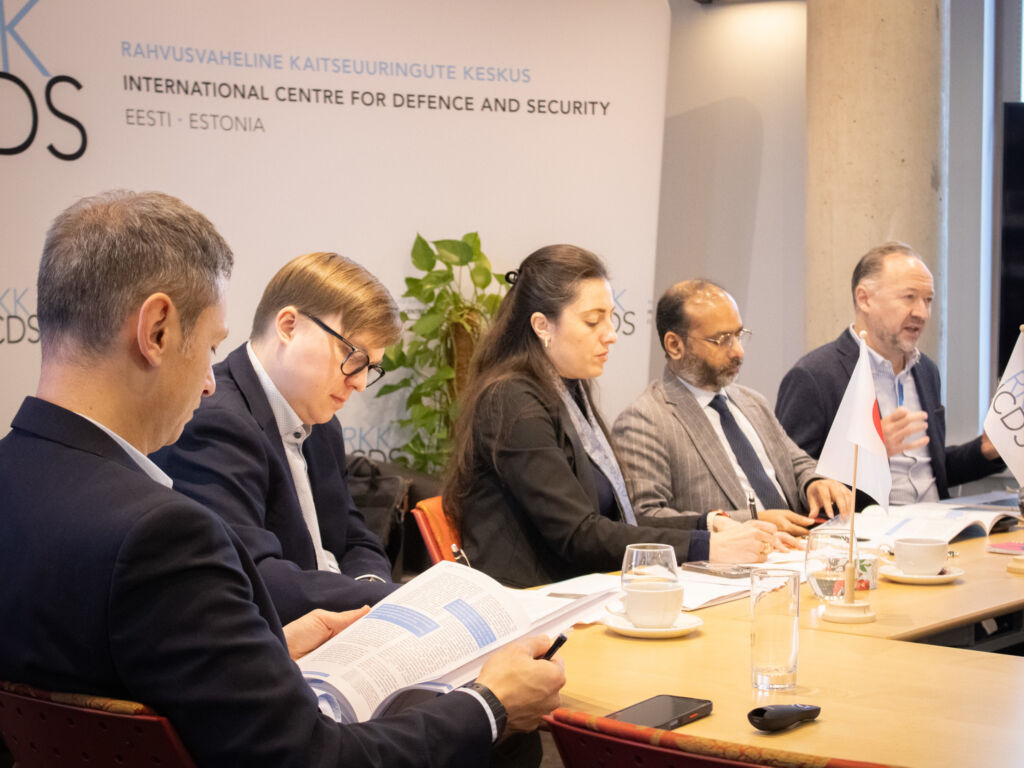
The seminar continued with the co-authors summarising the report’s main findings. Wrenn Yennie Lindgren talked about flagship projects in Japan’s Official Development Assistance (ODA), especially when engaging the Philippines. With institutions like the newly opened Philippine Railway Institute, Japan aims to share its know-how and build relevant capacities. Bart Gaens analysed connectivity partnerships between Japan and India as well as Japan and the EU. Institutional fragmentation, bureaucratic obstacles, and national branding are among many other issues that prevent such alliances from realising their full potential. Jagannath Panda explained why Japan’s expertise and integration into India–Middle East–Europe Economic Corridor (IMEC) will be essential for the long-term viability of the project, especially amid less interest in the US. Ville Sinkkonen focused on the impact the US had in past connectivity projects and how the second Trump administration changed the notion from strategic to ‘transactional’ connectivity. A round of questions, with an emphasis on the best practices, concluded the intensive seminar.
More photos: Flickr
Read the report: Japan and Strategic Connectivity: Policies, Partners, and Possibilities
AloJapan.com