
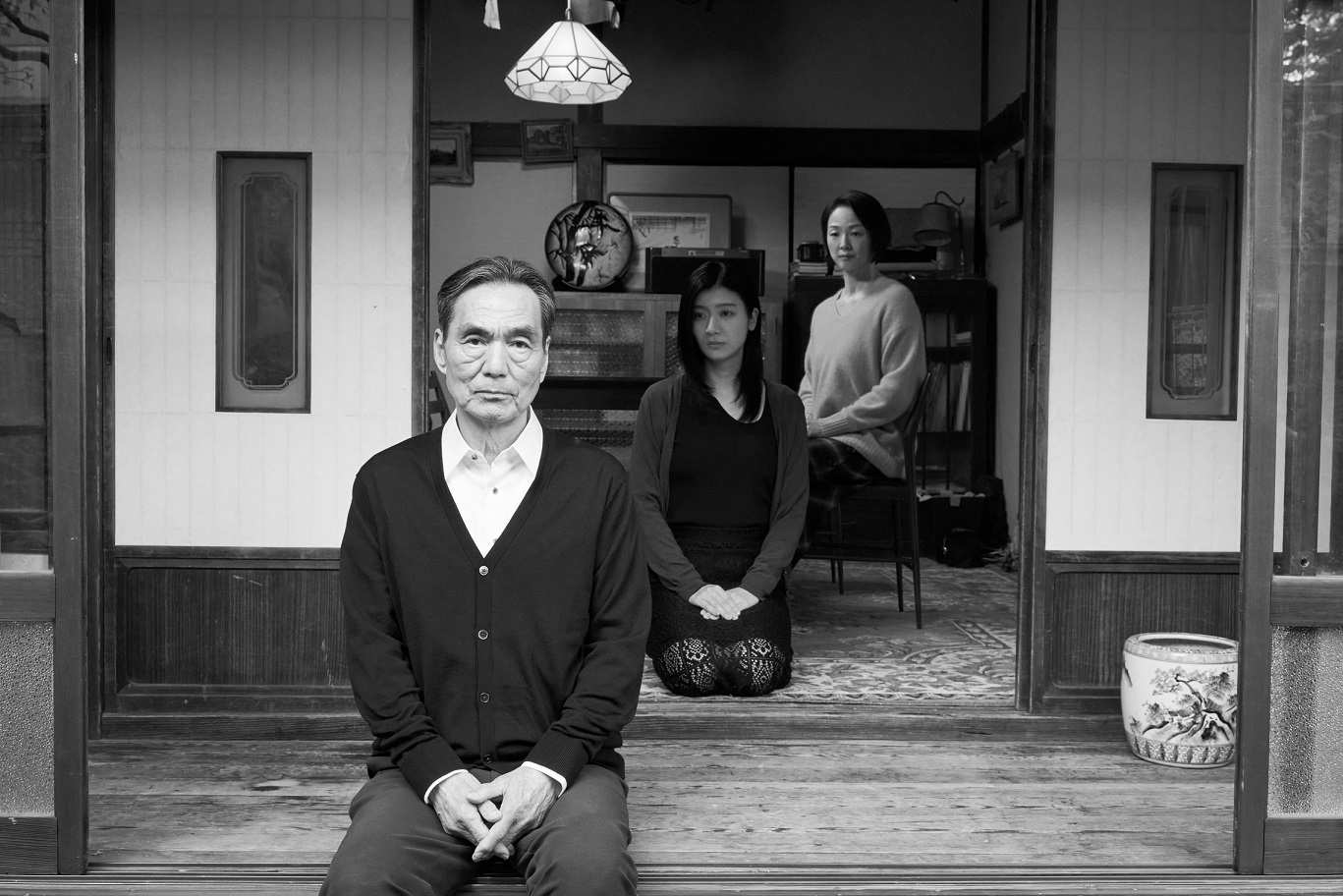
Adaptor and Director: Yoshida Daihachi (from the novel by Yasutaka Tsutsui)
Directed by Yoshida Daihachi (who also adapts from the novel by Yasutaka Tsutsui) Teki Cometh is a sedate film the meaning of which is so obscure that viewers can make any number of guesses and they may all be correct.
Retired professor and widower Watanabe Gisuke (Nagatsuka Kyozo) leads an orderly even mundane life performing daily household chores, shopping and cooking surprisingly elaborate meals. In his professional life he generated so much respect and admiration in his students they voluntarily tend his garden and arrange for his articles to be taken by publishers for whom they work. Like all of us the professor receives and disregards unwanted e-mails. He dismisses an e-mail warning him to prepare to flee as ‘Teki’(Japanese for ‘enemy’) is coming from the North but later experiences a series of dreams and illusions raising questions as to the nature of the enemy.
The oncoming ‘enemy’ may simply be age and its associated frailties and indignities-an elderly neighbour acknowledges old age brings a lack of interest in personal hygiene. Watanabe gives the impression of being at peace with his mature age, remarking his funeral is paid for and his will and testament almost written. Yet taking a prostate examination provokes a delirious dream, close to sexual fantasy, in which he undergoes an intensely humiliating medical procedure.
A grim recognition of the futility of existence may provoke the dreams – Watanabe’s publisher terminates his contract, raising doubts about the value of his professional achievements.
So many of the dreams and hallucinations involve women they may be induced by guilt. A sequence involves a fully-clothed seduction after a meal before Watanabe wakes up alone and with only a single place at the dining table. Whist drafting his will Watanabe drifts off and begins a financial proposition urging a woman to have sex with him. Watanabe does not seem to have much respect for women regarding them as fantasy sexual objects. A dream conversation with his late wife suggests she was aware of his roving eye and that he was fired from his teaching post. It is possible; therefore, his dismissal was due to an affair with a student and his dreams are an effort to acknowledge and come to terms with his past behaviour.
The fragility of mundane but civilised life may also be a theme. Although Watanabe seems to lead a relaxed sheltered lifestyle, he is aware his neighbours are regularly involved in strong arguments about trivial matters such as dogs fouling the pavement.
The atmosphere of the film is drily funny in particular when it tackles the possibility the message received by the professor is part of a wider conspiracy theory warning of an influx of unwashed refugees. A follow-up e-mail is full of dense hysterical detail insisting hospitals are full to bursting and demanding the implementation of martial law. Watanabe’s absurd solution to the threatened crisis is to leave a suitcase of soap on the pavement to placate the unclean intruders. The next day it becomes clear how far Watanabe had been caught up in the hysteria as he notices he really did leave a bar of soap outside his house.
Actor Nagatsuka Kyozo has the unenviable task of displaying Watanabe’s humanity amongst the absurdist storyline. It is easy to relate to Watanabe’s confused and panicked reactions at finding himself running down the corridors of a suddenly-empty hospital but Nagatsuka Kyozo shows also the character’s calculating side – visiting an ailing friend less out of compassion and more to get contact details for a student he hopes to seduce. Watanabe’s composed actions towards the conclusion suggest he has exorcised his unconscious demons and achieved degree of dignity.
Teki Cometh is a film more intellectually engaging than emotionally satisfying as director Yoshida Daihachi sets a remote atmosphere as if observing events from afar. This is largely due to the film being in black and white with sharp, clear pictures but an analytical and distant tone. However, the remote approach places demands upon the viewer who might find their attention wandering during the slow opening scenes where very little happens apart from the professor doing his daily chores. It is typical of a film in which nothing can be taken for granted that, having kept an ambiguous atmosphere throughout, the director concludes in the manner of a classic ghost story.
The Japan Foundation Touring Film Programme 2026 takes place in cinemas around the UK from 6 February to 31 March 2026. For further information: https://www.jpf-film.org.uk/
Reviewer: David Cunningham
AloJapan.com