
At the recent World Economic Forum annual meeting at Davos, Canadian Prime Minister Mark Carney made a telling admission about the US-led international rules-based order: it was never truly fair. Canada benefited from it and tolerated it, but now that it no longer serves Canada’s interests, Ottawa is reassessing its place within it.This long-overdue critique echoes decades of protest from the developing world, which has consistently challenged this system as unfair and Western-centric. Over the past decade, China, alongside partners in the Global South, has worked to construct alternative frameworks for cooperation – exemplified by the Belt and Road Initiative – that aspire to greater fairness and mutual benefit.Now, the tide is turning. As leaders from France, the United Kingdom and Canada made their way to Beijing, a new reality became clear: parts of the Global North are starting to align with the vision of a fairer order as a hedge against US President Donald Trump’s imperialistic ambitions.
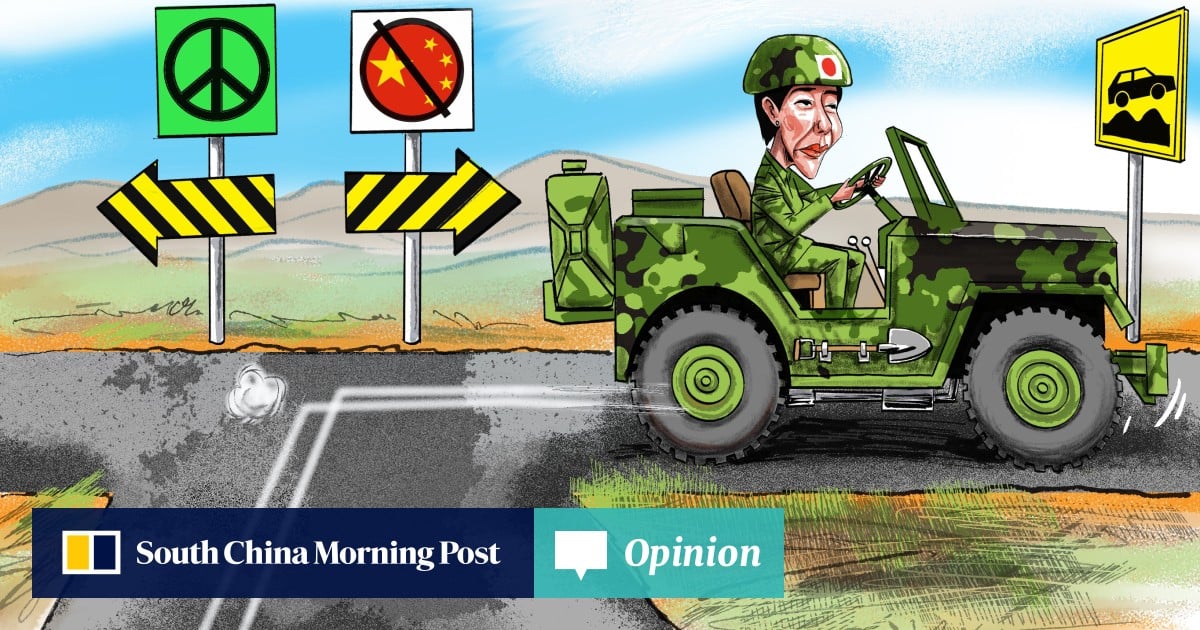
One non-Western country that benefited from the Western-centric order is Japan. Like the European Union, Japan is recalibrating in response to Trump’s “America first” policy. However, unlike some partners in the West, Tokyo is not hedging towards Beijing. Instead, it is doubling down on a high-stakes strategic confrontation with China.
At the heart of the stand-off are unresolved issues from World War II. Beijing interprets Takaichi’s recent remarks on Taiwan as evidence that Japan is chipping away at the constraints imposed by its wartime surrender. Meanwhile, Tokyo sees China’s rise, shaped by historical grievances and growing assertiveness, as a direct threat to its security and well-being.
AloJapan.com