
Osaka is not Tokyo. It has never tried to be. Whereas the country’s capital exudes a buttoned-up beauty and a cosmopolitan charisma found in only a handful of global megacities, “tenka no daidokoro,” which translates to “Japan’s kitchen”—a nickname dating to the Edo period when the city was a major rice-trading hub—has a far more casual appeal: less pristine and polished, more energetic and grounded. The legendary food scene ranges from acclaimed omakase counters to stalls slinging takoyaki in Dotonbori. Of note, Osaka has 79 Michelin-starred restaurants and hundreds of “shopping arcades” lined with convenience stores, noodle shops, standing bars and izakayas, where sake, beer and shochu flow. A new crop of cafes serves pour-overs with beans carefully sourced from around the world and makes matcha lattes without the gimmicks of sugary syrup.
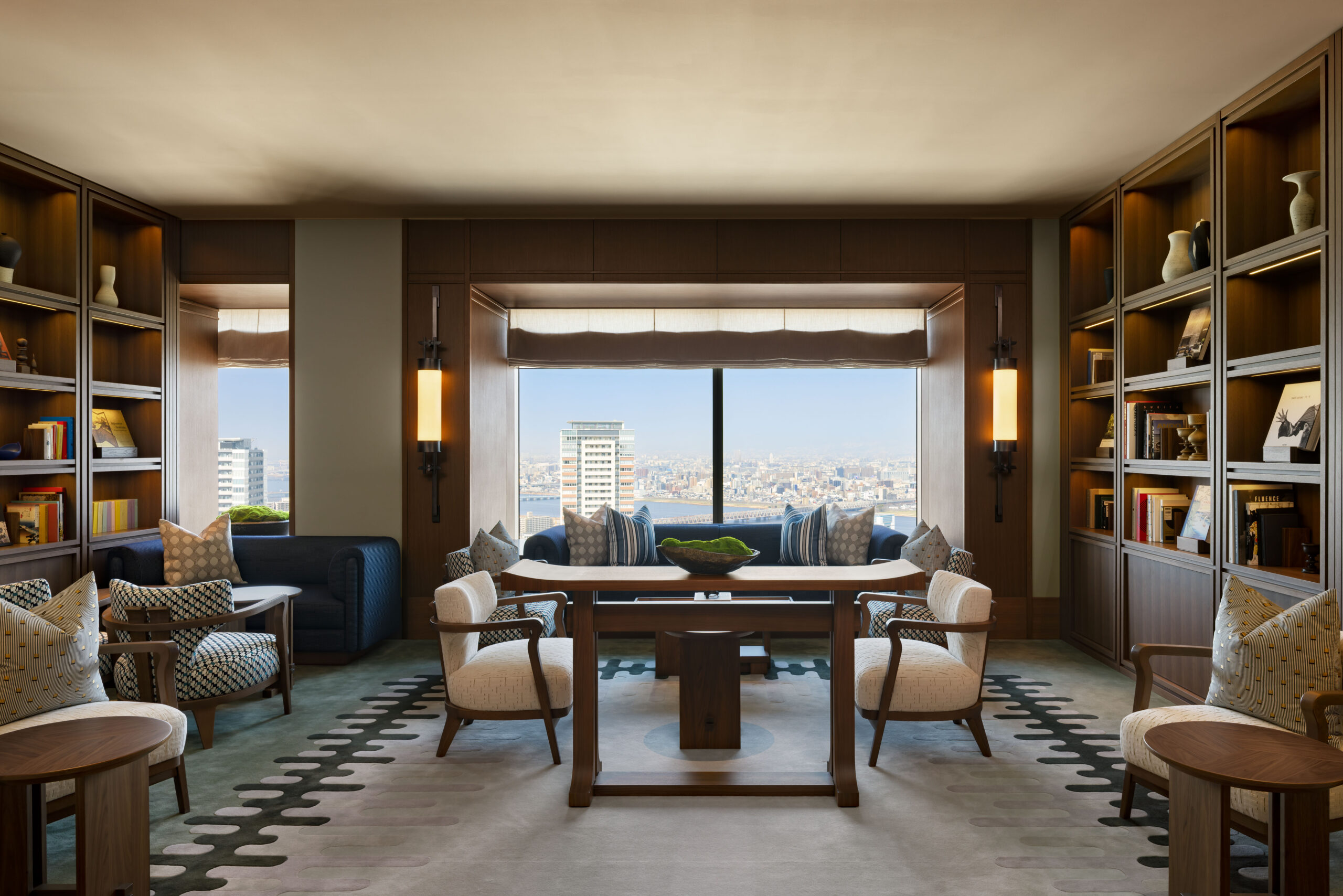
While the eating and drinking culture remains the primary reason many travelers hop on a Shinkansen, Osaka has emerged beyond its culinary credentials, becoming an exciting urban hub for arts and design. In 2025, Osaka saw a record 17.6 million visitors. Expo 2025 Osaka, which ran from April to October, brought millions of overseas travelers, and spring’s sakura cherry blossom season always means an influx of visitors. Western Japan’s biggest city was also named the top trending destination in the Tripadvisor Travelers’ Choice Awards. Many things draw travelers to Osaka—street food, museums, Osaka Castle—but historically, hotels have not been one of them. Up until recently, the accommodation scene was more functional than anything else; mostly business-oriented, mid-tier and budget stays, though with the notable old-school exceptions The St. Regis Osaka, The Ritz-Carlton, Osaka and Conrad Osaka. That all changed with the opening of Four Seasons Hotel Osaka in August 2024, followed by the Waldorf Astoria Osaka and Patina Osaka in April and May 2025, respectively. The Osaka Station Hotel, Autograph Collection, which opened in late July 2024, also provides a swank crash pad at a slightly lower price point. These new luxury hotels fill the high-end hospitality void by merging contemporary design, cultural tradition and state-of-the-art wellness, appealing to discerning travelers and bolstering the tourism profile of Japan’s second city.
AloJapan.com