
Japan continues to captivate foreign travelers, whether historically or today. Data shows that Japan ranks highly on the World Economic Forum’s Travel and Tourism Index, and the country remains one of the fastest-growing tourism destinations globally. In 2024 alone, nearly 37 million international visitors came to Japan, and that number is expected to grow even more this year. What do you believe makes Japan such an attractive destination?
There are several compelling reasons. First and foremost, Japan is a country rich in natural beauty. From the snowy landscapes of Hokkaido to the subtropical islands of Okinawa, visitors can experience a wide range of natural environments. For many people, seeing snow for the first time in Hokkaido is a magical experience. Nature is a core part of Japan’s charm.
Second, the climate in Japan is generally mild and comfortable. There is little off-season, so you can travel comfortably all year round. Although natural phenomena such as earthquakes occur occasionally, the buildings and transportation infrastructure are well-maintained, so tourists can stay safe.
Third, Japan offers a deeply rooted cultural experience. Traditional arts like sumo wrestling, kabuki theater, and other cultural performances attract visitors who want to engage with the authentic Japanese spirit.
And finally, Japanese cuisine is a major draw. The culinary experience here is diverse and globally acclaimed. These four pillars—nature, climate, culture, and cuisine—form the foundation of Japan’s appeal.
Furthermore, Japan is proactive in hosting international events and conferences. National and local governments, including those in Fukuoka, are making strong efforts to welcome people from overseas. These initiatives are helping Japan evolve into a more inclusive and globally recognized tourism hub.
You mentioned initiatives like international conferences and events. Would you say that Japan is becoming more integrated with the global tourism community?
Absolutely. The public and private sectors are both working toward that. Whether it’s government-sponsored programs or industry-led initiatives, we’re creating more platforms to bring people into the country—not just as tourists, but also as participants in global dialogue. It’s part of a broader evolution that reflects Japan’s growing engagement on the world stage.
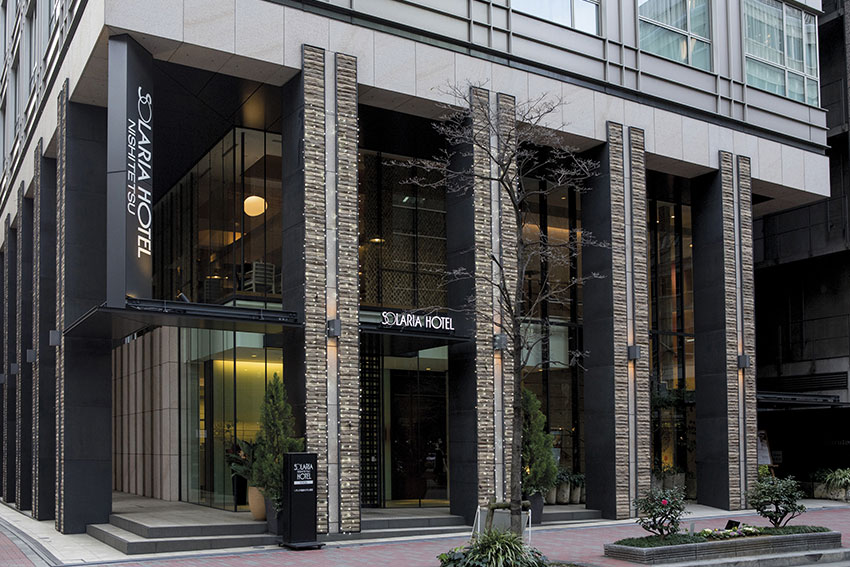
Solaria Nishitetsu Hotel Ginza, Tokyo
Speaking of regional development, TSMC’s investment in Kyushu has been big news. With Kumamoto now a hub for semiconductor production, Kyushu is being referred to as the “Silicon Island of Japan.” How has this development affected your hotel operations?
To be honest, we haven’t felt a direct impact from TSMC’s facility in Kumamoto yet—at least not in Fukuoka. However, Kumamoto is right next door, and we do expect the effects to spread in the near future.
Specifically, there will be both pre-processing and post-processing operations related to semiconductors. We anticipate that the post-processing stage will be carried out in northern Kyushu, which includes Fukuoka. Once that happens, we foresee a positive ripple effect, not just for Fukuoka, but for the entire Kyushu region—including cities like Kagoshima, Oita, and Beppu. While the benefits may not be immediately visible, we believe they will materialize over time, and we’re optimistic about the future impact on our business.
Japan’s national tourism strategy includes Phase 2, with the goal of reaching 60 million inbound visitors by 2030 and 15 trillion yen in annual tourist spending. There is also a push to distribute tourism more evenly across the country, beyond major cities like Tokyo and Osaka. What are your thoughts on this vision, and what role do you see for Kyushu?
Kyushu has enormous potential. Fukuoka, for instance, is just a short flight from many Asian cities. With the recent expansion of the Fukuoka Airport runway, we now have even more flights coming in, particularly from South Korea and other parts of Asia.
Another important point is that Fukuoka Airport has been privatized and is now operated by the Nishitetsu Group. That gives us more flexibility in how we position ourselves as a gateway for international tourism. We’re actively working to attract visitors not only to Fukuoka but to the entire Kyushu region.
You mentioned initiatives like the Tour de Kyushu and the involvement of local governments and businesses in promoting tourism. Can you tell us more about how regional collaboration is contributing to Kyushu’s tourism development?
We’re working very closely with the local governments and economic organizations across Kyushu to promote the region collectively. Events like the Tour de Kyushu—our own version of the Tour de France—are a great way to attract both domestic and Western cycling enthusiasts. These kinds of initiatives showcase Kyushu as an active, adventurous, and interconnected region.
We’re not just promoting Fukuoka—we’re linking visitors to Miyazaki, Kumamoto, and other prefectures. By creating a sense of regional unity, we make it easier for tourists to explore beyond a single city and discover the richness of the entire island.
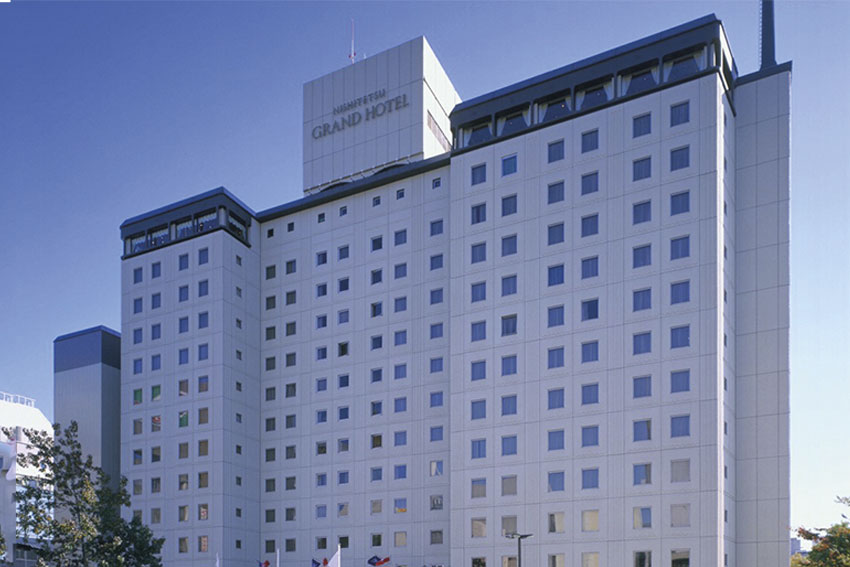
Nishitetsu Grand Hotel, Fukuoka
Due to the COVID-19 pandemic, many aspects of life and business have changed significantly. Now that we’ve emerged from that period, how would you describe the current state of the hotel industry?
That’s absolutely right. The pandemic brought about a massive transformation in how we operate. However, I believe we’ve now returned to a sense of normalcy—albeit a new normal, shaped by all that we learned during those difficult times.
How has the hotel industry recovered post-pandemic?
Surprisingly, the hotel industry today is performing even better than it did before the pandemic. This is a result of the pandemic itself—it completely reshaped the environment, forcing us to adapt. As the global situation has gradually improved, we’ve seen a robust recovery. There’s been an overwhelming resurgence in tourism, particularly inbound travel to Japan, and that has fueled growth across the entire hospitality sector. We gained many insights during the pandemic, and those lessons have helped us come back stronger.
Have you seen any particularly unexpected results?
Yes, the sheer volume of foreign visitors has exceeded our expectations. The turnover has been remarkable. Looking ahead, we anticipate that Japan will continue to attract a growing number of overseas tourists. Our goal is to actively target and serve this inbound market to capture that opportunity.
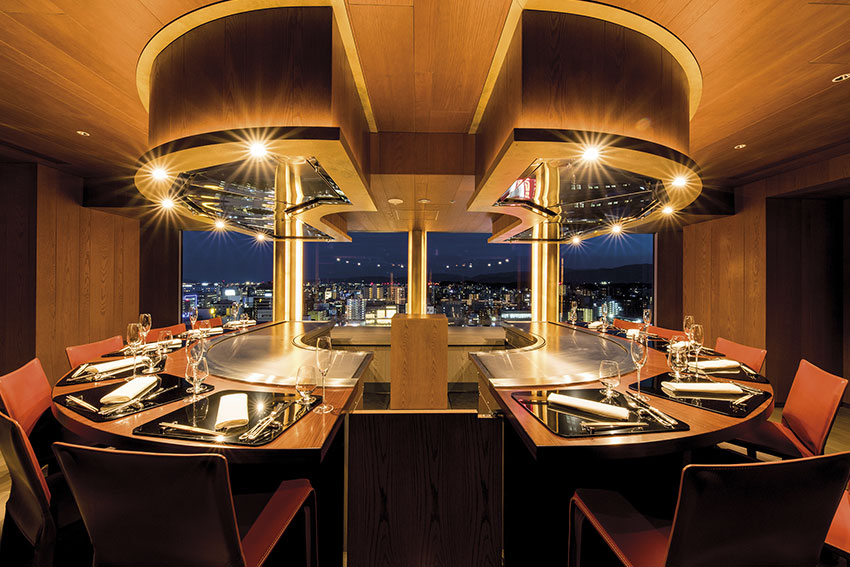
Asagi Teppanyaki at Solaria Fukuoka
What are your thoughts on expanding your business in this context?
We’re definitely assessing how we can expand our operations in response to this rising demand. The hotels currently confirmed to open are Solaria Nishitetsu Hotel Osaka Honmachi, scheduled to open in winter 2026, and Solaria Nishitetsu Hotel Fukuoka Airport, scheduled to open in summer 2027.
You’ve mentioned a new hotel opening directly connected to Fukuoka Airport, scheduled for 2027. Could you walk us through the concept behind this airport hotel and how it fits into your broader inbound tourism strategy?
Yes, we’re very excited about this project. Fukuoka Airport currently operates under restricted hours—from 7:00 a.m. to 10:00 p.m.—so some international flights, like those from Thailand, arrive quite early. Travelers are often tired upon arrival and need a place to rest before continuing their journey.
Our new hotel will address this need. We’re designing it with international travelers in mind, with amenities like triple rooms for families, large communal bath, fitness facilities, and even an airplane-themed concept room. The goal is to create a welcoming, convenient, and memorable first impression for visitors entering Japan.
Currently, the majority of inbound guests are from Asian markets. Do you have a strategy to attract more visitors from Western countries, such as Europe or North America?
That’s absolutely something we are working toward. While we do receive many guests from Korea, China, and Southeast Asia, we would certainly like to increase the number of Western visitors.
However, attracting Western tourists involves a different approach—different cultural expectations, travel patterns, and service preferences. We’re adjusting our marketing and guest services accordingly. It’s a long-term effort, but one that we believe will pay off.
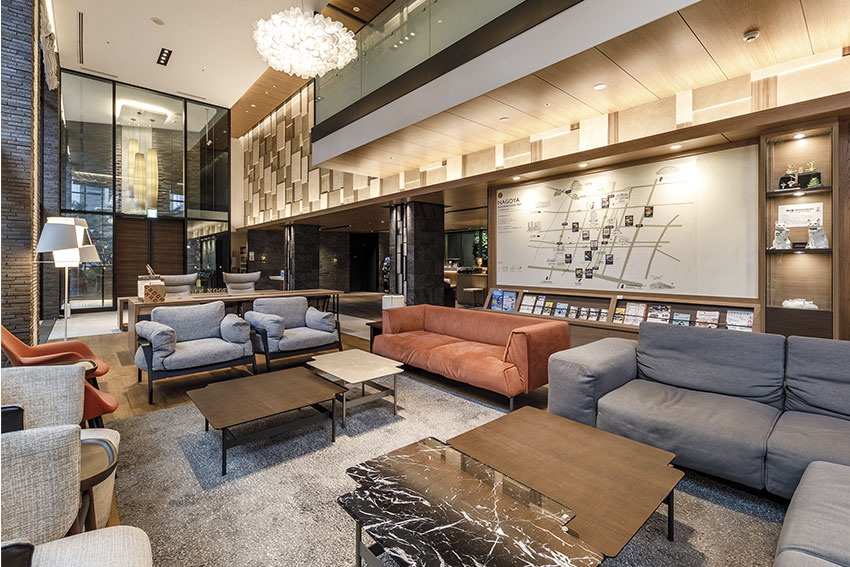
Nishitetsu Hotel Croom, Nagoya
When it comes to Japanese-style hospitality, or Omotenashi, how do you ensure your hotels meet the expectations of both Asian and Western guests? What specific experiences or services do you offer to make that distinction?
Omotenashi is a uniquely Japanese approach to hospitality that we take very seriously. We try to express that spirit not only through our service but also through experiences. For instance, we offer a plan where guests can rent a kimono and stroll around the Japanese gardens and shrines and temples around the hotel. Many guests enjoy kimono and exploring the historic Daimyo district, which was once home to high-ranking samurai.
We want guests to feel immersed in Japanese culture—not just by staying in our hotels, but by stepping outside and engaging with the local surroundings in a meaningful way.
Let’s shift to your four hotel brands. Nishitetsu Hotel Group currently operate 23 properties across Japan and Asia. Your flagship is Nishitetsu Grand Hotel, and you also manage Solaria Nishitetsu Hotel, Nishitetsu Hotel Croom, and Nishitetsu Inn. Can you elaborate on the strategy behind these distinct brands?
Absolutely. Nishitetsu Grand Hotel was established 56 years ago in 1969 as a high-end hotel in Fukuoka City, a base for tourism in Kyushu, in response to local demand amid growing tourism demand.
Roughly 20 years later in 1989, Solaria Nishitetsu Hotel Fukuoka opened amid a growing number of visitors to Fukuoka City, along with the development of urban infrastructure such as transportation and commercial facilities. It was constructed at Nishitetsu Tenjin Station, in the heart of Fukuoka City, as the core facility of a major redevelopment project for the Nishitetsu Group.
Around a decade after that in 1999, as the deflationary economy progressed and efficient management became necessary, we developed the Nishitetsu Inn brand, a lodging-focused facility. With the aim of providing practical hotels that are highly convenient for guests staying on business trips, we carefully selected areas in urban areas that are key transportation hubs and proceeded with development.
This chain expansion marked the beginning of the expansion of the hotel business, with the launch of the “Solaria” brand, a top-grade lodging-focused hotel, in 2011, overseas expansion in 2015, and the launch of the mid-grade “Croom” brand in 2016, starting with our flagship property near Hakata Station, which features 503 rooms. Croom was born out of the desire to provide more comfort for travelers. The design concept is “a relaxing, second home,” offering a sense of calm and familiarity for both business and leisure guests.
Each brand has its own identity, design philosophy, and guest profile, and that’s very intentional. It allows us to meet a wide range of customer needs while ensuring that each property delivers consistent quality and memorable experiences.
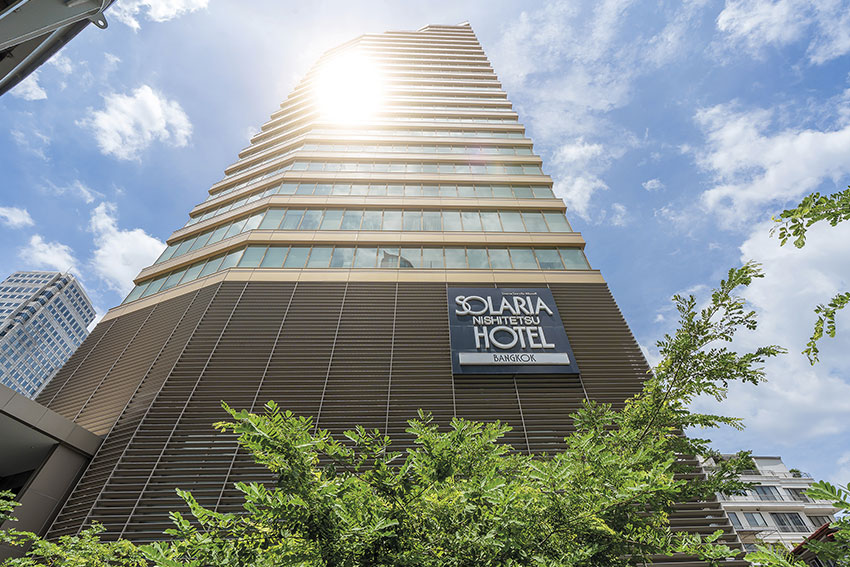
Solaria Nishitetsu Hotel, Bangkok
It seems like you’ve deliberately focused your development in urban areas rather than rural destinations. What’s driving that strategy, and will it continue going forward?
That’s right. Historically, our focus has been on urban centers like Tokyo, Osaka, and Fukuoka. These areas have high population density, strong infrastructure, and steady demand from business travelers, which made them ideal for hotel development.
However, we’re seeing changes in travel behavior. International visitors are showing increased interest in regional cities like Sendai, Kanazawa, and Hiroshima—places with rich culture, but historically fewer tourists. We’re now receiving requests to open properties in such locations, and we’re actively evaluating those possibilities.
That said, we approach expansion cautiously. We study the market carefully, assess the long-term potential of each site, and weigh the risks. Our priority is sustainable growth. We’ll continue focusing on areas where there is high demand, and alignment with our strategic goals.
With that shift in demand, do you see an opportunity to introduce a new high-end or luxury hotel brand under your company?
Yes, that’s under consideration. There’s growing demand for higher-end accommodations—particularly boutique hotels with spacious rooms and refined aesthetics, tailored for long-term stays and international guests.
For instance, lifestyle hotels such as Trunk Hotel and Ace Hotel place great importance on architectual design, art collaborations, and strong ties to their local communities. These brands bring unique personality, whether through their architecture, their art collaborations, or community events. We’re studying how to create a Japanese high-end brand that reflects both a sence of Japanese authenticity and modern appeal. We’re exploring how to offer premium experiences in a way that still feels approachable and rooted in local culture.
Although we have not yet launched any brands, expanding the scope of our four brands and developing hotels to meet diverse accommodation needs, including apartment-style hotels like Mimaru, is firmly positioned within our medium- to long-term vision.
What kind of in-hotel experiences would guests expect from a higher-end Nishitetsu hotel?
That’s something I’ve been thinking about a lot. Each luxury brand has its own personality. For example, the Ritz-Carlton emphasizes elegance and spaciousness. Ace Hotel has a trendy, artsy vibe. Trunk Hotel has a strong urban and community identity.
What we focus on is the question, “What would be the unique value of a high-end Nishitetsu property?” How can we differentiate ourselves while still offering the quality and sophistication guests expect? We’re still refining that concept. It has to go beyond just aesthetics or room size. It has to capture something essential about Japanese hospitality—and elevate it in a way that resonates globally.
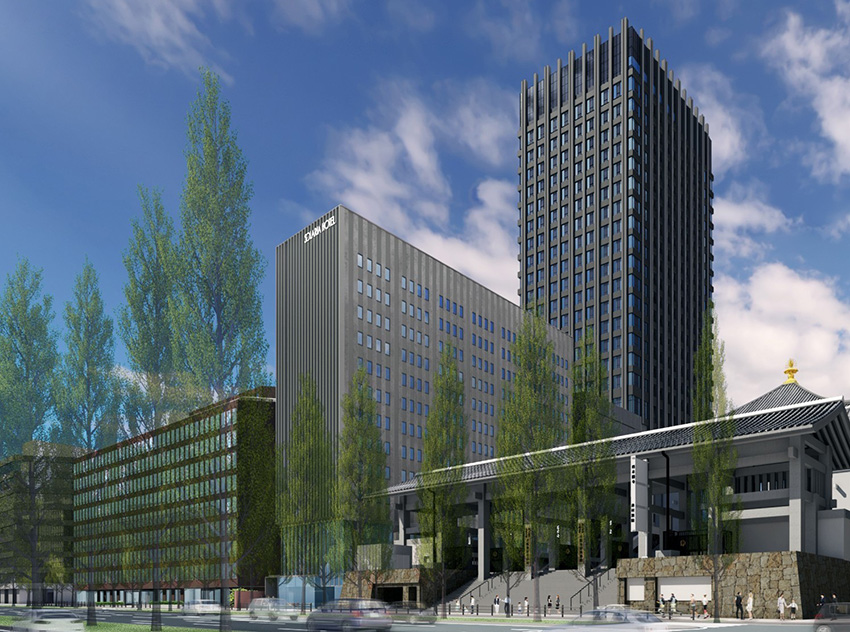
Solaria Nishitetsu Hotel, Osaka Honmachi
Since 2015, Nishitetsu Hotel Group has expanded internationally to South Korea, Thailand, and Taiwan. The latest property is Nishitetsu Hotel Croom Bangkok Silom, which opened in September 2024 and is the fifth overseas hotel. What role do these international locations play in your overall strategy?
Our international expansion has been carried out very strategically, in line with the Nishitetsu Group’s long-term vision. We focused on locations where we already had a strong understanding of the local culture, operations, and legal frameworks. Korea, Thailand, and Taiwan are countries where we have confidence and familiarity, so they were natural choices for our first wave of international hotels.
These markets are also important sources of inbound tourism to Japan, so having a presence there allows us to build brand recognition and strengthen our cross-border customer base. Going forward, we aim to continue to open multiple properties in a dominant position, focusing on areas where we already have a proven track record.
As part of your overseas strategy, will you be looking to form partnerships—such as with global hotel brands or more online travel agencies (OTAs)—to support your international operations and attract more inbound tourists?
We’re already working with many major OTAs—Expedia, Agoda, Booking.com, and also domestic platforms like Rakuten Travel. Currently, about 60% of our bookings come through these channels. We also collaborate with local travel agencies in markets like Korea and Taiwan.
At the same time, we are evaluating whether to pursue more direct sales through our own membership platform or website.
Are you also investing in building out your own direct booking channels, such as a loyalty membership system or enhanced website platform?
You’re absolutely right. OTAs are significant, and of course, direct bookings allow us to build better relationships with our guests. That’s something we’re seriously considering as part of our digital transformation strategy. We’re continuing to invest in improving our own website, enhancing user experience, and providing benefits for direct bookings—such as loyalty points or exclusive offers.
That said, OTAs are still an important part of the ecosystem, especially for attracting international guests. So we’re taking a balanced approach—working to increase direct sales, while maintaining strong partnerships with key OTA platforms.
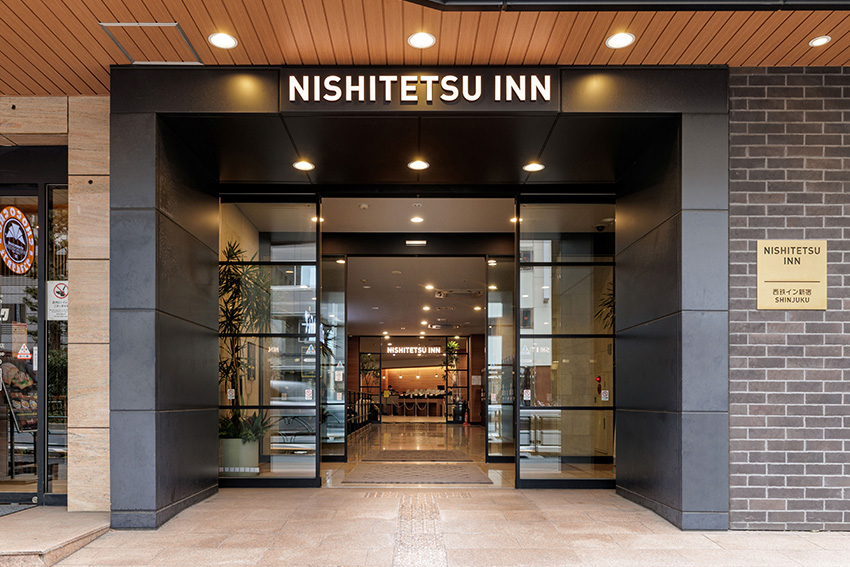
Nishitetsu Inn Shinjuku
Thank you again for your time today and for this in-depth conversation. As a final question—what would you like to accomplish during your presidency of Nishitetsu Hotel Group before passing the baton to the next generation?
That’s a meaningful question. The COVID-19 pandemic was a defining period for us. It forced us to innovate, rethink our business values, and fundamentally change the way we operate. I often say that those three years were not a setback, but a crucial part of our evolution.
We currently operate 23* hotels. Of course, I hope to grow that number, but more importantly, I want to enhance the quality of every property and pursu a more sustainable approach to tourism. Contributing to local communities and realizing hotel operations that are environmentally responsible is my mission.
My goal is to leave the company in a stronger position than it is today—more resilient, more innovative, and more aligned with the needs of tomorrow’s travelers. If I can achieve that, I’ll feel that I’ve fulfilled my role.
A perfect way to end. Thank you again, Toyofuku-san, for your generosity and insight. We’ll be following your journey closely.
Thank you very much. I truly appreciate your interest and the opportunity to share our story.
* Grand (1 property): Fukuoka, Solaria (9 properties): Sapporo/Ginza/Kyoto/Fukuoka/Kagoshima/Seoul/Busan/Taipei/Bangkok, Croom (4 properties): Nagoya/Hakata/Hakata Gion/Bangkok Silom, Inn (9 properties): Shinjuku/Nihonbashi/Kochi/Kokura/Kurosaki/Fukuoka/Tenjin/Beppu/Naha (as of January 2026).
Solaria Osaka Honmachi (scheduled to open in winter 2026), Solaria Fukuoka Airport (scheduled to open in summer 2027).
To find out more, please visit their website at: https://nnr-h.com/
To read more about Nishitetsu Hotel Group, check out this article about them.
AloJapan.com