
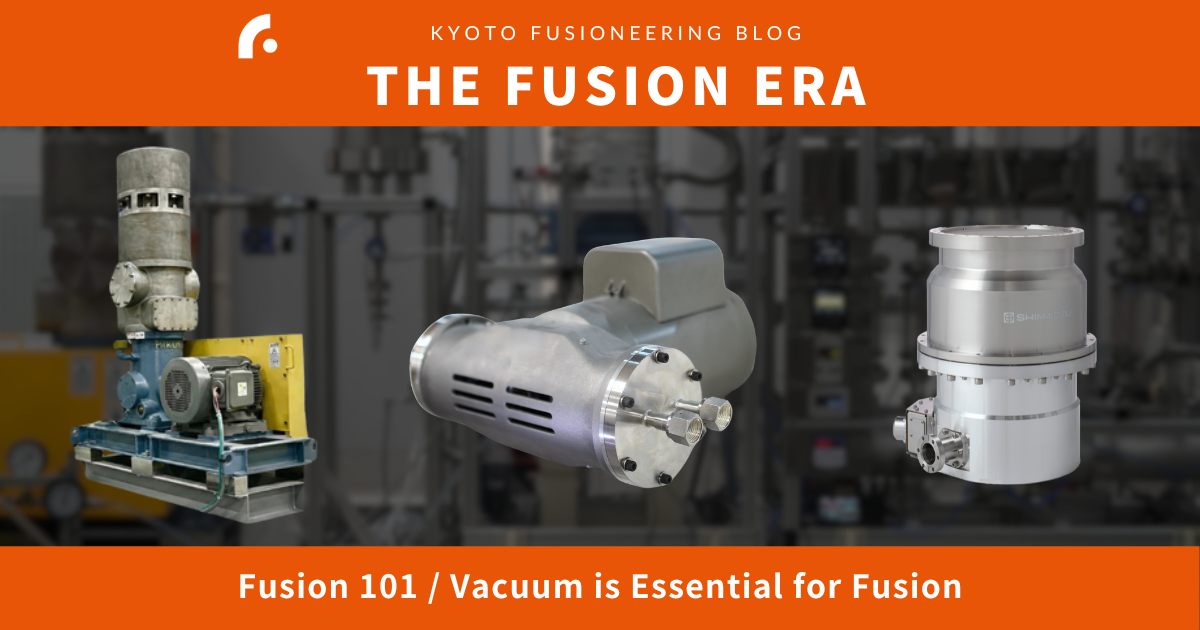
In December last year, we attended a vacuum engineering conference in Tokyo, which brought together companies and organizations involved in innovating vacuum technologies.
Kyoto Fusioneering (KF) also exhibited, and our CEO Satoshi Konishi gave a presentation highlighting the deep connection between vacuum technologies and fusion energy.
Let’s start with the basics— “What exactly is a vacuum?”—and then learn why vacuum technologies are critical for fusion, the role of vacuum pumps, and KF’s ongoing collaborative development efforts with Japanese manufacturing companies to bring world-class vacuum pumps to the fusion market.
What Exactly is a Vacuum?
When you hear the word “vacuum,” you might imagine a space completely devoid of air, like a vacuum-sealed food package. But that’s not quite accurate.
According to the Japanese Industrial Standards (JIS), a vacuum is defined as “a space filled with gas at a pressure lower than atmospheric pressure.” This means that even if some air or gas remains in a chamber, as long as the pressure is reduced below atmospheric levels using pumps or other equipment, it can be called a vacuum.
Furthermore, vacuum conditions are categorized by pressure levels: “low vacuum” and “high vacuum”, etc.
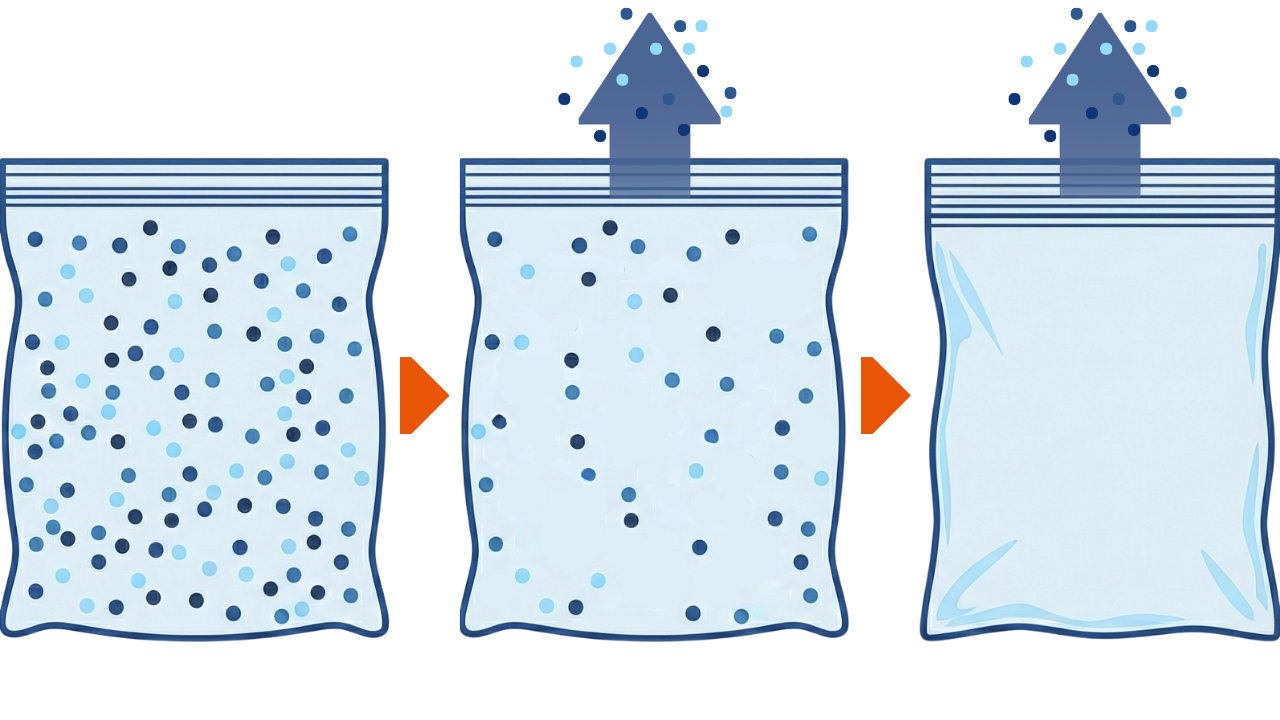 Illustration of air being drawn out of a bag to create a vacuum. Even the middle bag qualifies as a vacuum
Vacuum in Everyday Life
Vacuum exists around us more frequently than you might think.
Food preservation
Coffee beans are often packaged in a vacuum, by removing air from the bag. Reducing oxygen exposure prevents oxidation of coffee beans, which helps to maintain aroma and flavor.
Insulated bottles
A thermos or vacuum flask maintains the temperature of its contents by creating a vacuum layer between the inner and outer walls. In this vacuum layer, heat transfer via air is reduced, helping hot drinks stay hot and cold drinks stay cold.
Straws
Even drinking through a straw relies on vacuum principles. When you suck the air out and lower the air pressure inside the straw, the difference between internal and external pressure pushes the liquid upward.
Vacuum in Fusion
Fusion power plants are sometimes described as “large, complex vacuum systems.” Vacuum technology is essential for fusion—but why?
There are two main reasons:
Reason 1. Creating the environment required for fusion reactions to occur
To make fusion possible, hydrogen isotopes (deuterium and tritium) must be heated to hundreds of millions of degrees Celsius until they become plasma—the fourth state of matter, where atoms split into electrons and nuclei and create a soup of electrically charged particles that move freely.
But plasma cannot exist in ordinary air. Molecules of air (nitrogen, oxygen, and water vapor) would collide with and cool the plasma instantly, contaminate the fuel, and prevent the particles from reaching the temperatures and energies required for fusion.
For this reason, the inside of a fusion reactor core must be almost completely emptied of air before the fuel is injected and heated.
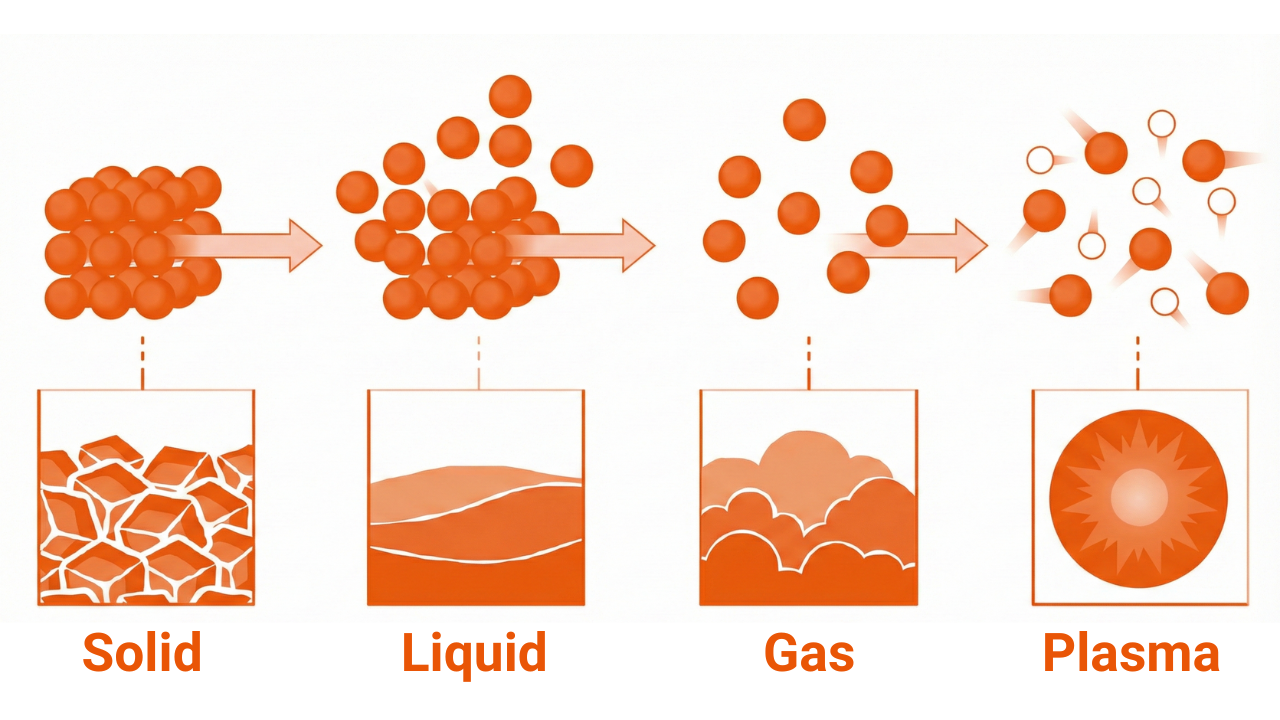 Illustration of the four states of matter.
The presence of vacuum is especially important in magnetic confinement fusion—where magnetic fields generated by powerful magnets are used to confine plasma and force fuel particles to collide.
Because of this, vacuum pumps that create and sustain the required vacuum environment are indispensable devices for enabling fusion reactions.
(For more on confinement methods, please refer to another Fusion 101 blog post here.)
2. Circulating Fuel Efficiently and Continuously
Fusion plants require a fusion fuel cycle system to clean and recycle unreacted hydrogen isotopes as the fuel. In a fusion fuel cycle, plasma that is cooled to gas containing unused fuel is collected, impurities like oxygen and nitrogen removed, and the purified fuel is fed back into the fusion reactor core.
Furthermore, movement of hydrogen isotopes (tritium and deuterium) must be carefully and efficiently controlled because hydrogen, the lightest element, can permeate into many materials. Importantly, tritium, being radioactive, must be prevented from leaking for safety.
Operating the fuel cycle under vacuum ensures that hydrogen can flow smoothly through the system, prevents leaks and contamination, and allows the fuel to be continuously purified and returned to the reactor with high efficiency.
What Makes Vacuum Pumps for Fusion Special?
Vacuum pumps used in fusion plants must meet several demanding requirements.
1. Tritium compatibility
Tritium reacts with organic materials like rubber or resins, causing these materials to degrade over prolonged exposure to tritium.
Therefore, fusion pumps must be:
oil-free
constructed from tritium-resistant materials
2. Ability to efficiently transport light gases
Fusion involves light elements like hydrogen (fusion fuel) and helium (product of fusion), which move quickly and behave differently from heavier gases like oxygen and the air. Thus, special structures are needed to transport them efficiently. As the pump performance can vary depending on gas type, extensive testing is required.
Japanese Manufacturing Power Driving Vacuum Pump Development
KF is combining its fusion expertise with Japan’s world-class manufacturing capabilities to develop vacuum pumps optimized for fusion environments. Here are a few examples:
• KF Reciprocating Pump (KFRP)
Developed with Mikuni Heavy Industries, this pump rapidly reduces the pressure from atmospheric levels to the low‑pressure range needed for the next stage of pumps—a process known as rough pumping—so that the subsequent pumps can further decrease the pressure.
• Turbo Molecular Pump (TMP)
Following rough pumping, turbo molecular pumps contain high-speed rotor blades that physically “kick” gas molecules out of the chamber to create high-vacuum conditions. We recently built a tritium-compatible prototype together with Shimadzu Corporation.
• Metal Bellows Pump (MBP)
An accordion-like metal bellows expands and contracts to control gas flow. By eliminating rubber and oil entirely, this “full metal” pump achieves compatibility for operation in tritium environments.
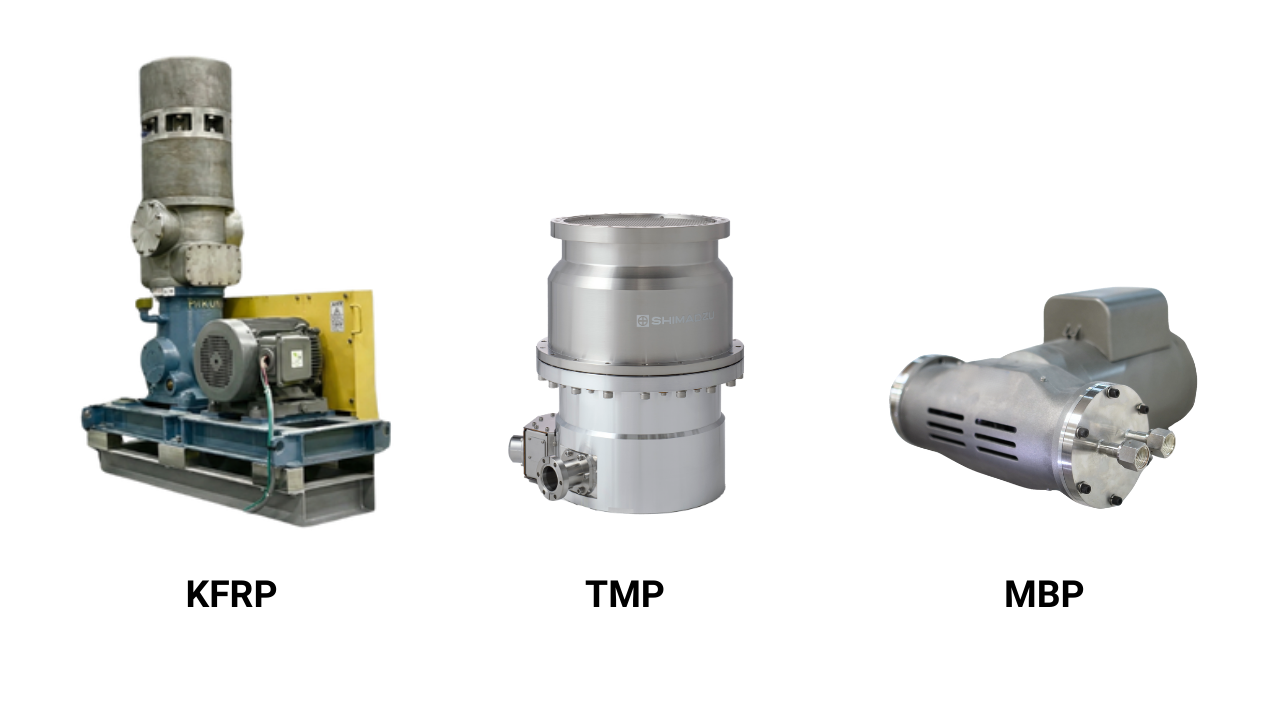 Innovated by KF in partnership with Japanese manufacturing companies, these vacuum pumps are used in a fusion plant
These pumps, now under development in Japan, will be tested under tritium conditions at UNITY-2, the integrated tritium fuel cycle test facility currently under construction in Canada.
Vacuum technology is just one example of everyday technologies that play an important role in advancing fusion energy.
We will continue sharing updates on essential technologies and fuel cycle development here on the blog—so stay tuned!
Subscribe to Our Newsletter (LinkedIn)
Follow Us on X, LinkedIn
AloJapan.com