
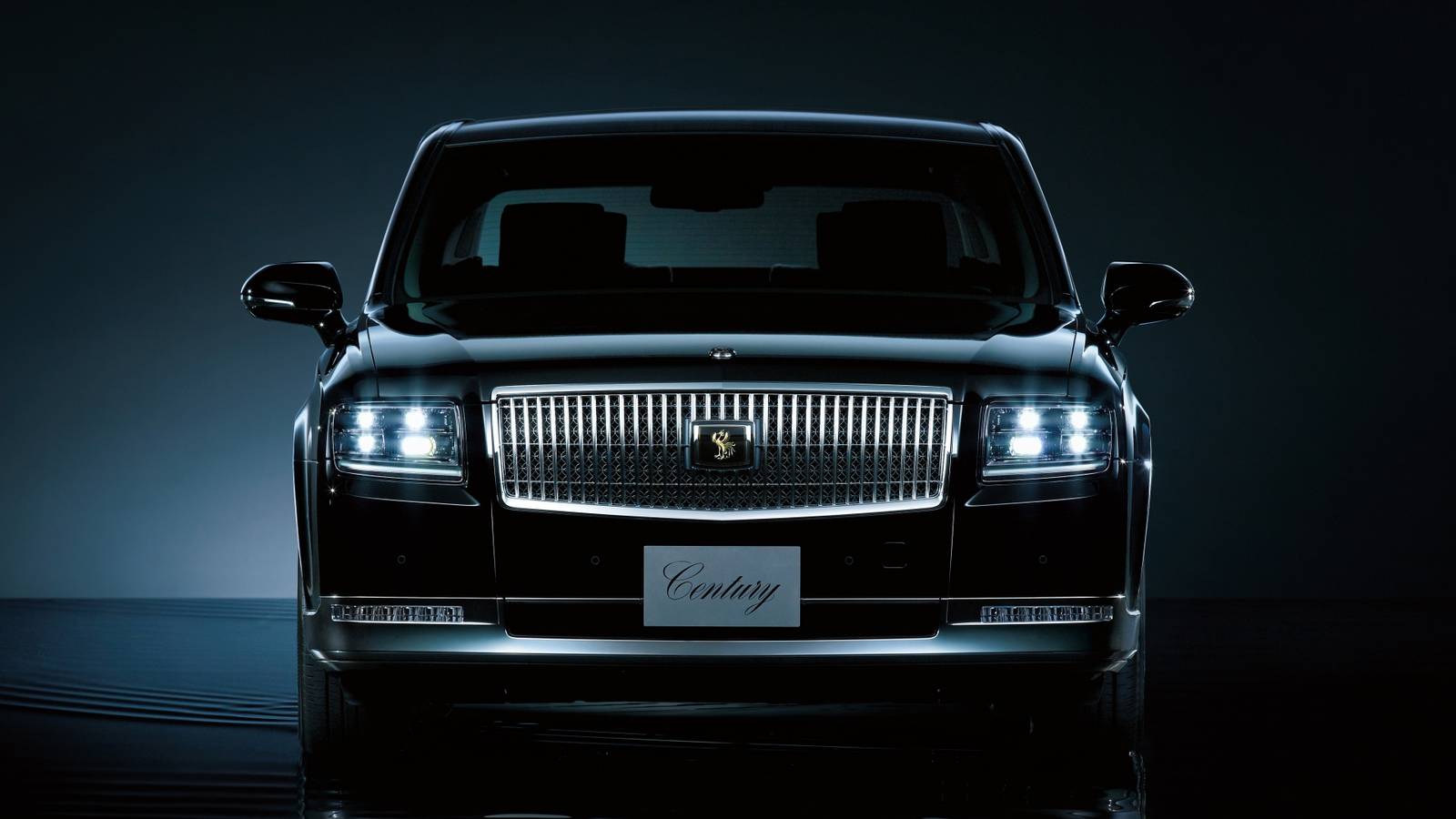
When it comes to luxury cars with big engines, many associate them with unreliability and high running costs, especially those fitted with V-8 to V-12s. There are some brands that have mastered the art of creating a V-12 that lasts forever with the right level of maintenance and care.
Toyota is a brand that has created one such engine. Although now discontinued, Toyota’s 1GZ-FE 5.0-liter V-12 stands as a prime example of its engineering expertise, as it has been the longstanding heart of the brand’s Crown Century luxury sedan, reserved for Japan’s millionaires and regalia.
Toyota’s Legendary 1GZ-FE V-12
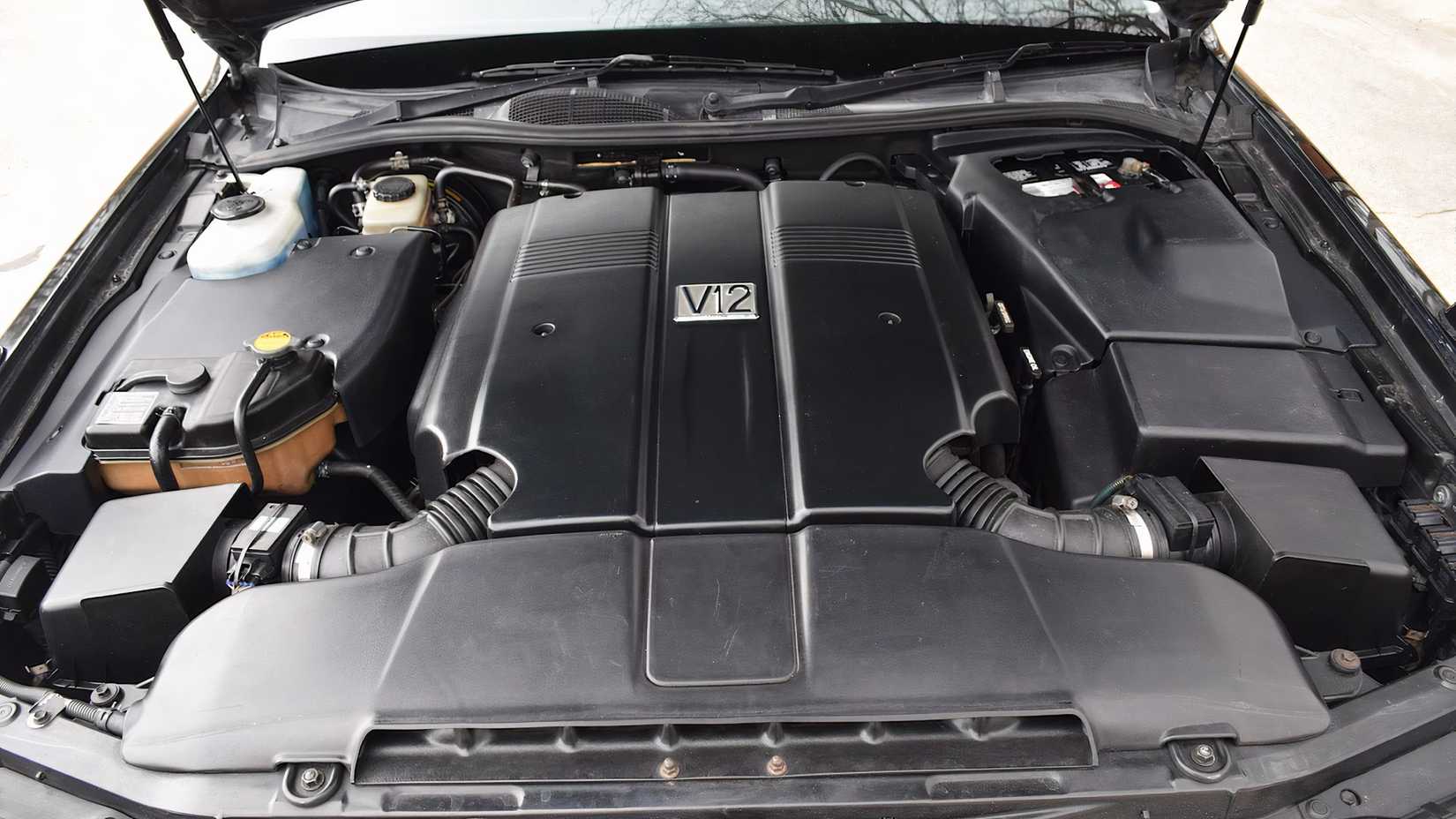
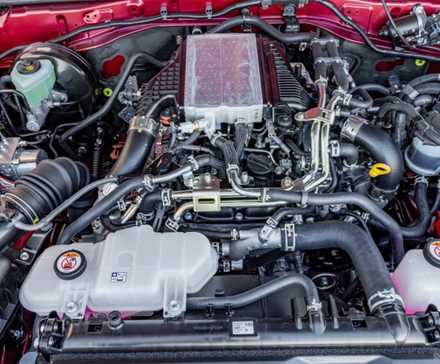
High angle shot of 1997 Toyota Century G50 engine bay showing V-12 engine with engine cover onBring A Trailer
The Toyota 1GZ-FE is Japan’s only mass-produced passenger car V-12, specifically engineered to power the second-generation Toyota Century GZG50 from 1997 to 2017. This is a 5.0-liter all-aluminum engine designed to operate with a near-silent level of refinement with vibration-free smoothness. Toyota doesn’t focus on raw performance for this model, as it only officially produces 276 horsepower and 355 pound-feet as per Japan’s Gentleman’s Agreement.
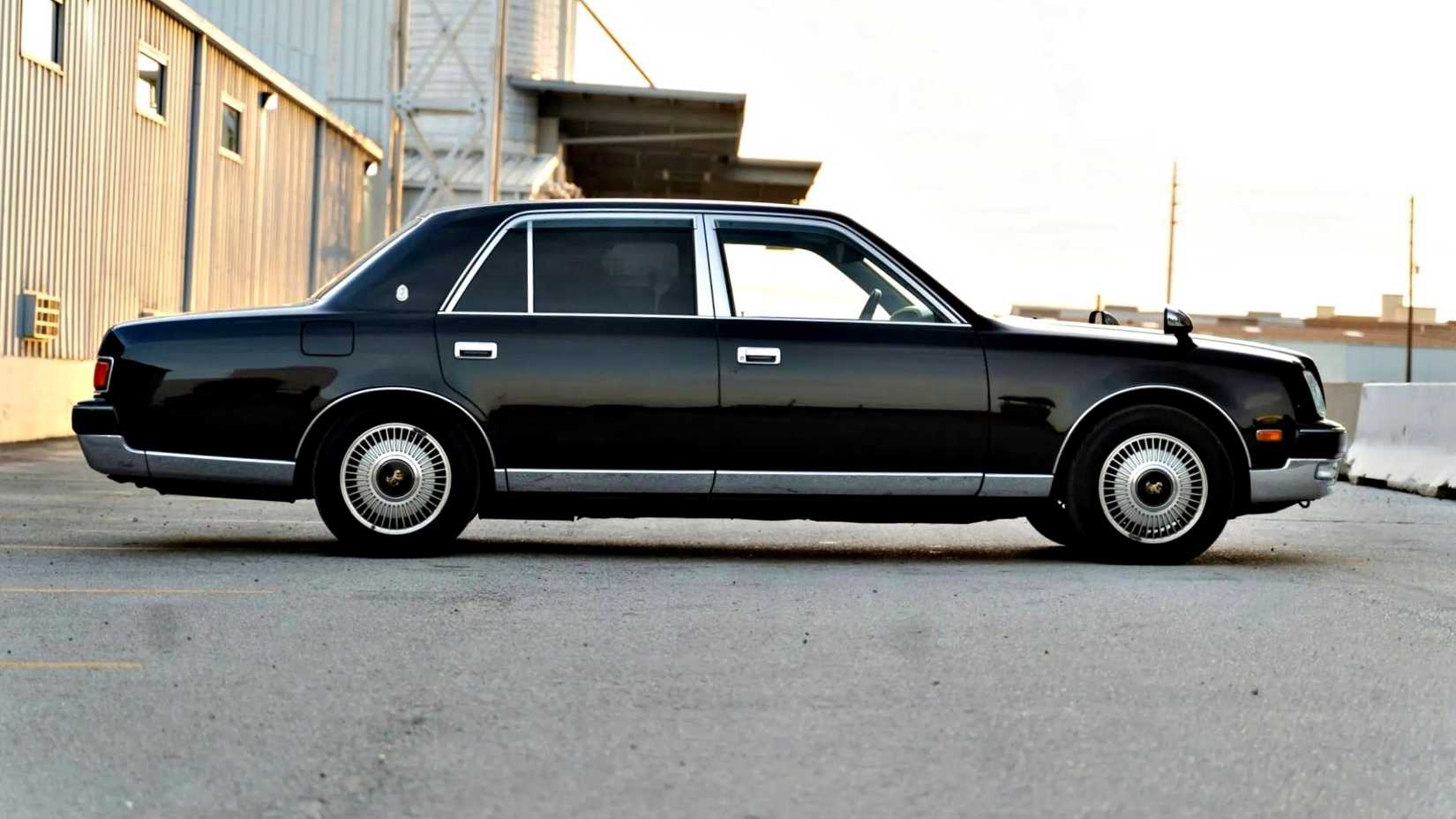
A side-view shot of a 1997 Toyota CenturyBring A Trailer
What makes this engine such a unique configuration is its dual-independent ECUs and fuel systems covering each six-cylinder bank. This allows it to continue running even if one side suffers a total electronic failure, bolstering its overall reliability. Production was technically limited to the Japanese domestic market, but it has become a legendary candidate for high-end engine swaps in the tuning community due to its overbuilt internal components and unique sound profile.
A Revolutionary Dual-Block System
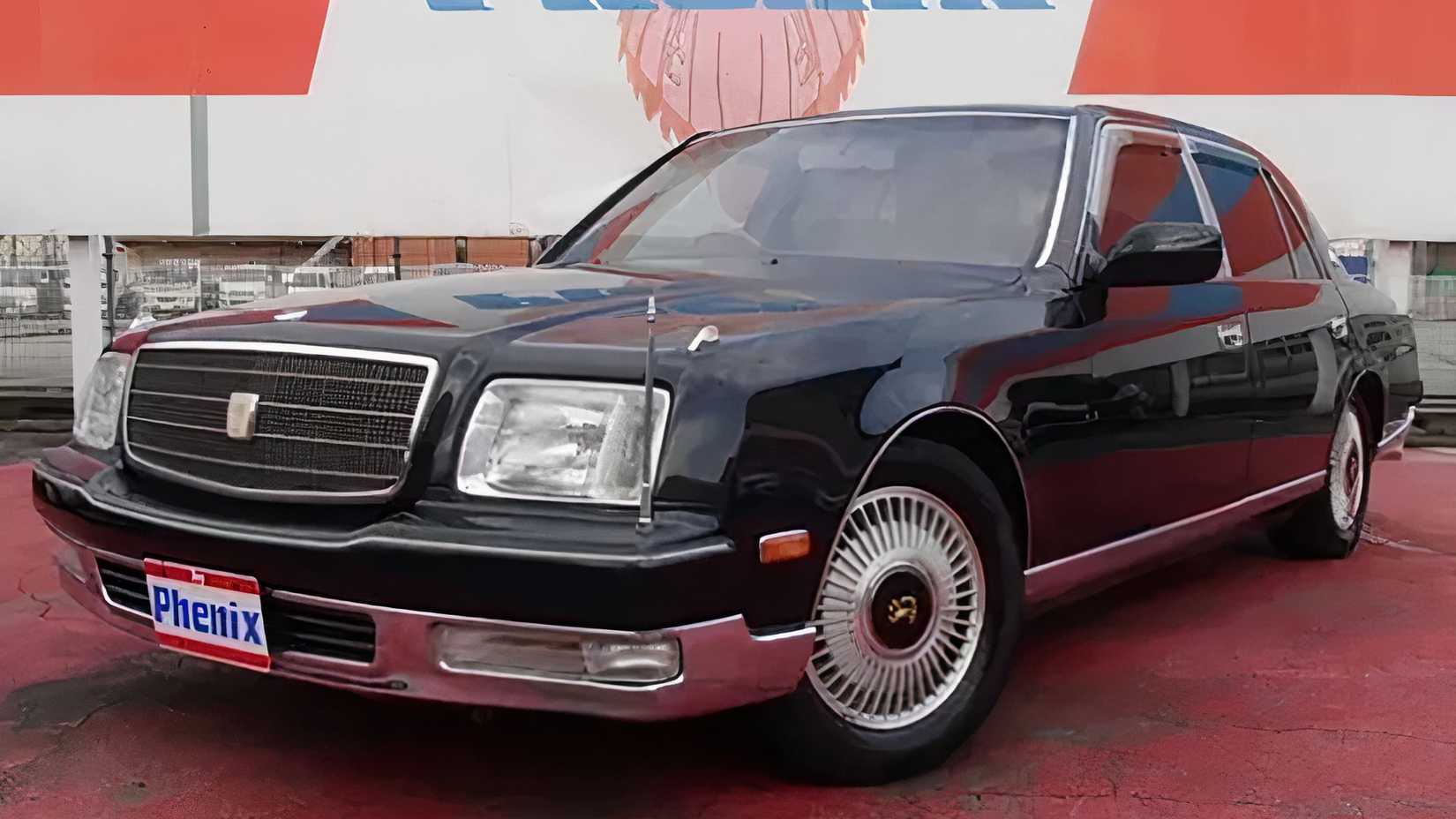
2003 Toyota Century Front, right exterior photoBring A Trailer
The Toyota 1GZ-FE V-12 is a masterclass in redundant engineering, featuring an all-aluminum block and heads with a 60-degree V-angle. This block utilizes a slant-squish combustion chamber and pent-roof design with four valves per cylinder, totaling 48 valves. Toyota opts for a straightforward dual overhead cam configuration driven by a robust chain and gear system and incorporating its trusted variable valve timing with intelligence on the intake cams.
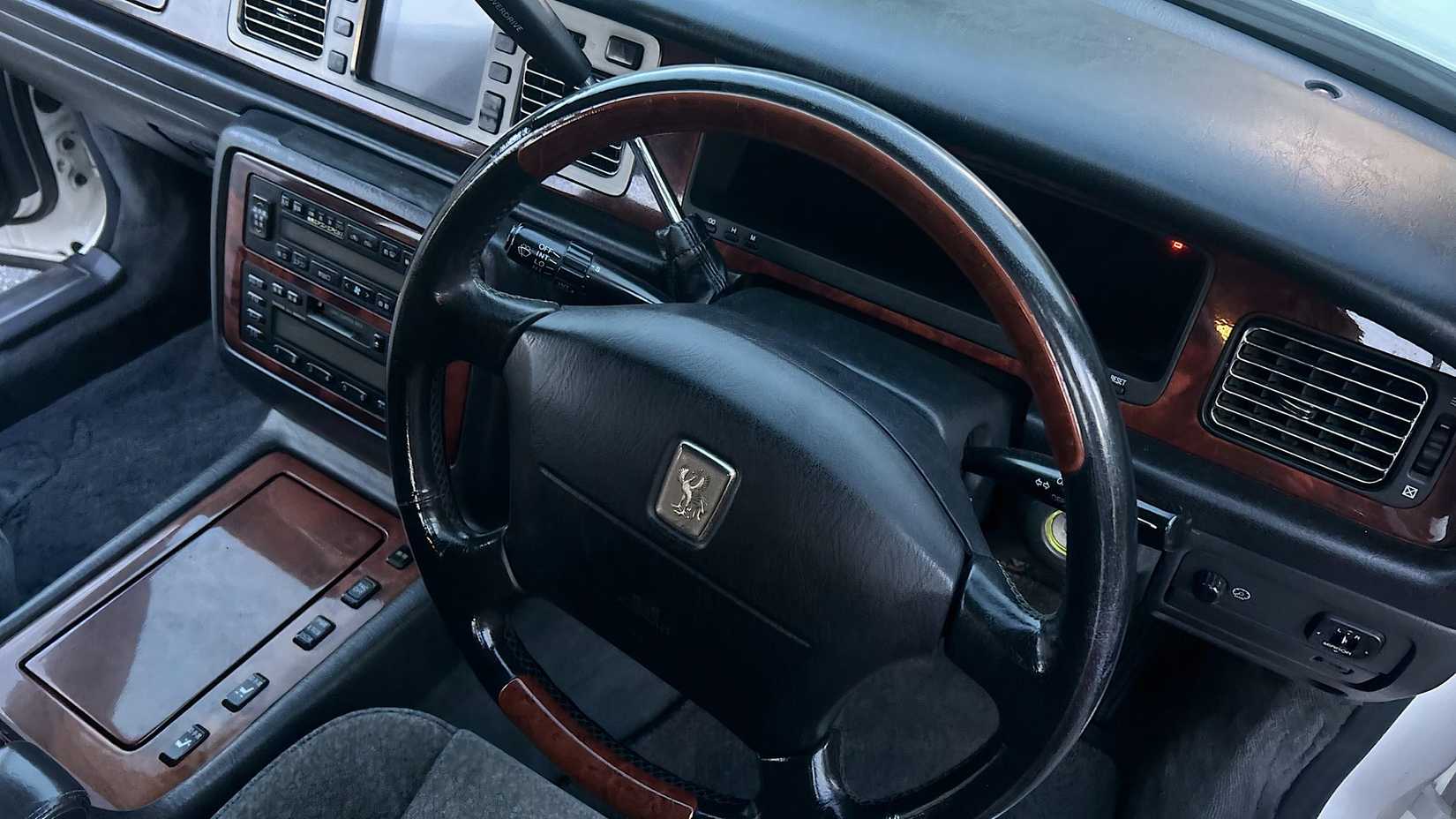
High angle close up shot of 1997 Toyota Century G50 interior showing steering wheel and central columnBring A Trailer
To minimize friction and noise, Toyota employs titanium-coated valve shims and low-viscosity 5W-30 oil. Internally, the engine is remarkably overbuilt, featuring a forged steel crankshaft supported by seven main bearings with six-bolt mains, and asymmetric forged connecting rods specific to each bank. It also features an Acoustic Control Induction System to optimize airflow across the rev range.
Related
10 Cars That Stand No Chance Against The Toyota Century V12
As the model that sets the benchmark for Japanese luxury cars, here’s how it compares to some of the best flagships from around the world
Uncompromised Attention To Detail
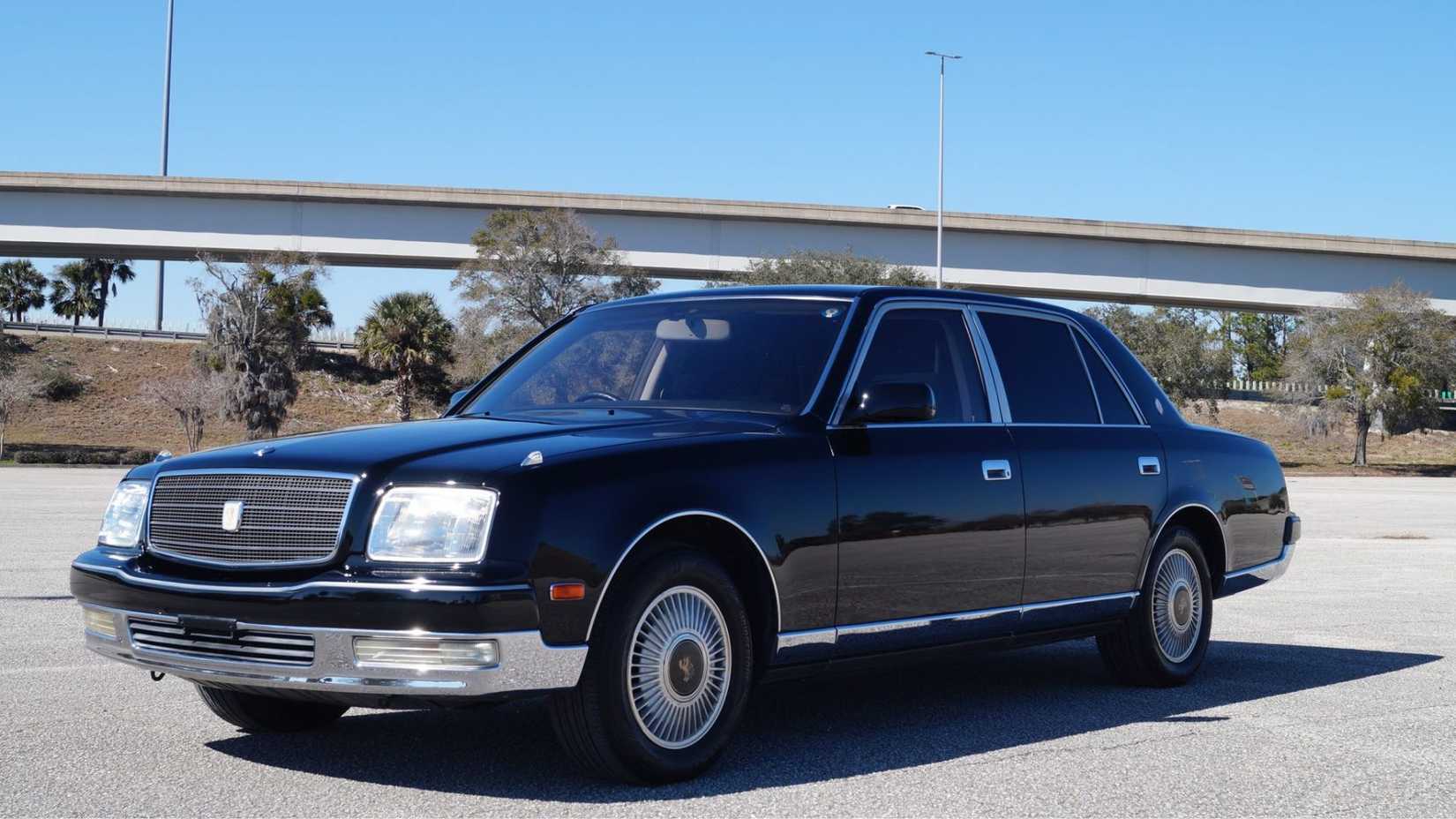
Toyota Century V12Bring a Trailer
Before discontinuation, the 1GZ-FE was meticulously produced at the Higashi-Fuji Plant of Toyota Motor East Japan, formerly Kanto Auto Works, in Shizuoka. This facility holds a legendary status as the birthplace of the Toyota Century. Unlike the high-speed, automated assembly lines typical of global manufacturing, Higashi-Fuji functioned more like a specialized atelier.
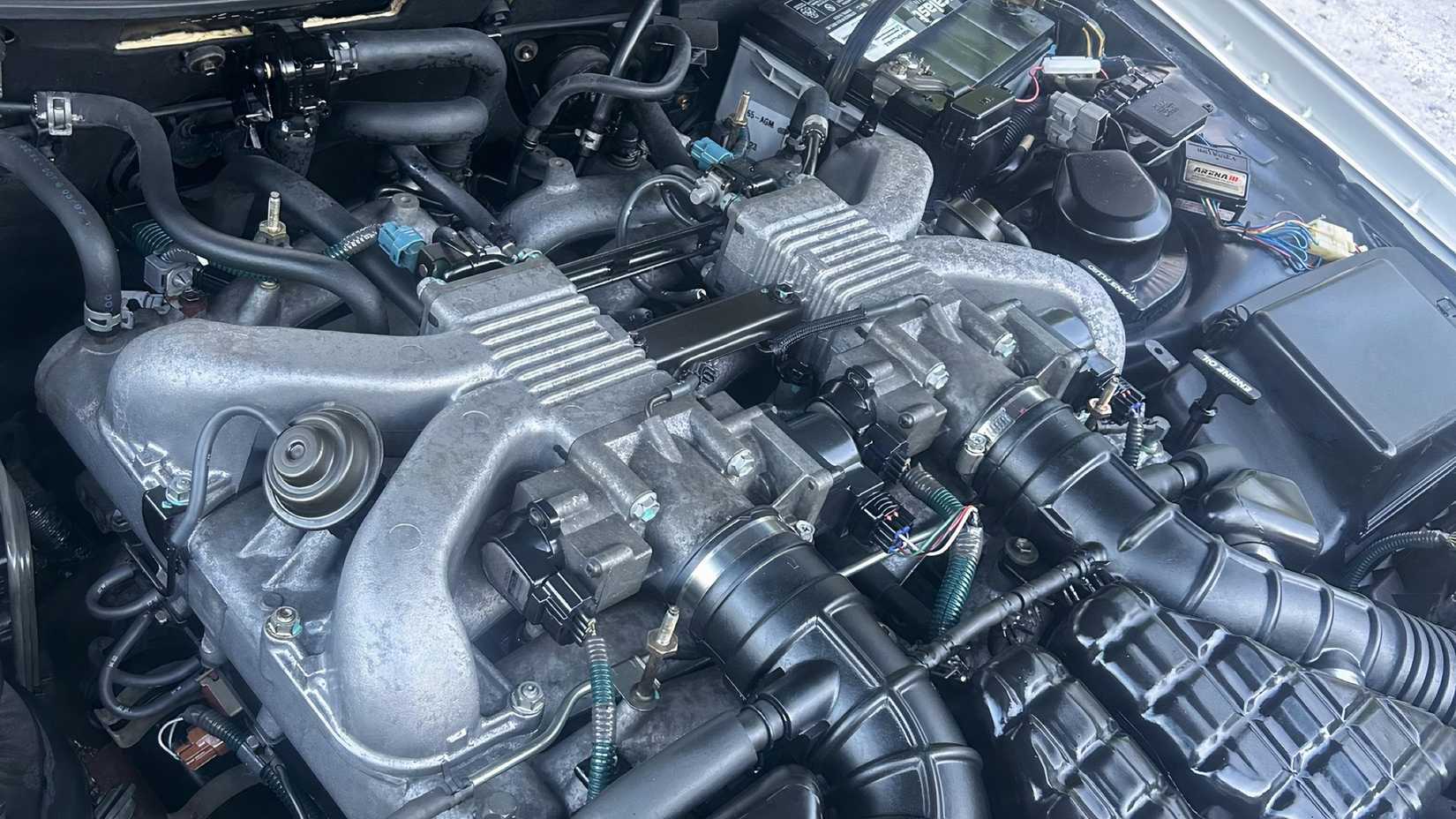
High angle shot of 1997 Toyota Century G50 engine bay showing V-12 engine without engine coverBring A Trailer
Initial production of this engine was a slow but incredibly deliberate process where engines and vehicles were largely hand-assembled by Takumi masters. These are highly skilled craftsmen who spent decades perfecting their trade in building the best engines for the brand. The facility was unique for its Century-only traditions, such as the use of hand-carved wooden molds and a specialized paint process involving seven layers of hand-polished finish.
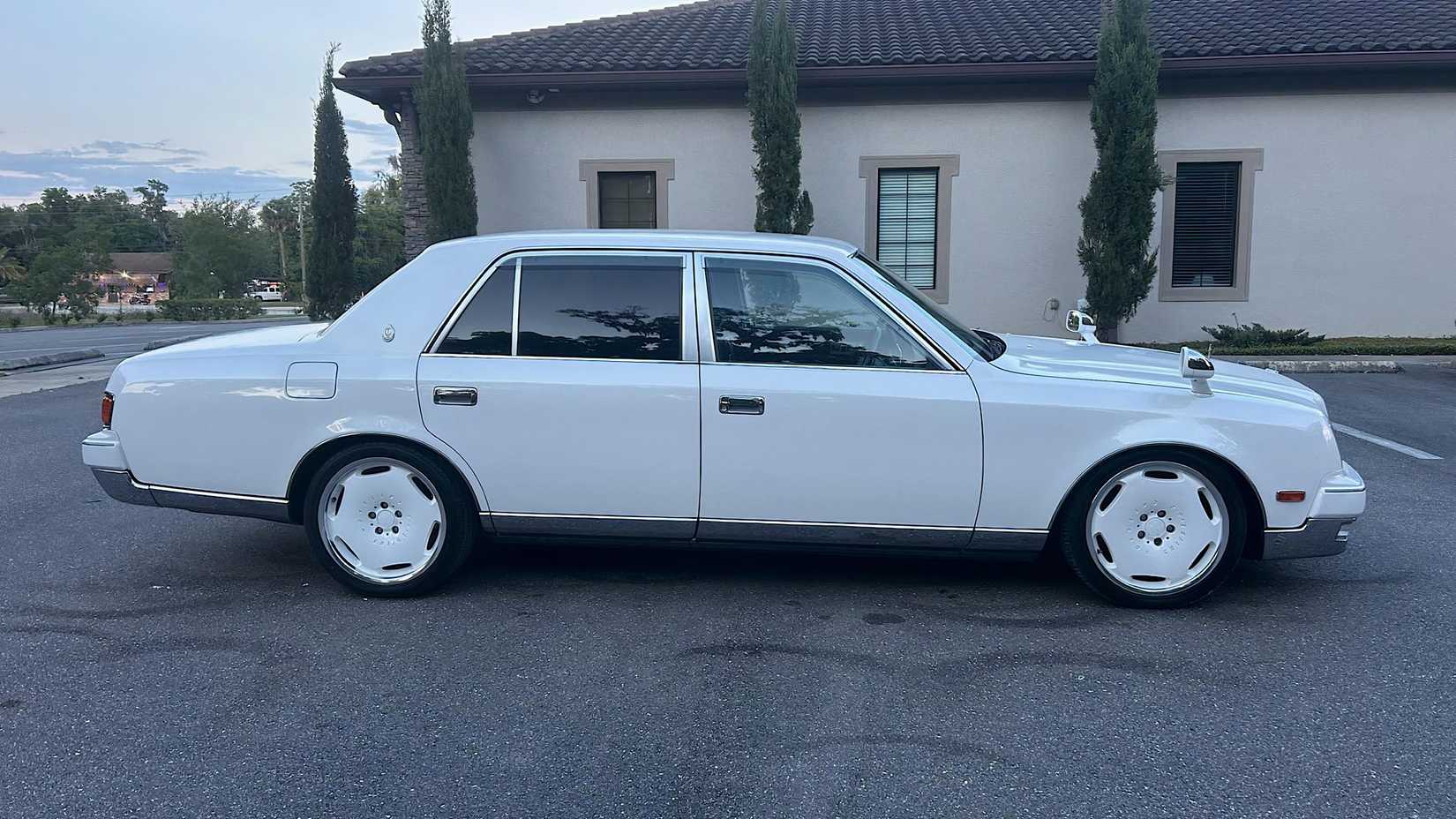
Side 1/2 shot of 1997 Toyota Century G50 in whiteBring A Trailer
This historic site fittingly overlooked Mount Fuji, but Toyota ultimately decided to decommission it in late 2020 after 53 years of operation. Its legacy continues in a futuristic way, as Toyota is currently transforming the grounds of this historic factory into Woven City. This living laboratory will work on paving the way for the brand’s hydrogen fuel cell technology, automated driving, and robotics, marking a bridge between Toyota’s tradition of ultimate mechanical craftsmanship and its future as a mobility company.


Find more Toyota vehicles in our Marketplace
Shop Now

A Purely Bespoke And Limited Powertrain
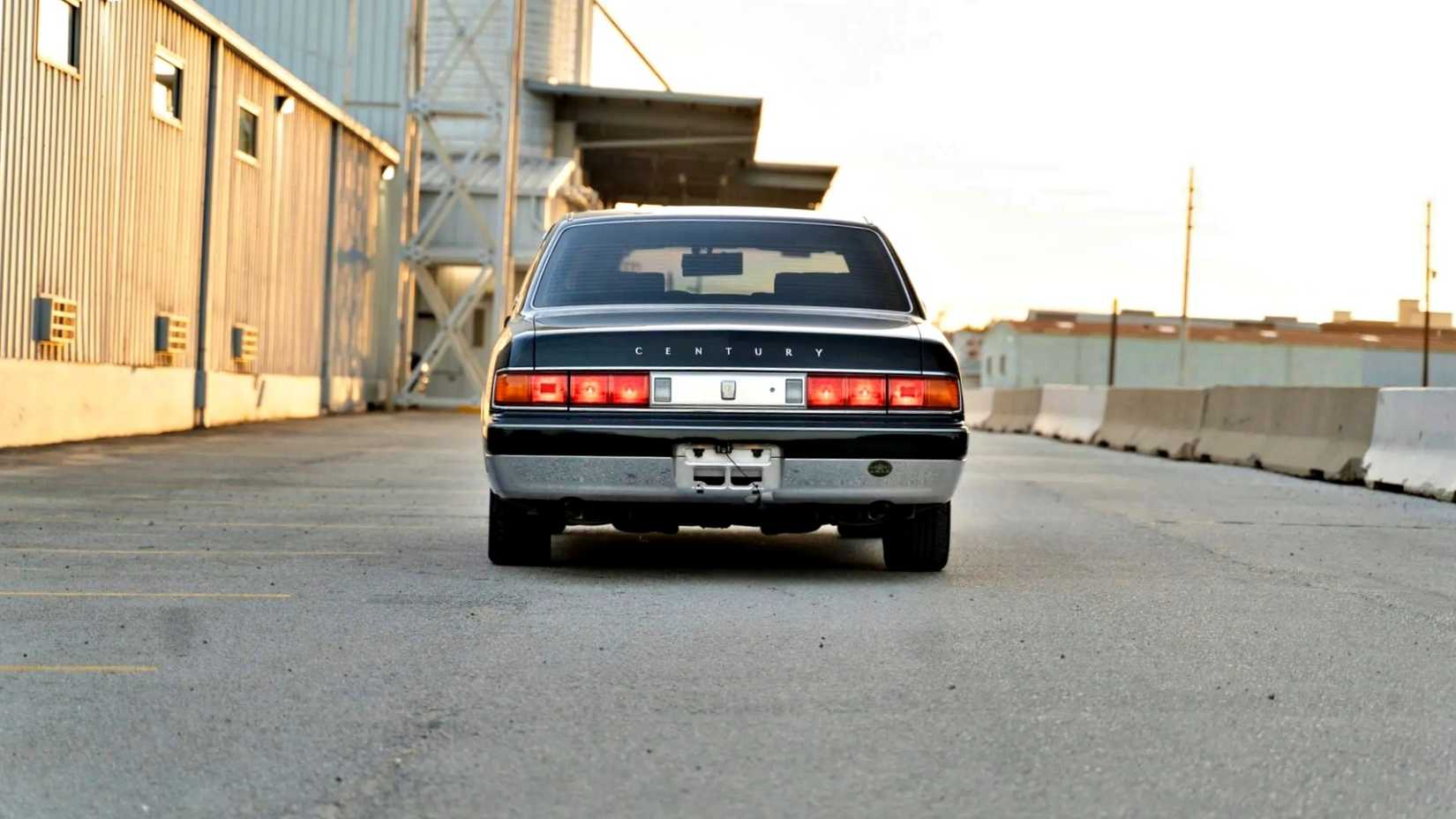
A rear 3/4 shot of a 1997 Toyota CenturyBring A Trailer
The 1GZ-FE is unique in Toyota’s history because it was never broadly applied across multiple model lines. Toyota instead purpose-built this engine for the second-generation Toyota Century, which went on to be the primary vessel for Japan’s imperial family, government officials, and top-tier executives. The most prestigious application of the engine was the Toyota Century Royal, a bespoke and elongated state car produced for the Emperor of Japan, featuring specialized security and luxury enhancements.
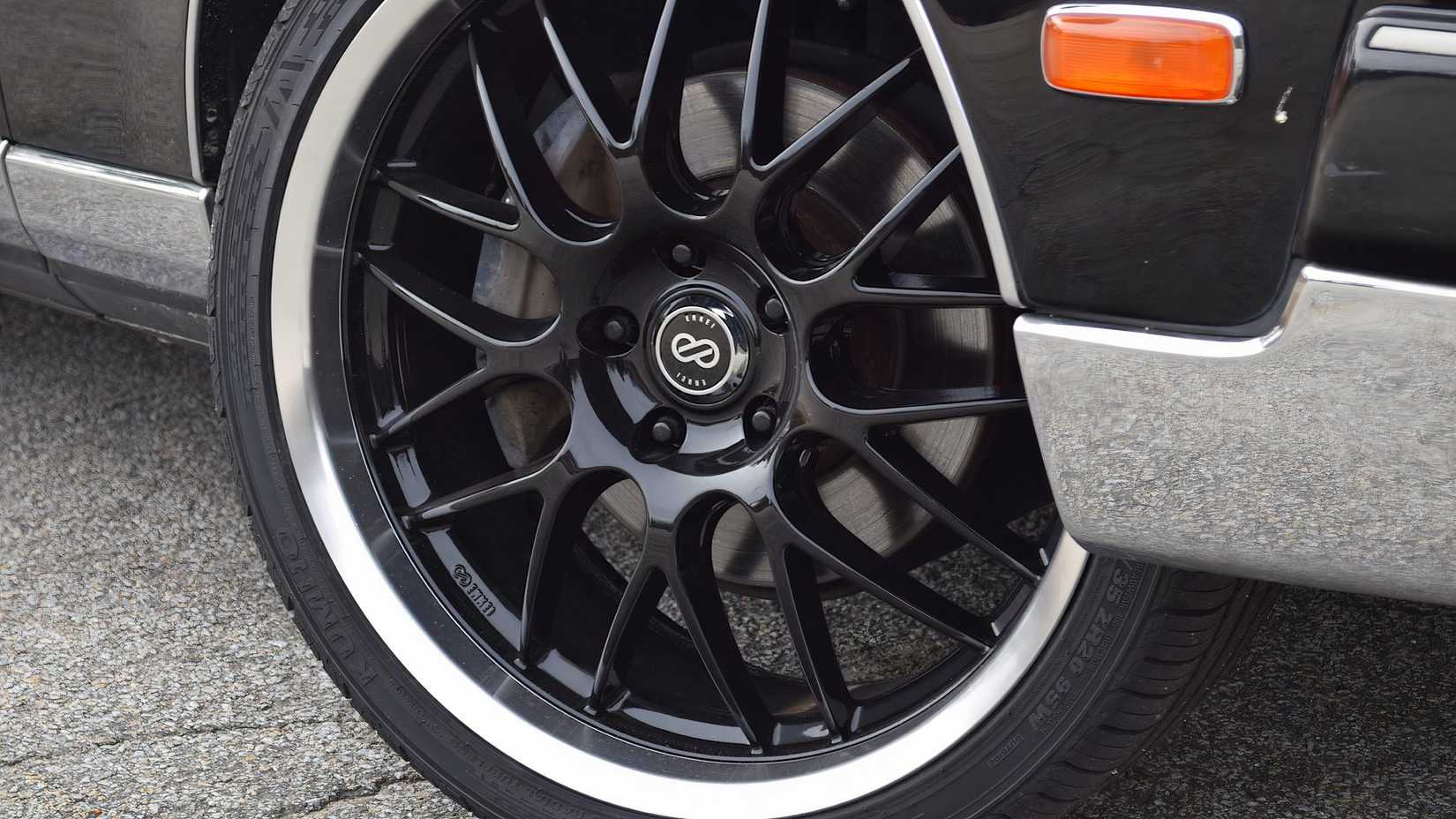
Close up shot of 1997 Toyota Century G50 wheel with white-wall tireBring A Trailer
The engine remained an exclusive Japanese domestic market offering, but its legacy was cemented in the tuning world by the legendary Top Secret Toyota Supra. Created by Kazuhiko Smokey Nagata, this infamous gold-painted A80 Supra swapped its original 2JZ straight-six for a twin-turbocharged 1GZ-FE, famously reaching 222 MPH at the Nardò test track in Germany. While not widely popular in the tuning world due to its technical nature, the Toyota V-12 has become a holy grail for high-end custom swaps, finding its way into specialized drift cars and restomodded Land Cruisers. It officially retired from the Toyota lineup when the third-generation Century pivoted to a V-8 hybrid powertrain in 2018, which is another drivetrain that it does not offer in the U.S.
Related
The Japanese Six-Cylinder Engine Is So Reliable It’s Still In Production After Almost 25 Years
Toyota’s venerable turbodiesel remains a cornerstone for one of its most iconic vehicles.
The Toyota V-12’s Brief International Journey
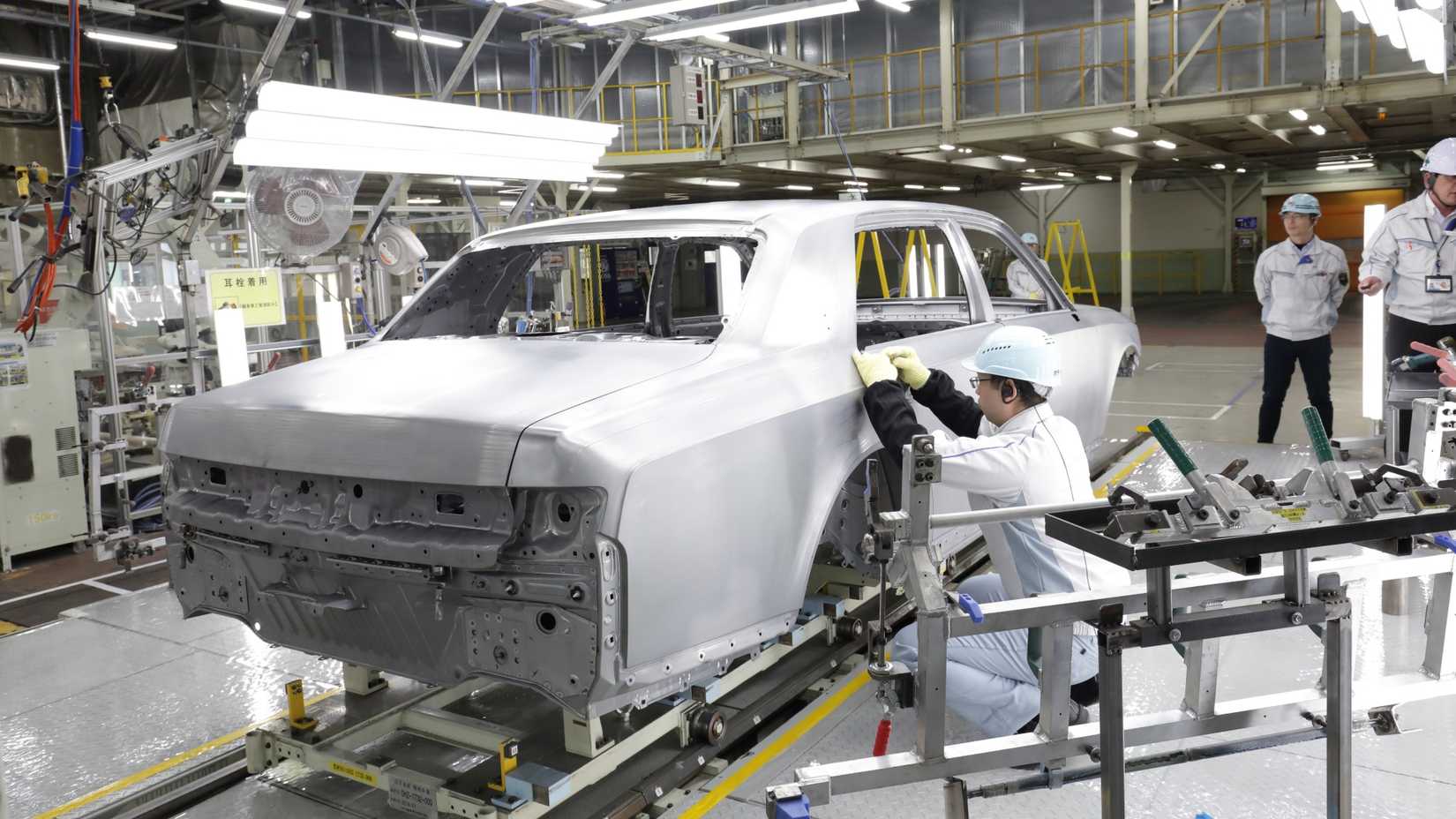
A shot of the Toyota Century at the body shopToyota
There is a common misconception that Toyota never exported the V-12. However, Toyota managed to export a few examples in 1998, targeting Europe, Asia, and the Middle East. These cars were not marketed to the public and were sold almost exclusively to Japanese embassies, government officials, and a tiny handful of private ultra-wealthy individuals. The primary reason for this limited reach was the brand’s global positioning. Outside Japan, Toyota was seen as a reliable mass-market brand, while its Lexus division was the designated fighter for the global luxury market.
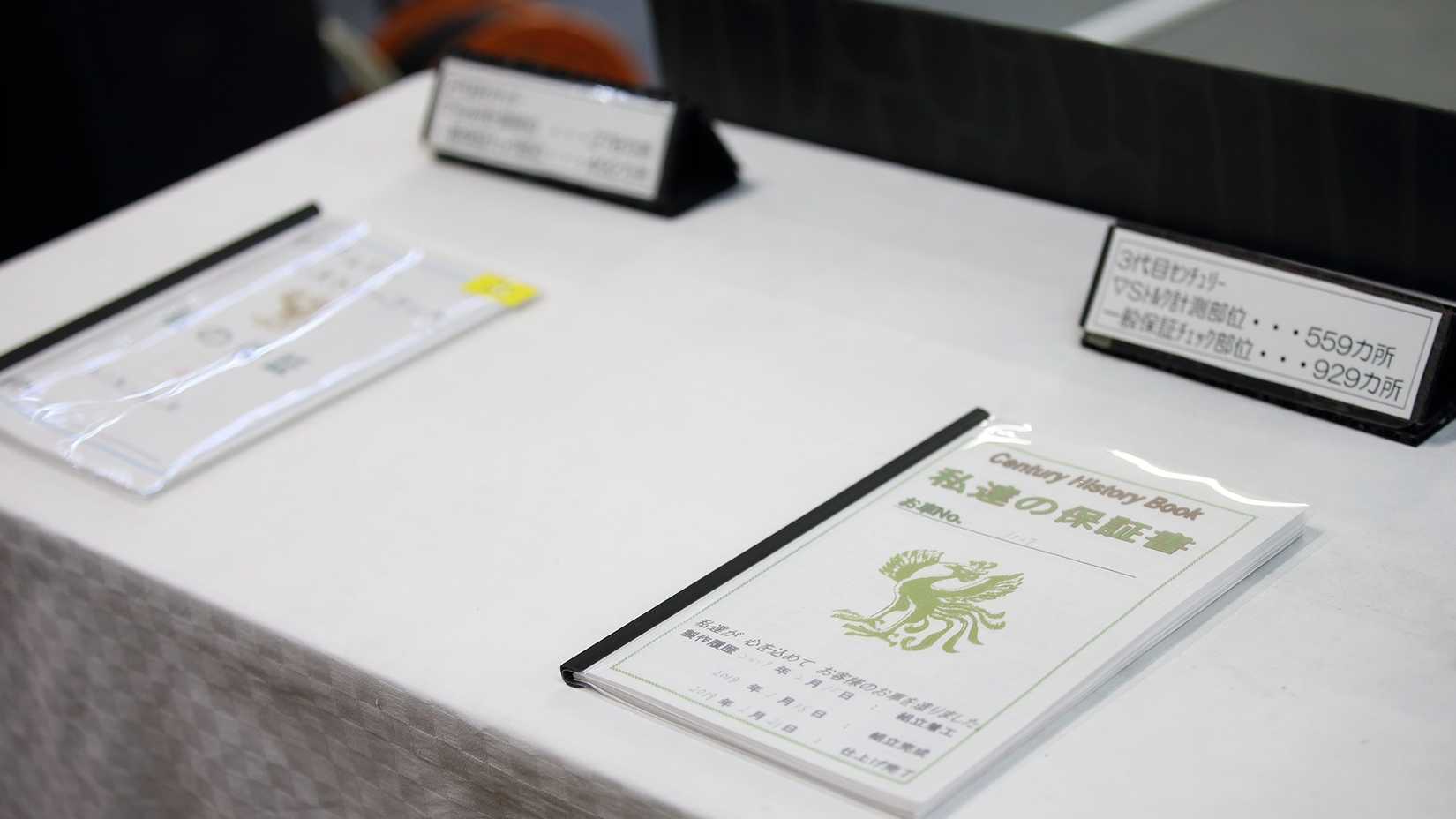
Toyota Century History Book assigned to each car with details about each Century builtToyota
As a result, the idea of a luxury sedan rivaling Rolls-Royce, with a $100,000 starting price, bearing the Toyota badge, would have created internal competition with the Lexus LS. The Century is also a much more conservative and understated sedan with unique features that luxury car buyers outside of Japan don’t necessarily appreciate as much. Ultimately, only about 100 left-hand-drive variants were ever produced, making this V-12 Century one of the rarest production cars in the world outside of Japan.
No Shortage Of Luxurious Experiences
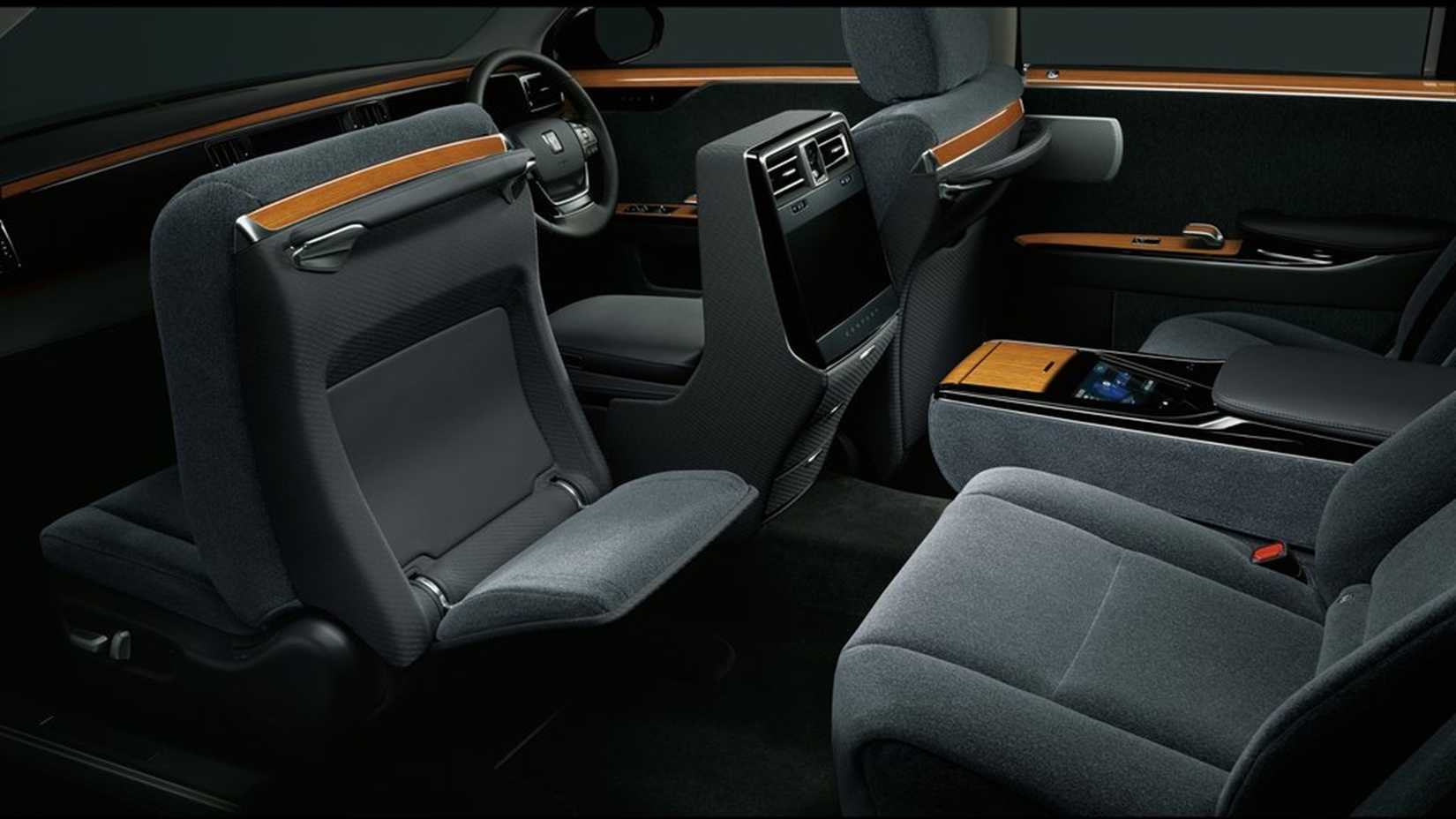
Full interior view of the 2018 Toyota CenturyToyota
General specification for the usual Century includes an interior prioritized for the rear-seat passenger. Rather than flashy leather, the cabin was standard-equipped with 100 percent Ruikyo wool upholstery, which Toyota opts for because of its high sound insulation and its ability to remain thermally neutral in all seasons.
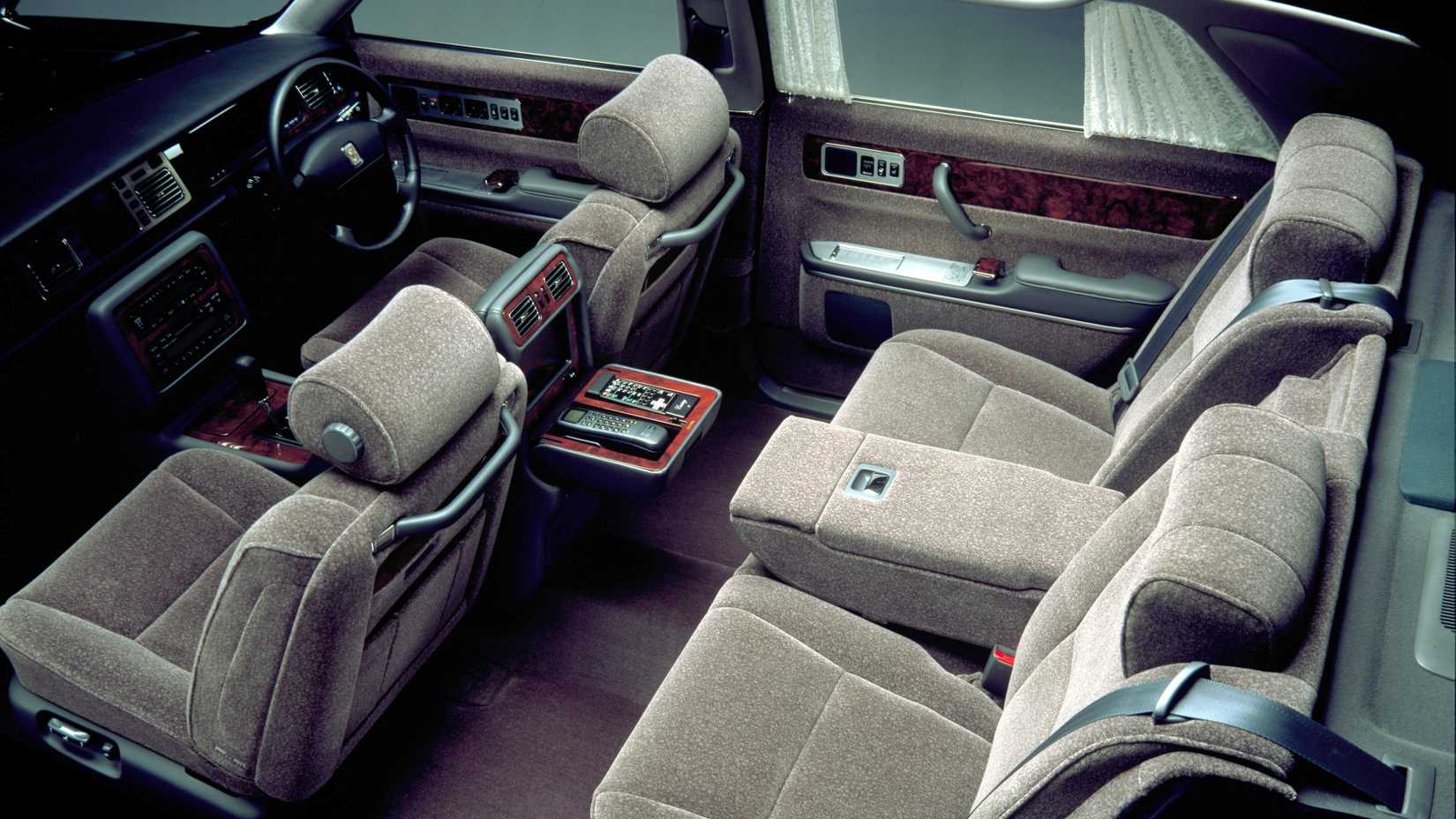
An interior view of the Second Generation Toyota Century V-12.Toyota
The most iconic feature was the front passenger seat pass-through, which allows the rear occupant to fold down the center of the front seat and stretch their legs through it for a true Ottoman-style experience. Managing comfort is a massaged and heated rear bench, fully adjustable via controls in a massive center armrest. Handling the entertainment department is an old-school rear-mounted CRT screen, which the brand later upgraded to a more modern LCD.
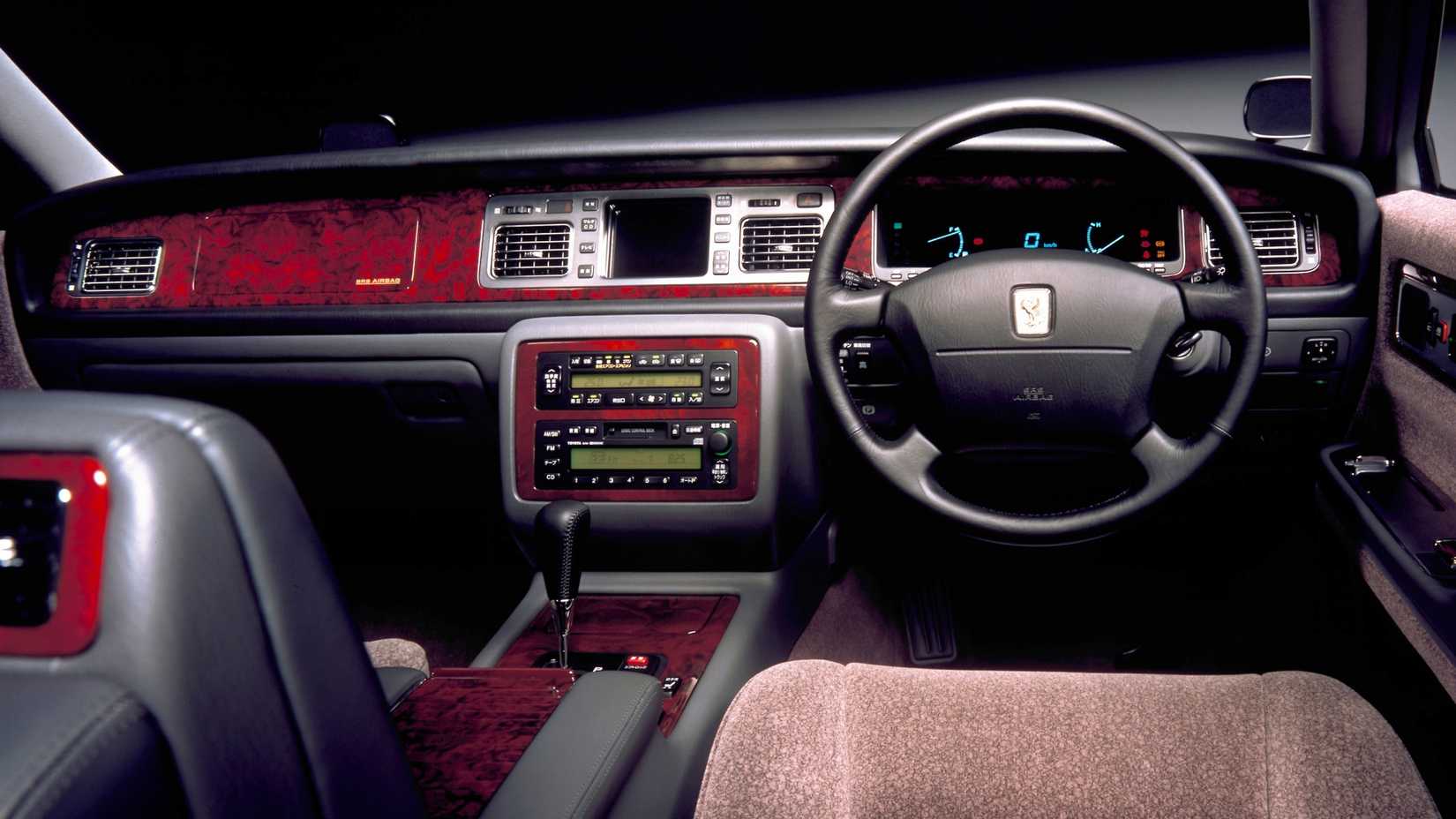
A driver’s poin-of-view of the Second Generation Toyota Century V-12.Toyota
Maintaining its analog heritage is a multi-disc CD changer and an integrated VHS player, but you’ll only find this in earlier V-12 models. To ensure total privacy, Toyota included electromagnetic lace curtains and soft-close vacuum doors to prevent the jarring sound of slamming. Most uniquely, the C-pillars are designed with a flat, mirrored finish so that dignitaries can check their appearance one last time before stepping out of the car.
Sources: Hagerty, Toyota
AloJapan.com